Home » Jazz Articles » Jazz in Long Form » The Myth of the Holy Trinity—It's Actually the Big Four
The Myth of the Holy Trinity—It's Actually the Big Four
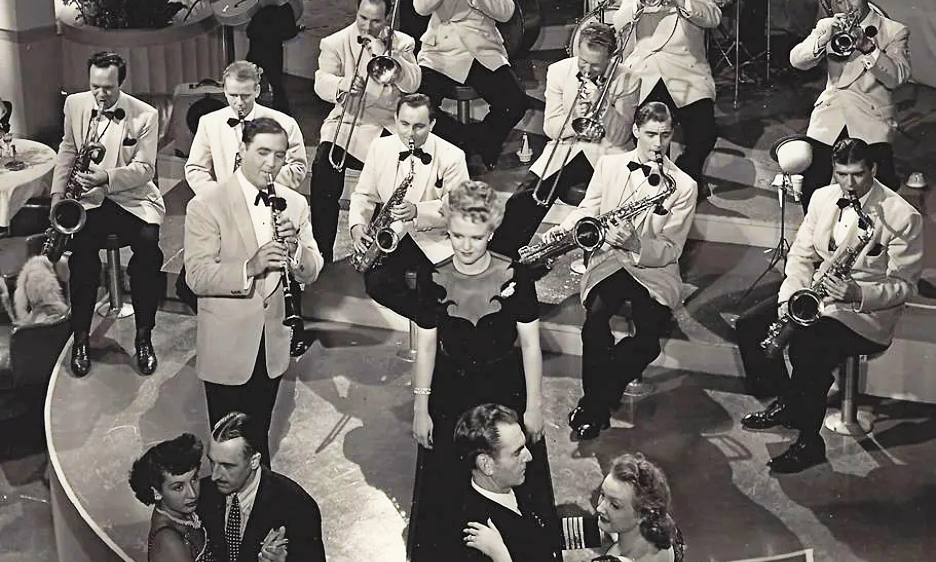
Peggy Lee is clear #3 and a case for the Greatest Female Artist of All Time.
Peggy Lee is the third seat. She also holds a case for number one.
She did not write just a few tunes, nor was she a bombshell girl singer who simply got lucky with Benny Goodman and His Orchestra, one of the greatest ensembles in American music history and a major draw.
Lee was a master at vocal prosody. She is a contender for the most complete female musical artist who ever lived.
She helped revolutionize the role of the big-band singer by introducing an equal instrumental partnership. Through this approach, she fundamentally transformed the vocalist's role from a simple "bandstand canary" into a featured instrumentalist, and an intimate storyteller. Lee was a master of back-phrasing, singing her melodies slightly behind the pulse of the rhythm section, and she utilized open space to project a smoky vulnerability. This artistic freedom allowed her to alter her tone from sunny to distressed, from slow-burning to swinging the beat.
A pioneering master of microphone technique, her "microphone naturalism" redefined the studio mic as an instrument of proximity and intimacy rather than mere amplification. By trading volume for a whisper, she turned technical restraint into a vehicle for unmatched emotional precision.
She also was a director-artist-songwriter-performer, shaping her life and artistry over multiple eras. If extensive smart direction and songwriting score points, Lee scores heavily.
The Peggy Lee 88-song playlist is below. Everything argued here can be heard in her own voice.
The Framework: A Painter and a Songwriter Performer, Not a Singer
Stop thinking about Peggy Lee as a singer. Singers sing notes. They display instruments and demonstrate vocal technique. Peggy Lee did something categorically different. She painted. She created.She approached songs like theater pieces. She inhabited and acted every role, deeply informed by her instincts as a songwriter.
Peggy Lee's acting palette was incredible. She read every song and painted its lyrical truth, its emotional weather, and its rhythmic personality.
Prosody is music for the meaning. No jazz vocalist in history sang prosody with more genius.
The difference between a singer and a prosody artist is simple. A prosody artist captures the soul of what is in front of her. Peggy Lee adapted her voice to paint a new picture every single time.
No other female jazz vocalist sustained this level of category-defining prosody performance across 88 distinct tracks. Miles Davis did it on his horn. But Miles was not a singer.
The Olympic Scoring: Where Peggy Lee Takes Gold
Score vocal greatness like the Olympics, category by category. The results are completely unambiguous.Prosody—Gold
Lee possessed a genius to make lyrics a theatrical part to artistically interpret. No two performances use the same brush, which is why listening to the 88 song playlist is important for this assessment. Prosody, music for meaning, remains underappreciated because it is a challenging vocal quality to describe.Songwriter-Performer Fusion—Gold
She authored the modern identity of "Fever," transforming it with new lyrics like the Romeo and Juliet verse. This radical reimagining into stark, dangerous minimalism, driven by a solo bass, snapping fingers, and occasional percussion hits, revealed the song's meaning in a completely new and mesmerizing wayPeggy Lee co-wrote other enduring classics. Her catalog includes "It's a Good Day," "I Don't Know Enough About You," and "Mañana" (with husband Dave Barbour), the soundtrack to Disney's Lady and the Tramp including "He's a Tramp" and "La La Lu" (both with Sonny Burke), "Where Can I Go Without You" (with Victor Young), and "I Love Being Here With You" (with Dave Cavanaugh, credited under the pseudonym Bill Schluger). "Mañana" became a million-selling number-one hit and won Billboard's Top Disc Jockey Record of the Year.
Peggy Lee wrote 270—300 songs. This perspective as a songwriter found genius in adapting her vocal artistry to paint each narrative widely differently.
The live recording of "I Love Being Here With You" from Basin Street East, recorded in January 1961, is worth singling out. She wrote that song. Despite a cold she sings loose, laughing, as if she's loving being around that someone special. It is her room, her song.
Billie Holiday co-wrote masterpieces like "God Bless the Child" and "Don't Explain" with Arthur Jr. Herzog, "Lady Sings the Blues" with Herbie Nichols, and "Long Gone Blues" with Tab Smith, alongside her solo effort, "Billie's Blues." Though working within a narrow vocal range, Holiday possessed an unrivaled emotional depth, transforming structural limitations into genius.
Holiday digs deep by remaining herself, while Lee was the pioneer of the female songwriter-performer era in American music.
Ella Fitzgerald and Sarah Vaughan wrote almost nothing, though their live interpretations remain legendary.
Palette Width—Gold
Her voice sounds widely different from song to song, for what the role needs. This ability to sing so differently displays a rare range in vocal acting talent."Why Don't You Do Right" catapulted her to stardom. She comes out of the gate with a powerful, pointed bluesy vocal tone. It was unlike anything recorded at the time, cutting with disappointment and urgency.
In "Where or When," Lee performs in a soft style. Her pure tones give the lyrics a haunting, suspended quality, ending softly as the celesta fades into silence.
In "Ain't We Got Fun," she elevates her voice joyfully. She uses fun emotional accents, landing sweetly late to the beat to match the expansive energy of the Nelson Riddle Orchestra.
She sings "Golden Earrings" with technically flawless vocal execution. Her operatic lower register sounds cinematically dangerous.
Then listen to her live recording of "I Love Being Here With You."
In "Mr. Wonderful," she floats in smitten love.
The palette width between songs is not close.
Quality of Musical Surroundings—Gold
This category alone clarifies the structural divergence between Lee and Vaughan. The tragedy isn't Vaughan's talent; it is that the infrastructure around her failed her. We will return to this point.Definitive Performances Across Genres—Gold
She mastered every single era. She evolved from a swing-era girl singer to a torch song icon, a jazz vocal master, a songwriter, a film composer, and a legendary live performer.Voice as a Pure Instrument—Bronze
Vaughan and Fitzgerald take Gold and Silver here if the metric is strictly anatomical. They hit bell-clear high notes and ran gymnastics down a three-octave scale. Nobody disputes their vocal power. Lee's voice is not the greatest athletic instrument in jazz.Peggy Lee made her voice serve the song rather than the other way around. She pivoted to a sultry resonance for "Black Coffee." She used her voice as a varied, multi-textured dramatic canvas. She didn't just compete with Vaughan and Fitzgerald. She out-sang them with vocal prosody.
Billie Holiday's vocal expression, though not technically dazzling, was uniquely rich. Her narrower range became an expression of her emotional geography. She used it to capture the intoxicating romance on "What a Little Moonlight Can Do," the longing of love on "Easy Living," the heartbreak on "All of Me," the sweet and melancholy reflection of "Autumn in New York," "Fine and Mellow," the desperation of "Lover Man (Oh, Where Can You Be?)," and the impact of "Strange Fruit." Holiday deserves a different vocal category.
#1 Grand Slams—Uncontested
Ella Fitzgerald sold over 40 million albums, won 13 Grammy Awards, and was awarded the Presidential Medal of Freedom. Nobody will top Ella.Era One: The Underappreciated Girl Singer Years
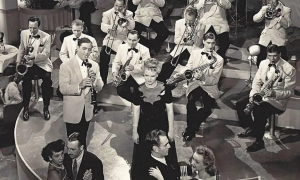
The first dismissal of Peggy Lee comes early. Critics bracket the Benny Goodman years as a mere apprenticeship. They call it a forgettable, commercial girl singer period. They claim this was not yet the real Peggy Lee. This is a catastrophic misreading. Within the constraints of the role, Lee helped revolutionize the role of the big-band singer.Goodman scouted Peggy Lee at The Buttery in Chicago after Helen Forrest said Goodman was difficult to work with and quit his band. Goodman sat there emotionless, staring blankly as Lee performed, Lee recalled later. Goodman signed her the next morning.
Lee was overwhelmed. She shook violently with nerves at her first recording session. Pianist Mel Powell recalled the sheet music in her hands "made such a racket it sounded like a forest fire that was going over the brass."
Lee and the orchestra made great Swing Era recordings together.
Listen to "Why Don't You Do Right." There's nothing else like it in jazz. Lee asked to record the song. Goodman didn't want to record the song. She heard something in that track nobody else did. She pestered him to record it. She fought for it. Then during a marathon 1942 recording session on the eve of an historic musicians' strike, they recorded it. Her blockbuster performance launched her career towards stardom. "Why Don't You Do Right" is a masterclass in tough pointedness with a complex, tragic, pleading, vocal coloring. This is prosody at the level of high art.
In the 1941 slow-burn "I Got It Bad (And That Ain't Good)," Peggy Lee, at just 21 years of age, drops into a lower, somber register to embody the song's longing. She lets her phrasing linger, like an intimate confession, her vocal prosody answered by muted prosody horns.
"Somebody Else Is Taking My Place" went to #1 on the charts. The call of distress in her voice is a completely different brush stroke. It is a different painting entirely.
In "Blues in the Night," Lee is paired with Benny Goodman and His Septet just four months into her tenure with Goodman. They create an immense musical presence for just seven plus one people, with Lee trading torch vocals with Lou McGarity's lamenting trombone.
Lee loved the blues, especially Bessie Smith. With a challenging rural childhood, Lee joked that she listened to the blues so much in her youth that people assumed she was a Black artist from the South when first hearing her on the radio rather than a white teenager from North Dakota. She would tune into distant broadcasts to hear Count Basie, Maxine Sullivan, and Bessie Smith. While Lee sang blues on the radio, Holiday, Vaughan and Fitzgerald navigated institutional restriction.
She used subtle timing shifts with an uplifting tone to lift the melody in "On the Sunny Side of the Street" with The Benny Goodman Sextet. She understood the song was sunny joy, supported by Mel Powell on piano, a prodigy who joined Goodman at just 18 and would later win a Pulitzer Prize for his classical compositions. Benny Goodman's bright, effortless clarinet and Lou McGarity's gritty, soulful trombone trade the spotlight over the buoyant, swinging foundation laid down by bassist Sid Weiss and drummer Ralph Collier.
In "Winter Weather," she subtly puts on a masterclass in swinging simple lyrics, really driving the groove because the meaning of the song—winter weather love—informed her to sing like that.
In "I See a Million People (But All I Can See Is You)," she drags the beat with subtle swing, creating a cool elastic groove hitched to the razor-sharp Benny Goodman band.
Standout songs "We'll Meet Again" and "How Long Has This Been Going On" reveal a prosody artist subtly at work. She shifts to meet the distinct needs and confines of each song. Critics frequently wave past this era on their way to her "serious" solo work. They are mistaken. The impressive work was already happening.
The Goodman bootcamp launched musicians who transformed the vocabulary, racial dynamics, and technological landscape of modern music: Stan Getz, Lionel Hampton, Charlie Christian, Gene Krupa, Teddy Wilson, Harry James, Mel Powell, and Peggy Lee.
Top jazz musicians over several eras wanted to play with her. That is its own verdict.
A Study in Prosody Contrast
Contrast the soft style of "Where or When" during the Benny Goodman years with her blazing solo-era "My Heart Belongs to Daddy." The same artist who whispers a dreamy ballad into existence before whispering it out practically yells her way through a driving rhythm. It is rapid, comic, fiery, and sensually confident. Pete Candoli's dazzling muted trumpet work creates an intense, fast-tempo call-and-response joust with Lee's vocal. She saw exactly what the song needed and delivered it with pure heat and bite.Era Two: The Singer—Songwriter Finds Her Footing
After breaking Benny Goodman's strict rule against dating the "girl singer," guitarist Dave Barbour was fired weeks before their March 8, 1943 wedding. Peggy Lee chose to give her notice and walk away from the band shortly after, and the couple married on March 8, 1943. Stripped of the big band's safety net, the newlyweds forged a new path. With Barbour as her musical partner, Lee literally wrote her way forward into a legendary solo career.Suddenly responsible for her own livelihood, Lee reached for what she knew deepest—the blues.
I Don't Know Enough About You and You Was Right, Baby
"You Was Right, Baby" was recorded on December 27, 1944 and hit #11 on the charts in the spring. Written by Lee and Barbour, his biting blues riffs drive the groove as Lee sings bluesy in sync. Barbour played a Gibson L-5 archtop acoustic guitar modified with a DeArmond floating pickup plugged into a tube amp.
With a bluesy jazz-pop vocal style and small jazz ensemble arrangements, "I Don't Know Enough About You" reached #7 on the charts in 1946, written by Lee and Barbour. On this song, Lee's bluesy voice sounds more jazz-pop.
In Lee's interpretation of "Waitin' for the Train to Come In," she sings with bluesy longing to the groove of a train, with Barbour's blues riffs driving the groove. It has proto-rock-n-roll elements yet retained a jazz ensemble arrangement and Lee's bluesy jazz-pop voice. It went to #4 on the charts.
It's a Good Day and Mañana
"It's a Good Day" became a smash hit in January, 1947. Sung with infectious optimism by Peggy Lee, it is one of the most joyful classics in the American songbook. Lee and Barbour also wrote "Mañana" in 1947. It spent nine weeks at number one in 1948 and sold over a million copies. Barbour and Lee later divorced.
Over her career, Lee scored over 70 US Billboard chart hits, released more than 150 singles, and achieved multiple million-selling records. She earned 13 Grammy nominations and secured Top 10 hits across three consecutive decades.
Quincy Jones called Lee a dear personal friend and praised her as a songwriter with "vocal imagery who can paint pictures with words." Industry giants enjoyed working with her, including Jones who arranged and conducted her 1962 Blues Cross Country album.
La Vie en Rose
After her death, a remarkable discovery emerged from her private family estate. A home demo of "La Vie en Rose" was unearthed. It was recorded around 1952 in her own living room on a personal reel-to-reel tape machine. It is a single take with a casual jazz trio, sung entirely in French out of her lifelong devotion to Édith Piaf. Her granddaughter released the tape in February 2026. Breathtaking, Lee never intended anyone to hear it. It is on the 88-song playlist.
Era Three: Nelson Riddle, Frank Sinatra, and the Strings
Peggy Lee operated at the absolute center of Capitol Records' golden age. For the legendary 1957 album The Man I Love, Frank Sinatra stepped onto the podium to conduct the orchestra for her. Nelson Riddle's creative circle provided the sweeping architecture.The results show a vocalist completely in command of idealized lyrics set against a backdrop of lush orchestral strings that never swallow her.
Her vocals on the Nelson Riddle collaboration "Ain't We Got Fun" are a splash of uplifting fun. Her voice rides the big band crest with ease, a completely different instrument serving a completely different emotional world.
Era Four: Slow Burn Masterpieces and the Great Album Black Coffee
Peggy Lee's genius is not just slow and devastating. She delivers her slow burn differently for every distinct emotional world.Fever
Pulse finger snapping over sparse space except for a bass (by West-Coast bassist Joe Mondragon), drum sounds, and a vocal cool and restrained yet generating massive heat. She stripped the arrangement down to raw wooden resonance and skeletal beat. She forced the listener to lean into the silence, transforming a standard blues pulse into an exercise in high-tension, architectural suspense. No other arrangement in popular music sounds like this. She conceived it and wrote the new lyrics. She delivered—as she had with her first blockbuster "Why Don't You Do Right."Where Can I Go Without You
Co-written with Victor Young, this is a quiet masterpiece of pure longing. Lee keeps her vocals spare and close, treating the lyrics like an unanswered question. The restraint is the entire point.Don't Smoke in Bed
A prosody performance of leaving her husband, she says as her last words of care, "Don't smoke in bed." Devastating vocal prosody impact. Just listen.Black Coffee the Album
If Peggy Lee had recorded nothing else, her masterpiece 1953 album Black Coffee would secure her place in jazz history. Her voice operates at the exact intersection of jazz and torch song, demonstrating absolute mastery of space and silence. Nobody else has ever made an album like this. Not Ella. Not Vaughan. Not Holiday. It exists in a category of one.The original eight tracks were recorded in New York with a spare quartet: Pete Candoli on trumpet, listed on some original pressings under the pseudonym "Cootie Chesterfield," and Jimmy Rowles on piano, two giants of the West Coast jazz world, alongside New York drummer Ed Shaughnessy and bassist Max Wayne—who had backed Stan Kenton's hard-hitting orchestra in Chicago's bustling mid-1940s jazz scene, anchored Marian McPartland's elite early trio at the Hickory House in New York in 1951 and 1952, and was recording in California by the late 1950s, a tri-coastal rhythm anchor. Shaughnessy matched them in the quiet passages and drove hard when the song demanded it. The album moves between bright light and dark space—her voice ranging from aching at the edge of stillness to propelling a groove with West Coast cool in tow. The result belonged to neither coast and sounded like nothing else recorded that year or since. Rowles's spacious chords, at times an early modal vibe—his harmonic imagination fed by bop and the French Impressionist textures of Debussy and Ravel—anchor the original sessions.
Candoli's trumpet shadows and answers Lee throughout.
Four additional tracks were later added with a deeply atmospheric Los Angeles quintet anchored by Chicago-born pianist Lou Levy, who brought a bebop style influenced by Bud Powell, alongside bassist Buddy Clark—later the co-founder of the Grammy-winning ensemble Supersax—versatile studio drummer and vibraphonist Larry Bunker, future Wrecking Crew guitarist Bill Pitman, and the innovative addition of Stella Castellucci on harp.
When the World Was Young
She opens with spoken-word intimacy, then glides effortlessly into a breathtaking jazz vocal performance, climbing into high notes that are achingly tender and yet biting.A Woman Alone With the Blues
The smoky vocal delivery, laced with subtle purring inflections, is so stripped down it sounds less like a studio performance than a private moment accidentally recorded. It is just a woman and the absolute truth of a lyric.Black Coffee
Her take on the title track is the definitive version—with all due respect to Sarah Vaughan's outstanding early recording of Black Coffee. Lee's voice is uniquely smoky and sultry, carrying a dual tension: she sings of total isolation, yet there is a lingering sensuality in her waiting tone. Candoli's frantic trumpet stabs slice through the song, shadowing her vocals with bitter, deeply bluesy lines that act like a musical character lurking in her shadow. The interplay is striking and irreplaceable.Dream Street
Her album Dream Street delivered further slow classics. "What's New" and "Street of Dreams" carry the intimacy of Black Coffee, but she changes up the arrangements, trading her earlier smoky grit for a reflective prosody tone with fine singing. "I've Grown Accustomed to His Face" finds her at her most quietly rueful.
It's All Right With Me (Dream Street)
Pianist Lou Levy delivers a fabulous, fast-tempo performance in "It's All Right With Me," ending with a back-and-forth call-and-response where Lee shifts the spotlight back to Levy for two clever encores. Lee affectionately nicknamed Levy her "good gray fox" because of his clever, highly supportive accompaniment style that perfectly shadowed her vocals without overstepping. Levy noted Lee's stellar reputation among musicians, "When Peggy went to New York, or Chicago, or Las Vegas, every musician in town wanted that gig... She got whoever she wanted, because she was so good."
I'm a Fool to Want You
During this same period, she recorded "I'm a Fool to Want You." Frank Sinatra recorded this song and made it famous. Lee recorded it and made it true. Same song, same era, completely different ambition. Sinatra is singing. Lee is painting.
Era Five: Movie Songs and the Film Composer
Peggy Lee was not just a recording artist. She was a brilliant film composer and lyricist whose work crossed into cinema at the highest level.She co-wrote the original songs for Disney's Lady and the Tramp. They remain streaming giants due to their enduring Disney association. She made legal history by winning a landmark $2.3 million lawsuit against Disney for videocassette royalties, permanently changing intellectual property rights for music artists. Peggy Lee was a commercial heavyweight.
She recorded "Golden Earrings" for the spy thriller of the same name.
She co-wrote the title track for "Johnny Guitar" with Victor Young for the iconic Joan Crawford Western.
She starred on-screen in the 1955 jazz film Pete Kelly's Blues, earning an Academy Award nomination for Best Supporting Actress, where she sang "Sing a Rainbow" on camera.
She also released "Big Spender" as a single right as the Broadway musical Sweet Charity (which featured the song) opened. It later became a movie. Lee's delivery is satirical, swinging, and simultaneously authentic. Each of these successful songs are evidence of an artist operating at a high level across several entertainment eras, owning each one.
Era Six: Is That All There Is?
Lee's artistic vision did not stall in the fifties. It kept moving, expanding, and finding fresh territory to inhabit."Is That All There Is?" arrived in 1969, long after most of her contemporaries had settled into comfortable nostalgia. Rather than treating Leiber and Stoller's existential cabaret piece as a simple tragedy, Lee approaches the lyric with a dry, theatrical wit. She avoids the easy paths of self-pity or melodrama. Instead, she delivers the spoken verses with a knowing irony, floating through the chorus with a philosophical shrug—treating it not as an expression of defeat, but as a masterclass in stoic survival.
Yet the true brilliance of the recording is its profound ambiguity. It operates on multiple psychological frequencies at once, serving as a blank canvas. It pulls the listener into an active dialogue, holding up a mirror to one's own life experience. If you approach it with cynicism, her delivery sounds chillingly cold. If you approach it with resilience, it shifts into an inspiring anthem of endurance. No other vocalist of her era could have balanced that mix.
It earned her a Grammy Award.
When the Voice Becomes the Art
Sarah Vaughan possessed the greatest pure vocal instrument in jazz history. Her range, control, intonation, and vibrato are gifts that appear once in a generation. Critics awarded the diving competition to the biggest splash. Vaughan has merits.But the voice is not the art. The art is what the artist does with the song.
The Arrangements:
Ella Fitzgerald recorded with Oscar Peterson, Nelson Riddle, and Billy May. Norman Granz curated her contexts with world-class taste. Billie Holiday recorded with Teddy Wilson, Lester Young, Buck Clayton, and Ben Webster—those historic sessions are jazz summit meetings in miniature. Peggy Lee emerged from Benny Goodman and His Orchestra working with legendary musicians, worked closely with Nelson Riddle, recorded with top jazz musicians including Pete Candoli and Jimmy Rowles on Black Coffee, and directed her own musical environments with sharp artistic vision throughout her career. Sarah Vaughan's arrangements at Mercury Records, the infrastructure around her, were frequently lush, commercial orchestrations designed to highlight the instrument rather than serve the song. The studio treated her generation-defining gift as a luxury product. To be sure, her self-titled 1954 EmArcy session with Clifford Brown and her late-career Pablo dates with Count Basie are jazz monuments, but they stand as intermittent highlights rather than a lengthy catalog like Ella Fitzgerald and Peggy Lee.The Songwriting
Vaughan wrote almost nothing. In contrast, Holiday wrote or co-wrote monumental classics like "God Bless the Child" and "Don't Explain." Lee authored the performance identity of "Fever" and co-wrote "It's a Good Day," "I Love Being Here With You," "I Don't Know Enough About You," and "Mañana." The songwriter-director-performer fusion that makes the greatest recordings of Lee and Holiday irreplaceable simply does not exist in Vaughan's catalog.If writing music is worth points, score that heavily for Lee and Holiday.
The Commercial Crossovers
"Broken-Hearted Melody" was Vaughan's biggest commercial hit. It features a generic electric guitar backbeat and pop backing singers. Vaughan herself openly called it the corniest thing she ever did.The Palette
"No Count Blues" is a genuine jazz masterpiece. The vocalese interplay with trumpeter Joe Newman is inside-the-tradition dialogue at the highest level. "Lullaby of Birdland" displays a bebop scat vocabulary second only to Ella. These are monumental achievements. But they represent the ceiling of the Vaughan jazz argument. Assemble Vaughan's best 88 recordings with the bands backing her and they cannot match Lee's making prosody music over several eras with some of the best musicians in jazz history. Vaughan's gift pulls the listener toward the beauty of the note. Lee pulls the listener into the heart of the lyric.The 88-song playlist is not a greatest hits collection. It is a sustained musical argument. It represents 88 distinct paintings by an artist.
Miles Davis sustains it. They are two artists whose catalogs are so deep and varied that 88 songs of prosody painting leaves you feeling plenty of runway left.
The Verdict: Not a Holy Trinity. A Big Four. Peggy Lee #3
Peggy Lee clearly holds the number three female jazz vocalist spot by any honest accounting. She holds that position while winning gold medals in the categories that matter most to the art form: prosody, songwriter-performer fusion, palette width, self-directed artistic vision, quality of musical surroundings, and definitive performances across genres.She loses in the category critics have weighted too heavily for seventy years: the voice as pure instrument. In losing that athletic category, she wins the more important argument. She never needed the instrument to carry her. She used her instrument to paint.
Ella Fitzgerald is #1
Her stunning vocal performances, effortless swing, technical mastery, scat genius, definitive Songbook recordings, and forty-year consistency stand entirely alone. She sold over 40 million albums, won 13 Grammy Awards, and awarded the Presidential Medal of Freedom. She was a pioneer. "Blue Skies," "Misty," "You'll Have to Swing It (Mr. Paganini)," "A-Tisket, A-Tasket," "Mack the Knife (Live in Berlin, 1960)," and with Louis Armstrong "Summertime" and "They Can't Take That Away From Me" are gateways to Ella's greatness.Billie Holiday is #2
She is the most emotionally devastating vocalist in jazz history. She invented modern jazz phrasing and possessed a tone unlike anything before or since. She wrote songs that entered the permanent American songbook, and recorded alongside the greatest sidemen of her era. Holiday's peak is higher than anyone's.Peggy Lee is #3
No jazz vocalist in history sang prosody with more genius. She painted. She created. She approached songs like theater pieces. She inhabited and acted every role, deeply informed by her instincts as a songwriter. She transformed the vocalist's role from a simple "bandstand canary" into a featured instrumentalist, and an intimate storyteller. But the scoring system undercounted what Lee was doing, dismissing her vocal prosody paintings, dismissing her "girl singer" Benny Goodman orchestra achievements. She painted gold. Prosody is harder to measure than vocal range.Listen to the 88 song playlist as a data assessment. All reasoned opinions are welcome.
The third chair belongs to Peggy Lee. The Holy Trinity has been a misreading for seventy years. It's The Big Four.
Tags

PREVIOUS / NEXT


Support All About Jazz
 All About Jazz has been a pillar of jazz since 1995, championing it as an art form and, more importantly, supporting the musicians who make it. Our enduring commitment has made "AAJ" one of the most culturally important websites of its kind, read by hundreds of thousands of fans, musicians and industry figures every month.