Home » Jazz Articles » Jazz in Long Form » Andy Wasserman, George Russell, and the Living Lineage o...
Andy Wasserman, George Russell, and the Living Lineage of the Lydian Chromatic Concept
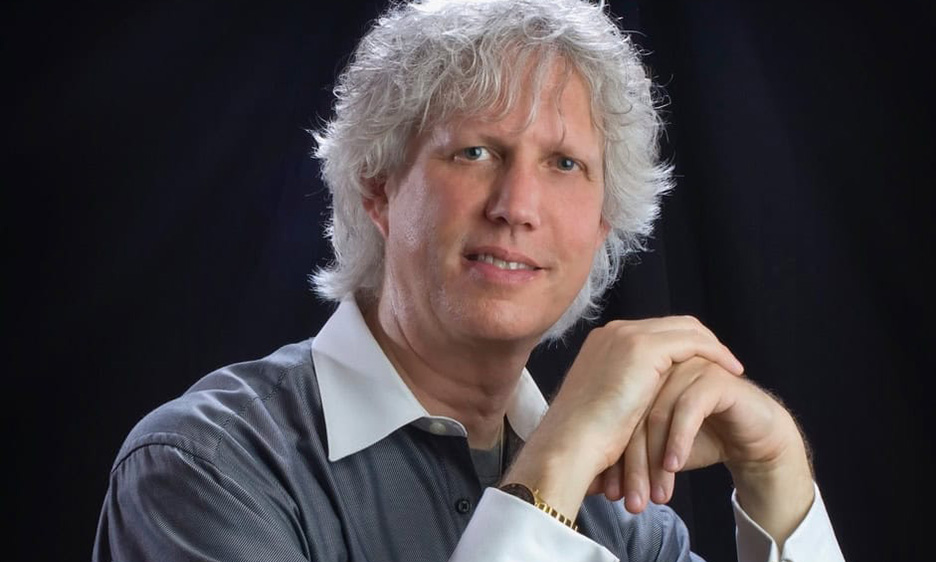
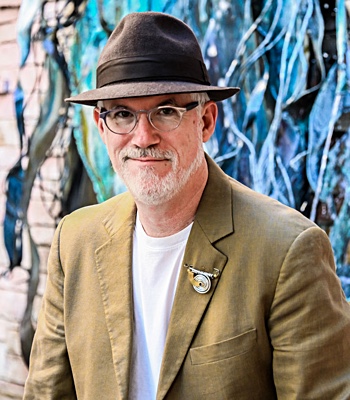
Courtesy Andy Wasserman

The Concept establishes an open-ended, pan-stylistic foundation in which levels of tonal gravity act as prime, integral moving forces within music.
—Andy Wasserman
For over 40 years, Wasserman has been one of the Concept's foremost teachers and practitioners. In an era when "jazz theory" is often reduced to a toolkit of scales and substitutions, Wasserman stands as a rare example of true lineage: a professional musician with more than half a century on the bandstand and in the studio, a multi-instrumentalist fluent on over 60+ instruments, and one of a very small number of musicians personally certified by Russell to teach the Lydian Chromatic Concept in its entirety.
To study Russell's work with Andy Wasserman is not to encounter a secondhand abstraction of a great theory. It is, by design and by Russell's explicit trust, as close as one can come today to experiencing the Concept as its creator intended—musically, philosophically, and practically.
A Direct Lineage to George Russell
The depth of Andy Wasserman's expertise is rooted in a profound 30-year relationship with George Russell, during which he was mentored directly by the Maestro himself. As one of a very select few personally certified by Russell to teach the Lydian Chromatic Concept in its entirety, Wasserman preserves the original integrity and pedagogical spirit of the work with absolute fidelity. Studying with Andy is widely recognized as the closest experience one can have to sitting in Mr. Russell's own classroom; he conveys the knowledge exactly as it was intended, ensuring that the lineage of Tonal Gravity remains unbroken and as potent as it was at its inception.A Concept That Rewired Modern Jazz
Before delving into Wasserman's role, it is worth recalling the magnitude of the theory at the center of his life's work.First published in 1953, George Russell's Lydian Chromatic Concept of Tonal Organization was a lightning strike in the evolution of jazz. At a time when bebop's chromatic intricacies were still being digested, Russell proposed something radical: that Western harmony could be understood not as a linear chain of ii—V--I progressions or major/minor key centers, but as a gravity field centered around the Lydian scale.
Russell's central insight rests on the acoustical primacy of the perfect fifth. Stack seven consecutive fifths (for example, C—G--D—A--E—B--F♯), compress them into a single octave, and you arrive not at the traditional major scale, but at the Lydian scale. For Russell, this seventone collection, with its single, unambiguous tonic, represented the most complete state of harmonic unity. It became the gravitational "sun" around which all other tones orbit—closer or more distant, more or less stable, yet always relating to a Lydian center.
Russell called this ordering principle Tonal Gravity. Where traditional theory often focuses on what notes or chords are "correct," the Lydian Chromatic Concept asks why sounds pull toward or away from a center, and how that pull can be understood, organized, and stretched without severing its internal logic.
From this gravitational view, Russell outlined three states of tonal gravity-vertical, horizontal, and supravertical—offering a framework in which melody, harmony, and large scale form could all be understood as movements within a coherent field of relationships. The Lydian scale, the extended Lydian chromatic field, and their permutations became a map to tonal space, not a list of rules.
The influence on modern jazz was seismic. Russell's work, often cited as a crucial catalyst for modal jazz, opened doors for musicians seeking to move beyond bebop's chord-by-chord improvisation into broader harmonic planes. Miles Davis's Kind of Blue and John Coltrane's modal explorations are frequently linked to the horizons that Russell's Concept made visible. From there, many of jazz's later developments—modalism, expanded harmonic palettes, applications of non-Western and synthetic scales, even aspects of free improvisation—can be traced, in part, to this reorientation around tonal gravity.
From Manhattan to the Lydian Universe: Andy Wasserman's Path
For Andy Wasserman, the Concept was not an academic discovery but a deeply personal calling.Growing up in Manhattan, Wasserman encountered Russell's work in its most vivid, orchestral form: the 1959 Decca album New York, N.Y. The recording—both a sonic portrait of the city and a bold statement of Russell's evolving ideas—resonated powerfully with the young pianist and multi-instrumentalist. The sounds, the emotional landscape, and the distinctly New York sensibility of that album became a kind of invitation; the Lydian Chromatic Concept was evidently not just a theory in a book, but a living musical language.
By 1978, Wasserman's response to that invitation was decisive. He moved from New York to Boston to enroll at the New England Conservatory of Music (NEC) with a clear and singular aim: to apprentice with George Russell. Russell, already a towering figure as a composer, bandleader, and theorist-and a mainstay of NEC's Jazz Studies program-became the center of Wasserman's musical orbit.
Wasserman's entrance audition for Russell at NEC was telling. He performed an original solo piano medley of Billy Strayhorn compositions, revealing not just keyboard facility but a deep sense of harmony, color, and orchestration. Russell's written evaluation-"applicant accepted: good sense of harmony and orchestration"-was the beginning of what would become a decades long mentorship.
Under Russell's guidance, Wasserman pursued a Bachelor of Music in Jazz Composition, graduating in 1982. But his role at NEC went well beyond that of a typical student. Whenever Russell and his big band, the Living Time Orchestra, were on tour, Wasserman stepped in to teach Russell's classes on the Lydian Chromatic Concept. This early responsibility was a clear indication of the trust Russell placed in his understanding and pedagogical ability.
Editorial Partner, Foreword Author, and Certified Teacher
Perhaps the most striking testament to the depth of the Russell—Wasserman relationship is the extent to which Russell involved him in the final, definitive statement of his life's work.From the late 1970s onward, Wasserman served as an editorial assistant to Concept Publishing, working closely with Russell for over 20 years on the fourth and final hardcover edition of George Russell's Lydian Chromatic Concept of Tonal Organization—Volume One: The Art and Science of Tonal Gravity (Concept Publishing, 2001). This was no simple reprint. The fourth edition is a complete, carefully organized rearticulation of the Concept, vastly expanding on previous editions with analysis, examples, and compressed decades of reflection.
To help refine such a book requires far more than copy editing. It demands intimate familiarity with the architecture of the Concept, comfort with its technical subtleties, and sensitivity to Russell's language and intent. It is, in a very real sense, cocrafting how the theory will be encountered by future generations.
Russell also made an extraordinary request: he asked Andy Wasserman to write the Foreword for this definitive fourth edition. It is hard to imagine a stronger endorsement of Wasserman's grasp of the material and his alignment with Russell's vision. The foreword, written by Wasserman and included in the 2001 volume, invites readers to suspend preconceptions, to engage deeply, and to recognize that the study of the Concept is as much an inner reorientation as it is a technical one. It articulates Russell's system from the perspective of someone who has thoroughly internalized it as a living practice.
Even more crucially, in 1982 Russell personally certified Wasserman as an instructor of the Lydian Chromatic Concept, formally authorizing him to teach the system in its entirety. This certification is exceedingly rare. Only a small handful of musicians worldwide have been sanctioned by Russell to represent the work "exactly as he intended it to be taught," and Wasserman is among that select few.
In Russell's own written recommendation regarding Wasserman's work with the Concept, he identifies Andy as one of the foremost figures in preserving, teaching, and advancing the Lydian Chromatic Concept as Russell intended it to be shared. That recognition cements Wasserman's position not merely as a competent interpreter, but as an essential carrier of the lineage.
A Vertical Man and His Heir: Integrity, Lineage, and Legacy
George Russell has often been described as a "vertical man"-a phrase evoking his deep inner orientation, integrity, and the way he listened to and followed a "potent transforming magnetic center" within himself. The Lydian Chromatic Concept is not just a method for organizing tones; it is an expression of Russell's broader vision of order, unity, and meaning-musical and extramusical.Wasserman's lifelong dedication to this work mirrors that vertical orientation. For over 40 years, he has not only taught the Concept but anchored his own composing, improvising, and listening in its principles. His career reflects a commitment not to trend or fashion, but to an underlying coherence of thought and sound.
Where many discussions of jazz pedagogy invoke "lineage" in broad, sometimes sentimental ways, Wasserman's lineage is specific and concrete:
- He studied privately and intensively with Russell beginning in 1979.
- He substituted for Russell in Lydian Chromatic Concept classes at NEC when Russell was touring.
- He worked for decades as Russell's editorial assistant on the final edition of the book.
- He wrote the official foreword to that edition.
- He was personally certified by Russell to teach the Concept.
Not Just a Theoretician: A 50 Year Professional, Multi-Instrument Practitioner
What sets Andy Wasserman apart in the crowded field of "jazz theory experts" is that he is not, and has never been, a theorist in isolation. Before he became known as a teacher of the Lydian Chromatic Concept, he was-and remains-a working musician.He is an accomplished jazz pianist and a composer with a broad catalog, but his instrumental reach extends far beyond the keyboard. Remarkably, he plays over 60+ instruments, including a vast array of world and traditional instruments. This extraordinary multi-instrumental palette informs his understanding of tonal gravity not just as a keyboard abstraction, but as something that lives in timbre, resonance, phrasing, and idiomatic nuance across cultures.
This breadth is significant for a theory that Russell himself described as "panstylistic" and grounded not only in Western harmony, but in acoustics, physics, and global musical traditions. The Lydian Chromatic Concept is explicitly designed to apply to any style—European classical, jazz, non-Western systems, and beyond. Wasserman's worldmusic and multi-instrumental experience allows him to explore and demonstrate that claim concretely.
Importantly, he uses the Concept continuously in his own compositions and improvisations. For Wasserman, tonal gravity is not a set of diagrams on paper; it is the organizing principle behind how he writes a solo piano suite, shapes a melodic line, or orchestrates across instruments. This makes his teaching inherently grounded: students encounter the Concept not as a static theory, but as language in motion-in recordings, live performance, and real-time demonstration.
Andy Wasserman: The Artist and Educator
Andy Wasserman is far more than a mere theoretician; he is a seasoned artist who has spent over 50 years as a professional musician and more than 40 years actively implementing and teaching the Lydian Chromatic Concept of Tonal Organization. His mastery is not confined to the page, as he has utilized the Concept as the primary engine for his own creative output across a staggering array of 60+ different instruments. By integrating George Russell's principles into his daily life as a performer and composer for four decades, Wasserman bridges the gap between abstract musical science and real-world artistic expression, proving that the Concept is a living, breathing language for the modern innovator.The Pandemic Livestreams and Creative Endurance
During the global pandemic, Wasserman demonstrated the monumental practical power of the Concept by streaming 207 consecutive live concerts over a four-year period. Every Sunday, he performed entirely original programs, ultimately totaling over 1,400 unique solo piano compositions. Wasserman explicitly credits this extraordinary feat of creative endurance to the Lydian Chromatic Concept of Tonal Organization, stating that he would never have been able to sustain such a massive output of spontaneous, high-level composition without the gravitational map provided by Russell's work. This landmark achievement stands as a testament to the Concept's ability to unlock an infinite well of musical possibility.The Lydian Chromatic Concept and the Modern Jazz Imagination
Any discussion of Wasserman's role must also grapple with the Concept's monumental influence on modern jazz itself. Russell's theory did more than describe a new way to stack notes; it provided a framework that some of jazz's greatest innovators used to reimagine improvisation and composition.Miles Davis' move toward modal forms-most famously on Kind of Blue-is often linked to Russell's ideas about vertical, gravity-centered tonal space. John Coltrane's explorations, from the meditative depths of A Love Supreme to the extended harmonic cycles of his later period, echo questions central to the Concept: How can one move through tonal space in ways that feel both inevitable and boundless? How do we expand the palette of possible sounds without losing a sense of center, coherence, or spiritual focus?
Russell's own work as a bandleader and composer, particularly with his Living Time Orchestra, pushed these ideas into rich orchestral and large-ensemble contexts. His impact on subsequent generations of composers and improvisers was not limited to harmony; his sense of form, rhythm, and large-scale architecture-all shaped by tonal gravity-helped nudge jazz into new territories: electronics, cross-cultural fusion, extended forms, and beyond.
In this context, Wasserman's dedication to preserving and transmitting the Concept is more than the curation of a theoretical text. It is a commitment to safeguarding a foundational current in jazz's evolution-the same current that quietly underpins much of what listeners now take for granted as the language of modern jazz.
Teaching the Concept: As Close to Russell's Classroom as It Gets
Wasserman has been teaching the Lydian Chromatic Concept continuously since 1982, when Russell first certified him. Over four decades, he has worked with students around the world—professionals and aspiring musicians alike—through private instruction, workshops, seminars, and, in recent years, online platforms.What distinguishes his approach?
1. Direct Lineage and Certification
Wasserman's authorization comes directly from George Russell himself. That certification indicates not only that he "knows the material," but that Russell personally vetted his understanding, pedagogy, and fidelity to the system. There are only a very small number of such teachers worldwide; Wasserman is one of them.For students, this means the version of the Concept they encounter with Wasserman is not a reinterpretation, condensation, or rebranding, but the system as Russell intended-explicitly aligned with the fourth and final edition of the book.
2. Holistic, Gravity-Centered Musicianship
Wasserman teaches the Lydian Chromatic Concept not as a list of scales to apply over chord symbols, but as a complete reorientation of musical thinking. His lessons integrate:Vertical and horizontal hearing
How chords, scales, and melodic lines emerge from and return to a Lydian tonal center.Rhythmic and formal awareness
How tonal gravity can shape phrase structure, large-scale form, and development.Sound, touch, and timbre
Particularly as a pianist and multi-instrumentalist, he connects theoretical ideas to how notes are articulated, voiced, and colored.-
Inner listening and creativity
Echoing Russell's own insistence on psychological and spiritual dimensions, Wasserman encourages students to use the Concept as a mirror for their own aesthetic and inner development.
3. Structured Yet Personal Curriculum
Decades of teaching have allowed Wasserman to develop a structured, progressive way of presenting the Concept. The material can be daunting in its scope; Wasserman breaks it down into manageable stages, pairing conceptual study with targeted exercises in improvisation, composition, and analysis.At the same time, his curriculum is flexible. A saxophonist working on post-bop language, a pianist engaged with solo modal improvisation, a composer writing for contemporary ensemble, or a non-jazz musician seeking deeper harmonic understanding will each encounter the Concept in ways tailored to their aims, level, and stylistic world.
4. A Supportive, Transformative Environment
Students frequently describe their experience with Wasserman and the Concept as transformative, not just in their technical ability, but in how they hear and relate to music. His teaching style combines rigor with support, inviting students to develop confidence as they move from imitation to genuine creation.Because he has internalized the Concept so thoroughly, Wasserman can shift fluidly between the abstract and the practical: from discussing the theoretical basis of a Lydian chromatic field to demonstrating, at the keyboard, how it can reshape a familiar standard, a blues, or a free improvisation.
The Concept Beyond Technique: Unity, Psychology, and Inner Work
One of the most compelling aspects of Russell's Lydian Chromatic Concept-and one that Wasserman highlights in both his writing and teaching-is its extramusical dimension.Russell frequently framed the Concept in terms of unity and gravity, terms that resonate far beyond harmony drills. He drew parallels between the organization of tones and the structure of human psychology, spiritual traditions, and the search for coherence in a fragmented world.
The fourth edition of the Concept, which Wasserman helped to shape and introduced via his foreword, goes further than previous versions in integrating these dimensions. It acknowledges that truly creative music making involves the whole person-mind, emotions, and what Russell called one's "essence" as distinct from personality.
Wasserman, whose broader work includes holistic music education and healing arts, is uniquely positioned to help students engage with this deeper layer. For him, the study of tonal gravity is not about "correct notes," but about alignment: bringing one's listening, perception, and intention into a more ordered relationship with the gravitational field of sound.
This may be why so many of his students describe their experience not just in terms of improved chops, but in language that echoes personal transformation: clarity, integration, expanded awareness, a renewed connection to why they make music in the first place.
Why Andy Wasserman Matters-Now
In an age of abundant information and quick-fix "modal cheat sheets," it might be tempting to view the Lydian Chromatic Concept as something one can skim, cherry pick, and move on from. That view misses both the depth of Russell's achievement and the importance of transmitting such a system with care and fidelity.Andy Wasserman's work stands against that trend. For over four decades, he has dedicated his life as a performer, composer, and educator to safeguarding the integrity of George Russell's life work—while continually proving its relevance to living, breathing music.
He is not a museum curator of a closed system, but a practicing artist who keeps the Concept alive in his own creative work and in the work of his students. His combination of:
- direct, long-term apprenticeship with Russell;
- editorial collaboration on the final edition of the Concept;
- authorship of that edition's foreword;
- rare formal certification as a teacher of the LCCOTO;
- over 40 years of continuous teaching; and
- more than 50 years as a professional musician and multi-instrumental performer
For jazz musicians steeped in the music of Miles Davis, John Coltrane, and the many innovators whose paths were shaped—overtly or subtly-by Russell's insights, studying the Concept with Wasserman offers not only a chance to decode a crucial strand of modern jazz history, but to participate in that ongoing evolution.
In a very real sense, to work with Andy Wasserman on the Lydian Chromatic Concept is to step into the living stream of George Russell's legacy-to feel, as many of his students report, that you are encountering the Concept not in translation, but in its original voice.
Tags
Andy Wasserman
Patrick Doyle
George Russell
Lydian Chromatic Concept
George Russell Lydian Chromatic Concept of Tonal Organization
Jazz in Long Form
Miles Davis
John Coltrane
Comments

PREVIOUS / NEXT

Support All About Jazz
 All About Jazz has been a pillar of jazz since 1995, championing it as an art form and, more importantly, supporting the musicians who make it. Our enduring commitment has made "AAJ" one of the most culturally important websites of its kind, read by hundreds of thousands of fans, musicians and industry figures every month.