Jazz in Long Form
All About Jazz is home to a diverse and wide variety of authors who write about jazz from multifaceted and numerous different perspectives. From recording and concert reviews that help promote jazz musicians and jazz venues across the world, to in-depth articles that cover the richness of jazz in all its historical, sociological, theoretical, and cultural contexts, AAJ has provided a worldwide online promotional and educational resource for jazz musicians and jazz enthusiasts for nearly 30 years. To broaden our offerings even further, AAJ is pleased to announce an opportunity for authors who would like a more robust and formal reviewing process. We invite authors who are writing about jazz history, sociology, theory, and jazz culture, to consider submitting their articles to our new channel "Jazz in Long Form,” where articles are peer-reviewed by our editors in a double-blind process.
He Blinded Me With Jazz: The Surprising Jazz DNA in the Music of Thomas Dolby

by Kurt Ellenberger
I. Introduction Thomas Dolby is one of the most prominent and recognizable synth pop artists of the '80s. His carefully crafted brand as the bookish, bespeckled “mad synthesizer scientist" was perfect for the time period when MTV emerged as a dominant force in the music industry. MTV made the music video an essential part of an artist's success and the primary marketing and branding tool for both the music and the artist. Dolby, like his hero ...
Continue ReadingAndy Wasserman, George Russell, and the Living Lineage of the Lydian Chromatic Concept

by Patrick Doyle
Few theoretical works have altered the course of modern jazz as profoundly as George Russell's Lydian Chromatic Concept of Tonal Organization. Fewer still have had their legacy preserved with the depth of care, fidelity, and lived musicianship that Andy Wasserman has devoted to it for more than four decades. For over 40 years, Wasserman has been one of the Concept's foremost teachers and practitioners. In an era when “jazz theory" is often reduced to a toolkit of scales ...
Continue ReadingMake Him an Offer He Can't Refuse: Tony Bennett and Mafia Films
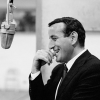
by Peter Wogan
Tony Bennett's song “I Wanna Be Around" (1962) pulls the listener in interesting directions. It contains Ralph Sharon's playful piano notes, the cheerful C major key, and Tony Bennett's silky smooth voice--yet the lyrics are all about vengeance and deriving joy from another person's suffering. As Bennett sings, “And that's when I'll discover that revenge is sweet/As I sit there applauding from a front-row seat/When somebody breaks your heart like you, like you broke mine." Studies show that ...
Continue ReadingHave A Holly, Jazzy Christmas

by Kurt Ellenberger
In my music history classes, particularly in November and December, students have often asked me about the relationship between jazz and Christmas: “Why are so many popular Christmas songs so jazzy?" It is a good question--indeed, many of the most popular secular Christmas music does have a jazz flavor, while a few are actually jazz. There is a direct connection between jazz and Christmas music, but to see what that connection is, we will first look at the history of ...
Continue ReadingThe Plaintive Sigh of a Sonic Doppelgänger: Why are Minor Chords Perceived as “Sad”? Part 3

by Kurt Ellenberger
Part 1 | Part 2 | Part 3 | Sad Song Survey Why Minor Chords and Minor Keys are Sad: Meet the Sonic Phantoms in the EtherTo begin our investigation into the hidden cause of our peculiar perception of minor chords and keys, we will listen to a trombone quartet playing a C minor chord. We might describe the sound as “rich" or “full" or some other adjective, but what exactly is it rich with or full of? ...
Continue ReadingThe Plaintive Sigh of a Sonic Doppelgänger: Why are Minor Chords Perceived as “Sad”? Part 2

by Kurt Ellenberger
Part 1 | Part 2 | Part 3 | Sad Song Survey IV. The Power of the Minor Chord and Minor Keys in Classical and JazzTo begin our discussion on what it is that makes minor chords sad, we will first listen to some examples of the use of minor chords and minor keys that demonstrate breathtaking power to convey deep emotional content. Here is “Siegfried's Funeral March" from Richard Wagner's Götterdämmerung, the fourth and final opera ...
Continue ReadingThe Plaintive Sigh of a Sonic Doppelgänger: Why are Minor Chords Perceived as “Sad”? Part 1

by Kurt Ellenberger
Part 1 | Part 2 | Part 3 | Sad Song Survey PreambleDaniel Levitin, in his popular bestseller entitled This is Your Brain on Music: The Science of a Human Obsession from 2006, characterizes the perception of the minor chord, which lowers the third of a major chord by a half-step, as follows: All of us, even without musical training, can tell the difference between these two [referring to a major and minor chord ...
Continue ReadingFrom Flock to Shepherd: The Evolution of the Drummer-Led Ensemble in Jazz

by Jon Sheckler
On November 15th, 2017 at 8:30pm, the Jazz Standard in jny: New York City had a line around the block. Starting from the dual entrance of the Jazz Standard jazz club and Blue Smoke restaurant in the direct middle of East 27th Street, the line of people stretched almost to Lexington Avenue, nearly 300 feet. Just after 9:00pm, audience members from the earlier set began to be released. The faces included some of the most prominent members of the New ...
Continue ReadingThe Great Hall: Perseverance Society Hall and the Beginnings of Jazz, Part 3

by Jon Sheckler
Part 1 | Part 2 | Part 3 Part 3: The Great Jazz HallPerseverance Society Hall was a multi-use facility for much of its history. But the chief use of the expansive interior was membership events. The design had even included a unique feature: a musicians' mezzanine was built at the back end of the hall. Just as benevolent societies had taken on responsibilities to the community in the wake of the defunding of the Freedmen's Bureau, the ...
Continue ReadingThe Great Hall: Perseverance Society Hall and the Beginnings of Jazz, Part 2
by Jon Sheckler
Part 1 | Part 2 | Part 3 Part 2: The BuildersBenevolence societies were staples of urban culture across the United States. New immigrants were encouraged to register at organizations which would help them find housing, employment, and serve as lenders and insurers. Known as benevolent societies or mutual aid associations, an element of these organizations still exists in the United States, most prominently in the Chinese community which proliferated new Chinese immigrants across the country while also ...
Continue Reading