Home » Jazz Articles » Jazz in Long Form » Make Him an Offer He Can't Refuse: Tony Bennett and Mafia Films
Make Him an Offer He Can't Refuse: Tony Bennett and Mafia Films
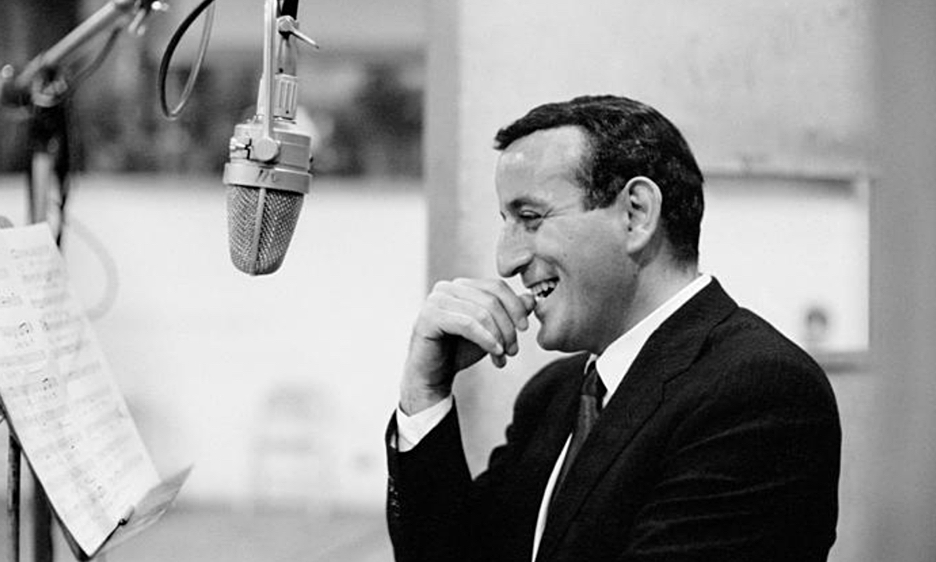

...listeners of songs like 'I Wanna Be Around' are often so swept up by the music that they largely disregard their incongruent lyrics.
Studies show that listeners of songs like "I Wanna Be Around" are often so swept up by the music that they largely disregard their incongruent lyrics.1 To take an extreme example, many listeners apparently do not fully realize or care that the mega hit "Mack the Knife" tells the tale of a gruesome serial killer, since they are more captivated by the song's happy-go-lucky music, as in the versions by Louis Armstrong (1956), Bobby Darin (1959), and Ella Fitzgerald (1960). Of course, compared to a murder ballad like "Mack the Knife," the negativity of "I Wanna Be Around" is quite mild. The song "Goody, Goody" offers a closer parallel, especially the swing versions by Benny Goodman (with vocals by Helen Ward, 1936) and Ella Fitzgerald (1957). In both songs, joyful music distracts from lyrics expressing delight at an ex-lover getting their comeuppance when someone breaks their heart. Not coincidentally, the person who wrote lines for "Goody, Goody" like "you had it coming to 'ya... you rascal, you" was none other than Johnny Mercer, the co-author with Sadie Vimmerstedt of "I Wanna Be Around."
The sting of the lyrics in such songs can also be diminished by other factors. For example, "Goody, Goody" contains a humorous refrain that sounds like a young child's taunt. And when the primary focus is high-energy dancing, as it often was for "Goody, Goody" during the 1930s, less attention is paid to the lyrics. Listeners can also downplay lyrics if they significantly differ from the artist's other well-known songs. In Tony Bennett's case, his 42 other hits from the 1950-60s contained many positive messages about life and romance, and the ones focused on breakups did not feature vengefulness. Bennett's positive persona, then, could easily overshadow the anomalous, spiteful aspects of "I Wanna Be Around."2
It gets even more interesting when you add film to this mix, such as research on the dissonant pairing of joyful, nostalgic soundtracks with violent scenes in films directed by Quentin Tarantino. 3 This research can be taken a step further, though, by examining how a song resonates with the entire genre of mafia films.4 A good example is the way Tony Bennett's "I Wanna Be Around" plays in the background while Marlon Brando ice skates in a long, poignant scene in the cult classic The Freshman (1990).
In the context of this film, "I Wanna Be Around" conveys the heartbreak and desire for revenge that Brando's character, presumed mafia don Carmine Sabatini, would feel if Clark Kellogg (Matthew Broderick) were to turn him over to the FBI agents investigating him. This resonance works well because loyalty is a core issue in The Godfather (1972) and the entire mafia film genre that The Freshman simultaneously parodies and honors. Like a mafia don, the song threatens retribution for betrayal, which is to be exacted by an unnamed third party ("A somebody who will swear to be true/As you used to do with me/Who'll leave you to learn/That misery loves company, wait and see").
Zooming out, notice how the musical disjuncture in "I Wanna Be Around" resembles the sharp contrast in mafia films between the polite way mob bosses talk versus their organization's brutal physical violence. To take a couple famous examples, characters in The Godfather use the euphemistic phrase "make him an offer he can't refuse" to indicate a death threat and "sleeps with the fishes" to refer to someone who has been murdered and dumped in water. Similarly, bosses in Martin Scorsese's films use mild terms like "straighten him out" to refer to acts of violence. 5 And, in The Freshman, Sabatini rejects Clark's characterization of his work as a "scam." Sabatini says, "This is an ugly word, 'scam,'" and then replaces that judgmental term with the more tactful, normalizing word "business." Like these euphemistic mafia styles of speech, "I Wanna Be Around" veils harsh realities under an elegant surface.
The reference to Mussolini in The Freshman presents an even more complicated example of indirect speech. Shortly after Clark first meets Sabatini in his Old World Social Club in Little Italy, Clark asks, "You know, that picture on the wall back there, that wouldn't by any chance be Mussolini?" Sabatini wryly responds, "It ain't Tony Bennett," and then he cracks a smile and his nephew Vic (Bruno Kirby) and Italian-speaking waiter (Joe Ingoldsby) burst out laughing. Like a euphemism, Sabatini's joke politely sidesteps discussion of his feelings about Mussolini. And his joke lands well due to the absurdity of comparing Mussolini, a fascist dictator, with Tony Bennett, a sweet crooner. Viewers who know Bennett's biography—U.S. Army Infantryman in Europe during WWII, later a pacifist and civil-rights advocate, with a life-long reputation for kindness—would find the Mussolini comparison even more absurd. 6 However, Clark, being young and naive, presses the point by asking Sabatini whether they keep the Mussolini picture on the wall for political reasons. Sabatini denies this, explaining that some older members of the club simply keep the picture there for sentimental, nostalgic reasons, and then he changes the topic. Even by the end of the film, we never find out whether Sabatini is actually connected with Italian fascism or mafia violence.
The song "Mona Lisa" continues to play with these questions about whether surface appearances fully represent underlying realities. Early in the film, Clark and Sabatini's daughter Tina (Penelope Ann Miller) dance in the living room to Nat King Cole's song "Mona Lisa" (1950) directly under the gaze of the original Da Vinci masterpiece—which Tina says her father took from the Louvre because he felt bad about it sitting behind all that thick glass. Awe-struck, Clark is not sure what to make of Don Sabatini and Tina, similar to the way Nat King Cole in the song isn't sure what to make of Mona Lisa ("Do you smile to tempt a lover, Mona Lisa? Or is this your way to hide a broken heart? ... Are you warm? Are you real, Mona Lisa?"). The film circles back to this song in a penultimate scene where Clark and Tina dance again to "Mona Lisa," this time sung live by Bert Parks. Tina now tells Clark that she'd like to spend a night in his dorm room, and Don Sabatini tells him, "I meant everything I told you," which must have included saying he's like the son he never had. So we find out it was not all just a con game; Don Sabatini and Tina actually developed strong feelings for Clark. To answer Nat King Cole's questions, Mona Lisa is warm and real, after all.
In other words, through certain songs and mafia speech mannerisms, The Freshman plays with tricky questions about whether you can trust surface appearance.7 The upshot is that it's worth considering the way music resonates with an entire film genre—and it's a pleasure to hear Tony Bennett sing while Marlon Brando gracefully skates around an ice rink.
This article was co-written with David Sutton.
Endnotes
[1]For studies about listener reactions to incongruent music, see Yiqing Ma, et al., "Lyrics and melodies: Do both affect emotions equally?," Musicae Scientiae, 2006, and Kazuma Mori and Makoto Iwanaga, "Pleasure generated by sadness: Effect of sad lyrics on the emotions induced by happy music," Psychology of Music, 2014. On the history of murder ballads (from European origins through American folk, blues, and country) and their connection with male dominance, see Daniel Newman, "Murder ballads and death in song," Australian Feminist Law Journal, 2020.??[2]Tony Bennett's pre-1958 hits can be found here. His later hits can be found here. A possible exception to the rule about Tony Bennett's lack of vengeful song lyrics could arguably be "Cinnamon Sinner" (1954), which clearly condemns a woman ("Satan's sister wearin' a disguise"). However, even this song does not threaten the ex-lover with her eventual comeuppance. For a more disturbing case where an artist's persona and live performances reduce attention to the lyrics, see Laura Sizer and Eva M. Dadlez, "Why, Delilah? When music and lyrics move us in different directions," Philosophical Studies, 2024. It's also worth noting that, for some fans, the lyrics to a negative song could elicit extra scrutiny and even rejection, precisely because they diverge so sharply from the artist's other songs.??
[3]On music-film incongruencies, see David Ireland, "Deconstructing incongruence: A psycho-semiotic approach toward difference in the film-music relationship," Music and the Moving Image, 2015. On Tarantino film music, in particular, see Lisa Coulthard, "Torture tunes: Tarantino, popular music, and new Hollywood ultraviolence," Music and the Moving Image, 2009.??
[4]To be sure, mafia films do not accurately represent the rich breadth of Italian-American communities.??
[5]Christoph Schubert, "Suspenseful indirectness in gangster film dialogue: A pragma-stylistic study of Scorsese's mob bosses," Language and Literature, 2025. Schubert convincingly shows that indirect language is used to create suspense in Scorsese films, since viewers must wait to see what will happen to the intended target of such language. By contrast, The Freshman, as a mafia comedy with a different director (Andrew Bergman), never resolves the suspense by actually showing violence on screen.??
[6] On Bennett's biography and positivity, see Christine Passarella's article "Tony Bennett: A Hero's Journey in Authenticity" in allaboutjazz.com. Among other things, this article captures Bennett's ethical disgust with racial and ethnic discrimination, such as his punishment for trying to eat with an African American friend in the Army's segregated mess hall during WWII, the discrimination he experienced as an Italian American, and the Jim Crow treatment he witnessed against musicians like Nat King Cole and Duke Ellington. For these reasons, Bennett joined Martin Luther King Jr.'s civil rights march from Selma to Montgomery in 1965. When asked about his legacy in "A Fireside Chat With Tony Bennett," in an AAJ interview, Bennett said he shared Count Basie's philosophy: "All I wanted to be is known as a nice guy."??
[7]Another tricky question is whether "I Wanna Be Around" partially represents Clark's repressed wish for something bad to happen to Sabatini, so Clark can escape the terrible predicament of having to betray Sabatini or risk going to jail. This would explain why, as we hear "I Wanna Be Around" prominently playing in the background, the camera adopts Clark's perspective for much of the scene, standing with Tina at a second-floor railing and serenely watching Sabatini ice skating below with an unnamed woman. Viewers who only focus on the music, Bennett's voice, and the refrain "I wanna be around" (rather than the rest of the lyrics) may mainly feel that this is a love song that captures the romance between Sabatini and this woman. As we have said, incongruent songs like this are particularly susceptible to multiple interpretations. Even with these various interpretations, though, presumably "I Wanna Be Around" is still primarily associated with Sabatini, due to his direct identification with Tony Bennett by age and Italian-American ethnicity, as well as the song's focus on loyalty and revenge.??
Tags
Jazz in Long Form
Tony Bennett
Peter Wogan
Louis Armstrong
Bobby Darin
Ella Fitzgerald
Benny Goodman
Helen Ward
Nat King Cole
Comments

PREVIOUS / NEXT

Support All About Jazz
 All About Jazz has been a pillar of jazz since 1995, championing it as an art form and, more importantly, supporting the musicians who make it. Our enduring commitment has made "AAJ" one of the most culturally important websites of its kind, read by hundreds of thousands of fans, musicians and industry figures every month.