Home » Jazz Articles » Chats with Cats » The Sync Director: Eric Meyers
The Sync Director: Eric Meyers

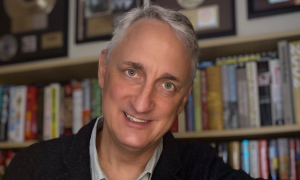
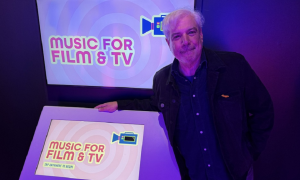
Courtesy Tim Aarons
Put as much out there as possible and don't underestimate the value of relationships. This business runs on trust and familiarity more than almost anything else.
—Eric Meyers
At first, they were small—a couple of dollars here and there. But over time, they grew. I'm not talking retirement money, but enough to pay some bills and earn back my investment.
It turns out my music had landed in hundreds of TV programs, and I had no idea. Shows like MTV Cribs, Young Sheldon, Chicago Fire, and Here Comes Honey Boo Boo, to name a few. Most of the time, it plays underneath dialogue, barely noticeable. Other times it serves as "elevator music" in scenes set in grocery stores, doctors' offices, or—most memorably—a car wash in Breaking Bad. Apparently, my music has been deemed ideal waiting-room material.
Hurt feelings aside, I recouped my investment—and gained a nice addition to my bio.
What surprised me most was how few musicians even knew about this avenue, known as "sync" (short for synchronization), which pairs music with visual media. For independent artists, it can be one of the best ways to generate income from music that's already been produced.
The sync world has changed dramatically in recent years—first with the rise of online libraries, and now with AI, which has become an increasingly adept composer in its own right.
To get a clearer picture of where things stand today, I spoke with Eric Meyers, Sync Director at Gramoscope Music and their new division Viralnoise, in Los Angeles. Full disclosure: I've worked with Gramoscope as a staff composer and have written for dozens of shows for them. They're on the front lines of sync, and Mr. Meyers offered a valuable perspective on the current state of the industry.
About Eric Meyers
Eric Meyers is a composer and creative professional with over a decade of experience across music production, publishing, and sync licensing. A Los Angeles native and graduate of Cal State Northridge's Music Industry Studies program, Eric built his early career working with multi-platinum artists and producers as Studio Manager and Lead Engineer for The Chemists, an entertainment company founded by former Interscope executive Garnett March. He went on to develop deep expertise in composing, publishing, and music production at several of LA's top music houses before joining Gramoscope Music as Creative Director, where he has become an integral part of the company's creative and business operations. Eric also serves as COO of Viralnoise, Gramoscope's royalty-free music subscription platform, helping lead the company's mission to make Hollywood-grade audio accessible to creators everywhere.All About Jazz: Tell me about your background and how you got into sync.
Eric Meyers: I came up playing in bands, composing, and doing a lot of studio engineering work. I always had a strong interest in business, though, and when the opportunity arose to jump into music publishing and sync, I was immediately fascinated by how it complemented my love of creating. I especially liked how composing for media allows you to create in countless styles and genres, which keeps me growing as a creative. I was fortunate enough to learn from some really great mentors along the way, including Alec Puro (founder of Gramoscope and Viralnoise). We've spent years cultivating relationships, working on really cool projects in almost all media formats, and curating a unique catalog of music that continues to grow every day.
AAJ: How does the process work when you're asked to provide music for a show? Who contacts you, and how much direction do they provide?
EM: It usually comes through a music supervisor or sometimes directly from a network or production company's in-house music team. The direction really varies depending on the project. Sometimes they come to us with a very specific brief, a reference track, a mood board, or a genre. Sometimes, it's much more open-ended, and they trust us to bring ideas to the table. Many of the clients we work with have been coming to us for years, and we have developed a shorthand for creative terms and styles over time. Our music supervisor, Tim Aarons, has worked on thousands of TV episodes, so we speak that language fluently and can translate even vague creative notes into the right music fast.
AAJ: Is everything made in-house with composers on your staff?
EM: We have a core team in-house that composes everything. Alec routinely scores exciting film projects; for example, he and I have recently landed a few theme songs for TV shows we're working on. What really sets Gramoscope apart is our roster of 50-plus composers from around the world. We have folks in the U.S., Australia, Ireland, Hong Kong, South Africa, Japan, and more. The blend of expertise we have access to is very diverse and highly skilled. The strength of our composing team allows us to create quality music in almost any genre, any time. We aim to release at least five to ten brand new albums of music per month, and that is only possible when you have a great team to make it happen.
AAJ: Are there certain styles that are more requested than others?
EM: Reality TV drives enormous volume, and that world tends to need a lot of dramatic underscore, tension cues (usually hip hop), and pop songs. Shows like Real Housewives and Vanderpump Rules need current-sounding music for every emotional beat to help drive the story. On the scripted and film side, we get pulled toward everything from quirky, organic indie music to horror to full-blown orchestral pieces. The diversity of what gets requested is part of what keeps things exciting. We're not locked into any one lane.
AAJ: How do musicians and composers get paid for their work?
EM: It's a combination of upfront fees for creating the music and backend performance royalties that come in whenever the music airs on TV through the performing rights organizations like ASCAP, BMI, and SESAC. That royalty is paid every time the content broadcasts so over time, composers can hopefully build up a steady revenue stream.
AAJ: There is now a new division of Gramoscope that offers royalty-free music. Tell me how it works and what makes it different.
EM: That's Viralnoise, and the core idea is simple: we built up this incredible premium catalog over nearly two decades of scoring for TV, film, and major brands, and for the first time, we're making that same music available to individual creators through an affordable subscription that starts at $8.99 a month. The thing that genuinely sets it apart from competitors like Epidemic Sound or Artlist is our track record. This isn't generic stock music built for creators, it's the actual music you've heard on your favorite network TV shows, ads, films, and more, but repackaged in a way more accessible way for creators of all skill levels and sizes. For example, you can access the film score that Alec Puro composed for All Nighter, which starred JK Simmons and Emile Hirsch. No other royalty-free platform I know of offers real film scores like that. Also, the licensing model is simple and easy to understand, avoiding the pitfalls and complexities of traditional music licensing that can act as a roadblock for creators to access premium music. We guarantee our music is copyright-safe, so creators never have to worry about copyright strikes on their channels.
AAJ: What does the Viralnoise catalog actually sound like? Is it niche or broad enough for any creator to find what they need?
EM: That's one of the things we're most proud of. Because our catalog was built over nearly two decades of scoring for such a wide range of projects, the breadth is pretty extraordinary. You can hear our range from a tense, dramatic underscore placed on Real Housewives to an indie film score like Alec's work for All Nighter, to hard-hitting action and trailer music, to pop music for fashion and vlog content, to intriguing podcast sounds, all in one place. We also have 30,000-plus premium sound effects, so creators can build out a complete sonic palette from a single subscription. New albums drop every week, and the catalog keeps growing, so whether you're making a TikTok, scoring a short film, or producing a podcast, there's genuinely something there for you.
AAJ: How has AI changed the sync world?
EM: It's a serious conversation happening at every level of the industry right now. On the positive side, AI is genuinely useful as a discovery and workflow tool. Metadata management and other clerical tasks have benefited from the use of AI tech. We've built an AI-powered search tool into Viralnoise that helps users find the music they're looking for faster. In that way, it's a tremendously helpful thing. The concern is on the side of creation and production, where some worry AI-generated music could undercut rights holders. That said, fully AI-generated music still can't be copyrighted under U.S. law, which means networks and studios generally won't touch it...at least so far. For professional sync placements, human-composed music with a clear chain of rights is still the only viable option. Also, if we're being honest, I do still believe that most creatives can tell the difference between real, human-crafted music and lesser value AI-generated music. 99% of the time, I think what humans create still resonates more and will rise to the top of any search our clients are doing.
AAJ: What is your advice to musicians who want to get into this side of the business, whether with their own music or as a composer for hire?
EM: Put as much out there as possible and don't underestimate the value of relationships. This business runs on trust and familiarity more than almost anything else. Work begets work, and the momentum you build from saying yes to smaller opportunities is what eventually opens the bigger doors. If you're trying to get music into a library, study what's actually being placed by them and make sure your recordings are clean, well-tagged, and delivered professionally. Also, make sure you are cultivating relationships with your peers. I personally have learned so much and continue to grow because I surround myself with people who are all driven to succeed and continue pushing the boundaries of their own creativity.
AAJ: What was your biggest placement, or one you are most proud of?
EM: The NBA 2K series is one we're really proud of. We've been providing music for that franchise for over a decade now, from 2K16 all the way through the current season. It's a massive global audience and having your music woven into the fabric of a franchise that millions of people engage with year after year is genuinely special. On the scoring side, Alec's work on Black Summer for Netflix is something we're all proud of. He created a dark, completely original sound that Stephen King himself praised publicly when season one dropped. Alec also has some really exciting films coming out this year, including New Years Rev, which was developed in tandem with Green Day. It's inspired by the band's early days on the road and features a bunch of their songs. We're all excited for that one to come out!
AAJ: What does the future look like for sync?
EM: The traditional sync market and entertainment in general are facing some real headwinds. The recent writer strikes, AI, and global instability all play a part. Streaming services are also struggling to figure out their next moves as their sector of the entertainment industry enters a more mature phase. Overall, though, we see the bigger picture as positive and exciting. There are millions of content creators worldwide, and I recently read that the creator economy is valued at nearly $51 billion in the U.S. alone. Creativity and storytelling, thankfully isn't going anywhere, and all of those stories will still need music to help drive them. All in all, we know that exciting media will still continue to be made and always need the genuine touch of talented creatives to make it truly shine.
Get 'And the Crowd Goes Mild' by B.D. Lenz
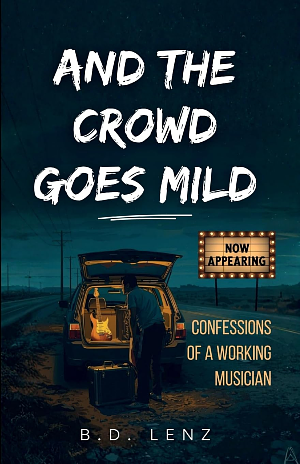 And the Crowd
Goes Mild, B.D. Lenz’s debut collection of essays on music, mindset, and the realities of a life in music. Blending humor, honesty, and hard-earned perspective, these reflections capture the quiet victories, absurd moments, and personal growth that come with chasing a creative path. And the Crowd Goes Mild is available on Amazon (paperback and Kindle) and most online booksellers.
And the Crowd
Goes Mild, B.D. Lenz’s debut collection of essays on music, mindset, and the realities of a life in music. Blending humor, honesty, and hard-earned perspective, these reflections capture the quiet victories, absurd moments, and personal growth that come with chasing a creative path. And the Crowd Goes Mild is available on Amazon (paperback and Kindle) and most online booksellers.
Tags

PREVIOUS / NEXT

Support All About Jazz
 All About Jazz has been a pillar of jazz since 1995, championing it as an art form and, more importantly, supporting the musicians who make it. Our enduring commitment has made "AAJ" one of the most culturally important websites of its kind, read by hundreds of thousands of fans, musicians and industry figures every month.