Home » Jazz Articles » Chats with Cats » The Jazz Learning Innovator: Stephanie Matthews
The Jazz Learning Innovator: Stephanie Matthews
I think I want people to feel that they have experienced something that was one of a kind, unique, and transformative.
—Stephanie Matthews
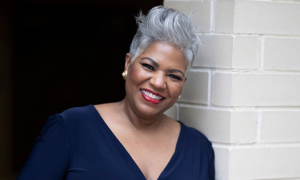
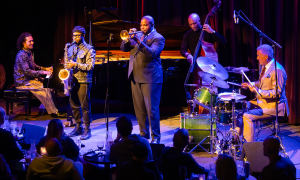
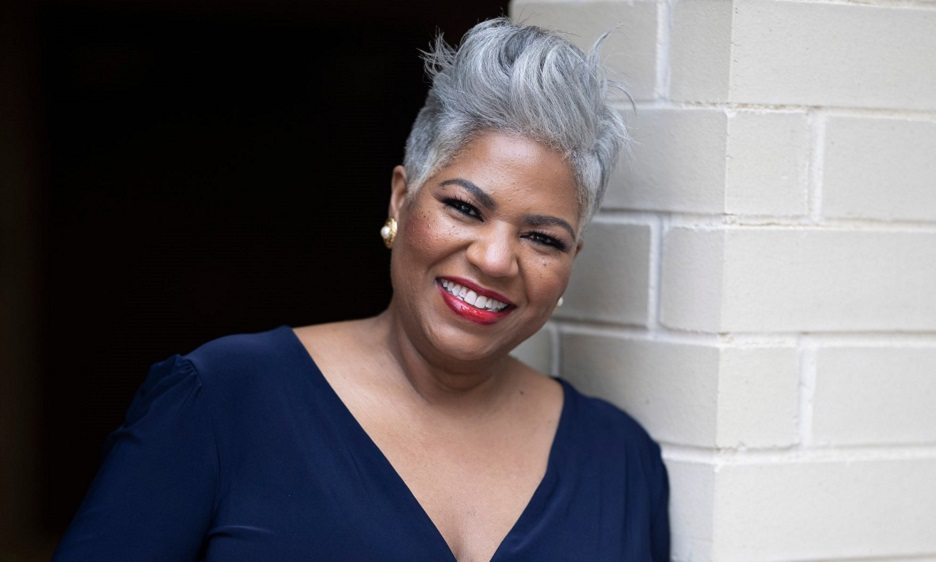
Stephanie Matthews is at the center of that shift. As Executive Director of A Tribe for Jazz, she has built a platform that approaches jazz not only as an art form, but as a framework for learning—one that values curiosity, emotion, and creative expression alongside technical skill.
Through initiatives like Jazz Lab and An Exploration of Emotions and Color through Jazz Music, Matthews explores how jazz can function beyond performance, serving as a tool for education, collaboration, and personal well-being. Her work reflects a broader effort to rethink how people engage with the music, particularly in learning environments.
For musicians and educators alike, organizations like A Tribe for Jazz also raise important questions about how jazz is taught, how communities are built around it, and how the next generation of artists might be shaped by more holistic, creative approaches.
To learn more about this work, I spoke with Stephanie Matthews about her background, her approach to reimagining jazz education, and how her organization is helping expand the way we think about music, learning, and community.
About Stephanie Mathews
Stephanie Matthews is an award-winning photographer, creative producer, and Executive Director of A Tribe for Jazz, with more than two decades of experience at the intersection of arts, education, and innovation. She is known for advancing equitable access to the arts through bold, cross-sector initiatives that connect creativity with community impact.Under her leadership, A Tribe for Jazz has expanded its reach through inclusive programming and strategic partnerships across education, healthcare, and corporate sectors. She is the creator of Jazz Lab, a pioneering initiative that merges jazz and STEM to equip youth with critical 21st-century skills, and has led programs that use the arts to foster emotional intelligence, strengthen workplace culture, and deepen community connection.
In addition to her leadership work, Stephanie is an accomplished creative producer whose projects span documentary film, live performance, and national campaigns. Her work has been recognized with the 2025 Columbus Business First Diversity in Business Award, and she is a recipient of the Jim Arter Arts Educator Award, Jazz Hero Award, and the Paul E. Young Outstanding Achievement in Education Award.
All About Jazz: Tell me about A Tribe for Jazz and what gap it fills within the community.
Stephanie Matthews: Sure. So, A Tribe For Jazz is a Columbus-based 501(c)(3) nonprofit, and our mission is around preserving the legacy and advancing the future of jazz. We do that through live performances, education, community engagement, as well as visual storytelling—we're visual storytellers at our heart. That comes from my background as a Creative Director.
There are a couple of jazz organizations here in town, and we're like that small, mighty one. What we do is we bring in those rising stars in jazz music, these incredible improvisers, folks from all over the nation, as well as global talents, who are just a different sound than what we normally get here in Columbus, Ohio. I'm not sure how much you're familiar with it, but Columbus usually gets a lot of big band American songbook, smooth jazz, contemporary, and the artists that we're bringing in are just a shock to the market. It's a wake-up to the market.
We do that mainly because we want to have these interesting conversations. How do you spark a really interesting conversation? How do you create greater access to the arts? One way we do that is by bringing in these younger talents, these storytellers, to help do that.
Some of the other things that we're known for, in addition to our performance series, from an educational perspective, is we use music as a bridge to everything from professional development to emotional wellness to STEM and STEAM learning. The power of jazz music is undeniable when you look at it from a neuroscience perspective. We're always talking about how jazz music, in particular, can help reduce anxiety, foster creativity and curiosity, and all these things. We want to pull all of that apart. Jazz is so much more than performance, and so we also look at the science side of things.
In regard to our programming, from an educational standpoint, we have our Jazz Lab program, which is our premier education program. Jazz Lab uses the principles and values of jazz music to teach STEM. Everything starts with the music. Jazz Lab is a program that started in the after-school space and travels with its own trio of professional musicians who teach the sciences of sound.
At the very core, when you're thinking about how jazz and STEM connect, it is physics. Music is sound, and sound is physics. So right there, we can start talking about vibration, pitch frequency, resonance, timbre, and energy. And, we can start teaching young people about those things and the fact that STEM, science, tech, engineering, math, and arts are all around you all the time.
So, the Jazz Lab program has a Science of Sound lab. We have an Improvisational Design lab, which is led by an engineer, where kids use everyday materials to build instruments and do collaborative sprint design exercises. There's virtual reality music making with an inside VR—that's with our partner COSI. Jazz also connects to beat-making; it connects to coding; it can connect to artificial intelligence and world-building.
I know that's kind of controversial for some people who run music because there's that whole dichotomy behind STEM and music. We're not trying to take children away from traditional music or jazz education. In fact, we're introducing kids who have never had experiences with instruments to instruments in a hands-on way, through exploration in our programs. It's really exciting. It's been heavily funded by Battelle, the city of Columbus, and now Meta, as well as Franklin County. We're going to take that statewide, and that's exciting.
But we can also branch jazz into emotional wellness and rest. We have a partnership with Exclusive Excursions and have created something called the Nap Concert. The Nap Concert uses a jazz musician to play improvised music to lull people to sleep. People are on air mattresses resting, doing this incredible NASA power nap, which is like 20 to 26 minutes. The NASA power nap is something backed by science and is introducing new people to jazz music, but also being really thoughtful about how we rest and how we counter burnout. We use music as a healing tool.
AAJ: That sounds amazing. I love jazz, and I love naps.
SM: [laughs]
AAJ: Who's your audience? Is it students? Is it the community at large?
SM: Our audience is vast. At our shows, for instance, we see everyone from young people—because we're always engaging with younger audiences—high schoolers, young kids, and people all the way up into their 90s. We get influencers, we get technologists, and we get people from vast socioeconomic and cultural backgrounds. That looks a lot different than what other organizations may be doing.
Here in Columbus, folks come out for the Jazz & Rib Fest. Then, there are the folks who come out for the big band shows. Both of those audiences, holistically, look a lot different than what we bring. Our audience is culturally and socioeconomically very diverse, as well as in age and gender.
AAJ: When you talked about how music can help people cognitively, you used the words "specifically jazz." What is it about jazz that makes it so beneficial?
SM: I'm not a medical professional by any means, but as far as I understand the neuroscience, it's the complexity of jazz that really opens up something in the brain for people.
The reason we even went down that path was because we held a cinematic performance film with saxophonist Jon Irabagon, who was the first person we ever worked with. I remember listening to John's music, and the complexity of it, and I started seeing shapes, colors, and patterns. I'm like, what is this? So, I went down that rabbit hole into the neuroscience to understand that that was synesthesia. But then what are other people experiencing, and what's happening in the body when you're experiencing jazz music?
We understand the cultural aspect, right? We understand the historicity of jazz and how it fosters resilience, community, social justice, freedom, and notions like that. But then there's also this other aspect, and I'm like, wow.
AAJ: Where did you grow up, and what was your own connection to jazz?
SM: So I grew up here in Columbus, Ohio, and as a middle schooler, I would spend time at my grandmother's house after school. She played all the jazz masters. She had one of those old-school consoles in her living room, and it was always there playing everybody from Louis Armstrong to Ella Fitzgerald and Etta James, and then there would be John Coltrane. I just became more aware of this music, and it was always a part of our household.
So, I fell in love with Louis Armstrong, and in fifth grade, I picked up the trumpet. My brother followed suit, and I played the trumpet up through the 12th grade. I love brass, but I wanted to be a drummer, honestly. I thought I wanted to be a drummer, but my left side is a little weak. But I've always loved music, the discipline, the collaborative aspects, and I think I've always been a jazz fan. My range and taste in music are very wide, but we always had jazz as a part of it.
AAJ: How would you define your role in what you do? Are you an educator? Are you a Director? Are you a community builder? All of the above?
SM: Gosh, thank you for that question. I'm probably going to stumble on this a little bit [laughs]. Well, technically, I'm the Executive Director of this nonprofit, and that's a pretty hefty role, but I would absolutely say that I am an arts educator and a community builder. That's the bulk of what it is that we do. We're really deep in partnership with a wide range of organizations and consistently working on how to create greater access to the arts and bring more people into this work. Last year, we received a diversity award from Columbus Business First for creating greater diversity in the arts.
Yeah, you know, titles are funny, right? They're tricky. But I would probably say that that's how other people see me, too.
AAJ: Right. You have a title, I just wanted to know what that looked like in practice.
SM: So, in practice as an Executive Director, I'm doing everything from building partnerships to overseeing and executing programming. We're in the middle of Jazz Appreciation Month right now, with a National Jazz Day coming up. So, performances are coming up, and the logistics are a heavy part of my work. And you know, building out our name in the community and outside of Ohio. We're working to do that as well. I oversee all of the aspects of what it is that we're doing, and I'm definitely a hands-on type of leader. So you'll see me on the ground at Jazz Lab. I may not be facilitating, but I'm bringing in stakeholders, having them tour the experience, and it's always building.
AAJ: You mentioned earlier how you're heavily into diversity and inclusion. What does that look like in what you do?
SM: Our work in the education space has always been to create great opportunities for children from underserved and under-resourced communities. When we started, we were in the afterschool space, and now summer programming. We're capturing those children who may not have a lot of access to cultural experiences, arts, or STEM programming in their schools. So we're able to provide those enrichment opportunities.
In addition to that, we push our work to the outlying counties. Within Ohio, there are 88 counties, and a lot of Ohio is rural. So our Jazz Lab program has been able to go to Licking County, to Fairfield County, and we're able to... Here's the reality. The kids in rural towns are facing the same challenges as children in the inner city. We know that, and so we bring Jazz Lab to them also.
AAJ: So, you're spreading this out beyond Columbus, then?
SM: Oh yeah, absolutely. Specifically, the Jazz Lab program was in Franklin, Delaware, Licking, and Fairfield Counties. So it's spread out.
With A Tribe for Jazz, the focus of our performance programming is here in Columbus, Ohio, but we've got that really strong relationship with New York and Chicago because of those artists we're bringing in. We think of ourselves globally because you can reach anyone, anywhere. We've got folks overseas who are following the work of A Tribe for Jazz because we've done series where we've brought in Israeli musicians like Avishai Cohen, Yonathan Avishai, and Roni Eytan. Then there's the series that we're doing featuring women: Kalia Vandever, Devon Gates, and, for International Jazz Day, we're featuring Milena Casado.
AAJ: What are the biggest challenges in building and sustaining this kind of nonprofit organization?
SM: Well, that's also a great question. The nonprofit landscape over the last several years shifted, right? We all know that. A lot has to do with the current administration, and I think when we came into the space five years ago, we came in with an entrepreneurial mindset. For us, it was, how do we not keep dependent? We have to access grants; we compete for them. But how do we create programming that allows us to be more sustainable? For instance, Jazz Lab is funded, but people, organizations, and schools pay for it to come in as well. It's a revenue generator. Our nap concert series that we do, that partnership is a revenue generator outside of grants. It's constantly thinking about that.
We're constantly looking at our differentiator and how we can move into different spaces in the market that may not be occupied. For instance, we very much want to take our emotional wellness programming, our exploration program, which is around social-emotional learning capacity building, and Jazz Lab, into the social justice system. There are a lot of people who stay away from that lane, but the reality is it's wide-open, and those young people need us too.
AAJ: What do you ultimately want people to take away from your program?
SM: I think I want people to feel that they have experienced something that was one of a kind, unique, and transformative. Maybe that's a tall order, but I think we do a really great job with that. From the performance side, we're bringing in dynamic musicians who are not known to this market. The audience is there because they want to experience something new, and if they're open to that, they can be transformed, and so there's that.
From the educational side, our approach using jazz music as a gateway into learning is completely fresh. So there's a lot of excitement and energy around it, and that inspires people. Stakeholders come to see the program, and they're like, "Man, where has this been? I wish this were around when I was a child."
AAJ: Are there any new initiatives or programs coming that you want to tell me about?
SM: Yeah, actually, on May 7, we are doing an experience called Sonic Motion. It was funded by the Ohio Arts Council, and it is a fully improvised experience with a jazz musician, an electronic artist, digital art being projected, and live dance being performed throughout the space. The idea is, how do we get audiences to come in and relinquish this idea of what a performance is?
There's very little seating. They walk through, and they experience sonic motion. In different areas of the room will be these different performers, all being inspired by one another, doing these 10-minute vignettes. Then there's silence for people to be able to process. Then they come back, and the experience starts again, but it's totally different because it's all improvised. Nothing will be the same. It just gives people something different to think about and to experience all the arts in a new, interesting way.
Tags
Comments

PREVIOUS / NEXT

Support All About Jazz
 All About Jazz has been a pillar of jazz since 1995, championing it as an art form and, more importantly, supporting the musicians who make it. Our enduring commitment has made "AAJ" one of the most culturally important websites of its kind, read by hundreds of thousands of fans, musicians and industry figures every month.