Home » Jazz Articles » So You Don't Like Jazz » 5 Epic Jazz Songs That Forever Changed the World
5 Epic Jazz Songs That Forever Changed the World
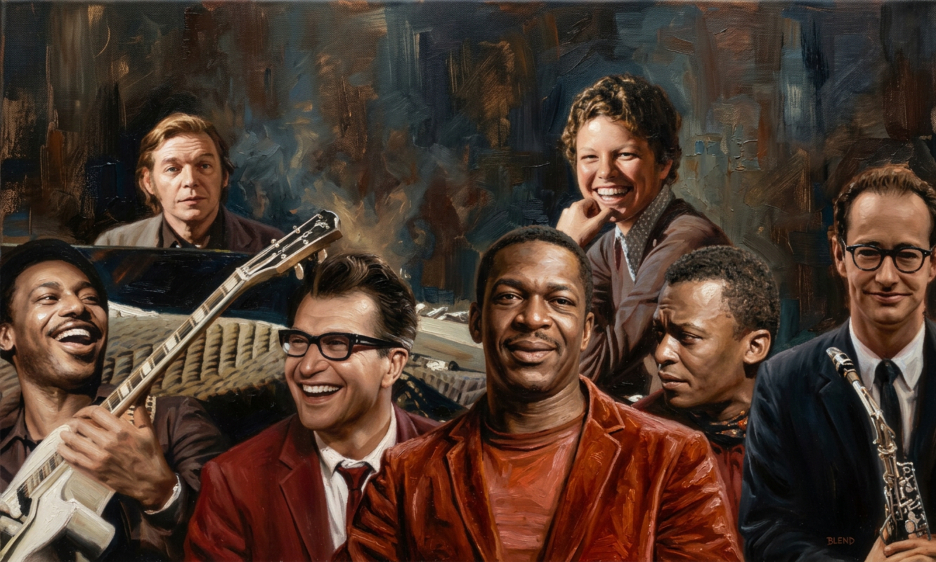
Courtesy AI

Take Five—The Dave Brubeck Quartet (1959)
The evocative fluid tone of Paul Desmond—that he himself once described as sounding like a dry martini—hooks the listener from the outset. "Take Five" was one of those rare instances when the spark of "it" happens, tastes shifted on a massive scale, new horizons open, and the musical world was suddenly different. Dave Brubeck had already been on the cover of Time Magazine—which in '54 was like breaking the internet, except the whole country actually paid attention for years instead of just a few days. But "Take Five" took it to the next level.What happened astonished everyone, including Brubeck himself. "Take Five" became the first jazz instrumental single to sell a million copies and cross over to the pop charts, while the album Time Out (Columbia, 1959) became one of the best-selling jazz LPs of its time, and over time was eventually certified double platinum with sales exceeding two million.
It is hard to believe now, but "Take Five" was originally seen as a "throwaway" track designed to showcase the now-legendary rhythmic skills of drummer Joe Morello. Morello was captivated by 5/4 time and would famously work it into his solos on tour, to the delight of audiences.
It is worth mentioning that Morello was actually a child prodigy on violin, performing as a soloist with the Boston Symphony Orchestra at age nine or ten, and again three years later. A couple of years after that he met his hero, Jascha Heifetz. He recognized he would never match that "intense and shimmering" sound and promptly gave up the violin—classical music's loss became jazz's gain.
After a State Department tour through Eurasia, Brubeck became fascinated by the unusual time signatures he encountered. Time Out was an outgrowth of that, yet interestingly he wrote every song on the album except "Take Five." Morello had been hounding Brubeck for about a year to write something in 5/4, when finally Paul Desmond stepped in and announced he would.
Ironically, the first day in the studio "Take Five" produced take after take that fell apart when someone would lose the beat. After more than a dozen takes, producer Teo Macero finally called it quits. A week later they nailed the master in just two takes. Brubeck initially had difficulty soloing in 5/4, so he simply vamped rhythmically; Morello later called that vamping the glue that held the song together and kept him from getting lost.
When Paul Desmond's lifestyle and impulsivity put him in a financial squeeze, so he sold the publishing rights to "Take Five" to Brubeck for a relatively modest lump sum ($25,000—about $260,000 today). Over the years he watched as that half of the song generated millions of dollars. Fortunately, he did retain the writer's royalties, which now go to the American Red Cross.
So What—Miles Davis (1959)
If "Take Five" proved that the unconventional could lure the mainstream, Miles Davis' Kind of Blue (Columbia, 1959) demonstrated something more philosophically radical: that less is more. Bebop was built on a foundation of relentless complexity that demanded virtuosity as musicians navigated an obstacle course of chord changes and chromatic runs. Davis looked at this and saw a way out: freedom, feeling, intimacy, and connection. He posed the question, "So what if it's different? Less can be more.""So What" became his manifesto. By embracing modal jazz—emphasizing scales and open tonality rather than dense harmonic progressions—Davis invited his musicians to "play the notes in between." The result was an architecture built around silence, where each note carried the weight of intention. The iconic call-and-response between piano and Paul Chambers' bass became the template for sophistication itself: cool aesthetics emerged not from complexity, but from economy.
Kind of Blue transcended jazz and, over time, became one of the best-selling albums in any genre, influencing rock, pop, and hip-hop for decades. Its influence carried over through generations. The cultural message was unmistakable: in an age of relentless acceleration, there was profound value in stillness. Miles had authored a philosophy of space—literally turning his back on conventional expectations.
Given the iconic stature of the entire album, the story of its recording is all the more remarkable. Miles provided only sketches, modes, and some loose ideas. (Gil Evans quietly ghostwrote the atmospheric introduction to "So What," which perfectly embodied the album's vibe. Miles believed first takes were the best takes, because that's where the raw creativity lived. In fact, "So What," "Freddie Freeloader," and "Blue in Green" were all captured in a single take. The whole album was completed in just two sessions, totaling about nine hours.
A final tidbit: it was recorded at Columbia's 30th Street Studio, a former church dedicated in 1875 with soaring 50-foot ceilings. Affectionately nicknamed "The Church," the room was legendary for its rich, natural acoustics. Dave Brubeck's Time Out was also recorded there, along with a who's-who of greats: Leonard Bernstein, Billie Holiday, Duke Ellington, Dizzy Gillespie, Charles Mingus, Bob Dylan, Aretha Franklin, Pink Floyd, and many more.
My Favorite Things—John Coltrane (1961)
If "So What" whispered that less could be more, Coltrane answered with a shout of unbridled freedom—turning "My Favorite Things" into thirteen minutes of pure transcendence and joy. Few artists possess the audacity—or the spiritual conviction—to transmute a Broadway showpiece into a visionary prayer.When John Coltrane purchased a soprano saxophone from a pawn shop and chose to tackle Richard Rodgers' cheerful waltz from The Sound of Music, observers might have anticipated a novelty recording. Instead, he delivered an odyssey that fundamentally altered perceptions of what an instrument could express. Coltrane's technique, which he termed "sheets of sound," involved a torrent of notes that dissolved into a continuous wall of sound—unbounded ecstasy that transcended conventional melody. Julie Andrews' sunny optimism became something incandescent and overwhelming, a spiritual ascent rendered through sonic alchemy. The soprano saxophone, previously relegated to niche status in jazz, emerged as a formidable lead voice capable of rivaling the tenor in expressive power.
Unlike the two previous selections, "My Favorite Things" did not captivate a wide audience in the same way, but it is included here because of the transformational influence it had upon rock musicians and fusion pioneers. Carlos Santana and John McLaughlin even recorded the tribute album Love Devotion Surrender (Columbia, 1973) explicitly honoring Coltrane's spirit. The list of his ardent rock and fusion admirers is long, and the most ardent are easy to spot—they tend to be humble and reserved, emanating a quiet spirituality while their emotive playing shifts easily from tender to explosive. That is an important part of Coltrane's legacy beyond jazz.
Coltrane revealed something universal beneath that happy Broadway tune: nothing is too pedestrian for transformation. Spiritual intensity could radiate from any source if channeled through sufficient conviction. Coltrane himself seemed to feel something special about the track—he once called it his favorite piece among all those he had recorded, and he returned to it again and again throughout the rest of his life, stretching and transforming it live in ways that felt like an ongoing prayer.
The song made the jazz charts and earned Grammy recognition, proving that avant-garde spirituality and commercial viability is achievable. While Coltrane proved avant-garde spirituality could chart, George Benson's alchemy fused jazz, groove, and joy into gold and platinum.
Breezin'—George Benson (1976)
By the mid-1970s, jazz faced a real challenge. Rock's electric revolution had lured most younger audiences away, and the avant-garde had splintered the genre into increasingly esoteric fragments. Into this landscape stepped George Benson, a virtuoso guitarist steeped in the tradition of Wes Montgomery, determined to make music that people actually wanted to hear on the radio. Benson initially resisted the title track. He loved Bobby Womack and Gabor Szabo's 1971 version (produced by Tommy LiPuma) and thought it was already perfect—"too simple" to improve upon.He only agreed to record it after insisting that Womack himself visit the studio. When Womack arrived at Capitol Studios, he hummed the now-iconic double-stop hook —"Da-da-da-da-da-da-da DUH-daaa!"—a lick he had always wanted on his own record but never got. Benson played it back, and that brief figure between verses became the irresistible earworm that defined the track. The sessions, January 6-8, 1976, in Capitol's Studio A (a room Benson loved because Nat King Cole had recorded there), were remarkably efficient. Five of the album's six tracks, including "Breezin,'" were captured in a single take.
With a relaxed all-star band—Phil Upchurch on rhythm guitar (Womack even added some himself), Harvey Mason on drums, Ralph MacDonald on percussion, and subtle orchestral touches from Claus Ogerman—the music breathed naturally. Engineer Al Schmitt captured the raw magic. For the first time on record, Benson plugged his new Gibson Johnny Smith guitar into a Polytone amp, yielding a smoother, rounder tone that perfectly suited the laid-back groove and gave the electric guitar an almost vocal warmth.
It's worth noting he had another huge hit on this album, a cover of Leon Russell's "This Masquerade," on which he unleashed another of his hidden powers—playing guitar in perfect unison with his vocals (and scatting). This became his trademark sound. "Breezin'" climbed to number one on the Billboard pop charts as the album Breezin' (Warner Bros., 1976) quickly became the first jazz record to go platinum. It earned a Grammy for Best Pop Instrumental Performance, while "This Masquerade" took home Record of the Year. The album single-handedly legitimized what would become known as "smooth jazz"—a format initially dismissed by some as a capitulation to commercialism.
Yet Benson's achievement was more nuanced than mere compromise. His technical mastery remained unquestionable; he simply chose to deploy it in service of accessibility. His success brought instrumental jazz back to radio in a big way, proving that technical sophistication and popular appeal aren't mutually exclusive. The commercial template he established would dominate adult contemporary radio for decades, introducing millions to jazz through a vehicle they adopted as their own.
Waters of March—Tom Jobim & Elis Regina (1974)
Antonio Carlos Jobim is rightfully known as the father of bossa nova. His songwriting alone would place him among the all-time greats: "The Girl from Ipanema," "Desafinado," "Corcovado," "Wave," and "Waters of March." He was a masterful composer, arranger, pianist, guitarist, and singer. I still remember hearing "Waters of March" for the first time. Even though I couldn't understand the Portuguese lyrics, it felt magical—the way it constantly unwound and went deeper and deeper. No chorus, no bridge, no obvious hook. Later, when I heard the English version, I was blown away again: it was stream-of-consciousness and a quiet celebration of life all wrapped into one. "A stick, a stone, it's the end of the road / It's the rest of a stump, it's a little alone / It's a sliver of glass, it is life, it's the sun..."The song was born in 1972 during heavy March rains at Jobim's country home. The downpour turned roads to mud and stalled construction on his property—thus, "It's the mud, it's the mud..." found its way into the lyrics, along with a collage of everyday images swept along by the flood. For Jobim, March marked the end of summer and the promise of renewal; the constant downward musical flow mirrored the rushing waters. He described writing the song in this stream-of-consciousness style as his own form of therapy.
The version that became definitive pairs Jobim with Elis Regina, Brazil's greatest vocalist. Their performance is as joyous as the song itself, full of playful call-and-response and laughter that bubbles up toward the end, with no hint of the dramatic tension behind the scenes. The project was Elis's long-held dream—a full album of Jobim songs with the composer himself—but old friction nearly derailed it.
Years earlier Jobim had dismissed the young Elis as a "gaúcha country bumpkin," and in the Los Angeles studio in early 1974, clashes over arrangements and style flared again. At one point Elis was ready to pack her bags and fly home, telling her manager the atmosphere was unbearable. Somehow they found common ground, relaxed into the music, and created pure magic. Elis later inscribed a photo of the sessions: "These were moments lived by two very tense people, who can only relax through music... in which the colors were different and the people were happier."
Recorded over about two weeks at MGM Studios in Los Angeles (February 22—March 9, 1974), the duet opens the landmark album Elis & Tom (Philips, 1974). What you hear is unscripted intimacy—the two artists discovering the song together in real time."Waters of March" became a massive hit in Brazil, crossed over to international jazz and adult contemporary audiences, and was later named the greatest Brazilian song of all time in a major poll of journalists, musicians, and artists.
Subsequent generations—from Joni Mitchell to David Byrne and beyond—have returned to it again and again, each finding new layers in its deceptively simple structure. The song proved a composition need not sacrifice sophistication for universality.
So What—Ronny Jordan (1991)
While putting this together, it struck me that three of these songs were covered by musicians I have interviewed for All About Jazz. Ronny Jordan in particular owed his big break to "So What"—it got him a deal with Island Records and his club version of "So What" that made the pop charts.AAJ: How did you get the deal, did you have it worked out in your mind what you needed to do?
RJ: I'd sent demos to all the labels in London and they all turned me down, basically saying what you have here is nice, but there's no market for it... they'd heard it all before, and he asked if I could give them something unique...
I had this idea for "So What" and I did it at a friend's house, and I sent it to the guy, and when he heard it, he called me right away, and he told me: "Can you get here today!" So I got on the bus and I went there, and he told me, look, "I want to sign you." And before I knew it, the legal attorney for the label was in the room...They loved "So What" so much they said, "Look, this is going to be the single. That's the hottest thing we've heard in a long time."
What's ironic, I don't know if you've heard this, but we were thinking of getting Miles Davis to do the video. But we were told he wasn't feeling well.
AAJ: Didn't he die around that time?
RJ: He died the night I finished it I went home, I was living with my ex-girlfriend. It was really late, and I put my headphones on and I played "So What" through my system and it sounded great. And just after I played it, I switched on the TV and this was 1991 and they were talking about the first Gulf War and there was a picture of Saddam Hussein and suddenly it changed to Miles Davis. And I thought, oh my God, and I knew right away what it was going to be because you don't see Miles on the news. And the newscaster announced Miles had passed away, and I was startled. So out of respect, I didn't want them to release the record. And the label was like, "Are you kidding? We're going to release it!" And back then they had DAT tape, and one of the A&R guys went to a club and just played the DAT tape, and the place went crazy. This was in London, and they were like, "Who is that!"
The very first gig I did as Ronny Jordan was in December of 1991 and this was in Brixton at the Fridge, and they wouldn't let me through the door. I told them I was Ronny Jordan and they said, "Ronny Jordan is American." And I'm like, "I'm Ronny Jordan!" And then another guy came and, "It's him, it's him." So they let me in, and it was sold out, and it was an amazing show. They were freakin' out, and they started playing "So What" around the clubs. Everyone was just goin' crazy. It was the first single release on Island Records in January of 1992 and it went into the charts.
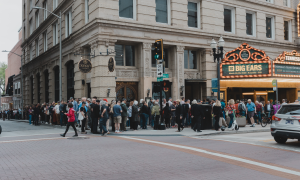
So after sound check I was standing outside of Ronnie Scott's and this girl comes down the street screaming, "Twenty-nine, twenty-nine!" So they're going crazy and I'm lookin' around and asking, "What's wrong?" And they said, "'So What' just went into the charts at twenty-nine!" I was mobbed, so we did the gig that night, and the champagne was flowing and I got to meet Ronnie Scott that night. It was an amazing surreal experience and I think it was the first jazz record in the charts for 30 years—I think it was "Take Five" that was on the charts in 1962, and that was the year I was born. So now we're in 1992, and now "So What" is on the charts.
AAJ: Miles Davis must have been smiling down on that, what a great thing, it's a perfect story.
RJ: It was amazing. I was doing an interview and was asked if I'd ever heard Miles' last studio album, and I said no I hadn't heard it. And they played "The Doo Bop Song" and I almost fell off my chair, because Miles and I were in the same direction, because Miles was doing hip hop jazz too. Doo Bop was released right after The Antidote and he produced it with a New York producer named Easy Mo Bee...
People would ask me if Miles would have approved of me doing his "So What" and I said, "I think he would, because Miles was always for changing." So when Doo Bop came out in the summer of 1992, then people knew I was right, and most agreed that Miles would have approved of my doing "So What." [Doo-Bop was the final studio album by Miles Davis, released posthumously on June 30, 1992, by Warner Bros.]
In Closing
These five tracks represent just a handful of the many jazz recordings that have quietly but powerfully reshaped modern music. This isn't a ranking of "the best," nor an attempt at a definitive list—merely a celebration of moments when jazz stepped beyond its usual circles and left an indelible mark on the wider culture.Tags
So You Don't Like Jazz
Miles Davis
Alan Bryson
Paul Desmond
Dave Brubeck
Joe Morello
Teo Macero
Gil Evans
Leonard Bernstein
Billie Holiday
duke ellington
Dizzy Gillespie
Charles Mingus
Bob Dylan
Aretha Franklin
Pink Floyd
Richard Rodgers
Carlos Santana
john mclaughlin
Wes Montgomery
Bobby Womack
Gábor Szabó
Tommy LiPuma
Nat King Cole
Phil Upchurch
Harvey Mason
Ralph MacDonald
Claus Ogerman
Al Schmitt
Tom Jobim
Elis Regina
Joni Mitchell
David Byrne
Ronny Jordan
Comments

PREVIOUS / NEXT

Support All About Jazz
 All About Jazz has been a pillar of jazz since 1995, championing it as an art form and, more importantly, supporting the musicians who make it. Our enduring commitment has made "AAJ" one of the most culturally important websites of its kind, read by hundreds of thousands of fans, musicians and industry figures every month.