Home » Jazz Articles » Interview » Melissa Errico: A Voice Reimagined
Melissa Errico: A Voice Reimagined
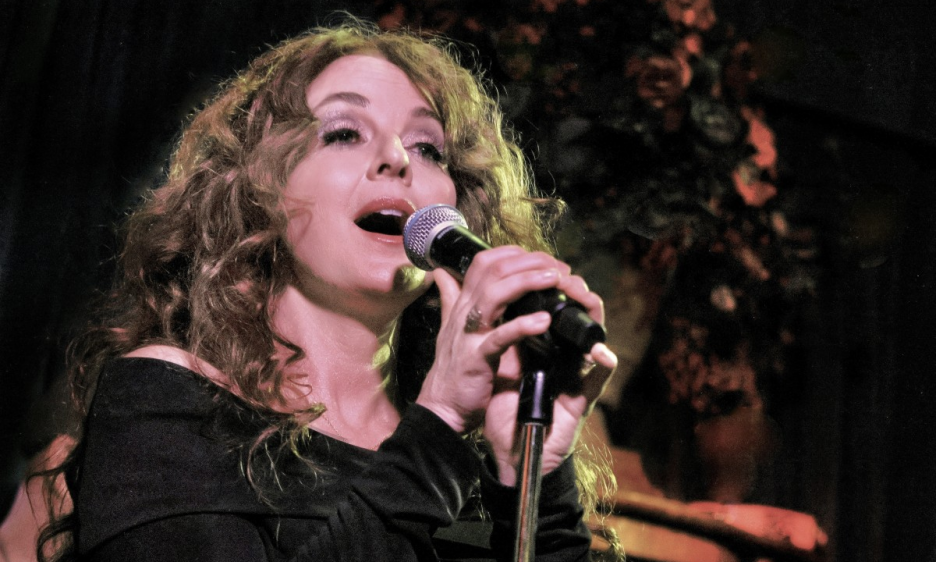
Courtesy Sherry Rubel
For me, the two things, technique and emotion, are never apart. They serve each other. Letting the audience hear every word and even every silence in a song empowers them to understand what the song has to say
—Melissa Errico
All About Jazz: Stephen Sondheim once told you to "sing the apostrophes"—to make sure the audience heard the silence in a word like "Couldn't." How does that technical obsession effect your emotional connection to a song?
Melissa Errico: Well, it inspired my set piece show "Sing the Silence," which I debuted at The Public Theater in November 2015 at Joe's Pub. I took Steve's little instruction and turned it into a metaphor for women's enforced absences; this was two years before the #MeToo movement went global in October 2017, by the way. My concert was about the things women never say, the ways their voices are stopped, the way they learn to live with a lot rumbling below the surface. I actually said to Sondheim once—"you want me to sing the silence?" and he said "yes." That exchange, in 2013, inspired an entire concert in my brain. For me, the two things—technique and emotion—are never apart. They serve each other. Letting the audience hear every word and even every silence in a song empowers them to understand what the song has to say. I am not drawn to the kind of operatic singing where all the words pass by in a kind of swell of sound. I love story telling—within the show and within the song. The more I can use what I know about singing words to inflect emotion, the more engaging or funny or tender the show becomes. Singing is just talking in pitch, and when you talk, you communicate. You don't orate. "Music is feeling then, not sound" a poet wrote, and I entirely agree. But the sounds have to be right for the feelings to be felt and understood. I loved diving into details with Steve. He loved puzzles and he made everything a glorious puzzle. I plan to play with his puzzles forever.
AAJ: You described yourself as a widow with "two dead husbands," after both Michel Legrand and Sondheim passed. When you are on stage now, do you feel like you are performing for them or with them?
ME: Well, I was being a touch mordantly ironic then, I was never involved with them as "husbands," and I have a living one, thanks very much. Plus, several 'stage' husbands, fellow actors and accompanists with whom I've been closely allied in work. Of course, I'm conscious of their continuing presence—how could I not be? Sondheim's intelligence, Michel's effortless lyricism... they both haunt me. Sondheim could be grouchy, in a humorous way, but he was also hugely generous. I try to keep both his satirical edge and his consoling wisdoms alive in me as they were in him. What a range he truly had! From "Uptown/ Downtown" to "Being Alive." Michel would make melody the way a mouse waltzes or a bird sings or soars! just freely, his hands dancing up and down the keyboard not even remembering what a beautiful melody he just made up. I try to keep that sense of his spinning ecstasy and freedom alive in my own soul when I sing him. Sometimes I cross pollinate the lessons—attending to obscure meanings in Legrand or releasing wild longings through Sondheim.
AAJ: You were the only American invited to sing at Michel Legrand's memorial in Paris at Le Grand Rex. What is it about the French sensibility that speaks so clearly to your New York upbringing?
ME: I'm not sure! I'm actually Italian through and through—even an Italian citizen now—so I'm not sure what draws me, so to speak, farther north across the Alps. I've often explained that my father loved the music of Michel Legrand and used it to seduce my mother, so that's one deep connection. He attached himself to Legrand's music, popular during the Vietnam years where, as an Air Force surgeon, suffered greatly. My parents often shared that "I Will Wait For You" was their anthem in the mid-'60s but also, I love the intermingling of crazy romance and precise language in French songs: the way that you have to remember the proper pronunciation amid the long thoughts, yet still the emotions in Legrand of Piaf or Trenet are so large and ambitious. That speaks to both sides of my imagination, the precise and the passionate.
AAJ: You are one of the few performers who was actually cast by Sondheim himself. What was the most surprising thing he ever sent you in a letter or a note?
ME: I've told the story many times, but when he came to see us revive his somewhat ill-fated musical with Richard Rodgers, Do I Hear a Waltz?, he greeted the company, then searched for me and said, "You were wonderful... most of the time." Then a few minutes later he said to me in private, "Actually, you were wonderful all of the time." It wasn't a put-down! It was a way of respecting the piece and paying a kind of winking tribute to the perfectionism he knew we shared. Later, he also told me to find the one thing in the character that might make the audience hate her, and, in one scene, play that. He actually said "Find the line, commit to it, and make everyone onstage and in the audience hate you." I was stunned. I understood at once that he wanted me to be daring and audacious and not always worry, as we actors tend to do, that our character was likable. He was an artist of ambivalence, and he encouraged his favorite players to allow some ambivalence into their portrayals. You don't have to be lovable every moment. The audience will recognize your humanity in your imperfection. A good truth!
AAJ: You recorded Sondheim in the City (Concord Theatricals, 2024) with jazz legend Lewis Nash. How did shifting from a purely theatrical style to a jazz-inflected one change how you breathe through a Sondheim lyric?
ME: It's been a process! When I was out in Los Angeles in the '90s, doing some TV and movie work, I fell into a circle of wonderful jazz musicians, including Shelly Berg and Alan Pasqua, and some of whom I work with still, like Andy Ezrin and Clifford Carter. We made beautiful demos together, a kind of pure research. It was one of those collections with Alan that led to my being signed by the legendary Bruce Lundvall for my first 'pop' album, Blue Like That (Manhattan Records, 2002). Then of course I came back to Broadway... but then in more recent years the appeal of that 'jazz-adjacent' style filled my mind again. I am drawn to these musicians, to their chords. I thrive on the colors and fills they provide me, together we seem to paint. I'm both a theater singer and a jazz singer of a kind—in fact, Sondheim himself once told me to sing his songs through once as he wrote them and then feel free to become a 'big band singer,' meaning a freer kind of bird, dancing through the melody. He recognized I was both—actress and 'girl singer.' He sent me many suggestions for how to develop that side of myself, he suggested I find an up-tempo song and make it a ballad, things like that. So, I learned, you can be both. That said, I love free singing, singing in a groove but not to a score. One of the highlights of my career was opening for George Benson at the Montreal Jazz Festival in front of thousands of people, and really locking in with his super-tight band. Pianist Randy Waldman (who has played for legends like Sinatra, Ray Charles, Stevie Wonder, Barbra for 45 years; and more) brought me into the George Benson family, and I was very moved when George invited me to tour the UK and told my manager "we want her on the bus, too." George also gave me some interesting advice backstage one night at Salle Pelletier theater in his dressing room: "Before soundcheck, I was thinking you need a new song. Now, after that crowd went wild, maybe you should just sing the old songs." No one has the answer. It's good to keep making music, and he sure touched my soul. Randy and I have built a beautiful new concert using some of the Benson set list, and created a homage to Barbra Streisand, Legrand, Hamlisch, Sondheim, Harold Arlen, David Shire and more. We just performed it in LA, New York and Las Vegas. Randy is where Streisand meets Oscar Peterson and Herbie Hancock. I love it!
AAJ: Your album, I Can Dream, Can't I? (Self Produced, 2026), is a voice-and-piano cycle. It also has a much jazzier feel than many of your other recordings. In an age of high-tech Broadway spectacles, why did you feel the need to strip everything back to just a piano and a microphone?
ME: It was an instinct more than a conscious plan, I just wanted to get into a studio with Tedd Firth and make music together that was both classically simple and somehow also gave dignity to these sometimes more obscure but beautiful songs. Some of my very favorite albums—Bill Evans, Tony Bennett and Ella, Ellis Larkins, they are just dialogues between a singer and a pianist, I wanted that kind of elegant, chamber vibe between us. Two voices entwined in classic songs, a sense of discovery. An unspooling of two souls more than a singers' recital with accompaniment. In every concert we do, Tedd and I usually stop the collective train and do one quiet number alone. It is a moment that is improvised. The band stands there wondering what on earth is going on. We stretch bars, we may suddenly have a piano concerto and I'll end up weeping, praying or laughing. It's a moment of play. Tedd and I just put 3 summer nights aside and went in with no arrangements. We did not plan to make an album. We didn't even listen to it for a year. Then, I listened and chose 14 of the 18 and released them. It's a peek into our minds, more than a finished project. We only did 2 or 3 takes, sometimes only one! Tedd had sent me 58 song ideas and I pared it down because I saw a hidden storyline in the ones I chose. I have a thread of personal emotion through the album. I didn't explain it to Tedd, or you, but I think it is felt. Tedd definitely knows when I am locked in. It may not seem like a spectacle but there is never a shortage of spectacle in my imagination. I see a world in these songs. I see ships, I see flowers growing in slow motion, I see history passing by like a carousel, I see lovers missing each other in the night. Some of these images appear in the YouTube playlist of films I made over the fall—music videos with words and images, called "lyric videos," by British filmmaker Matthew Edginton.
AAJ: You've pioneered the "caber-essay" format for your shows. Why isn't just "singing the songs" enough for you anymore?
ME: Well, of course, I love singing the songs and never want to get in their way. I also love making sense of the songs as part of a larger story of some kind about French life and love, if I'm singing Legrand in my show "Amour and After," or sharing what I know about what New York means to all of us when I'm singing Sondheim's Manhattan. I think that audiences are grateful for being let into your mind and are flattered by having some idea to take away bigger than, my next song. Cabaret concert can be a wonderful form if you lift its brow just a little. I love being sexy and present and if I can turn you on through sheer sensual singing nothing could make me happier. I have a mind and a memory, and the audience has minds and memories, and I like to entangle those as well. And humor! I love to make people laugh even as you move them. It's still mostly music, but I find the audience likes a complete experience. Someone once told me I hit the tuning fork of their mind before the tuning fork. I like that! Tap the fork with a smile. Why not?
AAJ: With a mother who is a sculptor and a father who is a surgeon/pianist, do you view singing more as an act of precision or an act of molding something from nothing?
ME: I love the question! Can we stop a moment to appreciate you? As I said before, both at once. I have a very precise, perfectionist side, which, yes, I suppose you could say I inherited from my surgeon-Dad. My father was an expert at Ravel and Chopin and Debussy, and Poulenc. That is his musical landscape Sondheim loved Ravel too, I have read. My father is the one who told me once, when Sondheim cast me in "Sunday in The Park," to really get to work six weeks early. "You're good, but you're not that good!" Not yet, I think he meant. With a passionate art-revering part from my mother, who loved to discuss in depth every role I had when I was a teenager, she was thrilled by stories, by emotion, by escaping into worlds. Peter Mills and Adam Gopnik even wrote a song about that: "My Mother Sang Through Me."
AAJ: I Can Dream Can't I? focuses on illusion and memory. What is one "illusion" about the Broadway life that you've finally let go of?
ME: Hmmmn. I suppose the illusion that there's always an absolute good in surrendering your own judgement to the "creative team." I'm more assertive now than I might have been as an ingenue starting up... though I was always, happily, pretty assertive: I convinced Sondheim to let me do a number in "Sunday in the Park" nude in a bath! He even rewrote a few words! That said, I still love the life, with all its absurdities, particularly the gift of a little company of actors, a ship's crew embarked upon a crazy voyage—that stirs my insides. I haven't let anything go really. I have just changed my illusions. I think it's good to become an older actress and have a dreamer side. I call myself fairy mom on Instagram. It's good for the younger people to see a happy older person. I guess I didn't know that evolving is our job. Maybe I was too fixed on getting "there." There is no there. "There," is what changes.
AAJ: Your father was an orthopedic surgeon and a concert pianist who actually delivered you, did he ever joke that your first cry was your first audition?
ME: Um, no, my family was not in show business so they didn't think in those terms. What I was told was that it was the first day of spring and my grandfather brought my mother daffodils. So, you could say, I was given a bouquet? My mother wore a pink ribbon on her own head going into labor, wishing I was a girl. What a relief I was! I am told that her first words to me, as she ran her finger on my cheeks were, "just think one day this face will be covered in Maybelline."
AAJ: You've described yourself as a "torture" to your parents as a self-assured little girl with a "precocious streak of showmanship." What was the "diva" thing you did before the age of 10?
ME: I don't know if it was a "diva" thing exactly, but I loved to hold shows in the basement of our suburban house and sell tickets, which I made, with fake money, which I also made. I kept track of every performance and every ticket sold. I don't recall ever saying I was a torture, but if I have to own that, it might be because I was determined to get on the LIRR train by age 12 and be in the city, taking lessons, figuring out how to audition. I had absolutely no idea where to begin. I paced around Times Square like a wild cat wishing to be let in. I would go to Steps and Broadway Dance Center and stay for 4 classes, til I was delirious. I bought Backstage newspaper and read it like it was the map of the hidden holy grail. I wasn't actually a showy singer back then. I was more of a brooding dreamer wanting to find the circus tent. Like that old joke, the frustrated guy who cleans up the poop behind the elephants and his shrink says "you should quit," and the guy replies "what? and give up show business?" You probably know the story that I had an audition for Ringling Brothers when I was 18 and I got cast in Les Miz a few days prior. If I had missed my shot at Cosette, I might be in Vegas right now strutting around in the Cirque de Soleil at the Bellagio.
AAJ: During the pandemic, you filmed yourself singing on your bed while your three kids waited downstairs for dinner. Did that forced vulnerability change how you approach performing in grand concert halls?
ME: That's a lovely and sensitive question! That performance was for Sondheim's ninetieth birthday, and we were all stuck at home. I sang "Children & Art," what else for a mother of three locked inside and trying to be poetic? I wanted it to have the quality of a prayer, something private. People seemed to love it, and yes that "forced vulnerability" is a quality, natural to me, that I suppose I haven't been afraid to cultivate since. I love whispered, overheard, gentle, but persuasive performance. I still leave it all out there on stage, but I try to accent it with intimacy.
Tags
Comments

PREVIOUS / NEXT
Support All About Jazz
 All About Jazz has been a pillar of jazz since 1995, championing it as an art form and, more importantly, supporting the musicians who make it. Our enduring commitment has made "AAJ" one of the most culturally important websites of its kind, read by hundreds of thousands of fans, musicians and industry figures every month.