Home » Jazz Articles » Big Band in the Sky » Sonny Rollins Blows His Last At 95
Sonny Rollins Blows His Last At 95
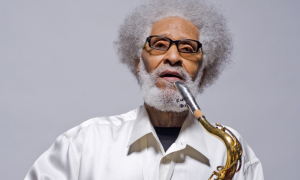
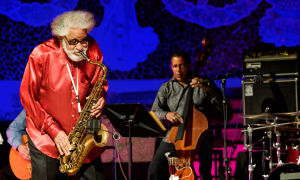
Courtesy John Abbott

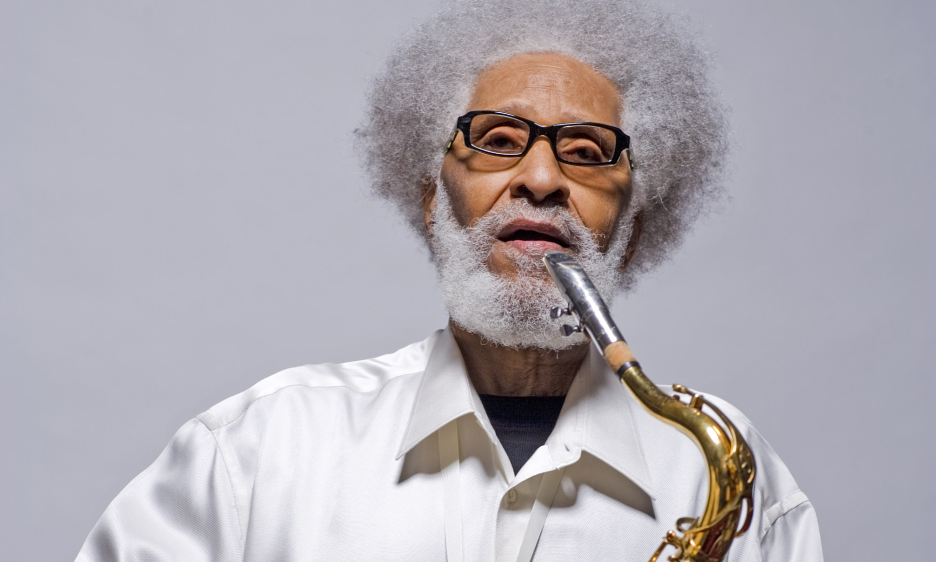
In a career that began in the 1940s, Rollins played with Miles Davis, Bud Powell, Thelonious Monk, Clifford Brown and Max Roach. Several of his compositions, among them "St. Thomas," "Doxy," and "Airegin," became jazz standards. An aunt gifted Rollins a used alto saxophone when he was eight. A perfectionist from an early age, Rollins would close himself in a room and practice for up to ten hours hours a day. "I just get into that zone, and it's a spiritual thing. And that's what's carried me through my life," Rollins told Harriette Cole in a 2016 interview for History Makers.
A restless artist, Rollins rarely led a settled band for long, prompting Albert Tootie Heath to remark: "Sonny would change musicians like he would change clothes."
Though the band members changed around him regularly, Rollins' brilliance as a soloist remained a constant throughout the decades. His legendary—and frequently very lengthy—improvisations made him a major concert draw well into his eighties, even when his later records were not always warmly received. Of Rollins' peers, perhaps only John Coltrane and Miles Davis inspired a comparable aura of genius or were revered with similar intensity. At a Japanese press conference at the start of Rollins' 1963 tour of the country, some 450 journalists reportedly attended.
The son of Caribbean immigrants, Walter Theodore Rollins was born on September 7, 1930. Growing up in Harlem, he was drawn to the saxophone by the music of Louis Jordan. As Rollins biographer Aidan Levy recounts in Saxophone Colossus: The Life And Music Of Sonny Rollins (Hachette Books, 2023), Rollins' childhood years were formative in his development both as a musician and as an improviser. His exposure to his Caribbean-born family's love of calypso, the music of the cinema and the Sanctified church, and especially the joyous rhythm and blues of Louis Jordan would all feed into his musical persona. These musical streams, together with the influence of radio, flowed into his marathon improvisations for the rest of his life.
Rollins' path was not without its trials. As a young man, heroin addiction and firearms offenses landed him in jail. He admitted to stealing other musicians' horns and to pickpocketing "some poor old woman" to feed his drug habit. Happily, he turned his life around.
As for the racial injustices of his time, Rollins often let his music do the talking. Freedom Suite (Riverside, 1958), his response to the racially prejudiced refusal to rent him an apartment, was perhaps the first civil rights-themed jazz album of its era, inspiring Max Roach's We Insist! Freedom Now Suite (Candid, 1960).
A slew of classic albums—notably Tenor Madness (Prestige, 1956), Saxophone Colossus (Prestige, 1957), Way Out West (Contemporary, 1957), and The Bridge (RCA Victor, 1962)—cemented Rollins' reputation as a modern jazz giant. For many fans and critics alike, the live album A Night at the Village Vanguard (Blue Note, 1958) captured Rollins at the peak of his powers.
When on a roll in concert—a single song could last an hour—it would have taken a train to stop one of Rollins' rhythmically and melodically charged improvisations. During an outdoor performance in a New York park in 1986, Rollins leapt from the stage toward the audience enclosure. Misjudging the distance, he fell six feet onto the rocks below, landing on his back and breaking his heel. Despite being in agony, he continued improvising while lying on the ground, a remarkable scene captured in Robert Mugge's documentary film Saxophone Colossus. (see YouTube video below)
Well-documented sabbaticals from public performance only enhanced the aura surrounding him. Though he never led a legendary group on the scale of those fronted by Coltrane or Davis, Rollins' stature continued to grow year after year.
In the 1970s and '80s, Rollins embraced funk and r&b on his albums, frequently working with electric guitarists and bass guitarists. While many of these records received lukewarm reviews, Rollins continued to command hefty fees for live performances around the world. Awards fell upon him in abundance: Grammys, Lifetime Achievement Awards, designation as an NEA Jazz Master, and numerous honorary doctorates.
Due to pulmonary fibrosis, Rollins gradually withdrew from the stage before announcing his retirement in 2014.
In a 1999 interview with All About Jazz's Chris M. Slawecki, Rollins reflected on his journey: "I did everything in my life basically like I wanted to do it. Of course, I made mistakes. I'm not saying that. Everybody does. But I mean that I've tried to pursue things that I thought were important to me at that time. I've done things against the grain, and all this stuff which people wouldn't have done—people wouldn't have taken sabbaticals, they would have been afraid to get away from the instrument or get away from the music scene, a lot of things. So like Frank Sinatra, I've done it my way."
Sonny Rollins (September 7, 1930—May 25, 2026) died at his Woodstock home.
Tags
Big Band in the Sky
Sonny Rollins
Ian Patterson
Miles Davis
Bud Powell
Thelonious Monk
Clifford Brown
Max Roach
Albert “Tootie” Heath
John Coltrane
Louis Jordan
Saxophone Colossus: The Life And Music Of Sonny Rollins
1999 interview

PREVIOUS / NEXT


Support All About Jazz
 All About Jazz has been a pillar of jazz since 1995, championing it as an art form and, more importantly, supporting the musicians who make it. Our enduring commitment has made "AAJ" one of the most culturally important websites of its kind, read by hundreds of thousands of fans, musicians and industry figures every month.