Home » Jazz Articles » Interview » Rebekka Salomea: German's Jazz Award's 2026 Artist of the Year
Rebekka Salomea: German's Jazz Award's 2026 Artist of the Year
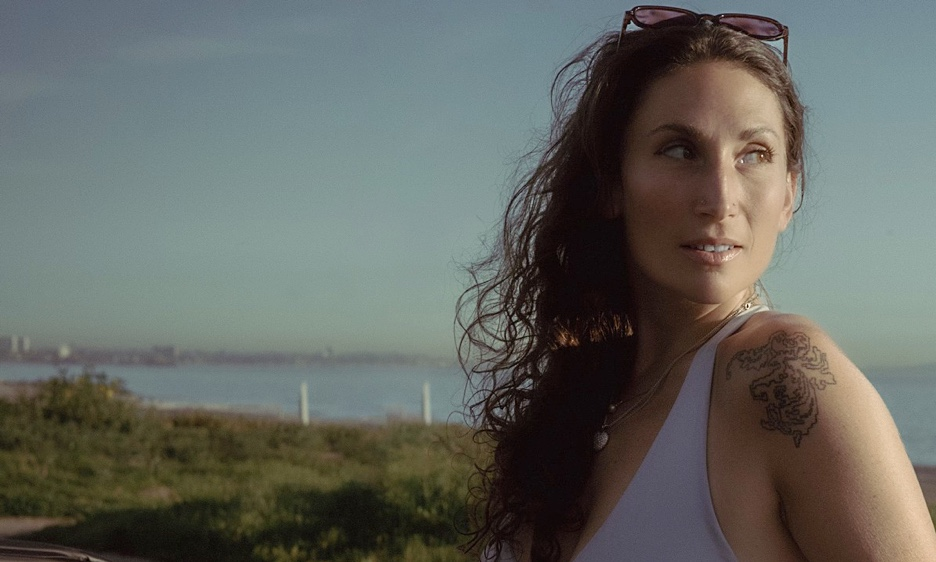
Courtesy Rawaa
I think I’m trying to ask more questions with the music than answer them.
In this context, we turn to this year's Artist of the Year, Rebekka Rebekka Salomea. A Cologne-based vocalist, composer, and interdisciplinary artist, she moves fluidly between jazz, electronic music, spoken word, and experimental sound. At the core of her work lies long-term collaboration, together with pianist Yannis Anft, bassist Oliver Lutz, and drummer Leif Berger, she has developed a close-knit artistic collective shaped by years of shared creative and personal experience. This sense of connection translates into a distinctive musical language, intimate and expansive. Rooted in both the German and international scene, Salomea's work reflects the openness, diversity, and forward-thinking spirit that the German Jazz Prize seeks to highlight. In the following conversation, she reflects on her artistic voice, creative process, and the evolving scene of contemporary jazz.
All About Jazz: You've been awarded "Artist of the Year" at German Jazz Award 2026. Do you feel you're representing a scene or a singular artistic voice?
Rebekka Salomea: That's a big question. My project is my voice, but at the same time it's also a collective with Leif Berger on drums, Yannis Anft on keys and co-production, and Yannis Anft on bass, so it already goes beyond a singular perspective. I'm also very aware of the trailblazers who came before, and that music does not exist in a vacuum. I do feel like a part of a certain sound, a movement, a community, with shared values that my idols, peers, and I hold. If one of us succeeds, we all succeed. We lift each other up. So yes, there is also a sense of responsibility in that.
AAJ: Your music isn't purely jazz. How would you describe the German jazz and experimental music scene from within today?
RS: It's very vivid and very scene-based. Each city has its own distinct identity—Berlin, Cologne, Hamburg, Munich. In Berlin, for example, a place like Donau115 is central, with an incredibly wide range of music happening all the time, from highly experimental to more song-based work. In Cologne, venues like Loft, Stadtgarten or King Georg function almost like living rooms for musicians and music lovers, and I've heard some of the most inspiring concerts ever, right there. Constantly active, constantly evolving.
I think what's really interesting now is how fluid everything has become. The boundaries between genres are less and less relevant. People's tastes are broad, and there's a real need for diversity, at least within the creative community. Not just musically, but also in terms of collaboration and artistic perspective. With access to so many influences, there's this constant urge to find new combinations, new ways of expressing something. Even if it's hard, maybe impossible, to create something entirely new today, there's still this drive to follow a vision. Some artists want their work to be accessible,—others don't mind if it isn't. For me, it's about people feeling something. whether that's joy, confusion, or even frustration. I just want people to feel.
AAJ: Your work moves fluidly between jazz, electronic music, and spoken word. Do you think in terms of genres or sound worlds when creating?
RS: Sound worlds, for sure. We combine all of our different influences, usually all four of us together, most of the time, even if not always. It becomes about layers and more of an architectural way of thinking. We are really building soundscapes, with abrupt edges, unexpected elements, like a door where you wouldn't expect one, or some stairs leading somewhere surprising, or a certain kind of light that shapes the space. Genres have always felt confusing to me and, in a way, limiting. I understand that they can be useful for describing music, but at the same time they feel vague, because everyone defines them differently. So yes, I think much more in terms of soundscapes.
AAJ: Do you care whether the listener understands your music, or is the experience enough?
RS: I kind of want it all. I love when people just experience the music first and then form their own relationship with it, and hopefully with the live concert as well. Understanding can come later, maybe as another level, but I really don't think it should be a prerequisite. It shouldn't be necessary to have a certain amount of knowledge, whether that's harmony or anything like that, in order to access the music.
At the same time, of course, that also creates certain limits. For me personally, it's really interesting to write more complex music as well, but that might close the door for some people. It can be an issue, definitely, it can be. So I'm always trying to hold some kind of balance between those things.
I don't think it should be necessary to understand. But when people do, it's great. It's kind of cool, kind of nice and a bit nerdy when someone really gets into that level, you know? I think I care most about emotional understanding, which, I guess, is a combination of understanding and experiencing?!
AAJ: Do you have a specific message you want listeners to walk away with, or do you prefer to let the music and lyrics flow more intuitively and leave space for their own interpretations?
I think there are both elements. Ultimately, I want to move people and create an experience. That might lead to understanding, or to questions, or to something entirely different. Even rejection. And that's okay too.
RS: Looking back at your earlier releases, what feels most distant now?
I think what feels most distant might be the songs that have very, very clear references. Those that are less abstract.
AAJ: What kind of questions are you exploring in your music right now?
RS: I'm not sure I'm trying to answer questions—I think I'm trying to ask more of them with the music. There's a quote by Rilke about loving the questions, and that really resonates with me. That, and trusting my instincts, is what I'm focused on at the moment.
AAJ: Is there something you're still trying to learn to express through your voice?
RS: Oh, many, many things, yes. I think singing is such a... I mean, any instrument is, but with singing, our instrument is our body, right? So, I feel like I'm constantly searching for a kind of rawness and honesty in my voice. That can take very different forms. It can be something quite theatrical, or it can be the wildest harmonic improv, which is actually something I still want to explore more, because I haven't spent that much time on it yet. But what really matters to me is that sense of pure, honest expression, truly believing every word you sing, and only placing what is necessary, but meaning it one hundred percent. That's something I'm continuously working on.
I think part of the answer is actually trying less hard and allowing myself to relax more, so that the voice can flow freely. At the same time, there's still so much technical work I'd like to go deeper into.
Lately, I've been focusing more on songwriting, writing simpler songs in a way. But I can already feel the desire to return to more complex harmonies and more intricate rhythms, and to reconnect with that side of myself again in a future project.
AAJ: Do you have a mentor or a teacher you're working with, or time to time?
RS: Not right now. I mean, there's this interesting concept, I think Victor Wooten says this, that you can find mentors without having ever met them. So maybe Victor Wooten is my mentor right now. I was really intrigued by his book, The Music Lesson. So that was really cool, maybe he's my mentor right now.
AAJ: What do you look for in musical collaborations?
RS: I look for true mutual admiration and genuine connection, about life and some kind of shared reality, maybe. I look for inspiration and novelty, I love learning and meeting new people. But I'm also very, very loyal.
It's awesome if you're just a real true fans of each other. That just feels really, really good. If you really adore what the other person does, learn something, and are challenged, maybe, I think that's the sweet spot.
AAJ: Have you ever had a collaboration that fundamentally changed your artistic vision?
RS: Starting my band definitely did. Working with these musicians changed everything I thought I could do. We've been together for a long time, over a decade, and that shared trust has been essential.
AAJ: There must have been ups and downs over that time.
RS: Of course. We've gone through everything—love, breakups, grief. That's heavy, but I think it just made us stronger. But also incredible tours and shared experiences, hours and hours in a car, driving to the South of France, and climbing mountains. We're like a family. That's as spicy as it gets.
AAJ: But when there is no tours and music, you're resting from each other, or you're still hanging out?
RS: We're hanging out all the time. Some of us live together. I'm very fortunate. We love each other.
AAJ: Can you recall a moment on stage when things nearly fell apart?
RS: Yes, many times. Sometimes intentionally, because we were exploring. But there were also moments when we simply got lost. I remember a performance in Casablanca, at Jazzablanca Festival. We were in a very experimental phase and things really did fall apart. But we found our way back through cues and listening. It probably wasn't our best performance, but we learned a lot from it.
AAJ: Do you try to surprise yourself on stage?
RS: I try to and I do, because I really want to not do what I always do. Otherwise, it's easy to fall into patterns, even when improvising.
I try to change things, maybe interact differently with the audience, I might tell them a story I've never told before, or just interact with them spontaneously, so I could surprise myself there. But in musical terms, really trying to explore rhythmically, harmonically, dynamically, using extended techniques, whispering, making noises, taking rests, or whatever. Of course, not try too hard. To speak in Victor Wooten's words again—"try real easy."
So yes, I do surprise myself, and we surprise each other, and we challenge each other. Which also, again, if you've been playing for so many years, sometimes maybe there are structures that you get caught in. That's actually something I'm really looking forward to in our next rehearsal phase, to explore different ways of navigating structure and improvisation.
The other day, I was walking down the street, and I wanted to surprise myself, which is really hard, as soon as your brain gets involved. I went for a full stops, in the middle of the street. I was actually really in a hurry to get somewhere, but somehow I wanted to switch things up. You should try! It felt weird, but good.
AAJ: What do you listen to when you need to reset your ears and mind?
RS: For resetting, I think the best thing is silence, honestly. Recently, I've been listening to KUU!, James Blake, or Thundercat's "Distracted," or Erykah Badu's classic albums, or Solange, Mia Koden, or Billie Holiday, Joni Mitchell, or podcasts. It's really a very, very wide range and I feel timing is crucial and very personal—when to listen to what, and when I'm open to what.
AAJ: What feels most honest in your music personally?
RS: I think my lyrics are very honest. My personal experience, dealing with grief, dealing with loss, I really wanted to talk about that and the different shades of that grief, the different emotions you go through. It's not just sorrow and sadness, it's also anger and rage and disappointment and loneliness. And then there can also be moments of happiness in between, right? Allowing all this to co-exist and to speak honestly about that and to tap into that on the spot, I think that's probably the most honest. And also the delivery or execution. The way the sound comes out.
Am I trying to do something or am I doing it, in full integrity?
AAJ: When you're creating a song, lyrics come first, music or both? It is a very different process.
RS: Totally, yes. Usually, I have different written notes, but also on my phone with all kinds of little lyric snippets. And then if I'm producing myself in Ableton, I usually start with drums or chords and when we write as a band, we usually just jam and everything happens at the same time and there might be some words coming through and then I'll continue writing from there.
So it really happens simultaneously, and all these things are constantly happening. And then I piece them together.
AAJ: You're also involved in producing your music. Why was that important to you?
RS: Yes, with my co-producer and pianist Yannis Anft.
Because I really wanted to. I had ideas in my head. I heard things that I wanted to incorporate and I trusted myself to figure out how to integrate them. I just really wanted to, had to, maybe. It's like a playground. A friend of mine, LNA, always says that producing is like puzzling. And I was having a lot of fun with that concept or the idea of really just having fun with it, playing!
AAJ: Do you feel treated differently as a woman in this field?
RS: There's so many ways to answer this question. The simple answer is: yes! It still happens that people are surprised I write my own music or produce or whatever and that's leaving out physical harassment. I'm used to it and refuse to spend my precious energy on dwelling any longer. I know it's important to raise awareness on this topic but honestly—I would love to turn this question around. Ask people in privileged positions whether they're aware of the fact that they're being treated differently. Point these differences out. Hold them accountable.
I mean, I only know my own experience. I'm lucky enough to have a team that has my back, and they are supportive. But there are still moments when expectations are different, when people are surprised that I write my own music and expect less of me than of my bandmates. That can be frustrating. But it also makes me more aware and more determined.
AAJ: If you weren't an artist or a singer, what would you do?
RS: As of now, I'd be a wildlife photographer trying to get the perfect shot of a specific bird, or lions, or whatever. And you'll see why wildlife when you see the artwork for my next album.
AAJ: With your new album AXXXIS coming in October 2026 and the first single "Sandcastle" just released, what's the idea behind the album, and how does it differ from your previous work?
RS: It's fully self-produced. I haven't really done that in a while I don't even know if I've ever done that before. We wrote a lot of the music together, and we produced it together, Yanis and I. The whole process was very close. I was involved in every part of it, not just because I wanted to, but also because the music came quite naturally.
That doesn't mean we didn't put in hours and hours of work but it was really fun. We played around a lot, like, "What if we do this? Or that?," just switching things up. I really had to take the pressure off myself, because otherwise I wouldn't have been able to do it.
I'm really excited about it. I just love the way it feels, it's like a new beginning somehow. And it's really about trusting your gut, trusting that intuition we all have. There are so many outside voices that can interfere with that.
We wrote it partly in Cologne, Germany. But I also took it to L.A. and finished writing and producing it there, just by myself, in a kind of cabin setting. So, it really traveled. And I think you can hear that. It combines these worlds that I carry within me: Cologne and the West Coast of the U.S., where so much of the music I love comes from.
It was really, really special for me to be there, to absorb all the creative energy from my idols and peers and put it into this music.
rebekka.z@gmx.de
Tags
Interview
Ieva Pakalniskyte
Germany
Salomea
Yannis Anft
Oliver Lutz
Leif Berger
Olis Lutz
Victor Wooten
Jazzablanca Festival
Erykah Badu
Billie Holiday
Comments

PREVIOUS / NEXT
Support All About Jazz
 All About Jazz has been a pillar of jazz since 1995, championing it as an art form and, more importantly, supporting the musicians who make it. Our enduring commitment has made "AAJ" one of the most culturally important websites of its kind, read by hundreds of thousands of fans, musicians and industry figures every month.