Home » Jazz Articles » In Tribute To... » Miles Davis At 100: A Global Perspective
Miles Davis At 100: A Global Perspective

Miles Davis is now and forever. Happy Birthday, Miles.
Rana Farhan, vocals (Iran)
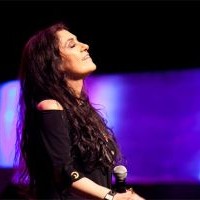 Miles's music has always been the sound of New York for me. Growing up in Tehran, I would listen to his records and feel the spirit of the nightlife of Manhattan. It always wowed me how huge and unmistakable he sounds. How it took over the atmosphere and changed the soundtrack of our lives forever. And that is why he will always remain a legend.
 Rosse Aguilar Barrascout, saxophone-vocals (Guatemala)
 What inspires me most about Miles Davis is the level of influence he had on the history of jazz in terms of resilience and adaptability, since he made sure to leave an important mark and legacy across different eras of change in jazz, including bebop, hard bop, modal jazz, and the jazz fusion movement.
 It is admirable how Miles listened to what was happening around him and kept adapting and evolving without ever losing his distinctive and incomparable sound; he adapted his improvisation and musicality to each era. The three important lessons I take from this legacy are applicable to all musicians, regardless of the instrument we play. First: Your sound is the most important thing—it is your signature. And that signature should be recognizable in every musical production you take part in. Second: It is important to know how to improvise with great virtuosity, but it is also important to leave space... to stop playing in order to listen and interact with other musicians in different ways. Phrases with fewer notes also contribute and inspire. Third: Agility is important in order to continue growing in our careers, so we should never stop practicing, no matter our age or the moment in history in which we are playing.
Yuwen Peng, piano-keys (Taiwan)
 Among Miles Davis's vast discography, the soundtrack to the film Dingo (Warner Bros., 1991)—a collaboration with Michel Legrand—has had the most profound impact on me. In this 1991 film, Miles himself portrays a trumpet master named Cross. During a brief stop in the Australian outback, his band's electrifying performance inspires a local boy to devote himself to jazz. Years later, that boy travels to Paris to find his mentor and eventually shares the stage with him.
 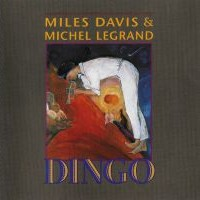 When I first watched this film, I had just begun my own journey into jazz. I was deeply captivated by its lyrical melodies and diverse musical styles. At that time, jazz education in Taiwan was still a 'desert,' and I saw my own reflection in that Australian boy. Drawing inspiration from Miles's presence on screen, I pushed through every obstacle to pursue my jazz dream—a journey that continues to this day.
 Dimitar Budurov, piano (Bulgaria)
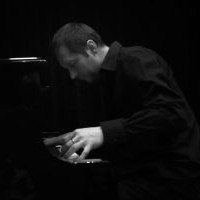 Miles. A name that has come to symbolize progress and transformation. A name that stands as an icon—revolutionary, mentor, and a true milestone in 20th-century music history. The influence of Miles Davis is immense, shaping not only jazz but also the language of pop and rock. You encounter Miles differently at each stage of life. Just when you think you've grasped a fragment of his artistry, another album appears—another facet of his genius that catches you off guard and reshapes your understanding.
 I remember vividly those wow moments in my teenage years when I first discovered him. It began with the bebop era alongside Parker—his phrasing, timing, and tone cutting straight through me. Then came Birth of the Cool with Gil Evans; the refined fusion of jazz and modern classical composition struck me deeply. But it was Live at the Plugged Nickel that truly overwhelmed me—a radical reimagining of harmony, form, and sound. The energy of those performances felt almost unreal. The synergy among the five musicians, their freedom, the way the music shifts from fragile to fierce, the elasticity of structure—through it all, Miles' sound shimmers like a lighthouse in a dark, stormy sea. I couldn't place it in any category. It felt entirely its own.
I became obsessed. Eventually, I immersed myself in The Complete Live at the Plugged Nickel. It was transformative. With each listen, I sank deeper into that small Chicago club. I began to notice everything—the clink of coins, the murmur of the crowd, the clatter of glasses—details that made it feel as though I were there. And above it all, Miles' sound: focused, exacting, guiding me like a hiker across shifting musical terrain. The band felt both disciplined and playful, constantly reshaping the material in new forms and colors. As a listener, I was no longer just observing—I was part of the act of creation. That is what made it so powerful. When it ended, I felt drained. I just sat there, staring into space. And then it struck me: this is what music is for.
Like the Buddhist saying—it's not about the destination, but the journey. What I didn't yet realize was that Miles' own journey—his relentless artistic evolution—continued until his very last day. Perhaps that is his greatest lesson: stay curious, keep exploring, protect your sense of wonder, and never stop believing in the power of music.
Marquis Hill, trumpet (USA)
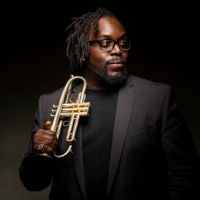 When I reflect on the impact that Miles Davis has had on me, a wide range of thoughts and emotions surface. But above all, one idea stands out: Miles embodies the archetype of pure originality.
 His originality wasn't limited to sound—it extended to concept, composition, approach, bandleading, and beyond. Through his work, Miles shows us that one of the most essential elements of this music is an unapologetic knowledge of self.
Thank you, Miles, for everything you gave and for the legacy you left behind.
Ella Zirina, guitar (Latvia)
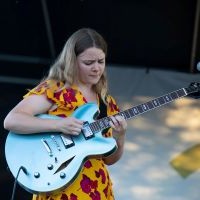 Kind of Blue is the first Miles Davis and jazz album that I truly dived into the depths of. When I was sixteen, I had a CD player and would play this album on repeat every day for at least two months. At some point, I could hear the solos ringing in my head while just going about my day.
 This album deeply moved me and changed how I hear music. There's so many little nuances that catch you off guard and really make you listen, like the Jimmy Cobb's ride cymbal crashes in "So What," the colorful and unique comping and voicings of Bill Evans in "Blue in Green" and "Flamenco Sketches."
This album has so much breath to it , each note that Miles plays feels so intentional and has its own subtle character. So much is said in the spaces that Miles leaves—he is a true master of that.
Victor Morel, drums (Paraguay)
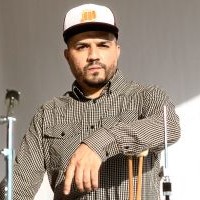 Seven Steps to Heaven (Columbia, 1963) is undoubtedly one of my favorite Miles albums—an exquisite record without question—where the sonic aesthetic and the unique, exclusive dynamics of a quintet that would later shape the future of jazz in such a singular and powerful way demonstrate Miles's influence across every sphere, both human and artistic.
 Terri Lyne Carrington, drums (USA)
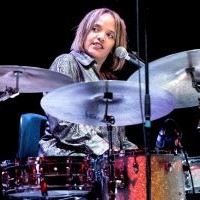 I toured opposite Miles Davis twice in the '80s. Once when I was playing with David Sanborn and once when I was playing with Wayne Shorter. Other bands on the tour were {Jack DeJohnette's Special Edition and the Pat Metheny Group. One thing I noticed was how many people were trying to have words with Miles, or reflect on his old albums, or when they met him before—just a desire to talk to him about anything, really. I felt like he was bored and slightly annoyed with these encounters, though he tried to be polite, he was not really engaged. I didn't want to be another one of those musicians, so I chose not to talk to him at all. And I think this created a bit of a mystery about me for him, as we travelled for weeks from city to city in Japan.
 Then one day, which happened to be my birthday, I was sitting by myself at the airport. While he was walking to the restroom, he paused to wish me a happy birthday. Those were the first words of exchange between us. We were relatively friendly after that, sometimes talking on the side of the stage during the shows. But this experience showed me the value of drawing people in and not being overly anxious or too excited to be in someone's orbit for what could end up being superficial exchanges, especially if the person is used to that behavior due to being a celebrity. I would have been just as happy observing him from afar if he didn't find me interesting enough to talk to. I felt that he was a person—just like the rest of us—though truly great and flawed as well. He was human!
There is much conversation now around his treatment of women. Patriarchy, capitalism and other societal malignancies have been around before and after Miles Davis. They are systemic issues that need to be addressed holistically and radically. I'm not excusing any wrongdoing of his, I'm just saying that citing Miles Davis's behavior is not putting a dent in the serious work of eradicating misogyny and sexism.
Ilir Bajri, piano (Kosovo)
 Tutu (Warner Bros. 1986) was my first true encounter with Miles Davis. I was hooked. The music was so inviting, so curious, provocative and contradictory, yet so joyful and so inspiring. The sounds, textures, arrangements, and that energetic, persistent playfulness that was pouring out—this was irresistible to me. It excited my curiosity. I listened to that album over and over again for a long time, deeply wanting to understand what was happening in the music and how could one learn to replicate it. Tutu became a reference point—something I could rely on whenever I lost my footing. What I realized much later on is that its influence is much deeper and beyond the artistic domain.
 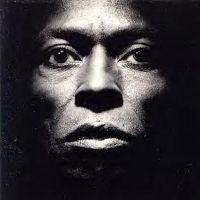 At that time my people were oppressed, persecuted, discriminated and kept in isolation. The world felt unreachable—somewhere behind tall, unreal walls. This broken communication with the world, and the resulting inferiority complex, were suffocating and traumatizing. And Tutu, with its colorful, inclusive atmosphere, its rule-bending aesthetics, the collision of acoustic and electronic sounds, the daring ideas delivered with almost playful mastery—became a platform that provided a unique perspective for me and my community.
 It was an invitation to look and think differently, to explore and find news ways for communication and collaboration, to challenge norms and rules, and to create space for inclusiveness, friendship and exchange. It became a strong point of support, reference and motivation whenever things became tough or confusing—a beacon and a reminder of what is really important in life. Merely showing gratitude for all that still feels insufficient.
Niwel Tsumbu, guitar (Congo)
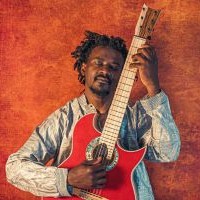 It's very difficult to choose a favorite Miles Davis album. I love all the ones I've heard, but if I had to choose one, it would be Bitches Brew. It's the album that completely shattered my sense of what music could be. At first, I couldn't understand what was happening at all. It took me days just to get through the first track because it sounded so alien and disorienting. But that's exactly why it stayed with me—it felt like my brain was expanding in real time.
 Miles Davis' music expanded my mind and showed me that there are virtually limitless possibilities in music. You don't have to fall into the norm—there will always be critics when you break boundaries, but there will also always be someone out there who would appreciate what you create. For me his legacy is that of an innovator who constantly followed his artistic muse, a true jazz pioneer.
Khachatur Savzyan, bass (Armenia)
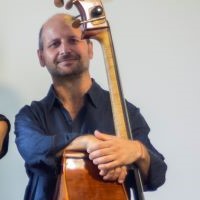 In the world of jazz, few figures are as influential as Miles Davis. He opened so many doors and forged so many new paths that his impact on the music's evolution is undeniable.
 One of the first jazz records that I kept spinning repeatedly, trying to transcribe every solo, was the vinyl of Bags' Groove (Prestige, 1957).
Later, during a difficult period of military service, his music became a lifeline. In the oppressive, dark atmosphere of the post-Soviet, post—war Armenian army, listening to The Complete Blackhawk Sessions on a cassette player sent by my brother was both an escape and a relief. Till today, I continue to discover new things in his music; but his most inspiring quality remains that unwavering courage to change!
Ronald 'Boo' Hinkson, guitar (Saint Lucia)
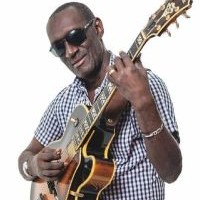 Miles taught us all about leaving space in the music. That a hundred notes at 180 BPM don't move your audience like twenty well chosen ones.
 His apparent musical restlessness and defiance of rules created his genius and contributed to the consummate ease with which he moved from jazz to pop to funk to hip hop. Who else could transport you from Kind of Blue to Bitches Brew to On the Corner, Cyndy Lauper and Michael Jackson. That's a master class on how to remain relevant.
Tamara Obrovac, vocals (Croatia)
 As we all know, for a genius like Miles Davis, music is an unlimited playground in every sense, and each of his albums is marked by a strong individuality and refined communication between the musicians, regardless of style or genre, so of course choosing just one of his albums is not at all simple...
 I remember the feeling that an entirely new world had opened up to me when, as a young jazz musician inclined toward searching for new sounds, after hearing several of Miles's first acoustic jazz albums, I heard Bitches Brew.
But I also remember that Kind of Blue was the album that played the most on my cassette player... and my favorite moments are Miles's anthological solo on "So What," and the fantastic groove on "All Blues."
Etienne Charles, trumpet (Trinidad)
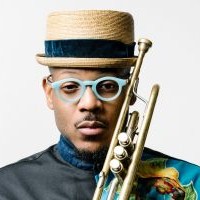 Miles Davis' influenced me in several ways: be in the moment, be in the pocket, trust the band, keep it moving, allow the magic to happen, keep growing and searching. Make time for listening and experiencing new styles as they develop. That's one of the main ways to bring new generations to this music. Play the blues and put rhythmic conviction in your lines. Record everything.
 Exercise: Miles was an avid boxing fan and trained—allegedly with Sugar Ray Robinson's trainer. To me, Miles' stylish looks on stage always complemented the music he was playing, from the crisp suits in the '40s to mid-'60s to the funk/rock styles of the late '60s to '70s. Then with the bright colors of his fits in the '80s and early '90s.
Miles showed the value of investing in the youth, giving them a platform—they have fresh ideas and new styles of composition, improvisation and more. You see this throughout Miles' career with Herbie Hancock, Tony Williams, Ron Carter, Chick Corea, Keith Jarrett, Michael Henderson, Daryl Jones, Robert Irving III, Kenny Garrett, Marcus Miller, Vince Wilburn Jr., Munyungo Jackson...
Miles was also very open to fresh sounds and techniques from outside the US, famously advocating for non-American musicians such as Hermeto Pascoal, Badal Roy, Victor Feldman, Dave Holland and many others. These are just some of the ways Miles Davis has influenced me.
Fergus McCreadie, piano (Scotland)
 My answer for my favorite Miles Davis record changes probably every day, but while writing this I have to say that the live album from the Olympia Theatre in Paris in 1960 holds a really special place in my heart.
 It epitomizes so much of what I love about jazz—there's a real fizz of energy in the air, the time feel and synergy in the rhythm section is incredible and Miles is on great form. Check out in particular the solo on "On Green Dolphin Street"—I think it really sums up both his approach as a bandleader and as a soloist; the solo has an incredible sense of space, feels completely organic to the moment (like all Miles there's no sense of anything being pre-worked out), and sets up the energy for the solos that follow in the perfect way.
We can't mention this album without talking about John Coltrane either; he's on absolutely blistering form and is really starting to pull away musically in his own direction... you can hear the audience in the second half of the gig starting to feel divided—very vocally—on how they feel about this new sound, and to me it's so Miles how, regardless, he continues to give Coltrane the space to be absolutely himself in that moment in time. One of the all-time great bandleaders and players.
Eva Cortés, vocals (Honduras)
 Miles Davis taught me that music does not have to scream to be powerful. He could play just a few notes and somehow say everything. There is a simplicity in his phrasing that feels almost impossible.
 I also admire how fearless he was with change. He trusted his vision even when people did not understand where he was going, and he was always listening for what was next. He surrounded himself with younger musicians, with new energy, and kept evolving instead of repeating himself.
Beyond music I connect with his contradictions as well. The strength, the fragility, the curiosity, the rebellion. I don't believe he was trying to be perfect. I think he was trying to be true, and I feel that gave a lot of us permission to own our wounds and search for our own sound without apologizing for it.
Athanase Obed Dehoumon, trumpet, Gangbé Brass Band, (Benin)
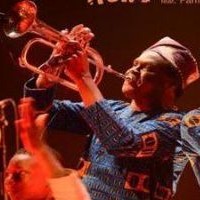 So immense is his legacy that we could spend hours talking about the illustrious Miles and still not finish. I was influenced by his charisma, his determination, and above all his spirit of fusion and bringing together the musicians of his generation with the younger ones who emerged during the era of electric jazz—Herbie Hancock, Chick Cora, Tony Williams, Dave Holland and John McLaughlin, among others. The great legacy of Miles is his style, his compositions, and the revolution he introduced into jazz.
 Saso Popovski, guitar (Macedonia)
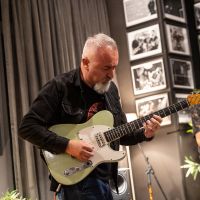 Miles' influence on me? His originality. Originality is the key. He was really different—you can tell it's Miles with only two or three notes played. His approach to the music, his phrasing and his emotional depth. From his music I've learned the importance of developing a personal sound.
 Emil Viklicky, piano (Czechia)
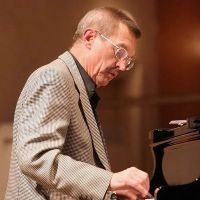 The very first Miles LP I owned—and my favorite—was My Funny Valentine. I bought it from known local rock guitarist Joe Karpaty. It was horribly scratched, because—as Joe told me—girls at his rock parties hated that music. Miles and the band on that recording immediately grabbed me with an intensity I had never experienced before. I was fascinated with the musician's interplay.
 To get the Four and More LP, with faster tunes from the same concert at Avery Hall in NYC, took me quite a while. Of course, I heard some low—quality cassette's copies of earlier Miles, but I had never felt the same intensity as with his second quintet. Throughout the time I collected probably all available recordings with Miles' second quintet—Plugged Nickel, Nefertiti, Miles in Berlin, Miles in Tokyo with Sam Rivers—these are my favorites.
Camila Meza, guitar-vocal (Chile)
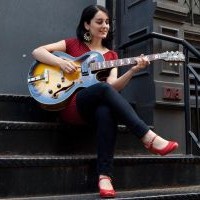 I have chosen "Fall" from Nefertiti. This whole album is a masterpiece but this particular song I remember when I first encountered it, I had to put it on repeat—I think I did for over an hour!—and I keep coming to it for a type of healing of sorts.
 Miles was able to create and lead such deep and unique universes with the groups he'd put together, allowing each of the voices to fully bloom and express themselves in an evident free and playful way. You can hear the vulnerability and risk in every second. Being Wayne Shorter's original composition, I love how much it was a perfect vehicle for the language of the second great quintet.
Kic Barroc, piano (Andorra)
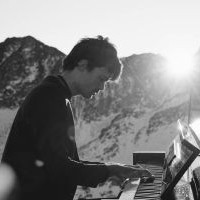 One of my favorite Miles Davis solos is his performance on "Blue in Green." What moves me is the fragility of his phrasing: each note feels suspended, almost hesitant, yet completely intentional. In that space, deeply connected to Bill Evans' harmonic world, Miles doesn't try to resolve anything. He simply exists through the sound, letting silence and tone carry the emotion. A perfect example of the moto less is more.
 Mardochée William, bass (Haiti)
 Among all of Miles Davis' musical pieces, "So What" from Kind of Blue remains one of the pieces that has marked me the most. What fascinates me about Miles' compositions is his ability to create musical spaces where each musician is freely expressing themselves harmonically, rhythmically, and emotionally with remarkable freedom. "So What" perfectly embodies this philosophy.
 Miles's solo feels like a journey in itself: every note and especially every silence carries weight and intention. There are relatively few notes, yet their placement is often unexpected, creating a constant sense of surprise as one melodic idea unfolds into the next. In that way, the piece truly embodies the essence of jazz: improvisation as spontaneous storytelling. Meanwhile, Paul Chambers' walking bass and Jimmy Cobb's swinging pulse provide the foundation that allows the other musicians to move freely, explore, and interact without restraint.
Miles Davis often said 'less is more,' and "So What" helped me deeply understand what that means in jazz. It taught me to see a jazz composition not simply as a song, but as a platform for dialogue, a space where each musician can say what they think while respecting the ideas of each other. That spirit of freedom, listening, surprise, and mutual respect is what makes Miles Davis' music timeless, and why "So What" continues to influence the way I understand jazz today.
David Little, inveterate gig goer (Northern Ireland)
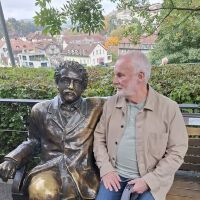 My all—time favorite LP is In a Silent Way, and I had just bought Bitches' Brew, so when I learned Miles was playing at Isle of Wight Festival in August 1970, I was determined to go.
 From my distant position in the 500,000 crowd, I just about recognized Miles (bright red jacket and shirt) and Dave Holland but did not know the rest of the musicians until I read the next week's Melody Maker. Short set, under 40 minutes, 'Call it anything' said Miles. No video screens or decent sound system—or facilities—back then. Apart from Miles and one or two others, the weekend was the most dispiriting live experience. I eventually bought the DVD to see what I had missed—Miles Electric: A Different Kind of Blue (Eagle Eye Media, 2004). Strongly recommended [see YouTube video at foot of article—ed].
Paul Augustin, bass-director Penang Island Jazz Festival (Malaysia)
 I don't really have a favorite album. I like his earlier works—Birth of the Cool, 'Round about Midnight, Milestones and Kind of Blue Later ones too, like Nefertiti and Bitches Brew. He was always evolving and I guess that's what makes it exciting to listen to him!
 What I really like and remember are stories told about him by others who worked with him and knew him, like Steve Thornton. I never had the pleasure of meeting Miles or seeing him in concert. Stories of him are what made him cool and real for me. Some I heard and remember are : When at a concert, the band was playing a song and he just played one note because he said that the song just needed that one note.
Another story I heard was after a festival, the band went out but Miles went back to the hotel. When the band returned to the hotel they saw people coming out because there was a bomb scare—there were people in pajamas, nightgowns—and there was Miles walking out dressed to the 'Ts' in his coat carrying his horn like he was about to go up on stage to perform. Stories like that are gems; whether true or not I can't really confirm, but they were told by people who knew him and played with him.
Delphine Joussein, flute (France)
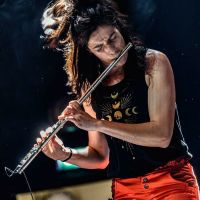 His thirst! It's his insatiable thirst that moved me the most. A thirst to drink the nectar of life at every stage of his life, every stage of jazz, of music! Each time, he dared, he experimented, he put his art at the service of something much greater than himself. That is surely what influenced me as a musician—constantly searching; and sometimes, even losing sight of that search, but simply living it, is quite delightful. That's the feeling Miles gave me, at times.
 Haja "Hajazz" Rasolomahatratra, guitar (Madagascar)
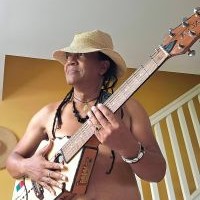 "Jean—Pierre" was our first Miles tune. We used to play it like a kind of pass when we were young musicians in the rough neighborhoods of Tamatave or Tananarive in Madagascar. If you didn't know "Jean-Pierre," you weren't a real jazzman. For me, this playful piece expresses freedom—the whole feeling of Miles telling us: "Set your knowledge and technique free—have fun!"
 When I sit in the sun, my skin turns brown like his, and I think of him, my big brother.
Florian Arbenz, drums (Switzerland)
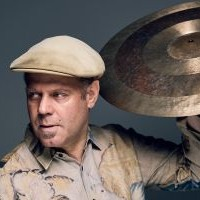 My favorite recording of Miles Davis is a bootleg from the Berlin Philharmonie from November 4, 1967. This recording is for me an absolute highlight of the great quintet with Shorter, Williams, Hancock and Carter. Not only that all those giants play at their highest level, they also shape a completely exciting set, the tension and release, playing in and out of the tunes and the shape of energy levels is so perfectly balanced, it could almost be composed! It's also one of the few bootlegs where Ron Carter's bass can be heard very well, it shows the absolute crucial input of Ron's playing on the music!
 Dima Loginov, trumpet (Kazakhstan)
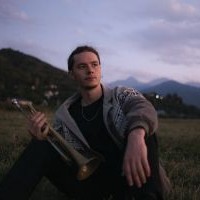 Growing up in Almaty, Kazakhstan, the first time I heard about Miles Davis was through my teacher, Valeriy Bannov, who shared recordings with me that I would transcribe and study. Miles' playing became important to me early on because his solos showed how much emotion, melody, and clarity can be expressed with just a few notes. I also remember hearing that during Soviet times his autobiography had already been translated into Russian by pianist, jazz theorist, and educator Mikhail Yermolov, giving many musicians in Kazakhstan the opportunity to discover Miles' artistic world even without knowing English.
 After moving to Amsterdam, I started reading the book myself and it gave me a deeper understanding of Miles not only as a trumpet player, but as a visionary artist and bandleader. His courage to constantly search for something new, take risks, and push your limits and boundaries strongly influenced my own approach to music and improvisation. Listening to his early recordings taught me the power of simplicity and phrasing, while albums like My Funny Valentine and Live at the Plugged Nickel showed me a new level of freedom, interaction, and collective experimentation within a band. Every now and then I continue returning to his recordings to learn and be inspired.
Chenxi Pan, Vocals (China)
 Among the many extraordinary albums by Miles Davis, Kind of Blue is undoubtedly my favorite. It has accompanied me throughout my journey of studying jazz and growing into a professional musician, and it holds a deeply personal significance for me. "So What," "Freddie Freeloader," and "All Blues" were among the very first jazz tunes I learned. As I developed further in improvisation and composition, "Flamenco Sketches" opened up an entirely new world of color and expression in music. More recently, I've found myself returning again and again to "Blue in Green," getting lost in its endless form and unmatched beauty. Each time I revisit this album, I discover new details I hadn't noticed before. There is a profound depth within its simplicity—it truly is a timeless masterpiece.
 Samuel Batista, saxophone (Panama)
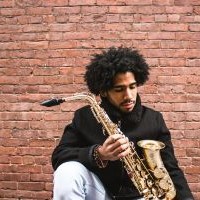 I first heard Miles Davis on the Night Music television show with David Sanborn. I had only been playing saxophone for about a year at the time, listening to artists such as Charlie Parker, Dizzy Gillespie, Paquito D'Rivera, and David Sanborn. However, I was still searching for more...
 Then Miles appeared.
I remember being completely stunned by the sound, the phrasing, and the rhythmic freedom in his playing. There was something dangerous and deeply alive about it. I could not sleep that night. That performance sent me directly into Tutu, and from there into Miles' vast universe.
As a student of Danilo Pérez, I often think about the artistic lineage connecting Miles, Wayne Shorter, Danilo, and musicians like myself who continue learning from that tradition. It is both humbling and encouraging.
What has influenced me most about Miles is not only his sound, but his fearless artistic vision. The way he led bands, trusted silence, shaped dynamics, and embraced constant evolution changed the way I think about music. Albums like In a Silent Way, Amandla, and Sketches of Spain continue to inspire me deeply.
Miles also taught me that music should never live inside categories. One of the greatest lessons I learned from him is the importance of staying open, curious, and unafraid of transformation. His music reminds us that artistic growth begins the moment we stop trying to protect labels and start listening without boundaries.
Tord Gustavsen, piano (Norway)
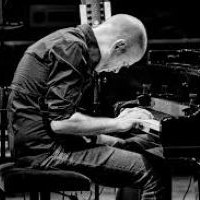 Kind of Blue remains my most deeply cherished Miles Davis album. It is also probably the most influential one for my own music, with its profound focus on musical space, the relaxed modal playing, and all the brilliant micro-timing in slow tempos. However, the Miles solo that has probably left the most lasting impression on me must be his incredibly cool and creatively bluesy hard-bop improvisation on "Walkin.'"
 During my student years in Trondheim, Norway, there was an annual, full-day festival (!) dedicated to this tune, with jam sessions, bands performing, and a climactic ritual session in which the old recording was played from vinyl, and everyone present sang along with the trumpet solo. You had to know the solo—or at least a good part of it—to get in.
Learning a long solo by ear, and both singing it and playing it on your instrument, is of course a great pedagogical tool: it is important not to go directly to writing it down and reading while playing, but instead to stay with your inner ear and your singing mind. But this festival took it further: into an almost tribal sense of belonging, eruptive energy, and communion around an iconic solo—a solo that I still remember almost to perfection 30 years later...
Simin Tander, vocals (Germany-Afghanistan)
 The albums that have stayed with me the most are Kind of Blue and Sketches of Spain. I remember sitting in my room during my first years of jazz studies in the Netherlands, Arnhem, 20-something years ago, listening to those two albums again and again, being very drawn to the depth of the slowness of some of the tunes, and also to the story telling of the albums as a whole. Loving Miles' phrasing and melodic choices so much that I had the sensation of almost being able to touch his phrases, so clear, so bold, like an evolving painting. Often bringing me into a contemplative state of joy, but very much trembling from the intensity of each note. So What" was then the first solo I transcribed for a theory lesson at the conservatory, first singing, feeling the phrases evolving, the deep swing, then notating.
 Two years later I dived into the songs "E.S.P." and "Blue in Green," having discovered Cassandra Wilson's Miles tribute album Traveling Miles (Blue Note, 1999) with beautiful lyrics set to several of Miles' tunes. Those two songs became a part of my first jazz repertoire. "Blue In Green" truly shaped and heavily influenced my first compositions, realizing how much I loved rich, floating harmonies.
Martin Eberle, trumpet (Austria)
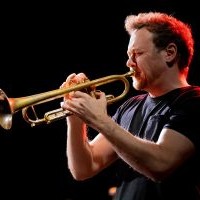 His phrasing and his sound! There's so much emotion, elegance, and personality in every single note he plays. The way he shapes melodies feels effortless and timeless—subtle, expressive, and instantly recognizable. That unique combination of tone and phrasing is one of the reasons why his music still sounds so fresh and inspiring today and truly touches my heart. And the way he brought bands and musicians together was incredible; he had a unique talent for surrounding himself with musicians who pushed each other to new heights.
 John McLaughlin, guitar (England)
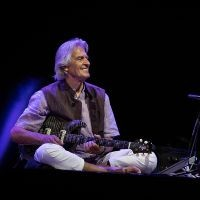 John: "Miles, where are you?" Miles: "I'm here" John: "I don't see you!" Miles: "Play the tape John!"
 Have a Miles Davis story to share? Send it to us and we'll include it in the article.
Tags
Rethinking Jazz Cultures
Miles Davis
Ian Patterson
Manchester
Glasgow
Herbie Hancock
Chick Corea
Joe Zawinul
john mclaughlin
Hermeto Pascoal
Jowee Omicil
Gil Evans
John Coltrane
Michael Brecker
Kenny Wheeler
Dexter Gordon
Jaco Pastorius
Marcus Miller
Tony Williams
Ron Carter
George Coleman
Bucky Pizzarelli
Mike Stern
Al Foster
Mino Cinelu
Red Garland
Philly Joe Jones
Dublin
Thelonious Monk
Dizzy Gillespie
John Scofield
Darryl Jones
Sydney
Cannonball Adderley
Jack DeJohnette
Keith Jarrett
Eric Dolphy
Bobby Timmons
Airto Moreira
Flora Purim
Dave Valentin
Bill Summers
Poncho Sánchez
Kei Akagi
Joe Farrell
Wynton Kelly
Paul Chambers
Jimmy Cobb
Hank Mobley
Jimi Hendrix
Ornette Coleman
Dave Brubeck
Gerry Mulligan
Louis Armstrong
Kenny Kirkland
Branford Marsalis
Omar Hakim
george benson
Joey DeFrancesco
Clifford Brown
lee morgan
Freddie Hubbard
oscar peterson
James Morrison
Adam Holzman
Rick Margitza
Benny Rietveld
Ricky Wellman
George Duke
Stanley Clarke
Palle Mikkelborg
Never Ending Revelations
duke ellington
David Sanborn
pat metheny
Michael Henderson
Robert Irving III
vince wilburn jr
Munyungo Jackson
BADAL ROY
Victor Feldman
Sam Rivers
Miles Electric: A Different Kind of Blue
Steve thornton
Amsterdam
Paquito D'Rivera
Danilo Pérez
Comments

PREVIOUS / NEXT


Support All About Jazz
 All About Jazz has been a pillar of jazz since 1995, championing it as an art form and, more importantly, supporting the musicians who make it. Our enduring commitment has made "AAJ" one of the most culturally important websites of its kind, read by hundreds of thousands of fans, musicians and industry figures every month.