Home » Jazz Articles » In Tribute To... » Miles Davis At 100: A Global Perspective
Miles Davis At 100: A Global Perspective

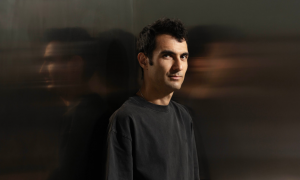
To me this band really epitomizes the idea of playing freely within form. This is always one of my primary musical goals and I'd say it has probably been the main way Miles has influenced me. Another thing I learned from Miles' constant innovation is to always be reaching artistically; on each one of my records, I've tried to use a different approach.
Chanx Mussa, guitar (Zambia)
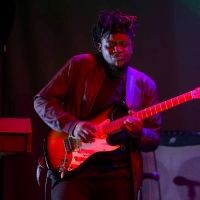 As an Afro-fusion guitarist, I got really inspired by the fusion of jazz, classical and traditional Spanish influences on Sketches of Spain Colombia, 1960). It opened up a whole different world for me as a composer, more freedom and fearless fusion. Kind of Blue had a significant impact on how I interpret harmony after listening to and studying the great Bill Evans' way of playing.
 Towfiq Arifin Turjo, drums (Bangladesh)
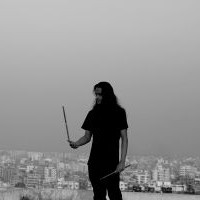 My favorite Miles Davis album is Kind of Blue. "So What" was the very first jazz tune I ever performed live. Even today, I still play the record regularly at my café, and every time I listen to it, I discover something new within the music, a different texture, a new conversation between the instruments, or a deeper sense of space and restraint.
 Listening to Miles Davis shaped the way I approach music and collaboration. Through his playing, I developed an understanding of the importance of space, knowing where not to play, and how to remain present and supportive while performing with other musicians. His music taught me that silence and restraint can be just as powerful as the notes themselves.
Enji, vocals (Mongolia)
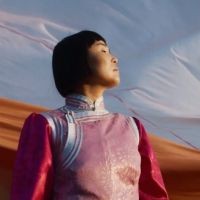 The very first time I listened to Miles Davis was through the album Kind of Blue (Columbia, 1959). Though it is a classic, for me it was a new, mysterious world of sound—yet one I could relate to in some ways. It sometimes sounded like "long-song," a Mongolian traditional singing that takes its time and moves with precision.
 In fact, all I could compare it to was singing. He sings. And you are drawn into his universe. A visionary universe of freedom.
Silvano Monasterios, piano (Venezuela)
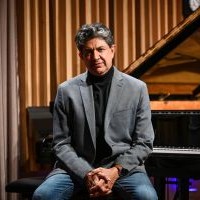 As a child growing up in the city of Caracas, music was always in the air in our home. My father, the very reason why I became a pianist, was a pharmacist and played the piano by ear. His repertoire consisted mostly of his favorite melodies and rhythms from Venezuela and Latin America.
 My mother, while she was in the kitchen, always had a transistor radio playing popular music. AM radio was still king at the time, and it always played an eclectic mix of songs from all over the world. In our family gatherings, the adults always danced to Cuban music, Salsa, Merengue and Cumbia. Thanks to my dear older sister, I was introduced to The Beatles, Queen and Carlos Santana among others. However, Jazz was not in the air.
My first encounters with this music occurred thanks to my childhood friend who lived in my building, and who for some reason happened to have at home a copy of George Benson's Breezin' (Warner Bros., 1976). That record changed my very young life and made me very curious about this style of music. Then I found out that the only FM radio station in Caracas at the time had a weekly one-hour show that played jazz. A discovery that I couldn't take advantage of as much as I wanted since it was broadcast late in the night.
One Christmas, my sister sent me from Boston, where she was studying English, what it turned out to be an invaluable present. It was one of the first editions of The Real Book. A collection of jazz compositions and composers that I never heard before and knew nothing about. I managed to somehow learn how to read chord symbols with some friends at the conservatory where I was studying (jazz education as we know it didn't really exist at the time), and I could read the melodies, so I started exploring all these interesting songs and composers. That is when I first saw the name Miles Davis. And right there and then, without having any knowledge about its profound and dramatic history, I fell in love with this music.
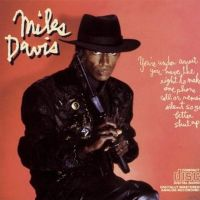 The Information Age had not arrived yet. My only other source for jazz was a handful of music stores that would import to Venezuela jazz records. A few years later, that was how I bought my first Miles record. Curiously, without me knowing it, it was perhaps one of his more unorthodox works. I bought You're Under Arrest (Columbia, 1985), and it made a huge impression on me.
 Surely, I then later discovered and studied Kind of Blue, fell in love with Bill Evans and Herbie Hancock thanks to their collaborations with Miles, and learned more about the history and tradition of this genre that is obviously so crucial and critical to the formation of any aspiring jazz musician. However, I will always remember that first record I bought because it makes me think about how impactful that was in the development of my own vision and voice as an artist.
Having the opportunity to write about my own experience with Miles Davis's music, in retrospect, has made me reflect deeply on how he showed me the way to my own artistry. He demonstrated to me and to the world that the possibilities in this style of music are endless. That in jazz, tradition can be intertwined with other influences, that inclusion, in its true meaning, it's an integral part of this genre, as it should be in any society, and that your culture and idiosyncratic roots can not only coexist with the jazz vernacular but also enrich it. He taught me. Remotely. Miles away.
Christine Kamau, trumpet (Kenya)
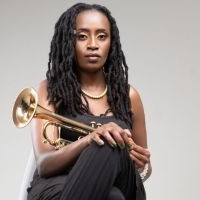 Reflecting on Miles Davis' legacy, I would say that he became a quintessential jazz artist. His musical career reflected his life experiences, and his music continues to resonate with listeners worldwide many years after his passing. His compositions span different stylistic eras, demonstrating his ability to redefine himself and experiment with diverse musical styles. He left behind an extensive discography that continues to influence subsequent generations of trumpet players. It comes as no surprise that his groundbreaking album Kind of Blue, released in 1959, is recognized as the best-selling jazz record of all time. Not confined to music, he also addressed sociopolitical issues during the civil rights era, earning distinction as a musician attuned to the current affairs of his time. It is my hope that this centennial celebration will spark greater interest in Miles Davis's music around the world.
 .
Marta Sanchez, piano (Spain)
 Miles Davis has probably been the musician I have listened to the most throughout my life, especially when I first began discovering the history of jazz. I spent countless hours listening to the recordings of the 1950s and, above all, the second great quintet of the 1960s. Those records shaped my understanding of what a group can be. For me, that quintet represents the possibility of magic in music: the feeling that harmony, rhythm, melody, space, and interaction can all be transformed in real time into something alive and unpredictable. Listening to that band opened up an entire world of possibilities for me as a musician and composer. It taught me that music can be both deeply structured and completely free at the same time.
 Beyond his playing, Miles influenced me profoundly through his vision as a leader. One of his greatest strengths was his ability to recognize and bring together extraordinary musicians, trusting them enough to shape the music collectively. The musicians he chose for his bands are, in many ways, the same musicians who went on to shape the history of jazz. Many of the compositions associated with those groups came from the musicians around him, and Miles created an environment where those voices could flourish. That ability to curate, guide, and inspire without controlling every detail is something I deeply admire. He showed me that leadership in music is not only about direction, but also about intuition, trust, personality, and the courage to constantly evolve.
Sanjar Nafikov, piano-keyboards (Uzbekistan)
 The melodic contour of Davis' lines, especially from the modal period, always reminded me of the maqam players of my region—he never played the melody directly, but always hinted at it, singing with its neighbor tones. And the intuitive signature "underblowing" of some notes gives a reference to the quarter-tone scales of Eastern music. The Dark Prince continued the line of mysticism in the music of the second great quintet, where his sound was not the trumpet of Jericho, but rather the meditative call of the muezzin to prayer. The influence of his music, like a silent Buddhist monk-teacher, continues on me to this day when it is necessary to organize the time and space of my sound world...
 Monty Alexander, piano (Jamaica-USA)
 Miles Davis was a musical genius and a restless spirit who constantly sought new musical expressions. Each time he did, it was a powerful statement. When he played the trumpet, he played life. He didn't play music, he played life. But the main thing is, he needed it to be grooving or swinging.
 I will never forget that special moment at the Village Vanguard back in the late 1960's when Miles spoke over the microphone in his raspy voice: "Monty, come up and play something!" and I did.
Sinan Alimanović, piano (Bosnia)
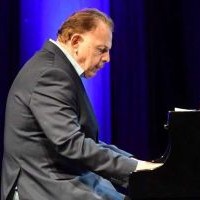 As a young boy in the 1960s, I heard the album Kind of Blue on my home turntable for the very first time. It was my initial encounter with Miles Davis' oeuvre, and it changed the course of my life forever. Even then, through his artistry, I intuitively felt that music was my life's path. Miles Davis sealed my decision to dedicate myself to music, which I consider to be the most beautiful calling in the world.
 Through his visionary work, from the early days of bebop with Charlie "Bird" Parker to pioneering cool jazz and modal forms, Miles constantly pushed boundaries and inspired every musician around him. My favorite artists and musical role models learned directly from him or were profoundly shaped by his influence. Among them are pianists Wynton Kelly, Bill Evans, Keith Jarrett, Herbie Hancock, and Joe Zawinul, as well as organist Joey DeFrancesco. Alongside them stands a constellation of genius musicians who either passed through his ensembles, such as John Coltrane, Wayne Shorter, the brothers Cannonball and Nat Adderley, or created parallel to him, such as the magnificent Clifford Brown, Lee Morgan, and Freddie Hubbard... The spirit of Miles Davis is deeply embedded within all of them, and that flame still burns today, nurturing the very heart of jazz through new generations.
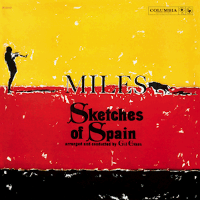 Alongside the seminal Kind of Blue, my favorite Miles Davis album is Sketches of Spain (Columbia, 1960), a masterpiece he recorded in collaboration with the brilliant composer, arranger, and conductor Gil Evans, whose influence on Miles' musical sensibility was exceptionally profound. Miles Davis left humanity a monumental discography that continues to resonate across most of contemporary music in unpredictable ways, through latent and lateral connections; it remains absolutely indispensable to contemporary art music.
 He was a visionary who established the aesthetic foundations upon which new generations can lean and continue to build, expanding musical art for the benefit of the entire humanity. I perceive Miles as a complete, fully rounded artistic personality. This is vividly reflected in the visual identity of his later albums, the covers of which he often painted and designed himself. This intermedial synergy, of truly Renaissance proportions, resonates powerfully today; in fact, it has never been more necessary or relevant. He was a born leader and a conceptual catalyst; when he plays just one long note, every musician in the band instantly sticks to him, and the music just takes off. That is the eternal inspiration.
Miles Davis' legacy is definitive proof that jazz is not merely a genre, but an authentic contemporary art music.
Christine Salem, vocals (Reunion Island)
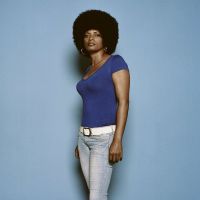 My favorite album is Kind of Blue. There are quite a few tremendous tracks on it—it's hard to choose just one—but from this album, one among many others, I'd pick "Freddie Freeloader."
 I'm a fan of blues, and I think Miles Davis's contribution of the trumpet to blues music was something entirely new. His inspiration was innovative for music; to me, his trumpet is the trumpet of the gods. I discovered Miles Davis through friends when I was about 12 or 13 years old. In fact, that's when I discovered a lot of jazz, blues, rock, and traditional music from all kinds of cultures.
His greatest legacy is his albums, but also this sense of freedom and boundless inspiration in music, while always remaining simple. He was a genius both with the trumpet and in composition.
Nina Feldgrill, bass guitar-vocals (Austria)
 For me, Miles Davis stands for musical reinvention and growth while still always staying true to himself artistically. From my point of view, only very few have played such an important role in so many different periods of jazz history or have influenced the music as much as he did. No matter which recording and therefore which phase in his career I am listening to, it always feels unmistakably like Miles Davis. I never get the impression that he changed styles to try something new or to follow trends. This development of musical periods seems to have evolved naturally through his curiosity about and openness towards music in general—which, to me, is a big part of his legacy.
 Kinan Azmeh, clarinet (Syria)
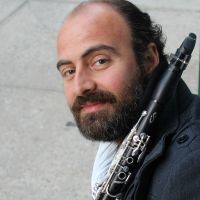 It was an early evening in Damascus—my hometown. I was 17 and had just begun studying at the Higher Institute of Music as a classical clarinetist. Already, I felt like a grown-up walking into my favorite record shop. Most of my collection at the time consisted of Western classical music, and that little shop on Hamra Street had a huge selection of cassettes of every genre—all pirated, of course.
 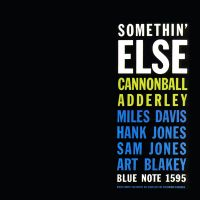 Feeling adventurous, I asked the shop assistant, an old friend, for an American pop record. He looked at me dismissively and said, "I'm not selling you that unless you buy this with it. You need to hear this." He handed me Somethin' Else—the first time I ever heard the sound of Miles Davis's trumpet. What struck me then was the clarity of thought in his playing, and that same clarity continues to inspire me to this day. I firmly believe that some of the greatest composed works are the ones that sound spontaneous, as if improvised, while some of the greatest improvised music sounds so inevitable and structured it could have been composed. To me, that was Miles.
 Antoine Souris, piano (Seychelles)
 Miles Davis is, without any doubt, one of the most influential jazz musicians of all time. I believe it is fair to say that his contribution has gone far beyond musical boundaries, transcending cultures, jazz eras, and even genres of music.
 As a musician coming from one of the world's smaller countries, Seychelles, I have been inspired by his life and work in many ways. During my first year of studies at Royal Welsh College of Music & Drama, I remember an occasion when many of my colleagues were eagerly anticipating a performance of Sergei Prokofiev's Piano Concerto No. 3 by a renowned orchestra and soloist. During that conversation, I felt somewhat like an outsider. In order to overcome the negative feelings this created in me, I ended up adding lyrics to Miles Davis's famous composition "So What." I still remember the opening line: "I never heard of Prokofiev... so what?" In many ways, "So What" became my personal motto for overcoming the inferiority complex I experienced throughout that challenging period.
When listening to Miles Davis and comparing his playing to that of musicians such as Charlie Parker, Dizzy Gillespie, John Coltrane, and Oscar Peterson, it becomes clear that his style was not built on virtuosic displays. However, his playing never lacked artistic mastery. In many ways, the subtle beauty and soulful phrasing of his music capture the listener's ear and touch the heart and soul of anyone willing to listen deeply. This is perhaps the greatest inspiration I have gained from Miles: the encouragement to fully embrace one's own individuality and create a unique artistic legacy.
Miles also left us with a powerful example of resilience. The story of how he overcame heroin addiction is remarkable and deserves to be passed from generation to generation. Thank you, Miles, for your music and your inspiration.
Dainius Pulauskas, piano-keys (Lithuania)
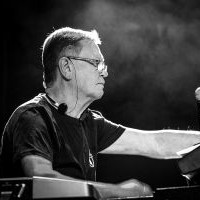 Miles Davis created a unique musical style that has influenced countless musicians, including me. He was a true genius who opened new horizons in jazz. He spread magic that hypnotized and drew listeners into his musical world of rhythm, harmony, and distinctive solos. His playing style was unique, and the sound of his trumpet remains inimitable. While participating in the Pori Jazz '87 festival in Finland, I had the rare opportunity to see Miles Davis perform live with his band. His "fusion" program left a deep impression on me and influenced my own creative path.
 Layth Sidiq, violin (Jordan-Iraq)
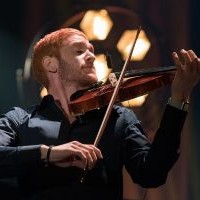 Miles Davis's influence on me comes largely through his melodic thinking and his relationship with space. The way he solos reminds me deeply of the spirit of taqasim (structured improvisations) in Arabic music, where every phrase carries emotional weight and silence is part of the expression itself. Like a master of taqasim, Miles understood how to unfold a mood gradually, how to let a single note breathe, and how to say something powerful with very little. His improvisation felt structured yet completely alive, which resonates strongly with the maqam tradition, where spontaneity exists within a deep melodic architecture and emotional weight. Listening to Miles reinforced for me that true improvisation is not about displaying ideas or technique, but about storytelling and human feeling in real time.
 Jeremy Monteiro, piano-vocals (Singapore)
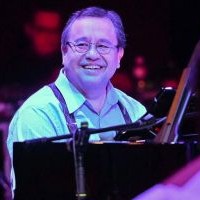 In 1989, the year after I'd played on the main stage of the Montreux Jazz Festival, Keyboard magazine—for whom I was Southeast Asia correspondent—assigned me to cover that year's festival. The press pass came with privileges: every show at the casino, the artist's lounge, the after-hours jam sessions at the Jazz Café.
 One night, I found myself sitting in the Warner Music balcony with Australian trumpeter James Morrison and singer Dianne Reeves, waiting for Miles Davis. My album Jeramzee Faces and Places (1988) was on WEA at the time, which is how a Singaporean kid ended up in that particular row of seats, watching the Prince of Darkness—back when the word "legendary" was still reserved for real legends.
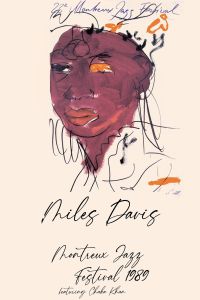 As soon as the band started—Adam Holzman and Kei Akagi on keyboards, Rick Margitza on sax, Foley on piccolo bass, Benny Rietveld on electric bass, Ricky Wellman on drums, Monyungo Jackson on percussion, Chaka Khan guesting—I turned to James and said, "Let's go down to the monitor mixing board and catch the show there." He nodded, grabbed Dianne, and we worked our way through the throng. The security guard at the barricade glanced at our passes and waved us in. We stood so close I could see the sweat on Miles' forehead and the spit he blew out of the spit-hole of his trumpet.
 After the show, Miles walked offstage with his road manager in front and two burly security guys on either side. I slipped in behind him, making it look like he was being escorted by four bouncers. One of them glanced back, clocked my all-access pass, and kept walking. For about thirty seconds, I walked the walk with Miles. Then I broke formation and ran ahead to the artist's café.
It was surreal in there. All the big jazz stars were drinking and talking loudly, like a classroom with no teacher in it. Twenty meters away, huddled together, were George Duke, Stanley Clarke and Palle Mikkelborg.
Then the Prince of Darkness entered the room. An instant hush descended. Nobody moved. As he passed the three of them—who suddenly looked like naughty schoolboys—Miles leaned over and rasped, "What's the matter, you guys too big now to get up and give me a hug?" They sprang up and embraced him while the rest of the room watched in silence.
Miles walked to his dressing now. The door clicked shut, and the noise rushed back in.
Arnaud Dolmen, drums (Guadeloupe)
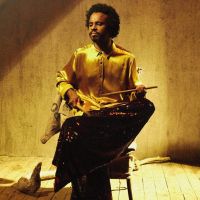 Choosing just one Miles Davis album is almost impossible, considering how many eras he went through and how many times he reinvented jazz. But Sorcerer (Columbia, 1968) is certainly one of the albums that moves me the most. I deeply love the mysterious vibration of this giant of music, his freedom, and that feeling of constant movement running through all of his work.
 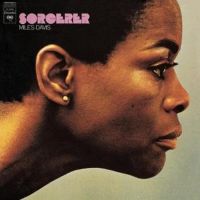 To me, Miles Davis was an eternal creator. What fascinates me most about him is his ability to constantly reinvent himself. Throughout every period of his life, he surrounded himself with the right musicians in order to create new sounds and open new musical directions. His playing kept evolving until the very end. He never stayed fixed in one aesthetic or one era.
 As a musician, this is probably what inspires me most about him: this permanent questioning of oneself. To keep searching, exploring, taking risks, and never being afraid of change. Miles Davis reminds us that music is a living movement and that we must always remain in search.
Laura Jurd, trumpet (England)
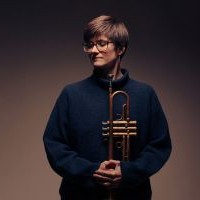 It might sound a little far-fetched, but the soloing of Miles Davis is something I think about and channel on a daily basis. His depth and commitment to the moment is a constant source of inspiration, in both life and music-making.
 A perfect example of this is his solo on "Miles Runs The Voodoo Down" from the iconic Bitches Brew. I could probably write an essay about this—it represents everything I love about Miles; the pacing, the intent, the deep sense of groove. The track begins with a slow-ish, deeply blues-laden bass line, from which the entire track is built. Having soaked up thirty seconds of groove, Miles enters with a characterful longish note, with his unmistakable sound, to begin his first melodic phrase. Whilst fairly understated at this early stage, the rhythmic placement of his entry and depth of intention, is just a hint of the radical assertion that is to come.
The magnetic pull of his rhythmic feel immediately gets the attention of John McLaughlin on guitar, who responds with Hendrix-esque fireworks in his accompaniment. The dynamism of this interaction, and the way he ignites energy from the whole band throughout the solo is incredible. The pacing of his playing over this kind of one-chord landscape is a masterclass in narrative and structure. He always finds the moment. Laying low until the music reveals the entry point—the dynamic, the attack etc.
It's the variation of character in his phrases, so perfectly placed, that make for such an exciting ride. Sometimes playing a few notes that sit casually amidst the groove—other times pouncing on the music with an arresting attack that only a trumpet, or perhaps a drummer could deliver, and always rhythmically knock-out. Each choice he makes is deeply meaningful and utterly serving the journey of the track.
It makes sense to me that Miles loved boxing. I don't know much about the sport, but you can absolutely hear Miles going in with some earth—shattering left—hooks in this solo—and the whole band is floored, in the grooviest way imaginable. I can only imagine how amazing it would have been to be in the ring with the guy. Wow!
Bill Frisell, guitar, (USA)—from Never Ending Revelations
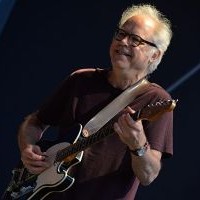 When I think of Miles Davis I don't really think of trumpet. It's a sound that I hear, not an instrument. Again, it's that thing about the melody and the way he treats the melody... He'll play an idea and he gives you a chance to ponder it. Like, 'What does that mean?' Same with Monk. They have this way of showing you things. It's like they bring you into the music. Like a fine watch maker, he'll open up the back of the watch and say 'Now look at that, see that? There's this little thing there that turns around... and this does that,' and it's like these guys are not just showing you what they can do but they're showing you something that they love...
 That's the other thing, that first Wes Montgomery record we talked about and there's Ron Carter, and I think the next record I got was a Kenny Burrell record and Ron Carter was on that. Then I found a Sam Rivers record and Ron Carter is on that. I was like, 'Who is this guy?'
Ron Carter, bass (USA)
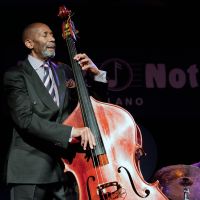 All About Jazz: What was Miles Davis like as a band leader from your vantage point?
 Ron Carter: He was as instructional as all the band leaders I played with. I learned something from all of them and he was no exception.
AAJ: Have you incorporated any of the lessons from your time with Miles Davis in your own projects?
RC: Yes. The recording process, how to do it without any preparation or rehearsal. We just showed up and played. I learned how to dress up for the gig and perhaps most of all how important to hire people who could help you make your musical concept come to fruition. Even if you can't express verbally what you're looking for, you need to find people whom you have confidence can give you what you need.
AAJ: How would you describe the relationship between discipline and freedom in Miles Davis' band?
RC: We had plenty of freedom and we also understood the bar lines and the form and were disciplined. Freedom is a mis-used word in my opinion, and I always resist using that word describing that band. We were as disciplined as someone like Duke Ellington. We just had our own way of rearranging the molecules.
Dimbo Makiese, piano-director Angojazz (Angola)
 As a pianist and director of Angojazz, the influence of Miles Davis is profound and is reflected both in the philosophy of creative freedom and in the very technical structure of the fusion between jazz and traditional Angolan rhythms such as semba, kilapanga, and massemba. Miles Davis was not merely a trumpeter; he was jazz's greatest chameleon, driven by the desire to break barriers and continually redefine the genre. For Angojazz, this avant-garde stance serves both as a beacon and as an aesthetic validation.
 Miles's legacy legitimizes the idea that jazz is not a static museum piece, but a living organism that must feed on other pulsations—in this case, the syncopations and ancestral rhythms of Angola. Miles's iconic albums, such as Kind of Blue (1959), popularized modal jazz, in which improvisation is based on modes/scales rather than on complex and rapid harmonic progressions. In Angojazz, this modal approach is an essential tool. Traditional Angolan rhythms, such as semba or massemba, are often built on bass and percussion ostinatos, allowing Angojazz soloists to float and improvise freely over these Angolan grooves without being bound by the strict rules of American bebop. This creates a space of trance and spiritual connection that is deeply present both in Miles's jazz and in traditional African music.
One of Miles Davis's greatest trademarks was his economy of notes: he understood the importance of silence and of allowing the music to "breathe." In my own approach to piano and arrangements, I employ a similar sensibility. In order for the traditional instruments or the percussive nuances of the dikanza, the ngoma, or the characteristic phrasing of semba to stand out, the jazz practiced by the project cannot be overcrowded. Miles's influence is reflected in the choice to play the right note at the right moment, thereby allowing the Angolan groove to become the true protagonist.
Miles Davis used to say: "Don't play what's there, play what's not there." Angojazz embraces this attitude of constant exploration. The project is neither limited to reproducing American jazz classics in Luanda nor to producing folkloric music dressed in sophistication. It is a search for a third path ("sembajazz"), creating a contemporary language that projects Angolan music onto the international jazz scene while preserving the rebellious and innovative spirit that Miles always championed.
Annamaija Saarela, director, G Livelab Tampere (Finland)
 I was really taken when asked me to be part of his article, but at the same time I felt insecure because I don't consider myself a Miles Davis expert. Fortunately, the question was not posed as: what is the most important or significant album of Miles Davis's career, but the more subjective, what is my favorite Miles Davis album.
 Many people might mention cornerstones like Kind of Blue or Bitches Brew, but my honest favorite of Miles' albums is Sketches of Spain. I know that many people think that album is more of a Gil Evans's work than a Miles recording, but it is very important to me personally. Sketches of Spain is the first jazz album I have ever bought for myself. My own background in my youth is not in jazz music, but in the world of classical music and opera. My mother loved opera and orchestral music and took me to listen to them from a very young age. My favorite album as a child was Prokofiev's Peter and the Wolf, and my dream when I was taking piano lessons was to become a classical pianist.
I probably first heard the Miles and Evans version of "Concierto de Aranjuez" on the radio, but I immediately wanted the album for myself, and I listened to it a lot. Sketches of Spain has therefore served as an important gateway for me, in my twenties, from classical music to the world of jazz, to becoming a jazz lover and event producer, and to the career in which I still get to work
Patricia López, saxophone (Uruguay)
 I have always admired Miles's style, for his immense and authentic personality both in music and in life. His sound conveys to me a direct connection with his soul, a unique warmth and depth that at times become sharp and visceral. A constant swing between light and darkness, an inexhaustible search that expanded every boundary.
 From a compositional perspective, he is a musician who embraced many facets within the history of jazz, and I admire each one of them for his versatility and the enormous legacy he left not only to trumpeters, but to all instrumentalists and composers. It is difficult to choose just one Miles album, so I would like to mention two records that, every time I listen to them, I continue learning from, and that have shaped me as a jazz musician to this day: Kind of Blue and Birth of the Cool (Capitol Records, 1957). There is not much that needs to be said about the first one, because it is a foundational album for almost all of us who love this musical style, and it is a landmark work for many reasons.
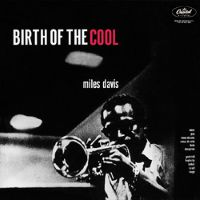 On the other hand, the album Birth of the Cool represented a tremendous learning experience for me because I had the opportunity to be part of a nonet in which we performed these arrangements, and I played baritone saxophone. It was the first group experience where I played complex jazz lines and where I learned bebop phrases within an ensemble setting.
 On this album, the instrumentation is very particular because there is no tenor saxophone, and the sonority is a hybrid between classical music and jazz. It is also the first work in which Miles appears as a leader, and his idea was to imitate a vocal choir with this nonet. From a compositional standpoint, you can hear phrases that define a style and a new post-bebop interpretation, integrating sonorities between cool jazz and modern jazz. In improvisation, Gerry Mulligan stands out for the prominence of his solos, being one of the most active soloists throughout the album, something quite uncommon for a baritone saxophonist.
Miles' music, his sound, and his improvisations left behind an enormous and essential legacy, one through which you can hear much of the history of jazz, and above all, its essence.
N'famady Kouyaté, balafon (Guinea)
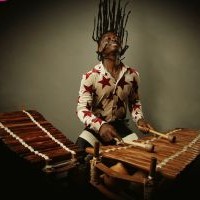 I had listened to Miles Davis occasionally in the past, and I've now spent some more time listening to his music. All I can really say is that his music is truly great and very inspirational. It still feels alive and continues to inspire people across generations.
 Navin Chettri, founder-artistic director "Jazzmandu" Kathmandu Jazz Festival (Nepal)
 Kind of Blue is one of my favorite Miles albums. Such a classic and groundbreaking record—it resonates with people from all walks of life, even if they are not jazz listeners.
  Miles always had great musicians play with him, but the lineup on Kind of Blue had a special organic flow that created a timeless sound. It is always refreshing to listen to this album, and it is my go-to recommendation for students or folks who are new to jazz and would like to get into it.
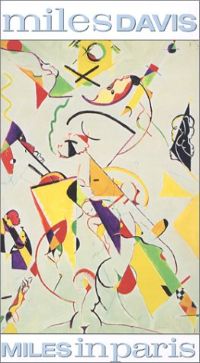
 I got into Miles Davis in the late 1990s in Kathmandu. Jazz was unheard of in Nepal at that time. The first time I saw Miles live was on a VHS tape in 1999 at a friend's place in Kathmandu. He was an expat from the Netherlands who had a VHS of Miles in Paris (Warner, 1990). My bandmates and I watched live jazz on a screen for the first time. That was monumental for us in a place where there were hardly any jazz resources at the time.
In the summer of 2000, we arranged "All Blues" and other classic jazz standards with Nepali traditional musicians on tabla, ishraj, bamboo flute, and sarod. Cadenza & Friends performed these arrangements at the first Jazz at Patan concert, celebrating 100 years of jazz in 2000. Now part of the Kathmandu Jazz Festival, Jazz at Patan is an annual concert and was really the origin of Jazzmandu, now in its 22nd year. We still arrange and perform tunes from Kind of Blue.
Dhafer Youssef, oud (Tunisia)
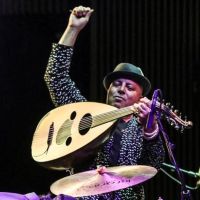 I love every note that comes out of Miles' trumpet. He was a musician with a different vision, not only in music, but as a source of inspiration as a band leader. The way he selected musicians, the way he shaped a band. He brought people together and gave each formation a body and soul. Every band became a unique world with its own identity, its own breath. I am learning from him every day.
 Giveton Gelin, trumpet (The Bahamas)
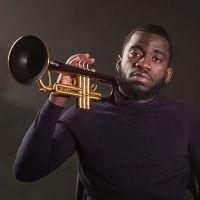 There are three tracks by Miles Davis that I've become obsessively drawn to: "Fall," "Sanctuary," and "Filles de Kilimanjaro." That same feeling extends to the corresponding albums, but these particular tracks have shaped my musicality and artistic vision unlike anything else I've ever heard.
 It was clear this music had been brought down to us from the heavens. I constantly return to them, spending time with the music and discovering something new every single time. It's comparable to a cookie jar that replenishes itself after every visit. We haven't even progressed far enough into the future to invent such a thing in 100 years.
Tags
Rethinking Jazz Cultures
Miles Davis
Ian Patterson
Manchester
Glasgow
Herbie Hancock
Chick Corea
Joe Zawinul
john mclaughlin
Hermeto Pascoal
Jowee Omicil
Gil Evans
John Coltrane
Michael Brecker
Kenny Wheeler
Dexter Gordon
Jaco Pastorius
Marcus Miller
Tony Williams
Ron Carter
George Coleman
Bucky Pizzarelli
Mike Stern
Al Foster
Mino Cinelu
Red Garland
Philly Joe Jones
Dublin
Thelonious Monk
Dizzy Gillespie
John Scofield
Darryl Jones
Sydney
Cannonball Adderley
Jack DeJohnette
Keith Jarrett
Eric Dolphy
Bobby Timmons
Airto Moreira
Flora Purim
Dave Valentin
Bill Summers
Poncho Sánchez
Kei Akagi
Joe Farrell
Wynton Kelly
Paul Chambers
Jimmy Cobb
Hank Mobley
Jimi Hendrix
Ornette Coleman
Dave Brubeck
Gerry Mulligan
Louis Armstrong
Kenny Kirkland
Branford Marsalis
Omar Hakim
george benson
Joey DeFrancesco
Clifford Brown
lee morgan
Freddie Hubbard
oscar peterson
James Morrison
Adam Holzman
Rick Margitza
Benny Rietveld
Ricky Wellman
George Duke
Stanley Clarke
Palle Mikkelborg
Never Ending Revelations
duke ellington
David Sanborn
pat metheny
Michael Henderson
Robert Irving III
vince wilburn jr
Munyungo Jackson
BADAL ROY
Victor Feldman
Sam Rivers
Miles Electric: A Different Kind of Blue
Steve thornton
Amsterdam
Paquito D'Rivera
Danilo Pérez
Comments

PREVIOUS / NEXT


Support All About Jazz
 All About Jazz has been a pillar of jazz since 1995, championing it as an art form and, more importantly, supporting the musicians who make it. Our enduring commitment has made "AAJ" one of the most culturally important websites of its kind, read by hundreds of thousands of fans, musicians and industry figures every month.