Home » Jazz Articles » Interview » Tigran Hamasyan’s Manifeste Destiny
Tigran Hamasyan’s Manifeste Destiny
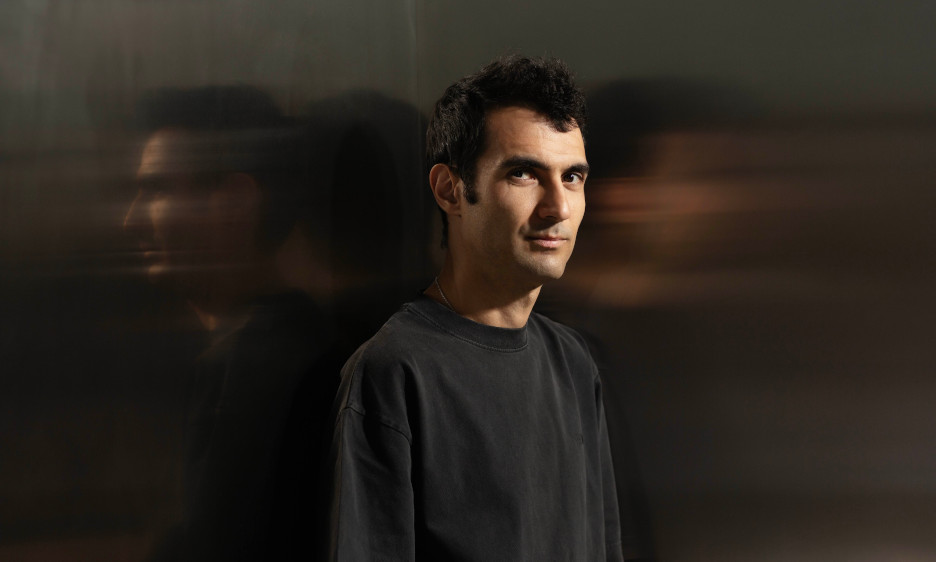
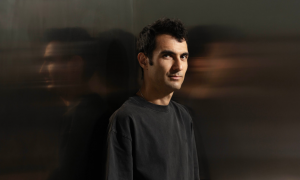
Courtesy Arnos Martirosyan
I kind of realized more and more that the more I age, the more that I embrace my identity and where I was born...
Yet in conversation, Hamasyan was thoughtful, reserved, and deeply in touch with the culture of his native Armenia. That was where All About Jazz caught up with the pianist shortly before he embarked on a 17-day tour of 11 U.S. cities that began weeks after the release of Manifeste.
All About Jazz: The music and culture of Armenia is very refined and ancient culture, and incredibly moving to encounter, and you are a student of and advocate for this culture. Your interest in the Cassiani hymns, written by a 9th Century, CE abbess whose work is some of the oldest Christian notated music in existence. Is fascinating. She was also somewhat of a political figure who had a quote attributed to her that: "I hate silence when it's time to speak." By releasing, Manifeste, is it your time to speak at this moment?
Tigran Hamasyan: Yes, that's a great question. Well, first of all, yeah, thanks for that quote. I'm a huge fan of all the hymns that Cassiani wrote. It's absolutely gorgeous. And yeah, I've been kind of listening to it for a long time now. And finally, a couple of months back, I started experimenting with a little bit of arranging some of those hymns—not only hers, but also other medieval European compositions. Basically, I love telling stories, and throughout my discography, there's this aspect of each song that tells a story, even through music. But we never try to distill words out of what the music is saying. People listen to a song, and they kind of imagine what this song is about. Or I'll have a title that takes them on a specific journey or suggests something specific.
I felt like this project [Manifeste] was kind of a retrospective of a lot of things I've been doing throughout the years. So the formats of the compositions or the different songs are very different from each other. The majority of it is a kind of progressive rock-metal—Armenian-influenced progressive metal, but with electroacoustics. On the other hand, there's some pieces with the choir and electronics. And also a little bit of R&B-ish influences here and there. On a couple of the songs, there's a female vocalist I collaborated with for the first time. And there's the "Fire Child" piece, which is basically an ambient electronic piece that came out of a few different samples from one of the songs on the record. So it's very broad in terms of what the format is musically. And it really felt like a retrospective thing. We distilled a text, which is in the vinyl and the CD, that's about what I stand for as a musician and a group of artists from Armenia—artists living in Armenia right now—and being an artist living in Armenia, what that means and what we stand for. And it's also about being a human being living in Armenia with all its challenges and its beauty on the other side.
AAJ: You moved back from California to Armenia, and there seems to be a gravitational pull of that beautiful country to the Armenian diaspora that impels you back. What specifically impelled you back, and how has that impulse enriched your music or inspired it?
TH: I actually moved back in 2013, but then I also left again just before COVID. And now I'm back here with children and a bigger family. But mainly, I don't know, I realized more and more that the more I age, the more that I embrace my identity and where I was born, and in a way, what God has given me. I could have been an Indian. I could have been born in the US. I could have been Irish, but somehow, I ended up being an Armenian. So, in a way, I take responsibility for that. That's to put it simply. But then, I could be an Armenian living abroad, but I wouldn't necessarily give my children the opportunity to really be carriers of that culture. So I decided to move back and raise my children here, at least for the time being, so they can absorb that culture. Then, if they want to go back to the US at some point, after they finish high school or even before high school, if they want that, then there's the opportunity for them to do that. Or they could go anywhere else in the world, but I want to give them the opportunity to be Armenian culturally and to get the richness of what that has to offer.
And also the toughness. There are different kinds of challenges of living in Armenia and dealing with these challenges and making a change. You know, there's a lot to be done here in terms of like, education in general—basically, the biggest challenges in dealing with the new progressive world while having this old heritage and traditions, and making sure we don't mess it up because people's mindsets, starting from ecological problems to all kinds of mindset problems that don't work in the new world. People have to be educated. So, being part of pushing that, I feel like we could make some difference directing people towards a better place and also learning.
AAJ: For sure. You mentioned your desire to have your children immersed in Armenian culture, and it seems that Armenian culture is extravagantly musical. The music gushes forth from your country, and very moving and emotional music at that. Music and musicians seem to be everywhere. So, taking you back to when you were a child, what was the music that you heard in your home when you were young?
TH: I grew up with a lot of rock. My father was a huge rock fan. He was in a very underground community. Growing up in the Soviet Union, everything was underground, all the kind of "Western capitalist music," you know. So there was a lot of underground music and appreciation for it. People would pay fortunes, like their monthly or sometimes even a yearly salary to get the new Led Zeppelin album or Black Sabbath album. So I grew up with a lot of that music: Black Sabbath, Led Zeppelin, Queen, you know, the The Beatles, etc, etc. Whitesnake, and heavier stuff as well. But on the other hand, my uncle was a jazz man, funk-jazz. So I grew up with a lot of the '70s, Herbie Hancock records, and also some Miles Davis and Chick Corea. Then at some point, my uncle, who was also like my advisor who made sure that I got proper education, he was really close to me, and realizing that I had, I guess, a talent for music. He was guiding me to have the best teachers I could possibly have. And so I studied bebop at some point with an incredible Armenian composer and pianist, his name is Vahagn Hayrapetyan Trio. And that's how I learned to play—really play—jazz, because I also love improvising. Even with all the rock influence, I love to just kind of make my own songs on the spot, you know, improvising. And also, I love blues as well. My grandparents' collection of classical music also helped. And also, since I was five years old, my parents got me my first classical music teacher. And from six years old on, I went to a music school. So I did learn a lot of classical music as well. different repertoire, like the typical music school repertoire, which was also really, really great.
AAJ: Well, if Herbie Hancock and Chick Corea are in the foreground, Komitas and the music of the Armenian church seem to be looking over your shoulder. Did you come to that music later in life or is it just in the air, in the soil, and unavoidable?
TH: Yeah, it's interesting how I came to realizing I have folk musical culture where I come from, and also just folk music in general. It was through artists like Jan Garbarek, Keith Jarrett, John McLaughlin, Shakti—I came to Armenian music through that. I heard, specifically, one record of Jan Garbarek with Ralph Towner, who just passed. That record kind of changed my life, honestly. One night, I remember my uncle took me to his friend's party, and I heard that record there. I was like, What the hell is this? At that time, I was really a bebop head, and I heard this improvising, incredible improvising, but everything was different from bebop. The harmonic language was different, but also melodically what Jan Garbarek was playing was something that had kind of a folk music influence. I heard that. It wasn't the typical bebop vocabulary, so it was a different kind of musical vocabulary that he was using. I took some records home with me that night and that was it. The next day, I was like, Oh, I need to check out folk music, and I found a bunch of recordings. I actually still have them, but at the time, I was also listening to the radio station that was playing Armenian folk music and religious music 24/7. Every time I heard something interesting, I would record and then transcribe it. Then I got a book of Armenian folk music studies and everything.
AAJ: Was that record Solstice (ECM Records, 1975)?
TH: No it's called Dis (ECM Records, 1975). It's a duo record. Unbelievable. It's a beautiful record.
AAJ: On Manifeste—on all your records, really—your concept seems very orchestral. If you were living 100 years ago or 150 years ago, would you have been writing orchestral music? And do you think that maybe if Armenian composer Aram Khachaturian were alive now, he would be doing what you're doing?
TH: Yeah...I don't know. I would love to be a composer, you know, full-time. I guess I could have been a composer. But also, a hundred years ago, maybe I could have been a painter. But composing is something that I really, really love. So, the thing about the world right now, the music world, that's very different compared to, let's say, 100 years ago, is the fact that we're exposed to a lot of folk music from all over the world, and we have access to study it. So back in the day, I didn't hear a lot of crazy, odd-meter stuff from that period. Only a few composers wrote music that was in, let's say, 5/4 or 7/4. But they didn't really explore that field yet, until later on, until, let's say, Indian classical music came to people's attention, or maybe Bulgarian folk music. But yeah, I feel like the difference now is mainly our access of all these beautiful cultures that we learned from, that we have the opportunity to learn from in this age. So Khachaturian would probably write some crazy music if he were alive today.
AAJ: What are the conditions on the ground in Armenia right now? I know it's been very difficult over the last 30 or 40 years, but are you or your family in any physical danger on a day-to-day basis?
TH: No, no, no, not anymore. I mean, we lost another huge territory, Armenian Karabakh. It was a completely ethnically cleansed of all Armenians after genetic studies confirmed that Armenians have been on this land for thousands of years, 5000 years, at least.
So it's kind of outrageous that it's possible in this age to ethnically cleanse people like that, and all the world is just watching it. So yeah, it's not that there's no danger. Now our government is spending money on defense, which was lacking during the previous presidents [administrations], who thought that everything was safe. So now I'm hoping there will be more... unfortunately, we have to be strong so that there's no... every time there's this balance with our neighbors, unfortunately, they take the opportunity.
AAJ: Yeah, well, we're all living in samsara, aren't we?
TH: Right. Yeah. I just hope if there's no wars, everything is going to be great.
AAJ: I hope so. I hope you're safe. I hope you're well.
Tags
Interview
Tigran Hamasyan
John Chacona
Lydia Liebman Promotions
Armenia
World Passion
Manifeste
Led Zeppelin
Black Sabbath
Queen
Beatles
Whitesnake
Herbie Hancock
Miles Davis
Chick Corea
Vahagn Hayrapetyan
Jan Garbarek
Keith Jarrett
john mclaughlin
Shakti
Ralph Towner
Solstice
Dis
Comments

PREVIOUS / NEXT


Tigran Hamasyan Concerts
Support All About Jazz
 All About Jazz has been a pillar of jazz since 1995, championing it as an art form and, more importantly, supporting the musicians who make it. Our enduring commitment has made "AAJ" one of the most culturally important websites of its kind, read by hundreds of thousands of fans, musicians and industry figures every month.