Home » Jazz Articles » In Tribute To... » Miles Davis At 100: A Global Perspective
Miles Davis At 100: A Global Perspective

Decades later, as I continue to learn and explore this unique and extraordinary art form, I still carry the lessons I gleaned from Miles in those early years; in fact, they remain central to my approach: less is more, intention, placement, invention with simple structures, blurring the lines with anticipation and delay, 'virtuosity' as demonstrated in a myriad of ways, nuance, sound, sound, sound, renew the context around you, the path continues to move forward, the intrinsic link between the artist, the music, and their story...
Others have reiterated and cemented the lessons, but I heard them first through Miles Davis.
Mike Stern, guitar (USA)
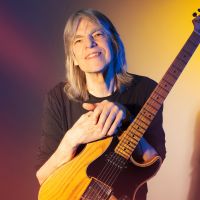 I started trying to write some stuff about my experience playing with Miles Davis and too many memories came to mind. But of course, some most important memories for me was just getting to hear his amazing improvising night after night. He was always searching—trying to find some new stuff. And he did that throughout his career, of course, with different concepts. But no matter how many different ways he shaped the music around him, he always sounded like Miles. There was always so much blues in his playing. No matter how far out some of his concepts got, he had a way of keeping it on the ground at the same time. I'll always be grateful to have been given the opportunity to play with Miles Davis. It was an amazing experience.
 Stephane Mercier, saxophones, (Belgium)
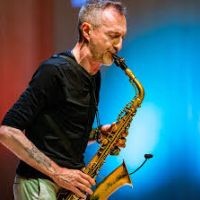 When I think about the genius of Miles Davis, I'm reminded of a quote by Thelonious Monk: "A genius is the one most like himself." Miles never tried to present himself as the greatest trumpeter in purely technical terms. Instead, he found his path by being unmistakably himself.
 He was perceptive enough to recognize the value of every opportunity. When, at around twenty-three, he was made to carry the banner of cool jazz, he realized it was also a powerful form of positioning and identity. He embraced that idea throughout his career, continually reinventing his sound and image—right up to his final album, Doo-Bop (Warner Bros, 1992).
Miguel Zenón, saxophone (Puerto Rico)
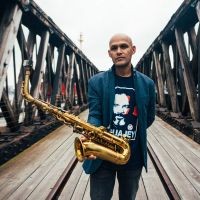 I had to think really hard about this one, but I finally settled on his solo on "Straight Chaser" from Live at Newport (also on the Miles and Coltrane compilation). Miles plays so beautifully here, with so much creativity, rhythm and control. It's also always amazing to hear Miles play over a blues form; I think that we can really trace his evolution as a player and as a conceptualist by studying how he played over many blues forms over the years.
 I find this period with his sextet (with Coltrane, Cannonball Adderley and Bill Evans) specially inspiring. It was the first Miles I ever heard, specifically the compilation '58 Miles (CBS, 1974) which is mind-blowing in every way and such an underrated testament to his genius.
Rute Mbangwa, vocals (Zimbabwe)
 Music is indeed a universal language. From Zimbabwe in the Southern part of Africa, Miles Davis' music reached across oceans and generations and profoundly shaped my sound and identity. I fell in love with his musicality... his tone, his fearless experimentation, and refusal to be boxed in. His muted trumpet was mellow yet full of clarity; subtle, but it invoked something deep. That artistry resonates across ages, cultures, and races. Miles gave me the courage to be fearless with rhythm, harmony, and style.
 My music is Afrocentric at its core, fused with strong jazz elements, an Afro-jazz fusion heavily influenced by his adventurous spirit. He was a trendsetter, a deep listener, and a remarkable team player; studying his recordings with his bandmates has been a masterclass in itself. Even though he never formally left us one, his music is the masterclass. His legacy lives on, and the sound now synonymous with the name Rute Mbangwa exists in large part because of him. I owe that to Miles.
.
Marta Bellomo, vocals (Argentina)
 His style changed how the trumpet is played. Davis abandoned fast, pyrotechnic solos. He sought an economical sound, with few notes, plenty of silence, and the Harmon mute as his trademark. He used to say that silence was as important as the music. His legacy wasn't technical—it was conceptual: teaching how to be cool, to play with space, with attitude.
 Franco D'Andrea, piano (Italy)
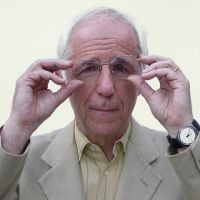 I followed him from the beginning—I was just a kid. I listened to his records with the quintet that included Coltrane. I also followed him through his "journeys," the electric Miles, especially those from '85. I loved those records in particular. There was Jack DeJohnette, and Keith Jarrett, who once said he hated keyboards, but in my opinion they were beautiful.
 I attended one of his concerts in Rome—the one at the Teatro Sistina in 1969 with Dave Holland, Chick Corea, Wayne Shorter and DeJohnette. It was a superb concert. Whenever Miles is there, things always happen.
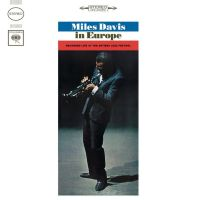 Another concert I attended was the one in Juan-les-Pins, which was recorded and released as Miles Davis in Europe: Live at Antibes (Colombia, 1964). I was at that festival because I was playing bass in an Italian group, so I had the chance to go backstage. I had a brief but intense period as a bassist. During that concert, the drummer Tony Williams played a solo—something he never usually did. It was magnificent. Miles, with his back to the audience, was watching this seventeen-year-old kid play that unforgettable solo. It was '63 in Juan-les-Pins. They seemed like aliens to me. I listened to Herbie Hancock, and I remember not understanding anything at all. Then I studied everything later by listening again on the record. The sound wasn't great.
 Miles was also an exceptional talent scout, to begin with. Depending on the period, he was always still Miles, but the musicians who played with him kept changing—and they were always fantastic. He was the guiding light; he created the group's special mood. He could be very melodic, but also very fierce when hitting certain high notes. He was like a coach on the field. They're one-of-a-kind figures—that's all there is to it. Like Monk.
Nicole Johänntgen, saxophonist (Germany)
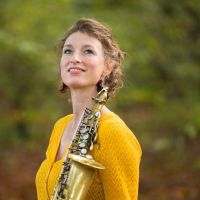 When I think about Miles Davis, I hear human nature. The song "Human Nature" but him as human nature as well. He didn't write this wonderful song but played it in a such a simple way—straight from his heart. Concentration, meditation, breath, flow. All in one. He knew about jazz improvisation but placed these notes with such feel.
 In the '50s Miles was boxing beside his music life. He had a big passion for that. I see here a connection between playing a solo and boxing. Both are based on high concentration and on knowledge of technical skills. Concentration—to be ready to let it go—and then the sound. With the result of high concentration and time, I experience in my own playing a kind of trance, because I go to the limit of time. This brings freedom in my playing. Miles knew his instrument, the jazz language—he was flying in the moment of playing a solo. For all these reasons I am definitely inspired by Miles Davis.
Luis Muñoz, percussion (Costa Rica)
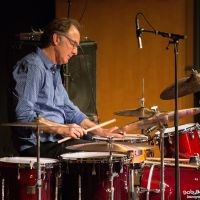 I was still living in San José, Costa Rica when I heard Miles Davis' music for the very first time. It was December of 1968, and I was a 15-year-old boy playing drums with The King Kats, a band that had recently recorded their very first single which had gone to the top of the rock 'n' roll charts in the country. Just four years before that, The Beatles had convinced me that music was my calling.
 My musical world was already extensive then. At home, my parents would play Chopin, Ravel, and Tchaikovsky. I would soak up the tangos of Carlos Gardel, the mambo of Dámaso Pérez Prado and the boleros of Agustín Lara, el Trio Los Panchos and Toña La Negra emanating from the radio or the cantinas and stores around the city. With my friends, the sounds of The Stones, The Who, The Kinks and The Animals were our music of choice.
One afternoon, while waiting for a foosball table to free up at the local teenage hang, a friend invited me to his house across the street to listen to a record he had just brought from the US. It was Miles' Miles in the Sky (Columbia, 1968) record, and It transformed me.
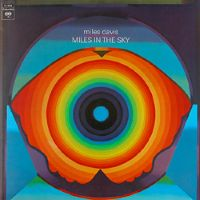 I remember listening to the opening few bars of "Stuff" which came out blasting, with Tony Williams' backbeat and Ron Carter's baseline hinting at bossa nova and boogaloo, and Herbie Hancock's chromatic runs on the Rhodes setting up the pulse. The horn melody came in and after that, the magic started, the musical dialogue, the dynamics, the improvisation, the interplay and Tony continuing to fly everywhere over that perfect groove.
 It was a brand-new musical language for me, full of possibilities, a brand new sound and concept, fresh and alive. And then there was the beauty of Miles' trumpet, his phrasing, his choice of notes, and the overall sound of the band. It was hard for me to relate or understand what was going on in that music, but I knew that it was making me feel something I had never felt before, and I loved it! That was the beginning of my moving into Miles Davis' world, where I still reside. It is a world that has inspired me so often, that has opened so many doors within me, that has created so many questions and offered me so many answers. And as his world would change, as it so often did, I too would change with it.
My musical interests shifted after listening to that album. Soon after, I was exposed to Eric Dolphy, Monk, Bobby Timmons and John Coltrane—I must say I was very lucky, since Jazz was rarely available in Costa Rica then. In 1974 I would make the decision to move to the United States in order to be with a woman that eventually would become my wife and muse. Also, I wanted to learn about and immerse myself into that wonderful musical world that Miles Davis had introduced me to just six years before.
In 1985 I finally had the opportunity to see Miles live for the very first time. It was at the Queen Mary Jazz festival in Long Beach, CA. where I was performing with Airto Moreira, a Miles alumnus, his wife Flora Purim and the Latin Jazz All Stars, a group that included flutist Dave Valentin, percussionists Bill Summers and Poncho Sanchez, pianist Kei Akagi—who would eventually become Miles' keyboardist for a few years—and Joe Farrell on sax. This was late-period Miles, and his repertoire then was a peculiar collection of tunes, Michael Jackson's Human Nature, Cyndi Lauper's Time after Time, etc.
However, that night, the dream of that 15-year-old Costa Rican boy who had found immense beauty and inspiration in Miles Davis' music, and who had been shaped as an artist by him finally had come true. Miles' sound and spirit were there, and so was the magic behind every single note he chose to play. At the end of the concert, a deep sense of gratitude came into me. Forty years later, that feeling remains...
Tich Makalisa, piano (Zimbabwe)
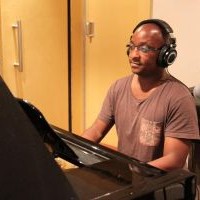 Miles Davis's My Funny Valentine (Columbia, 1965) album had a profound influence on me as a jazz performer, particularly in the way the band interacts in such a sensitive and conversational way.
 From a pianist's point of view, what stands out most is how Herbie Hancock approaches comping—not as constant accompaniment, but as a responsive dialogue with the soloist. His chords are sparse, carefully placed, and often leave space for the horns to shape the direction of the music. Rather than filling every moment, he listens deeply to Miles and the rhythm section, responding with colors, voicings, and rhythmic gestures that support the emotional arc of the performance.
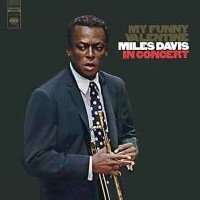 That level of interaction taught me that great piano playing in a small jazz ensemble isn't about dominating the harmony, but about shaping the texture of the music and helping the band breathe together. Listening to that recording pushed me to think more intentionally about space, timing, and how my comping choices can influence the entire band's sound. Miles Davis's solos are defined by restraint, using space and silence as powerfully as the notes themselves. Rather than overwhelming with speed, he crafts melodic, emotionally rich phrases that shape the mood of the entire performance. This has had a major influence on how I approach my own solos.
 Hong Chanutr Techatananan, drums (Thailand)
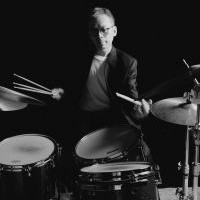 Without a doubt, my all-time favorite Miles Davis recording is the double-live album, Four & More/ My Funny Valentine, recorded live in 1964.
 Growing up in Bangkok, Thailand, during a time when jazz was still finding its footing in the city, I was just beginning to discover and make sense of jazz, I would pop both of these albums into my CD Walkman every night before bed, completely captivated yet utterly lost in the music. I had absolutely no idea what these musicians were doing, but I was blown away by it. What struck me most was the incredible role that Tony Williams, Herbie Hancock and Ron Carter played in defining the band's rhythmic feel and in interpreting Miles' great vision for the band's composition and musical direction. Their deep and sophisticated sense of rhythm and harmony, combined with their ability to create magical moments on the spot, was truly groundbreaking.
Looking back, I can honestly say those late-night listening sessions had a strong impact on me, and in many ways, helped lay the foundation for me and the style of my playing I would eventually develop over the years.
Tomos Williams, trumpet (Wales)
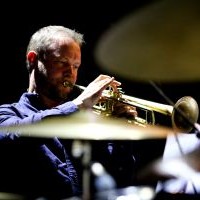 I've chosen to contribute an 'underrated' album by Miles. But anything with Miles on it is worth listening to, and not necessarily under-rated either. In the '60s Miles released a slew of incredible live recordings; My Funny Valentine and Four and More, the legendary Live at the Plugged Nickel, as well as the swinging Blackhawk residency, but I've gone for Miles Davis at Carnegie Hall (Columbia, 1962). Two solos by Miles on this album stand out to me: "So What" and "Teo." Both give us a foresight into the maximalist Miles which would come to full fruition on the Live at Fillmore dates and Live Evil in the early '70s. But here is Miles in full flight, in complete control of his horn and his ideas, smearing and searing his way into the highest registers of the trumpet.
 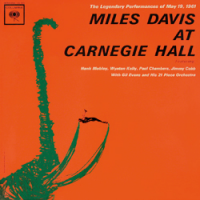 His solo on "So What" is his defining live solo on that tune—to my ears—while he is having such a great time on "Teo," with the Spanish tinge that Miles did so well. He jumps back in for another bite at the cherry at the end of the song. These two solos are backed by his band of the time (Wynton Kelly, Paul Chambers, Jimmy Cobb, with Hank Mobley on saxophone). The presence of the Gil Evans Orchestra at the concert adds an element of grandeur to many of the other songs and the orchestra's introduction to "So What" sets the scene before Miles and his quintet take flight.
 I've always found these two solos by Miles on "So What" and "Teo" particularly inspiring. You can't beat 'live Miles.' His presence and commitment to the 'now' bursts through with every phrase and gesture. Thank you for the music Miles.
Sunna Gunnlaugs, piano (Iceland)
 My favorite album of his is My Funny Valentine, half of the 1964 Town Hall concert with Herbie Hancock, Ron Carter Tony Williams and George Coleman. My parents bought the album for me when I was getting into jazz.
 It is funny to think back to that very first listen because at that time it was too advanced for me and I did not get it. I did not understand what was happening. My first thought was to put it aside but then I decided to stick with it and of course I totally fell in love with it. Herbie's solo on "All of you" became my absolute favorite and I transcribed it and still have my handwritten copy of it. There is so much shape to the music, so much forward motion and always something happening... and the transition from Miles' solos to Coleman's are always so amazing. I have always thought that it was magical how the solos would build in intensity, come back down a little bit but then build again, and the vocabulary is the perfect mix of catchy phrases, interesting colors and the blues. I still love it.
Jerry Léonide, piano (Mauritius)
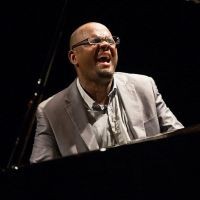 For my album Heritage: A Tribute To Miles Davis (2024), I chose to depict him as a pharaoh. He is, for me, the pillar that jazz stands on, and his contribution to modern music is simply invaluable. Miles showed us that jazz is not just a musical style, it is a universal language. He reminded us that improvisation is the essence of being human, and that playing music is one of the most powerful experiences there is.
 Every time I sit at the piano and revisit his repertoire, I feel both the weight and the gift of that inheritance. That is his greatest legacy, and it is why, more than thirty years after his passing, musicians from every corner of the world are still in conversation with him.
Sandy Gabriel, saxophone (Dominican Republic)
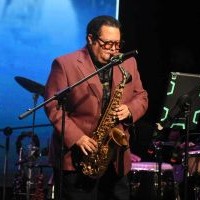 The greatest legacy of the legendary musician Miles Davis goes beyond his music—it also lies in the way he transformed how music is thought about and created. He was an extraordinary trumpeter who continuously revolutionized jazz, bringing his knowledge and brilliance to every recording he made. Simply embracing the idea that "less is more in music" opened the minds of musicians around the world. It led us to approach improvisation with greater awareness, teaching us that a single, perfectly placed note at the right moment is worth far more than a thousand notes played without intention.
 He was constantly reshaping and redefining the many styles of jazz, leaving his mark across the wide range of recordings he produced—from bebop to electronic jazz. In conclusion, I consider Miles Davis to be one of the five greatest jazz musicians in the history of humanity. I'm deeply grateful to God for blessing us with an artist of such creativity and musical genius.
Jaak Sooäär, guitar (Estonia)
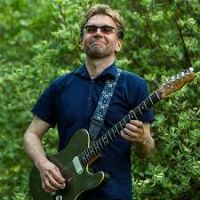 I like so many albums by Miles. When I was a young musician, I really liked his late '50s albums, especially Kind of Blue. I still think that it is a real masterpiece. I was introduced to his late '60s electric albums many years later and from the beginning I really loved Live Evil (Columbia, 1971) the most. I guess that this album gives an idea about the possible co-operation of Miles and Jimi Hendrix which unfortunately never happened. The flow and energy of this album are so natural and strong. Great groove and wonderful solos. John McLaughlin is incredible on electric guitar. I have played some tunes from the album myself and these grooves are such inspiring starting points for improvisation.
 Yazz Ahmed, trumpet (England-Bahrain)
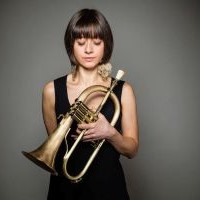 Live Evil is the follow up to Bitches Brew—also one of my favorites. The album is a mixture of live and studio recorded material, whereas Bitches Brew was purely created in the studio. The band sounds really fluent, like they've been on a spiritual journey from their very first experiments, defining this new genre of jazz.
 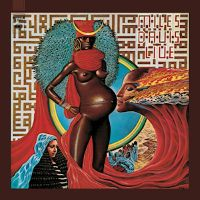 I'm still totally blown away by the power, the raw energy and the telepathic communication between the wonderful band Miles assembled. I'm also really inspired by the editing process, the physical cutting of tape with a blade, essential in creating these compositions, which carry such strong narratives and compelling moments from all the musicians. Miles's use of space is perfect—he never plays too much, just the right amount. It's so easy to overplay free music. I've learnt from him the importance of leaving space, letting the music breathe. I listen to my fellow musicians, make a statement when it feels right, and if I don't have anything to say, just let the music evolve around me.
 Cote Calmet, drums (Peru)
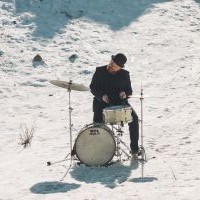 To me, Miles Davis' most important contribution wasn't just a single album or style, but his incredible ability to constantly reinvent himself and create music that reflected the world around him. It's mind-blowing how he could completely shift gears—from the 'cool' era to something as wild as electric fusion—and still be the best at it every single time. He had such an intense, clear vision that no matter what direction he took or what was happening in the culture, the music always worked. That's really his greatest legacy: showing that an artist can have the courage to change everything without ever losing their edge. He proved that if your vision is strong enough, you can lead the music anywhere and it will always be brilliant.
 Linley Hamilton, trumpet (Northern Ireland)
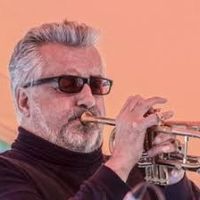 Miles Davis' solo on "So What" has to probably be the one I was most influenced by as a young player. In terms of its influence, the contrast to bebop where chords move quickly and lines are constructed more vertically in essence, to this horizontal modal approach with straight, no vibrato, sound and intent again reinforced dynamically, is profound.
 It was almost as if bebop—which had its glory days over a decade before, with melodies reworked mostly over better known tune—was forcing musicians to progress through directional change... Ornette Coleman's "free" movement, Dave Brubeck's academic and odd-meter approach and Miles' modal period with space, as well as the orchestrated work with Gil Evans, and his nonette with Gerry Mulligan in the Birth of the Cool era.
"So What"—two chords or modes for the entire form, 16 bars D Dorian, eight bars Eb Dorian, then back to eight bars of D Dorian. The chords don't do as much of the work as they do in other forms of modern jazz, so the creativity, the partnership with tone, the impact of range on target notes, the dynamic contour across the approach phrases, the use of space, the motivic development of motivic ideas—these are all magnified at the slower speed and the simplicity of the rhythm section. It is also highlighted by the contrast to the other soloists, especially Coltrane.
Bassekou Kouyate, ngoni (Mali)
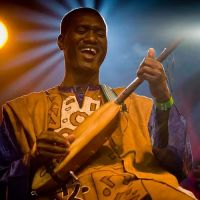 Miles showed me that you don't have to stay in one place with your music. You can always change and try new things. That gave me the courage to explore new sounds with my ngoni, without forgetting where I come from.
 Khadijah Simon, piano (Antigua and Bermuda)
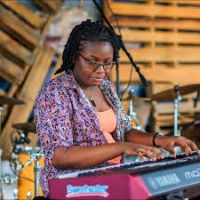 Miles Davis has influenced me through his fearlessness and confidence as a musician. He was always willing to push musical boundaries, unconcerned with challenging expectations or receiving criticism from others. He trusted his artistic vision deeply, and that has influenced my artistic approach. His ability to lead with conviction, take creative risks, and remain unapologetically authentic inspires me to approach music with greater confidence, to trust my instincts, and to continuously grow as both a pianist and an artist.
 Gerald Situmorang, guitar (Indonesia)
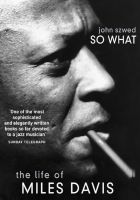
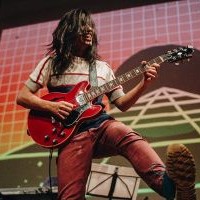 In 2006, while I was still in college, my guitar teacher handed me two things about Miles Davis: the Relaxin' with the Miles Davis Quintet album and John Szwed's biography So What: The Life of Miles Davis (Penguin Random House, 2003). I didn't know it then, but those gifts would fundamentally shift how I perceived jazz—and Miles himself.
  Since then, I've listened to his entire discography, tracing the steps of a pioneer who was always breaking the boundaries in all eras. That spirit of evolution is what I carry with me every time I make a new album. I strive to follow his footsteps by constantly changing, yet I always try to be honest and keep my authenticity when I'm creating my music.
 And Miles as an improviser? He remains my G.O.A.T. I find myself chasing that Miles style, the deliberate choice of notes, the masterful use of space, and a tone so singular that it's recognizable from the very first breath. Even now, my goal remains the same: to have my own sound in playing and improvising.
Holman Alvarez, piano (Colombia)
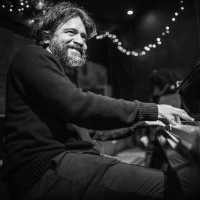 Of the many contributions Miles Davis made to music, the one I admire most is his desire to explore new territories. Whenever something caught his attention, he would try to experiment with it; he was open to change, to being influenced by the transformative forces of chaos. Miles knew how to generate energy from the friction between opposing forces—steady groove versus free playing, classical music versus jazz. This layering of elements, tested over intense periods of touring and studio sessions, resulted in something entirely new and intense.
 This openness to play and to change—so natural in children—is the greatest contribution Miles Davis has made to my career as a musician.
Donna Khalife, bass-vocals (Lebanon)
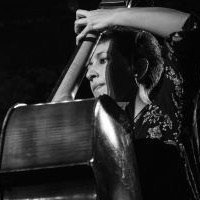 When I think of jazz and its eclecticism, its different currents, styles, and infinite horizons, I think first of Miles Davis—the artist who kept pushing both his own boundaries and those of everyone around him. The albums he left behind are so diverse and extraordinary, each one unique in its own way.
 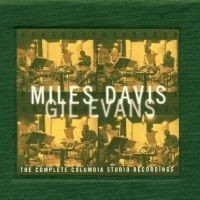 There are still so many I have yet to discover, but two albums in particular had a profound influence on me: Kind of Blue, which introduced me to jazz and from which I transcribed my very first solos, and Miles Davis & Gil Evans: The Complete Columbia Studio Recordings Columbia, 1996), which deeply inspired me through its incredible arrangements. The compositions, the orchestra, the melodies, and Miles's unmistakable sound all resonate with me in a powerful way. What a gift it is that he left us all of this music.
 Dexter Stanley Tauvoa, drums (Samoa)
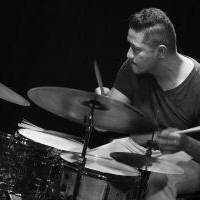 In his readiness to pursue new ideas, push boundaries, and remain true to his own artistry, Miles Davis gave countless others the permission to let our own lights shine and to realize our own visions. His impact parallels the great Louis Armstrong in how he shaped jazz and consequently all else around it. Miles' vast body of work lets you find belonging in whichever sense of jazz appeals to you, and if not, his essence implores you to find it!
 Vasil Hadžimanov, piano (Serbia)
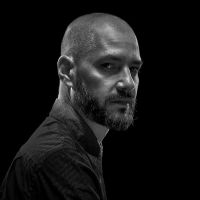 Miles Davis is perhaps the only musician whose entire work is indescribably dear, inspiring and important to me. During his career, Miles managed to bravely and without compromise enter into new musical adventures, while in the process of creation he pushed all possible boundaries, created revolutionary musical genres, and completely new styles, within jazz music and beyond. Each album is a lesson in itself. You can dissect and analyze each one for years to the point of exhaustion and you will always find something new and beautiful.
 At the same time, we can listen to each of his albums without paying too much attention to the details, which is especially difficult for us musicians, surrender to the entire sound and the atmosphere it carries. The effect will be the same. Every time we listen to it, we'll discover new things and experience something fresh and special. That unique special experience only he was able to create.
Miles also had a gift to get the most out of every musician who plays with him, no matter their mastery level. This is just proof of how gifted and skilled he was, not only as a trumpet player and composer, but also as a band leader. A true musical guru. I am very glad to have been invited to write about this giant, and deeply honored to do so. It feels impossible to fully express what he has left behind for all of us. Perhaps the clearest understanding of his greatness and how precious he was can only come through listening to his music. All that remains to be said is: Thank you, Miles. We love you.
Tots Tolentino, saxophone (The Philipines)
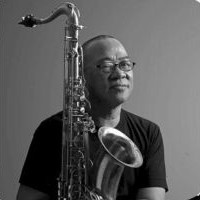 Miles albums were like the hip thing to listen to for jazz musicians of my generation. I loved each listening experience, trying to figure out the "space" in every Miles melody and solo.
 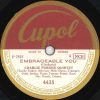 I couldn't figure it out in my younger years, always distracted by the busy sax solos on the recordings. But the solo that got me the most wasn't on a Miles album—it was on Bird's "Embraceable You." Lyrical and radical. I am still learning from that solo. A lot. Miles lives!
 João Barradas, accordion (Portugal)
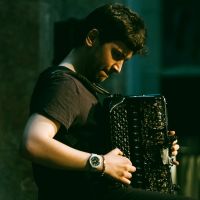 Miles Davis is synonymous with expression, precision, rhythmic prowess, and bandleading at the highest level. His influence is inseparable from the very history of jazz. It is nearly impossible to imagine contemporary music without his discography. As through these recordings, Davis shaped not only the course of modern jazz—consider the interplay within standard forms of Wayne Shorter, Herbie Hancock, Ron Carter, and Tony Williams, where fixed chord changes become springboards for virtuosity and innovation; from advanced comping impositions to metric modulation and the reshaping of formal quadrature—but also left a profound imprint on other musical traditions, from classical to pop music. A cultural icon.
 David Laborier, guitar (Luxembourg)
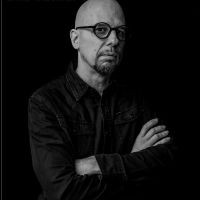 The first time I consciously encountered Miles' music was the year before going to college, when I entered the jazz department of the Luxembourg Conservatory. I later realised I had been listening to his alumni for quite some time, as Sting's Bring On the Night (A&M, 1986), with Kenny Kirkland, Darryl Jones, Branford Marsalis and Omar Hakim, had already been one of my favourite records.
 Like most rock guitarists getting curious about jazz music, my gateway into the language of jazz was "So What" and the Kind of Blue album. It's the combination of the incredible recording, the out of this world musicianship of that band and the overall accessibility to the music for jazz neophytes and the general public that makes this particular album so impactful. At least it was to me. Also, it challenged my ears to want to understand the sounds they were discovering and, most of all, attempt to express them on an instrument.
Then came the acquisition of jazz repertoire and the discovery that Miles' work spanned as many stylistic currents as music history had to offer. He seemed to be as much at ease in a bop setting as he was playing with hip-hop loops and a full-blown electric band. His trademark playing style and sound seemed to effortlessly serve every single one of the situations and lead the charge of the band, to sing on top of Gil Evans' many colorful arrangements or be as incisive as needed to hold the ground shaken by Marcus Miller's fat groove. Or to play such beautifully crafted, clear and concise arrangements of jazz standards (the four "-ing" albums), when just a minute later, he leads "Four and More" to a deconstruction of the standard he had just helped in setting! Imagine the awe when discovering that all of this could be done with only metal pipes and air, without a constant stream of words, dance or pyrotechnics. Just that sound, feel, sense of space and adventure! Oh boy, I could not imagine an ounce of this was even thinkable.
There's this whole legacy of players who went through his bands and went to become major influences on others themselves. Quite a few of them seem to have walked away from the experience with a heightened hunger for exploration of the uncharted waters of music. For me, the biggest takeaway of Miles' body of work is the fearless confrontation of set standards and of the criticism that comes from breaking with the expected. Facing the "that's the only way it's supposed to be done" demon is no small feat, and I think that most musicians long for a small piece of the courage Miles had over decades.
Polycarp Kyagulani, multi-instrumentalist-conductor (Uganda)
 Bitches Brew (Columbia, 1970) is a work that continues to challenge and inspire me as both a conductor and a musician. What draws me most to this album is its bold, unapologetic fusion, reshaping the direction of modern music by merging jazz with rock and experimental textures.
 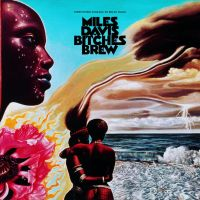 As I work to fuse jazz with traditional Ugandan music, I find Miles's approach both liberating and instructive; it is a reminder that true innovation lies in the courage to bridge seemingly distant worlds. I am equally fascinated by his use of space and silence. How he allows the music to breathe, creating a profound emotional focus. For me, Bitches Brew is more than an album; it is a creative compass that guides my own artistic exploration in Africa.
 Anton Stavnichy, saxophone (Kyrgyzstan)
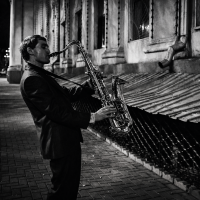 My favorite solo by Miles Davis is "Stella by Starlight" from the album My Funny Valentine, recorded live at Philharmonic Hall in February 1964. When I was first immersing myself in the world of swing and post-bop, like many saxophonists starting out, I wanted to play fast and impressively, filling every bar with notes. Miles, on that performance of "Stella," on "So What," and on "My Funny Valentine," made me rethink that approach. On that recording, he plays as if every note must first earn the right to be heard. And between the phrases there is space in which Herbie Hancock, Ron Carter, and Tony Williams respond to him almost telepathically.
 That solo taught me that silence in improvisation is not emptiness but part of the statement. Every pause becomes tension, and every note that follows it lands with impact. Ever since, whenever I pick up the saxophone and think about soloing on a ballad, I return to that "Stella" as a point of reference: a reminder that a musical idea carries exactly as much weight as the silence surrounding it.
Vangthanousone "Lao Jazznova" Bouaphanh, guitar (Lao PDR)
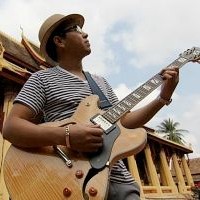 Miles Davis has been more than just a legend to me—he's a reminder to always search for new sounds and never stay comfortable. On his 100th anniversary, I'm grateful for the way he shaped not only jazz, but the way we think about music.
 Warren Galea, guitar (Malta)
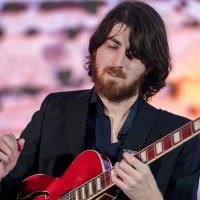 Miles Davis was one of the very first jazz artists I ever heard on record. A central figure in the history of this music, he has influenced me in a number of ways. I remember reading his autobiography as a teenager and that had quite an impact on me, especially the way he talked about Charlie Parker's genius and the heights music can rise to. At that age, the book really showed me how deep the art form is and how dedicated to their craft the masters were.
Tags
Rethinking Jazz Cultures
Miles Davis
Ian Patterson
Manchester
Glasgow
Herbie Hancock
Chick Corea
Joe Zawinul
john mclaughlin
Hermeto Pascoal
Jowee Omicil
Gil Evans
John Coltrane
Michael Brecker
Kenny Wheeler
Dexter Gordon
Jaco Pastorius
Marcus Miller
Tony Williams
Ron Carter
George Coleman
Bucky Pizzarelli
Mike Stern
Al Foster
Mino Cinelu
Red Garland
Philly Joe Jones
Dublin
Thelonious Monk
Dizzy Gillespie
John Scofield
Darryl Jones
Sydney
Cannonball Adderley
Jack DeJohnette
Keith Jarrett
Eric Dolphy
Bobby Timmons
Airto Moreira
Flora Purim
Dave Valentin
Bill Summers
Poncho Sánchez
Kei Akagi
Joe Farrell
Wynton Kelly
Paul Chambers
Jimmy Cobb
Hank Mobley
Jimi Hendrix
Ornette Coleman
Dave Brubeck
Gerry Mulligan
Louis Armstrong
Kenny Kirkland
Branford Marsalis
Omar Hakim
george benson
Joey DeFrancesco
Clifford Brown
lee morgan
Freddie Hubbard
oscar peterson
James Morrison
Adam Holzman
Rick Margitza
Benny Rietveld
Ricky Wellman
George Duke
Stanley Clarke
Palle Mikkelborg
Never Ending Revelations
duke ellington
David Sanborn
pat metheny
Michael Henderson
Robert Irving III
vince wilburn jr
Munyungo Jackson
BADAL ROY
Victor Feldman
Sam Rivers
Miles Electric: A Different Kind of Blue
Steve thornton
Amsterdam
Paquito D'Rivera
Danilo Pérez
Comments

PREVIOUS / NEXT

Support All About Jazz
 All About Jazz has been a pillar of jazz since 1995, championing it as an art form and, more importantly, supporting the musicians who make it. Our enduring commitment has made "AAJ" one of the most culturally important websites of its kind, read by hundreds of thousands of fans, musicians and industry figures every month.