Home » Jazz Articles » Book Review » Listening To Prestige
Listening To Prestige

The idea was simple: listen to the Prestige catalog and see whether those recordings really held up over time.
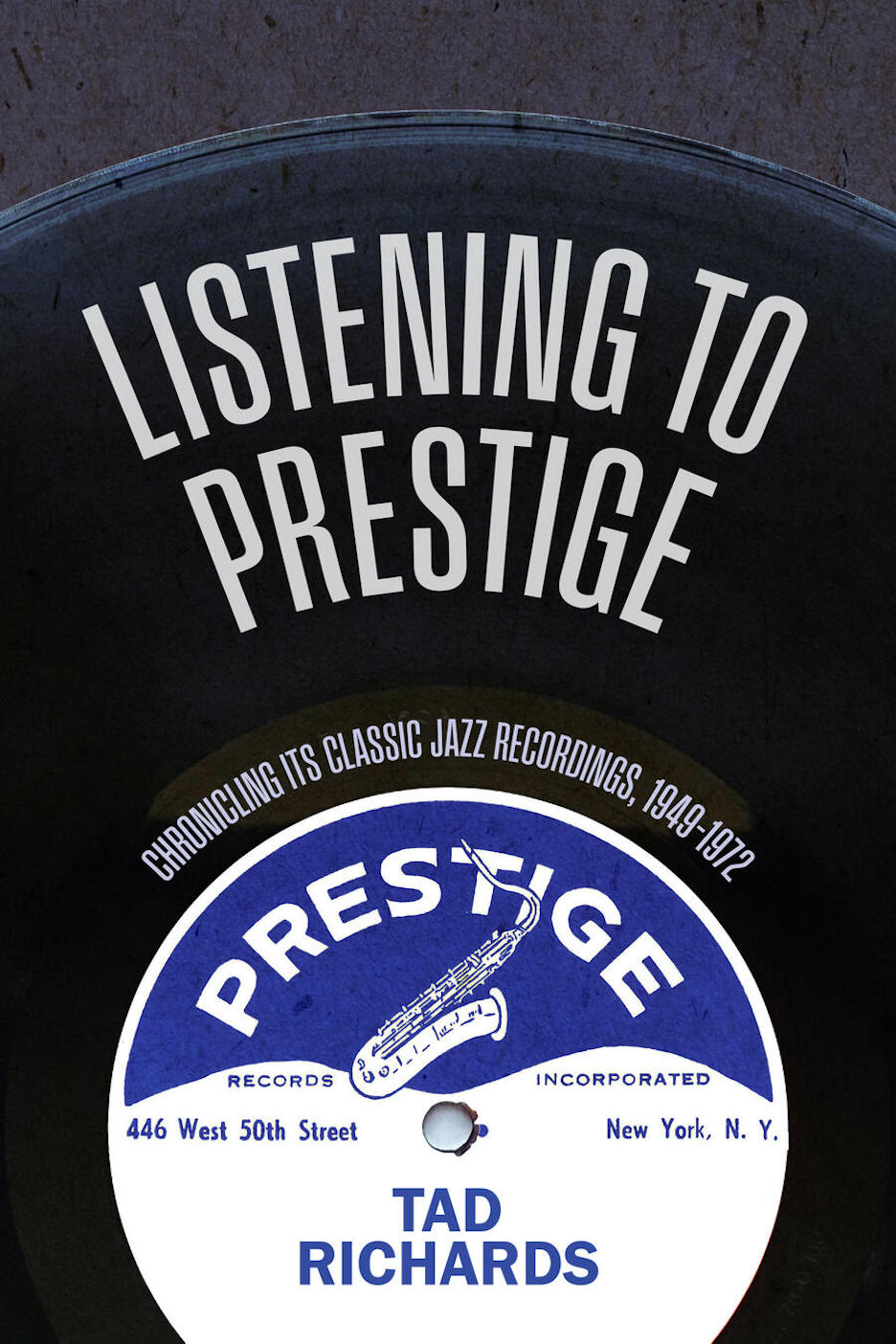 Listening To Prestige
 Tad Richards
278 Pages
ISBN: # 9798855804959
Excelsior Editions/State University of New York
2026
Shortly after World War II ended, a young music lover named Bob Weinstock opened a record store in Times Square, New York City. The store specialized in jazz recordings, the music that Weinstock and his father loved collecting. Things took a dramatic turn one day when Alfred Lion, the owner of Blue Note Records, stopped by the store with a Thelonious Monk record. It was the first time Weinstock had ever heard bebop. He probably didn't realize it at the time, but that moment would not only change the course of his life but it would also help shape the future of modern jazz.
Inspired by the new music he was hearing, Weinstock eventually started his own label, which became Prestige Records. Over the next two decades, the label would document some of the most important developments in modern jazz, recording artists such as Miles Davis, Sonny Rollins, Thelonious Monk, and John Coltrane. In Listening to Prestige, Tad Richards tells the label's story through many of its most important recordings.
By the mid-1950s, Prestige had become one of the most important independent labels in jazz, documenting the transition from bebop to hard bop and beyond. Listening To Prestige grew out of a project Richards began years earlier when he decided to listen his way through the Prestige catalog. What began as a blog eventually evolved into this book, an engaging chronicle of one of jazz's most important independent labels. As Richards explains, the idea was simple: listen to the catalog and see whether those classic Prestige recordings really held up as well as memory suggested.
Many listeners associate Prestige Records with a sense of spontaneity and improvisation. Richards captures that spirit well, guiding readers through sessions that reflect the changing sound of jazz from the bebop era through the 1960s. Richards's idea grew out of conversations with friends who were also jazz fans, wondering how well the Prestige catalog really held up. Was it truly as good as they remembered? That question eventually led Richards to undertake a listening journey through the label's recordings.
This gave Richards the opportunity to revisit many classic sessions featuring artists such as Sonny Rollins, Miles Davis, the Modern Jazz Quartet, Yusef Lateef and Eric Dolphy. Along the way, the book does something more ambitious: it traces the development of modern jazz from bebop through hard bop and modal jazz. Richards notes that the goal of the project was simple: listen carefully and see whether the Prestige catalog really held up over time.
A recurring theme in the book is Weinstock's recording philosophy, which became legendary for its emphasis on minimal rehearsal, quick studio sessions, and spontaneity. Rather than polishing performances through endless takes, Prestige recordings often captured musicians playing together in the moment. The result was a sound that sometimes felt closer to a live performance than a carefully produced studio recording.
One of the central artists featured in the book is Sonny Rollins. Two of his Prestige recordings remain landmarks in jazz history: Saxophone Colossus (1956), which features classics such as "St. Thomas" and "Blue 7," and Tenor Madness (1956), notable for its historic meeting between Rollins and John Coltrane. Both albums were recorded in 1956 and demonstrate the kind of focused studio work that characterized many Prestige sessions, in which musicians arrived prepared, recorded quickly, and produced lasting results.
Revisiting these recordings while reading Richards's book reinforces the point. Rollins's playing on "You Don't Know What Love Is" from Saxophone Colossus, for example, has a relaxed swing that feels almost conversational, as if the musicians had simply gathered in the studio and started playing.
The Prestige catalog is also inseparable from Miles Davis's early career. Richards recounts the now-famous story of Davis's contract with Prestige and his eventual move to Columbia Records. Before leaving the label, Davis still owed several albums under his contract. This led to what has often been described as a "contractual marathon," in which Davis and his quintet quickly recorded the material that became the albums Cookin' (1957), Relaxin' (1958), Workin' (1960), and Steamin' (1961). Despite the speed at which they were produced, these recordings are widely regarded as among the finest examples of Davis's early work.
One of the most appealing aspects of Listening to Prestige is that it reads less like a conventional historical study and more like a guided listening experience. Rather than simply presenting facts, Richards invites readers to explore the catalog along with him. In doing so, the book becomes something like a roadmap through the evolution of modern jazz, from bebop to hard bop, soul jazz, and eventually the avant-garde.
For longtime jazz listeners, the book offers a chance to revisit a remarkable catalog. For newer listeners, it provides an inviting introduction to one of the most important labels in modern jazz history.
Tags
Book Review
Kyle Simpler
Excelsior Editions/State University of New York
Alfred Lion
Thelonious Monk
Miles Davis
Sonny Rollins
John Coltrane
Modern Jazz Quartet
Yusef Lateef
Eric Dolphy
Comments

PREVIOUS / NEXT


Support All About Jazz
 All About Jazz has been a pillar of jazz since 1995, championing it as an art form and, more importantly, supporting the musicians who make it. Our enduring commitment has made "AAJ" one of the most culturally important websites of its kind, read by hundreds of thousands of fans, musicians and industry figures every month.