Home » Jazz Articles » Interview » John Bishop: A Multi-Dimensional Journey in Jazz
John Bishop: A Multi-Dimensional Journey in Jazz
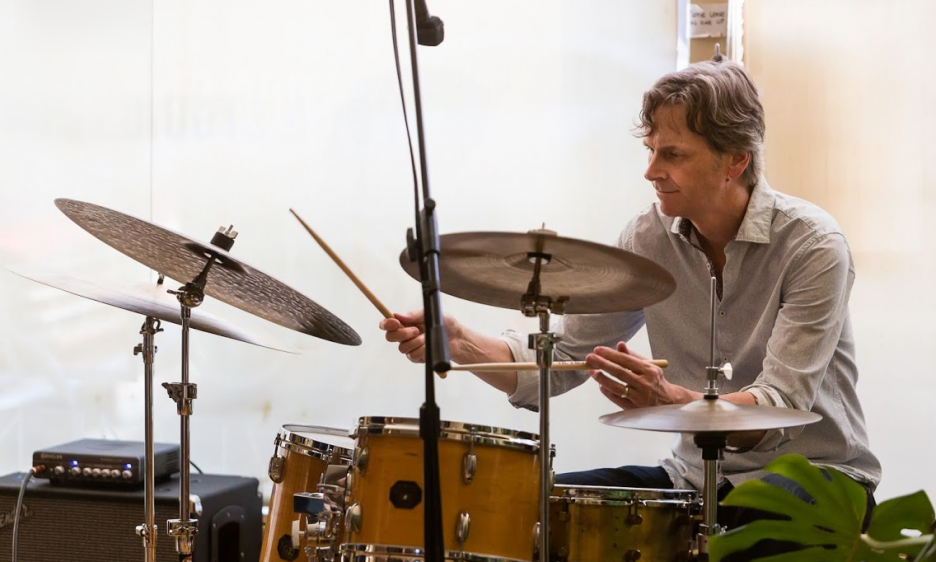
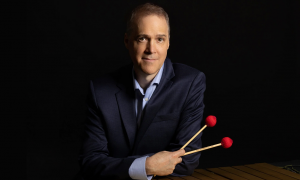
Courtesy Jim Levitt

AAJ: You spent your formative years in Eugene, Oregon, a town known essentially for three things: the University of Oregon, track and field and as a center of free thought, intellectualism and counterculture. Where did a young John Bishop fit into this social dichotomy?
JB: The cool thing, because we came from San Antonio, Texas, which was the opposite where we'd been for a couple years, and that was heinous. So we went to Eugene, and then our junior high school had no required classes. It didn't have grades. It was just a standard school, but they had this set up that way. So moving to Eugene, all of a sudden, the world opened up. It was, "So what class are you going to take?" I don't know what I'm gonna take, maybe this and that.
All those things you said about Eugene were exactly what I stepped right into—it was just wide open. I was able to take band classes, and the band director was a hippie—and so there'd be hanging out, and anything went. It was really cool. I went to South Eugene High School, which was another hotbed—a lot of university professors' kids went there, so a bunch of smart people and really good musicians. There's probably 10 musicians that I went to high school with who are now still functioning out in the world, in music, on a high level. So it was cool.
AAJ: Then you went to the University of Oregon and eventually found yourself right back in Texas.
JB: Well, I go back to Texas directly as a result of who was teaching there. [North] Texas State University was a great program, huge—and it was a machine. They had nine big bands. Basically all the big bands—Buddy Rich, Woody, Maynard Ferguson—they'd be picking up kids, they'd have players coming in and out of the bands, and they would recruit straight from Berklee or North Texas. I was only there for a semester, and it could have easily been four years. That's what it felt like. As far as what happened there, yeah, it was high output.
AAJ: You had a working band in Eugene at the time before the move to North Texas, one that was actively writing and performing music. How did that work out?
JB: The pianist in the band was writing a lot of music, and the guitarist was writing a lot of music, so we're doing a lot of originals. We were doing gigs. We were doing concerts in college, and then we did a Nike commercial—Nike was a fledgling little business, and we did full albums worth of recording. That was right around the time I decided to go to North Texas, and then two of the guys in the band joined me. When we got there the next week, I received a call from the pianist saying we got a record deal with that thing we just did. So we said, "Well, we just got here to Texas, so maybe we'll hang out here for a semester and then come back." We went to our professors and the school and said, "Here we are. We got this record deal, so we're going to leave at the end of the semester. Is that okay?" They told us to just go to school and don't worry about requirements or anything. Just go to school.
AAJ: That freed you up creatively. Somehow, some way, that band was what brought you to Seattle.
JB: All I had to worry about was playing music. I didn't have to worry about doing proficiency exams or all the different classical instruments and all that kind of stuff. It didn't matter if I got to the next level in all my classes. Just hang out, play, take advantage of the scene there. That was just magnificent. So we went back to Eugene, and we proceeded with our thing. And the record deal ended up being with this one label out of New York, this guy who kind of took advantage of a lot of people. So we decided not to go with that—but then John Hammond, the producer, took a liking to our stuff. He invited our pianist back to New York and met up with A&R people at Columbia, where he was working—they were working out a deal. And then there was a famous day at Columbia in the late '70s when everybody got fired. That was like in the middle of this happening. Hammond still had his office at Columbia and everything. He said "Well, okay, it's not going to happen now, but I'm planning on starting this other label myself, and we'll get something going here." He would send us money to do more demos and stuff for the next two years or so. We just kept playing, doing that, made more recordings, and then we ended up getting a gig up here at a club called Chapter 11, right by the Kingdome in Seattle—three nights a week for six months. So we came up and did that gig for six months, and at the time, on all my off days, I would be driving back to Eugene to play a gig, or I'd be going and hanging out and meeting Chuck Deardorf. Mark Seales, Jay Thomas, hanging out at Parnell's, hanging out of Jazz Alley and doing jam sessions. So there were just a lot of people here in the '80s.
AAJ: There was a lot of talk when I arrived in the Seattle area in 1976 that Seattle was the new San Francisco, that there was social movement and musical originality sprouting up here into the '80s. How did you find the cultural landscape in Seattle?
JB: It was—it felt—very blue collar. San Francisco had a real vibe to it, as far as community and everything. Going down to Keystone Korner when I was 17 or 18, it felt like some sort of scene that was larger than what you saw here—it felt less like that and more like you just show up at Parnell's and it would be hopping, and there would be Cedar Walton with Billy Higgins and Charlie Rouse, and it was just a hang. You could run over to Jazz Alley and catch the last set of Dexter Gordon with his band and it didn't feel like there was a collective thing. It felt more like there were these individuals who were doing things like Dimitriou doing Jazz Alley. But then the musicians and the musician's scene seemed to be separated, too. You had Floyd Standifer and Woody Woodhouse, you had the older folks who came up on Jackson Street, and then you had the younger, Cornish kind of situation. You had the younger musicians like Chuck Deardorf, Mark Seales and Dave Peterson, who were doing a big mix, like playing with the old folks, doing fusion music and commercial stuff.
AAJ: That was when acoustic jazz was making a comeback from the 70s and the fusion revolution. Wynton Marsalis was hitting big after his stint with Art Blakey.
JB: Yeah, that didn't really hit until they really codified the whole young lions thing. I mean, it still felt like the old folks' terrain, like when I saw Wynton Marsalis when he was 18 or 19, with Art Blakey. It wasn't their world yet, but you could see the start of that—but it still didn't feel like there was going to be this commercial revolution of young men in suits codifying this variation on 1958.
AAJ: To us Boomers, the suit thing felt like they were dressing up in the uniform of "the man." We had kind of relegated that sort of formal dress to the politicians and such. It seemed not hip, even though the music was super hip.
JB: It was cool back in the '50s when everybody wore suits all the time—but then you would put your own spin on it. You wouldn't look like a politician, even though you would be wearing a suit like a politician.
AAJ: Yeah, you hip it out a little bit. But then again, I'm just trying to imagine the more athletic aspects of being a drummer and wearing a suit, sweating it up.
JB: And you have to keep your jacket buttoned so that your jacket lays straight, lays properly. I mean, if you had noticed any of the big cats in the day, they would keep their coat buttoned when they play, very impressive.
AAJ: Well, yeah. But then you had Elvin Jones wearing a button-down shirt with a cigarette hanging out of his mouth.
JB: Yeah, or that nylon fishnet.
AAJ: Jay Thomas, Rick Mandyck, John Stowell and Jeff Johnson are some players that you first met in the 1980s and early '90s that you still have musical relationships with today. What are the commonalities between you that keep that journey alive?
JB: Just being devoted to music, music making. I mean, that's all there is, right? You don't necessarily live together or share all of the same type of lifestyle stuff, but the music is what draws you in and keeps you going for decades. Rick Mandyck is probably the longest running person I've played with. We did the record with Michael Bisio in 1983, right? So as far as playing creative music and it not being a pursuit of a career or anything like that, it's just music, just playing music. Seattle, back in those days, there were just so many little circles of musicians that you could get involved with that would cover the range of what you would need in your life. For me, I like playing fusion. I liked Steve Gadd and Billy Cobham. So I could have a fusion band, and we could play festivals. We could play clubs that had that thing going. I liked playing with the old cats. We had Jazz Alley and these other places that would call you up—you had hotel gigs, playing with Buddy Catlett or any of those guys. So you could do five nights a week at a hotel for six weeks and then be doing stuff during the day—teaching and other things. Then we had Cornish, that whole circle of people that was different, unbelievable stuff.
There was just so much going on in the recording industry around here. Muzak came along out of Seattle. You could go in and record for four days and record hundreds of tunes. Your job was to play each tune as if you were the original musician on the original record. So that's a skill set that you can't really develop any other way, introducing a lot of different styles in a real way. Just the nuance of capturing all those other great players from everywhere—being able to capture nuance in that and have it be that part of your life where you're actually getting paid. It paid your rent, and you're having to focus on what the hell you know, whether it be Motown, '60s, rock, power rock, hair [bands], old jazz music—just everything. A lot of jazz musicians crossed over and played with rock musicians in the '80s. Big time. There were a lot of different opportunities.
Yeah, the '80s were it. It felt like a kind of a cultural death zone, yes. But at the same time, there were so many cats left from bebop and from the '60s and '70s. There was plenty of stuff going on creatively and there was plenty of work to be had and money to be made so you could make a living.
AAJ: New Stories was a trio you engaged with about that time with pianist Marc Seales and bassist Doug Miller. When did that relationship begin to take form?
JB: We started playing in '86 or something, and we just played really that early at the University of Washington once a week. It was just a thing to do—no records until 1995. So we just played for a couple years, not hustling gigs or anything like that. It was just new tunes.
AAJ: But no time in the studio early on?
JB: A big part of that was that it wasn't really possible, because if you were going to make a record, you'd have to make an LP. So the costs were high. I mean, in the '80s, if you wanted to make a record, you had to buy two-inch tape that would give you 13 minutes of music—and that's 120 bucks. So, you buy three rolls, four rolls, and then press LPs.
AAJ: Of course, this was before you started Origin Records.
JB: Yeah. I started the label in '97. In the '80s and early '90s everything was before computers, it was vinyl and cassettes back then. So unless you were really devoted to a thing, and you had the money available, that just wasn't reality.
AAJ: So was that the inspiration to create a label?
JB: Well, no, because the inspiration for that came beginning in the '90s, when all of a sudden CDs and then computers became the norm—being able to do computer graphics and all that stuff. We made a CD in '91 with a band called Hearing Voices, which was with Portland bassist Jeff Leonard, Hans Teuber and Dave Peterson—fusion kind of stuff. We got a deal with a label, but we had to pay for typesetting, etc. So to have a computer and to be able to output art and text and everything was life changing for all musicians. That's what made it all viable, and all of a sudden you have artist run labels popping up in the mid '90s,
AAJ: Thus the term "indie" was born—having to do with independently creating a recording outside of major record companies. Today, it acts as a genre designation!
JB: Yes, having some sort of a connection to the production, being able to produce yourself without needing a record label or any of that.
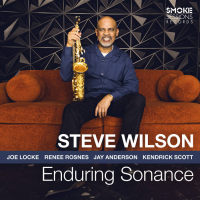
AAJ: Now Origin is arriving at 900 titles. There's a real identity to the label—even the graphic cover art you provide has a definitive style. That's true with a lot of successful labels—Smoke Sessions comes to mind, though in a very different way. You could lay out a hundred CDs on a table from a variety of labels and pick out the Origin offerings easily without reading a title. Do you identify a particular sound to Origin /OA2 as well?
JB: I never really thought it through. But as you watch and look and as I'm going through the process year after year, you develop a sense of what's going on, and then you can kind of put it into words, barely. But I think my thing is it's multi-layered. You have the music that's coming out from somebody, somebody sends in a thing. What does it have just on the basic levels? Does it have the recording quality and sound that connects with me? So that would be number one.
AAJ: So artists are sending you completed masters?
JB: Yes. It's not me producing the sound—the ideas the artist comes with their final statement. It's like, this is me. This is who I am. This is the music I want to put out—and it sounds like this. Then my job would be to decide if it fits in with what we're doing, musically speaking, I don't care what it is. Does it have the same sort of intention? Can it fit in the same realm? Can it fit in the same room? It doesn't have to be the same. It can jump all over the place, but then it would be my job then to put them into some sort of order where that would make sense to somebody coming along and buying them.
AAJ: You have Origin and OA2. I know this is mainly to get more ears on the music in the long run. There seems to be a perception that OA2 falls on the more eclectic side of things, whereas Origin is more mainstream. I know this isn't exactly true, but do artists perceive a difference or a preference for where their music is released?
JB: Which is perfectly fine. It's because everybody who comes into it makes their own, has their own. Some people come in and to them it's all the same. It's Origin, OA2. I don't care. Other people are going, well, isn't Origin, this and OA2, that? And it's perfectly fine for anybody to have whatever they thought they had. As far as I'm concerned, I had to make another label, a sister label, like all larger record labels. You have sibling labels that serve different purposes. And the main purpose is always just controlling output and getting some sort of idea of being able to put things out. You can have this big punch bowl that you can throw everything into, or you could have a couple three different little containers that have these different tastes. The tastes change from moment to moment. One day OA2 will be really mainstream, and Origin will be kind of eclectic, and then a month, two months later, they switch places, and that's the flow I have to take control over so that each label separately makes sense to a listener—but also together, because I'm delivering everything together. But people come up with their own storyline on what each one means. That's cool.
AAJ: It means folks are talking about Origin, and that's always good.
JB: But for me, it's controlling the flow of music, being able to put out a lot of music, and being able to control the flow.
AAJ: Fellow drummer Matt Jorgensen eventually came into the picture as a principal force and partner. I noticed drummer Evan Woodle is now doing work for the label. Is this some sort of drum-induced conspiracy?
JB: Matt was in the beginning (laughing). I was starting the label and he was an ex-student living in New York, and we talked all the time about stuff. He was working on figuring out computers, figuring out the internet. So he said, "I'll make a website for the label if I can put out this one record." So that was that.
AAJ: The Radio Action record with Mark Taylor.
JB: Yes. Not all labels were on the internet yet; there was not a thing. So that was a big step.
AAJ: Walk us through the process of what Origin does for an artist, from the time you are presented a master to the finished product.
JB: I guess basically I should probably talk about why I would even start a label. To make that make sense, I started doing graphics for things, and then making CD covers. Then people asked me to make their CD cover for them, if I could help them out with that. They would all come with these different CD pressing plants that they wanted to work with. I would have to make new templates for each one. I decided it would be easier if I could just use one template from one plant that had a good deal and just streamline the process. I've got a pile of CDs sitting on my front porch. So that was step one—just simplifying that whole process for an artist, but then for myself also. I didn't have to deal with several different templates and redo each, reinventing the wheel every time I did a new project. So streamlining my own thing, streamlining for musicians—I was going to put out my own stuff anyway.
I needed to figure out what to do once you get CDs made. Where do you put them? Where do you send them? Who do you talk to? We had our media contacts around Seattle, Portland, Eugene, Vancouver, and then slowly pieced that together. It didn't take long to figure out, how can you make it so that a musician can put together a project, pay a little dough, and then end up with something very usable, and take a bunch of work off of their plate, put it on mine. I get paid and they get to be working on CD release parties, all the stuff you would want to be working on, as opposed to trying to figure out who's going to design my cover for me. Where am I going to get [it] pressed? What's the radio press? Where do I send it? What should I do? That was the idea and then and that setup hasn't changed at all. That's the whole concept. It's me finding better outlets and solidifying outlets for press and radio and distributors and everything which is essentially promotion and networking.
AAJ: Artists pay a lot of money to publicists when they make an independent recording without a label. As a jazz writer, I receive dozens of emails from publicists concerning these projects every week. In reading Jazz Week, I can see that Origin does an extremely good job of getting its artists radio plays. This impacts an artist in so many ways within the industry, including touring and other opportunities. In researching numbers, indie releases plus publicity fees seem to equal or exceed what you as a label would provide for the same services. In the end however, independent releases are on an island, with no connection to a roster of artists and credible history within the industry. This seems counterproductive in an environment where there is just so much volume. Blue Note Records, Smoke Sessions, Origin and all prominent labels are in some ways flagged for media outlets in a sense.
JB: They like that independence with quotes around it, where they have that feeling of controlling their destiny and all that. So I understand that urge, and it's cool, but getting to that, that whole thing of chasing promotion. I think what my plan was built on, everything I learned when I was 14—how do you build a community for yourself? How do you make it so that you're doing one gig? How can you make sure that you get to do another gig from that? And how do you build just day to day? Who's your circle? Who's your tribe? You've got other musicians. You meet some bartenders, you meet some managers of restaurants, you meet some mentors, you meet other musicians—and then you just keep building on that. Then at a certain point, you're meeting a person who writes for a magazine. You're meeting radio people and that kind of builds.
For me, for the last 50 years, you need to build that—that has to be handcrafted. I think now, of course, it's way too easy to just kind of go online—you've got tech companies who want to play the middleman for you, which is handy and slick, but you have to be able to ask yourself, what's real and what's just noise? What are people basically profiteering off you? Yes, a product that you're producing that already has lean margins.
Coming up through the '70s and the '80s, you could have 200 people show up for a gig, and now you're thinking, "Oh, I had 26,000 people listen to my Spotify." But when I had that gig with 200 people, I paid my rent that month, and I paid all my bills that month from that one gig, right? And now instead, I've got 26,000 people listening, but I can't buy a cup of coffee. So not all numbers are the same. It's figuring out how your numbers work. I think that that's been an ongoing thing. I would assess and do mathematics—this week, I met eight people and had nice, long talks. I did three gigs, I taught 10 lessons, and then the next week I would keep building on that. Next week after that, keep building on that, and just make sure that each one of the numbers in your life is a real number and not a toy number—tech company number, like a Spotify number.
Building our press list and our radio list, each one of those people, I read their playlists weekly for thirty years, each one of those writers. I've read their stuff over and over again, so I know who I'm working with. I'm not just blindly looking for somebody to write about it or somebody to play it. I've got specific ideas in mind. So when I'm putting together something when a new artist comes along, I see if that person fits into the catalog, but also, do they fit in with our other friends that are in our circle, which is a few hundred radio and press people. It's dozens and dozens of distributor people who work for us in all those realms. So again, are your numbers reasonable? Do they make sense? For us to put out the number of records we put out, it makes sense, because I've built up a big enough array of radio people that love our stuff and radio people that love mainstream, just pretty things, and you've got everything in between. Whereas some labels are doing straight down, they decide "this is our sound." Our players are all in New York City. They all wear suits. They all look like this. It's this tribe and they've got their audience, which is slick, and they know the numbers, they know how many they can sell. They know what they're working with. And they live within that realm.
AAJ: Again, to mention Smoke Sessions. They're a jazz dinner club, and a high-ticket item in New York. But people know what to expect and they deliver consistently and credibly.
JB: And that's probably, overall, the tightest label, the environment where everything fits into this great model. They've done a wonderful job of just defining themselves through their club and the records and the people and the sound, everything is really well defined. The beauty of their thing is, everybody involved with it is so well defined by it, the audience, the people who review, people who play, everybody who's involved.
AAJ: The way it's presented, with all the session players on the cover and the leader's photo, gives the listener the understanding of whether the music within is something they want to hear.
JB: It's a beautiful structure. We're on the opposite end—any one month of releases we're covering a wide range of stuff. So I'm looking at each one of our little audiences, trying not to alienate any of them, but bring them in as if they've stepped into a library—into an art gallery. I don't really want to be in this room, but I'm glad to be over in this room. I love this section—I think more in those terms—that makes sense.
AAJ: A lot of folks these days don't own a CD player, or for that matter, a stereo setup of any kind. Modern cars do not come with a CD player anymore. Of course, they still sound the best. And disc players that plug into computers of all sorts are very inexpensive. I use one every day, meaning the CD is still a viable product and a physical medium for the media to receive. How do you see the modern consumer of jazz recordings, and what can they do to support artists, even if the overall majority of their listening is through streaming?
JB: Well, once again, going back to numbers and not being sidetracked by the noise that all those numbers that get thrown out, and especially the absolutist stuff, like nobody owns a CD player anymore. Well, that's the silliest phrase ever. There's millions of CD players, yeah, millions of DVD players that are still in the world, that are sitting in people's houses, turntables, everything. More importantly, jazz people own CD players. Yes, there's many who don't—those people, I'm not really concerned about that because they've decided to separate themselves from the ecosystem that we all live in as musicians and as culture-loving people. It would be like anybody who doesn't pay to go into a museum or go out to a movie or go into a bookstore. Those are the exact same people that are streaming. They're the ones who are not contributing to the ecosystem. So how much time do you want to spend concerned about those people?
All the numbers being thrown out, I think you have to simplify and think of your own situation, where this stuff comes in, like, nobody owns CD players, nobody's buying CDs, everybody's streaming all that kind of stuff. From where jazz record labels sit, they all make CDs—the CD is still central to all of their businesses, absolutely.
Are we selling a lot of CDs? No. We used to sell a lot of CDs for a period. But everything is percentages. At one point I'm selling 70% of what I wanted to sell, and now we might have 20% of what we want to sell. Does it pay the bills? Kind of yes, but not as good as before—but it's not that drastic, all or nothing at all—you're still working within a realm. CDs still have value for all to deal with, all distributors, all retailers. CDs have something that lasts forever. Do you trust tech companies to take care of your digital files for the next 50 years? No. Do you trust them to still be operating and taking care of you as a musician, as an artist, as a business entity? No. So that answers your question. Is that what you want to put all your ducks into?
AAJ: I recently spoke with a Seattle-based jazz vocalist who is working on her first recording. She's not young, is very talented, and has some friends in the industry. She had some money to sink into a recording project, and did so in Los Angeles with some prominent musicians. She's deep into the process, and still doesn't know what she will do with the master once it is completed. It seems that regardless of what resources artists have gathered, that there is a lot of confusion about what to do with their work, where they fit in. The sheer volume of recording out there in the digital age makes it even more daunting for them.
JB: I go to a lot of the conferences and deal with a lot of press people and radio people. Radio people, specifically, who can barely handle the volume of new records that come out. What I would always tell them was—because they just go on and on about that, and it is overwhelming—how do you figure out what to play? Every time, I try to explain to them that I don't care if you play our stuff, I'm not going to push anything specifically on you. Your job is only to make a good radio show. Yeah, that's it. It doesn't matter if there are a thousand records or whatever there are. Your job is not to discover each one and to make careers for people. Yours is to put on a good radio show. But if it's in the back of your mind that you are asking yourself, "What have I done before that's been successful and has had a good impact on my show or that fits into what I'm doing?" Origin is something they've done—they've received a CD from Origin, instead of just some publicist saying so and so is releasing this recording.
AAJ: Describe your travelogue over the course of a year, in terms of the label, aside from your work as a musician.
JB: Well, all of that stuff goes together. I mean, it's all one. I don't think of my life as being any different than it was when I was 22 moving to Seattle. It's just an expansion of that, where all you're doing is trying to have a good time, hook up with new people, try to get more things going on in your life so you can make some money and have a career, have a gig. As far as the building of relations with press and media and other musicians and educators, you have to show up and you just have to be there. So for the label, every time you meet somebody new, it's like we're all multi-dimensional with our careers. It's the only way you make a living. So you meet one person, you're not just meeting a radio person. You're also meeting a person who's involved with several other things that could cross-reference with your life. So that's what I'm shooting for—hanging out. I try to hit at least three or four conferences a year that cover basic needs, like the Jazz Week one, which hasn't happened in a while, was always radio people and a few promoters and some press people and a few musicians and a couple other labels. So that would be a good, you know, immersive, three days of hanging and talking and hanging with those types. Jazz Congress, where it's a wider scope in New York City for the last 15 years. Been doing that, and then decided to go to Europe and do at least one of those a year, probably starting in 2008, in Bremen. It was Cannes before that—the array of people you meet at those things, it can be very bizarre and you end up with these relationships. Who knows where they're going to lead. I've got some best friends now out of that who are living in different places around the globe, and we gather at those times and hook up.
AAJ: You released a trio album this past year with Belgian musicians Piet Verbist and Bram Weijters. I know the label takes you to Europe annually, but how did this musical friendship begin with Piet and Bram?
JB: That's one of those combinations of things, having Chad McCullough be one of my assistants on the label, and him being a musician who's expanding his horizons. He went to the Banff Music Camp, which was really slick, and he met a bunch of people from Europe and different places and ended up forming a friendship with this pianist in Antwerp. So the next time we went to Europe, we flew up to Antwerp and hung out with those guys and did some playing, and then that just turned into a yearly thing now, for 15 years. Awesome. It's trying to have a good time more than anything. Connections and friendships, that mean something. They're some meaningful relationships. Not just handshake relationships.
Tags
Interview
John Bishop
Paul Rauch
United States
Washington
Seattle
San Antonio
Eugene
san francisco
Cedar Walton
Billy Higgins
Charlie Rouse
Jazz Alley
Dexter Gordon
Chuck Deardorf
Mark Seales
Dave Peterson
wynton marsalis
Art Blakey
Rick Mandyck
Michael Bizio
Steve Gadd
Billy Cobham
New Stories
Marc Seales
Doug Miller
Jeff Leonard
Hans Teuber
Chad McCulloch
John Stowell
Jeff Johnson
John Coltrane
Comments

PREVIOUS / NEXT

Support All About Jazz
 All About Jazz has been a pillar of jazz since 1995, championing it as an art form and, more importantly, supporting the musicians who make it. Our enduring commitment has made "AAJ" one of the most culturally important websites of its kind, read by hundreds of thousands of fans, musicians and industry figures every month.