Home » Jazz Articles » Interview » Fred Hersch: The Touch of Genius
Fred Hersch: The Touch of Genius
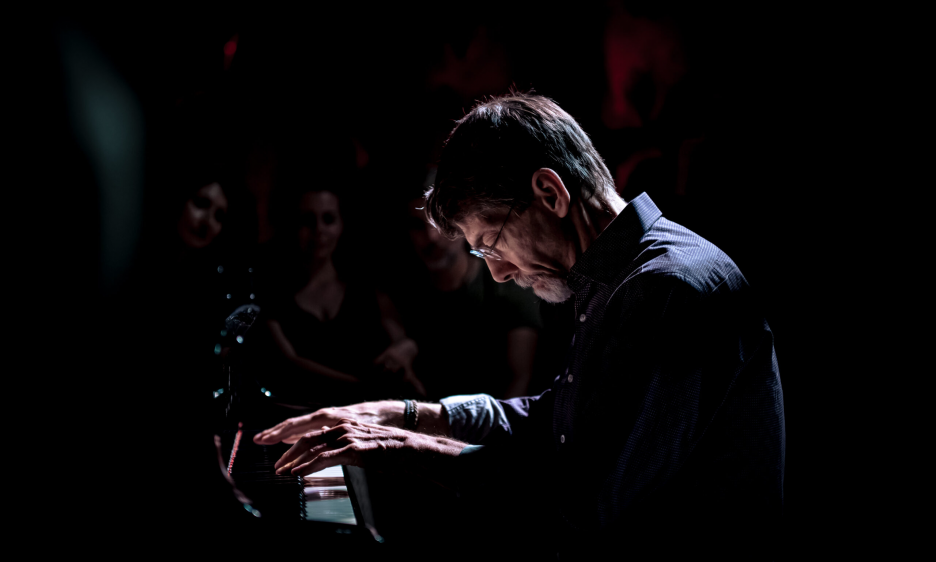
Courtesy Roberto Cifarelli

But tone to me is something that you're not really going to develop unless you care about it. And I've always cared about it. When I play a standard, I know the words. I think that's important when you're trying to convey and phrase a melody, that you understand the words.
—Fred Hersch
The interview was conducted on March 16, 2026 and portions of it were aired on Timeless Jazz on April 12, 2026, in addition to some of the pianist's recordings. Fred Hersch's April 21st solo concert, a benefit for WUTC-FM, was underwritten by the author and his wife.
All About Jazz: I'm sure you had a great turnout at Smoke.
Fred Hersch: We did. We had a very nice week, and I thoroughly enjoyed it. On the weekend, you play three sets there and I haven't played three shows in a long time. It was a little much, but I enjoyed it. I played with a nice young rhythm section (Felix Moseholm and Kush Abadey). We had a great time.
I'll be hitting the road on the first and seeing you later in April.
AAJ: Yeah, we are looking forward to it. You're going to be our second benefit concert for WUTC-FM. We've got Benny Green coming in the fall.
What drew you to Jaki Byard at the New England Conservatory? How did you discover him?
FH: I was kind of a self-taught jazz pianist in Cincinnati in the early '70s, '73, '74, basically buying records and listening a lot and playing with the older musicians and learning on the bandstand. I had so many records with Jaki Byard on them. I had Eric Dolphy records and Charles Mingus records. I had some of his records. I had Sam Rivers records.
I don't even know how I heard that he was teaching at the New England Conservatory in Boston. But I did hear about it and got in the car and basically drove up there with no particular plan other than to try to meet this guy. And kind of cornered him in the hallway and said, "Mr. Byard, I want to come study with you." He said, "Okay, I got 10 minutes. Play something." So I played a few tunes and he said, "You're in." And that was it. In August of '75, I moved to Boston and then started studying with him that September. He was an encyclopedia of jazz piano.
I mean, he really got me into the older, pre-bop piano players. And he was fearless. I mean, he would just play anything. He really had a very healthy, non-neurotic, 'I'm just going to play what I feel like' approach. And I think his career suffered a little bit. He'd go anywhere, anytime. He's instantly recognizable to me. But he didn't have one particular thing that people associated with him. But these Mingus records, particularly the live ones, he plays some solo introductions that are just incredible.
He had a big band of students called the Apollo Stompers. He would play saxophone and conduct, I played piano. He was a very good arranger and just really great to be around, just to be around somebody that was a part of such significant music. He was the first super heavyweight guy I ever got to hang out with. I just I thought he was great. I was just really a big fan.
AAJ: Have you ever recorded or performed any of his compositions?
FH: One on a CD that is called Thirteen Ways, with (multi-reed player) Michael Moore and percussionist Gerry Hemingway. On our second record, which is called Focus, we recorded a tune of his called "One Note to My Wife." On a trio album called Whirl, I recorded "Mrs. Parker of K.C." that he recorded with Eric Dolphy.
AAJ: I should have remembered that.
I've been in touch with his surviving daughter. I think she's in the Maryland area now. But we had a really nice chat and she sent me a dub of a cassette of an old transcription recording that someone had made of Jaki back in 1948. What was fascinating about it is when I went back and checked my 1990 interview with Jaki, he mentioned getting that cassette recently.
The funniest thing for me, I wrote liner notes to the posthumously issued The Last From Lennie's, which was the unissued third volume from the Prestige Records series. They sent me an advance and I listened to "St. Mark's Place Among the Sewers." Now, that's got to mean something, I had no idea what. I was just dumbfounded about what to write about the title.
Then producer Stuart Kremsky said, "Oh, Jaki mentioned the explanation behind that," although they omitted the spoken part from the CD. St. Mark's Place was where a lot of New York City jazz clubs were back in the '60s. Since jazz musicians frequently referred to jazz clubs back then as toilets, "St. Mark's Place Among the Sewers." If I hadn't asked, I never would have known, because Jaki never recorded it. Although some of those Apollo Stompers broadcasts that appeared on NPR's Jazz Alive! had that particular song.
FH: Yeah, he was a great, great character, too.
AAJ: Yeah. Do you have other early mentors, not necessarily in jazz education, but it could be there or it could be some of the leaders you worked for that you felt like were helpful to your career?
FH: Oh, so many. Sam Jones was an early mentor and getting to play with him. And, you know, people had such respect for him that like if Sam Jones said that I was okay, I was okay.
That meant a lot. That was kind of cred. And I played with him in the quintet with Tom Harrell, Bob Berg and Keith Copeland. I played with his 12 piece band. We played lots of weeks at Bradley's and pick up trio gigs. I even got to play one night with Sam Jones and Jimmy Cobb, which was unbelievable. Sam was great. He recommended me to Art Farmer and through Art, I met Joe Henderson. Then it all kind of started for me.
Joe was a mentor just by virtue of how amazingly great and creative he was. We probably played the same 10 tunes for 10 years and he always found something new and special every night. Yeah, I was really lucky to have great apprenticeships.
Of course, I had a wonderful classical piano teacher, Sophia Rosoff, on and off for 35 years. She was incredibly helpful and she was also a good friend and a mentor as well.
I've been lucky. I've just really kind of learned by doing. And even the older musicians, when I first started out back in Cincinnati, they were very generous, but they would also kick my ass. If I didn't know the tune, they would let me know it. If I wasn't swinging or there was something wrong with the comping or whatever, they would tell me. And that was good.
I mean, that's the best way to learn, play with people who are better than you and then hopefully your level goes up. So all through my 20s, I was doing the sideman pool. I got to play with all kinds of weird people. I played with Big Nick Nicholas. I played with Mel Lewis and Lee Konitz. I played some gigs or a week with all kinds of amazing legends. And I think all of that goes into the soup. It's just all kind of in there.
AAJ: You have done so many different things. Yet I feel when I hear your sound, I know it's you, even a recording I've never heard before. How do you feel you develop such a distinctive touch at the piano?
FH: Thank you for that. Yeah, I think with sound.
OK, so if you're a saxophonist or trumpet player, you have an embouchure, the way that your lips and the mouthpiece interact. Then you have some concept of sound and you work on tone, long tones. Of course, with saxophone players, there's all the complexities of reeds and mouthpieces.
And the same with brass players with a piano. A two year old can hit a note and it's going to sound. You don't have to be able to blow into it or vibrate or press a string.
But tone to me is something that you're not really going to develop unless you care about it. And I've always cared about it. I mean, growing up, listening to classical pianists, particularly people like Arthur Rubinstein, Dinu Lipati, Arturo Benedetti Michelangeli and Glenn Gould.
I mean, they all had a sound that was their sound. Then my early exposure to jazz pianists, realizing that Duke Ellington from the '20s, the '30s, the '60s, he always sounds the same. Different pianos, different recording techniques, always sounds the same.
Ahmad Jamal is another one with a very distinctive sound and somebody like Bill Evans. I mean, he had a very different sound early. He had different phases of his sound that changed depending, unfortunately, on what drugs he was doing or not doing.
But, there are periods where I loved his sound and periods where I didn't particularly care for it. One of my early influences was Wynton Kelly, who had just this very kind of a happy, happy sound to the way that he played. A little more pop on it than Hank Jones, or Tommy Flanagan, or Sonny Clark, or Red Garland.
Very contrasting sounds. So, yeah, I think it's not to me. It's if you take a trumpet player with a huge sound like Miles Davis or even Chet Baker had a beautiful, big round sound.
They didn't have to play as many notes as somebody like Woody Shaw, who had a thinner sound and had to kind of come up with a different way of playing because he didn't have that weight of sound. And so. I'm not really one of those loud and fast guys, that's not really my thing.
But I try to just concentrate on phrase making and clarity and also playing with people who allow me to play that way. I have to have the right kind of rhythm section or the right kind of piano or acoustics to enable it to work. If I get a really heavy and dead piano, I'm kind of a dead duck.
So I need the cooperation from the band, from the sound, from the instrument. But, yeah, I just really care about it. Sophia Rosoff defined music as sound plus rhythm, but sound being the first thing. So I think, yeah, it's always just been fundamental to the way that I play, because I care about it.
AAJ: How does a new composition evolve for you? Are there different ways from the initial inspiration to where you finally say it's done?
FH: That's a good question. Well, like my most recent album is called The Surrounding Green. I had that title for months, but I didn't have a tune. Then one day, the tune just sort of arrived. And I don't know how it did or what, but it just arrived in about, 20, 30 minutes. And there it was.
Another tune on that album is called "Anticipation." And it started out as being in three, four time and three quarter time. And it ended up being a very Brazilian-influenced tune.
And I can't quite explain how that happened. But they all have a kind of a different story to them. Sometimes I make an assignment, say I'm going to write a certain kind of tune and then just let my mind work on it.
And then it pops out. Other times I'll be playing at the piano and I'll hit on something. I go, oh, cool. I'll grab the paper and just start going. Yeah, sometimes I try to speed write in 45 minutes, finish a tune. I've not been writing so much in the last year or two, but I do have a pretty big catalog of things I've written. I still enjoy playing them. But I hope this year to create some new material. I think it's time to do that.
But I'd like to think that a good tune is memorable. And that it stimulates a good improvisation. It's fun to play. Leaves room for the player. Those are the qualities that I look for. Not something that might be what we might call overwritten.
But all my favorite tune writers, whether it's Ornette Coleman, or Kenny Wheeler, or Wayne Shorter or Thelonious Monk, or Billy Strayhorn, or Richard Rodgers, or Jerome Kern, all those songs you can play again and again and again. There's always something more to them. They're like puzzles. They really have a DNA to them that's distinctive. So, yeah, that's what I look for.
AAJ: And you're constantly finding new routes in and out of them, too. So you're not, as Lester Young would say, a repeating pencil.
FH: Right, right. Yeah, well, and speaking of Lester Young, about learning words. When I play a standard, I know the words. I think that's important when you're trying to convey and phrase a melody, that you understand the words. And I pass that on to my younger musicians about, Okay, if you're going to play a standard, you really got to know the words.
AAJ: Yeah. I remember, when I interviewed Michel Petrucciani back in the '90s. He told me that "Besame Mucho" is a very, very sad song. Yet you hear some people play it really up-tempo.
FH: No, no, no. Yeah, it's hard. He's been gone a long time, Michel.
AAJ: I think I probably talked to him in '96, about three years before he died. And in fact, Michel Petrucciani's Record Store Day release just arrived today, Kuumbwa.
FH: Cool.
AAJ: You've worked with so many vocalists. I remember when that live recording came out of that CD that you did backing Nancy King at the Jazz Standard. The funny thing was there was one year in January that I saw Nancy King with a pianist at Jazz Standard. I cannot remember if it was you or Geoffrey Keezer. But it was probably in the early 2000s.
FH: She was one of the greats. That was one of my duo weeks at Jazz Standard. And my partner, Scott, had suggested, well, why don't you ask Nancy? She'd come in and sing with you. And so she came in from Portland. It was a weekend. So we did three sets. I told the sound engineer, just record it. Don't tell her.
And talk about fearless. She's one of the most fearless jazz singers ever. Didn't care what key she sang anything in. It didn't make any difference. She soloed. She soloed on everything, ballads, everything. She was really, really a fantastic vocalist. I'm really glad that that record came out. Because she didn't record very much. I think it really showed her at her best. I was very happy for her that she got some recognition. That there's that document of her really doing her thing.
AAJ: I think it's probably the best recording I've heard of her. Even though I do like those recordings she did with Glen Moore.
FH: Yeah, those are nice, too.
AAJ: I think that may have been one of her last recordings. I remember hearing she had some back problems and had to have surgery.
FH: Oh, yeah, she had all kinds of health problems. And some family tragedy.
I recorded a duo album in 1988 with the guitarist Mick Goodrick. And he passed away the year before last, I believe. His executor got ahold of me and said, Mick always liked that duo album. Can I put it out now that he's gone? I said, well, I'm working with ECM. I have to ask Manfred Eicher what he thinks. I don't want to surprise him. So I sent it to Manfred. Then the next day Manfred said he wants to put it out.
So that's coming out in June. Mick Goodrick was, I call him the guitar whisperer. I mean, he taught and mentored Pat Metheny, Bill Frisell}, John Scofield and Julian Lage. Like every guitarist studied with Mick. He was modest and didn't record much. This is a really, really sweet project.
AAJ: What's it tentatively titled?
FH: It's called Feebles, Fables, and Ferns.
AAJ: That'll be something to look forward to hearing.
FH: Yeah, the sound is nice. It's not the pristine ECM sound, it was done here in my studio in 1988. But I'm just also glad that's coming out. He was one of the first jazz guitarists to play solid body guitar. As I said, he was a huge influence on so many people.
AAJ: Yeah. I know some of the other vocalists that you've worked with, especially Norma Winstone and Kate McGarry.
FH: Yeah. Both of them are great. Norma is one of the best lyricists too. Yeah. I've been lucky.
Jay Clayton is another one, we did a standards album and people don't associate her with that kind of music, but she's so great at it. She and Nancy just passed. Norma is still alive and well, but we're getting on.
Sheila Jordan passed, these are people that were big influences on a whole generation or several generations of young jazz singers.
AAJ: In recent years, from looking at your gig list and also your recordings, it seems to me like you're doing more solo piano, even though you're staying active playing with trios. What do you find are the advantages of playing solo versus with a rhythm section?
FH: Well, actually this April tour is going to be about half trio and half solo. Then June in New York and July in Europe, I'm playing trio with Drew Gress and Peter Erskine, which is a new combination that I'm enjoying. Of course, the solo piano, I mean if the piano is good and the hall is good, then I can modulate to another key or change my mind about anything.
I'm liking the trio a lot now. I have been doing more solo the last year or so, because of the previous solo album for ECM, Silent, Listening. Now the new trio album, there are more trio concerts coming up. But I love them both and I love my duos.
I mean, all three of them have great pluses. And I wouldn't even say minuses, when I'm playing with great players, it really doesn't matter what the configuration is. I played with a young rhythm section this past week at Smoke. It was really great to try out some new folks and yeah, I'm really just enjoying it all right now.
AAJ: In addition to the duo recording with Mick Goodrick that's coming out, do you have anything else that's in the can that's due for release in the next year or a plan?
FH: Well, in the beginning of May, I'm playing at an ECM festival in Switzerland and Manfred Eicher will be there. He says we're going to talk about what the next thing is. So it could be trio, could be solo. I don't really know yet. So I'm going to meet with him and he's 83 or 84 now and kind of an old fashioned guy. I think he likes to just sort of sit down across the table and talk about stuff as opposed to emails or on the phone.
I feel very supported by ECM and it's certainly helped my career in Europe quite a bit in terms of this summer, we're playing a lot of major festivals and big venues. I first started buying ECM albums in 1973 or 1974, Crystal Silence by Chick Corea and Gary Burton and Conference of the Birds by Dave Holland and Bremen/Lausanne by Keith Jarrett. It's great that 50-plus years later, I'm getting to work with Manfred. It's a very nice circle. I really love working with them.
AAJ: It sounds like the kind of label where he's giving you a lot more freedom to choose songs. I knew you had told me in the past about, we won't mention those labels, but where they really wanted you to focus on this, for the next release. That can be kind of restricting, I imagine, to say the least.
FH: Yeah, Manfred, he just cares about making a good record. He doesn't care who wrote the material, what it is, nothing about it. It doesn't have to have a concept.
It doesn't have to have a hook. It is just, what is the best recording we can make? I met him very organically doing a duo album with Enrico Rava and we liked each other and then that led to the solo album, which led to the trio album and then the duo album.
So everything just sort of happened in the most natural way. I really liked that. Nobody's trying to pigeonhole me into a certain kind of thing.
So I appreciate that at this point.
AAJ: Well, that's good. Last Night When We Were Young: The Ballad Album has stood out for me for so long from the moment I first heard it and reviewed it, it was just such a striking release and you've done so much work in raising money for HIV and AIDS education. I have at least four different CDs and maybe there's one I don't know about.
The Richard Rodgers Centennial, Fred Hersch and Friends: The Duo Album, and Two Hands, Ten Voices. Then I actually ran across another one you did. I don't know if it was a nonprofit, but it was something to do with children that had needs and you did music for that. I ran across that in a used CD store. I'd never heard of it.
FH: Well, when I made that album Last Night When We Were Young, we recorded in 1992 and I was not really sure how much longer I was going to live. A lot of my friends were dying and sick. I met Charles Hamlin, who was running this organization called Classical Action Performing Arts Against AIDS. He was a classical music guy.
But I said, I'd like to do a jazz record and do it as a benefit. So I asked all my famous friends to come and play a track. They all said yes. The studio donated time, everything was donated. It became quite of a big deal in the press. I came out about having HIV and being a gay jazz musician. It was on CNN and in Newsweek and jazz magazines everywhere. Just with a one 800 number, we raised about $150,000. That was before the internet.
Then there were three more benefit albums and lots of house concerts and other activities. All the artists who participated were so happy that they could do something, not just for me personally, but a lot of jazz musicians are not in a position to write a big check, but they could come and play a track or donate their appearance on a concert or fundraiser. I think the jazz community gets behind causes, it's generally a very good bunch of people. We all know that jazz musicians get ill and people have fundraisers and now GoFundMe things and Kickstarter. I think people want to help. So, I was really gratified, not just by the money we raised, but by the fact that it was sort of a community building thing. I think the album you're referring to is called Nourishing The Caregiver.
AAJ: That's it, yeah.
FH: Well, I have a niece and nephew who were adopted and when my nephew was adopted, I was in the studio doing something. This would have been in the early nineties. Back then there was this trend of these awful children's lullaby tapes. They were horrible. I had an extra hour, so I recorded some classical music and some just gentle piano music and called it Uncle Fred Spent Time tape.
Then my niece came along and I did the same thing for her. So Nourishing The Caregiver is kind of a combination of those two recordings I made for my niece and nephew, with the idea that the people who are ill, they need care, but you've got to also put on your mask before assisting others on the airplane, you got to take care of yourself if you're going to take care of other people.
AAJ: Yeah. I understand that.
When you come to Chattanooga next month, what kind of set might people expect? I get the idea that you sort of have a floating group of songs in your head, but not really a planned set.
FH: I don't have a planned set, but it's usually kind of a third, a third, a third. There's usually a third of things that I've written, more or less. Then there's usually a third of what I would call jazz compositions, which are compositions written by jazz musicians for jazz musicians. Then a third of American popular song, which to me also includes Joni Mitchell, The Beatles, Jimmy Webb, James Taylor once in a while, not just Rodgers and Hart or Cole Porter. I really don't decide until I meet the piano and see what it's going to give me and check out the hall and just see what I feel like playing at that particular moment. So I don't usually have that much of a plan. I always play some Brazilian music also in a solo concert. I always play Brazilian music because that's something very geared to my heart. So, yeah, it'll be a little bit of everything.
AAJ: I just wanted to thank you for coming to play and supporting the station. Thank you for your time today, Fred, and thank you for the great music.
FH: Thank you and thanks for the support. I hope it'll be a great evening for everybody.
AAJ: Well, I know it will for us and, uh, just hope you enjoy yourself in Chattanooga.
FH: Thank you, Ken. See you soon.
Tags
Interview
Fred Hersch
Ken Dryden
United States
Tennessee
Chattanooga
Jaki Byard
Smoke
Felix Moseholm
Kush Abadey
Benny Green
Eric Dolphy
Mingus
Sam Rivers
Apollo Stompers
Thirteen Ways
Michael Moore
Gerry Hemingway
Thirteen Ways (Hersch -Moore -Hemingway): Focus
Fred Hersch: Whirl
The Last From Lennie's
Stuart Kremsky
Fantasy
Sam Jones
Tom Harrell
Bob Berg
Keith Copeland
Bradley’s
Jimmy Cobb
Art Farmer
Joe Henderson
Sophia Rosoff
Big Nick Nicholas
Mel Lewis
Lee Konitz
Arthur Rubinstein
Dinu Lipati
Arturo Benedetti Michelangeli
Glenn Gould
duke ellington
Ahmad Jamal
Bill Evans
Wynton Kelly
Hank Jones
Tommy Flanagan
Sonny Clark
Red Garland
Miles
Chet Baker
Woody Shaw
The Surrounding Green
Ornette Coleman
Kenny Wheeler
Wayne Shorter
Thelonious Monk
Billy Strayhorn
Richard Rodgers
Jerome Kern
Lester Young
Michel Petrucciani
Kuumbwa
Nancy King
Jazz Standard
geoff keezer
Glenn Moore
Mick Goodrick
ECM
Manfred Eicher
pat metheny
Bill Frisell
John Scofield
Julian Lage
Kate McGarry
Jay Clayton
Sheila Jordan
Drew Gress
Peter Erskine
Silent Listening
Crystal Silence
Chick Corea
Gary Burton
conference of the birds
Dave Holland
bremen/lausanne
Keith Jarrett
Enrico Rava
last night when we were young: the ballad album
the richard rodgers centennial
Fred Hersch and Friends: The Duo Album
two hands, ten voices
Charles Hamlin
Classical Action Performing Arts Against AIDS
NourishingThe Caregiver
Joni Mitchell
Jimmy Webb
James Taylor
Rodgers and Hart
Cole Porter
The Beatles
Comments

PREVIOUS / NEXT

Fred Hersch Concerts
Support All About Jazz
 All About Jazz has been a pillar of jazz since 1995, championing it as an art form and, more importantly, supporting the musicians who make it. Our enduring commitment has made "AAJ" one of the most culturally important websites of its kind, read by hundreds of thousands of fans, musicians and industry figures every month.