Home » Jazz Articles » Interview » Davidsson: A Lifeline from the Land of Fire and Ice
Davidsson: A Lifeline from the Land of Fire and Ice
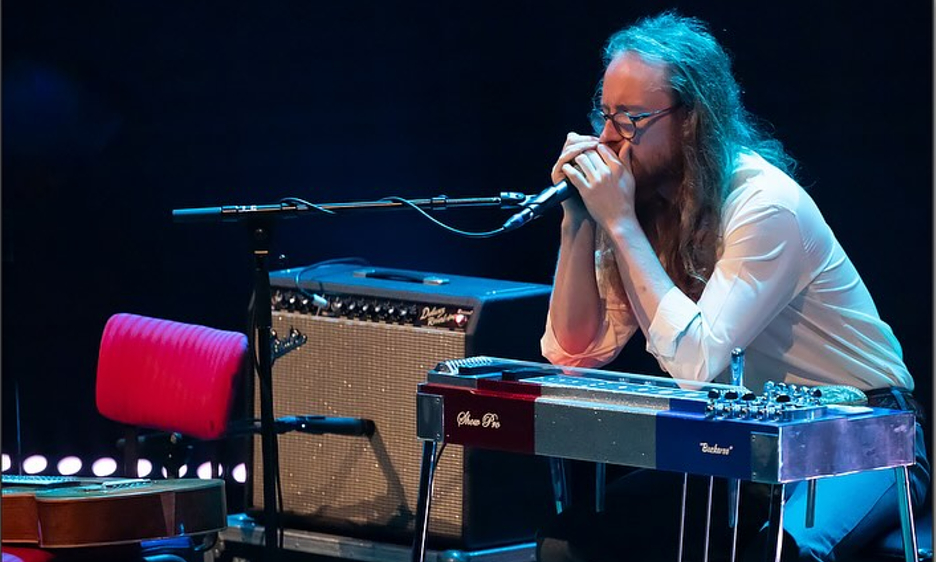
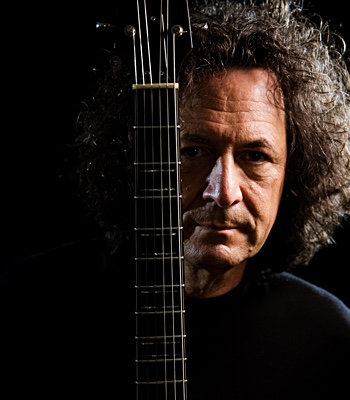
Courtesy Jan Rijk

Music has always been my strongest form of communication. I was very shy as a kid, and music was my way of finding who I am and gaining confidence. And I think who you are as a person comes through in the music. You can't hide that on stage.
—Thorleifur Gaukur Davidsson
Davidsson made his debut album with good friends Skúli Sverrisson (electric and acoustic bass) and Davíð Þór Jónsson (piano, organ and banjo). His motivation above all was to record organically with composition as a starting point for whatever would emerge.
After playing the record for one of my music friends, I asked what their impression was of it. His reply was, "I kind of like it. I just don't know what it is. Is it jazz? Is it almost classical or a country-ish new age?" Well, there may not be a specific answer. Whatever you hear, it's not really one or the other. Actually, you could term it contemporary music, though it does leave you guessing. But if you were to call it jazz, there must be improvisation.
"Yes, I've always leaned on improvisation to be the case," Davidsson said thoughtfully. "I've approached it from that angle at least, but there is a lot of composition. When you're making a first record, you have so many things to say."
The land of fire and ice is one of the least populated countries on Earth, and its landscape is similar to that of Winterfell in Game of Thrones. With 10% percent of Iceland literally a glacier and thirty active volcanoes dotting the island, the entire country feels like a writhing living being. In other words, fertile ground for exciting and experimental sounds.
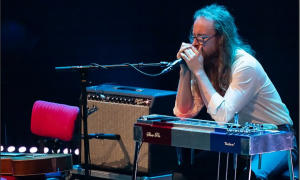
His trio's polyrhythms are mercurial, but not in the sense that they're all over the place. Their time signatures remain firmly grounded. That's the wildest part: their ability to spend several minutes in the same structure while making each measure feel new. They're madman magicians, pulling rhythmic brain-twisters and earworm hooks from within the same beat the way Harry Houdini pulled rabbits from hats. It's all musical sleight-of-hand in the end; now you see the architecture of a track, now you don't. The music moves without ambush or discombobulation—textural, cavernous. Davidsson coaxes impossible tones from his pedal steel like a snake charmer, and the trio's sense of tempo alone is enough to boggle the mind. The sounds they produce want to jimmy the locked door of your imagination. They take solos like a promise that must be kept before somehow coming together like a Sudoku puzzle.
"What I was feeling during the process of making this record were waves of emotions," Davidsson said, perhaps recalling the powerful sneaker waves that wash over Reynisfjara, the black sand beach in southern Iceland. "I think the next record will be purely instrumental, too, and show the side of the harmonica and pedal steel that otherwise cannot be easily heard."
All About Jazz: I looked up your hometown (Heimaey—an island 4 miles off the coast) in an Icelandic paper, and a person had added Icelandic expressions, one which I'll never be able to pronounce, but the translation is something about a missed opportunity.
Thorleifur Davidsson: That's a good one. Heimay translates as "Home." The Icelandic language is a beautiful thing. It has such a deep tradition for rhyming, and that was our form of expression for so many years. There were not many instruments back in the day, so people mostly used vocal music.
AAJ: I read about structures being built out of turf not all that long ago.
TD: Yes, it's fascinating. They deteriorated over time, of course. We were living like that until fairly recently. Now we're pretending to be a modern nation.
AAJ: Did you experienced a sense of isolation as a youth?
TD: I grew up in a lot of places, moved around a lot as a kid, but my island is one of the only places I have a deep connection to. I have a lot of family there. But I also lived in Víkí Mýrdal, the famous town in South Iceland, known for its black sand beaches. My father had different jobs and we moved around, so I tried out many different schools, which prepped me well for the touring life.
When you move away, you realize there are a lot of special things here. On that island, there is one of the biggest puffin populations in the world. Every year the baby puffins try to fly from their nest, and they are a little disoriented from the lights of the town because they usually use the moon to navigate. So, they fly into town and are not strong enough to fly back. The kids of the town go to the beaches to pick up these baby puffins and take care of them for a week to get them stronger. And then they take them back to the beach and throw them in the air, and they fly back to their parents. Growing up I realized that was a very unique thing. We were part of the ecosystem of that island.
AAJ: Do some of the things unique to Iceland, like the volcanic activity, find their way into your music?
TD: Yes, it is intertwined with it and there is this sense of awe that comes from the experiences. That explains when I moved to Nashville, I'd spent most of my life studying American roots music like blues and jazz and bluegrass. I thought mine was pretty much a US sound, and then I played my first show in Nashville, which was my own music, and people came up to me and said you've got that Icelandic sound.
Of course I do. Even if I've spent my whole life studying American music, I was born into this place. My mother sang me Icelandic lullabies, and just the silence of Iceland stays with you. When you go out there, even in the summertime, there's not many bugs, so you don't hear the sounds of flies or crickets, just total silence. That affects your pace and the way you play a phrase. I tend to the details in music that often disappear in a louder setting. For example, last night I played with a rock band, also Icelandic. The bottom thirty percent of your range disappears, and you have to play above that. With my music, I mostly live in that 30% percent playing as a duo or a trio and little things come out. That has definitely a connection to nature. I remember Victor Wooten said that in a big city, he tries to remind himself that those things are always there.
AAJ: It's hard to imagine, hearing these subtle sounds. Can you hear the crackling of the ice?
TD: One of the most powerful sonic experiences I've ever had is the most recent series of volcanoes in Iceland that has been going on for the last three or four years. I went up to a few of them with JJ, the singer of the band I'm touring in now. We walked up to that volcano with film gear and recorded a video of him in front of the volcano close to where the lava was flowing. There was a deep rumble, like a sub-frequency that I've never experienced in nature. It's almost like glass breaking. The flow of the lava and the lights from the volcano keeps you up, so I wasn't tired that whole night.
AAJ: On one video you see the band Kaleo spending a day by the shore going into the water and swimming underneath into a cave.
TD: That is a secret hot spring inside a cave, which is also one of the things I miss when I'm traveling. ,
AAJ: Are you currently active with Kaleo? On your website, it reads that you are not an official member.
TD: Partly by choice, I like to have my musical freedom and the ability to choose what I do, and I still found a way to be a part of it without being a member, which means I don't have to sit in meetings discussing financial decisions. I am the music director, and I get to show up for the tours and have an impact on the music, then go home and don't think about it.
AAJ: The other two musicians on your debut album Lifelines, have they been with you for a while?
TD: Davíð Þór Jónsson, the pianist, I met when I was 17 in a small Iceland town. There was a blues festival and the band playing was the Blue Ice band with Pinetop Perkins. Muddy Waters made a record with this band. It's an all-Iceland band that somehow got involved in the Chicago blues scene. Me and my friend were the opening act, and as we started playing, I could feel their presence in the back. They were in awe of my harmonica playing. I had been playing only for a year or two at the time, and a guy told me that he's been in the industry for a while and he knows when something's happening. He said, you have something special here, keep on doing what you're doing. And that was coming from my biggest hero. That's when I took the decision to pursue music.
I learned a lot. Even when I wasn't playing, I would show up to soundcheck and see how they would navigate different settings. Those old school musicians sometimes wanted to prove the point that they're worthy of leading a band and would go overboard, while others that showed up were completely calm and just let it flow. I got to see all these different ways of communicating through music. It's easier to learn the essence of music through blues because the form has simplistic elements. You really have to dig into the other angles. I still approach a lot of things from that angle, and it is very visceral music.
AAJ: If someone asked you to describe Lifelines, what would you say to them?
TD: I have a very hard time finding words to put that. Actually, I didn't intend it to be anything. It's music that came from a very intense time in my life, dealing with a lot of grief. So, it is very emotional, but in terms of genre of music, it definitely has elements of blues and jazz., and there are elements of Icelandic folk music and American folk music. You could say it is cinematic in scope.
AAJ: Perhaps we could get a clearer perspective by asking you to talk about the tracks on the album. Start with "Light in the Dark." You mentioned before about being in a dark cave. Does that have something to do with it?
TD: That was one of the first ones we wrote for the record, and it has an intensity to it. I wrote it after my father's passing, and so it has a little bit of anger even and an intentional emotion. I felt like I was processing a lot of that because grief is quite complex. To give you a little backstory my father was training a horse, and it was a particularly difficult one that freaked out over something on the ground. He ran with him at full speed, and then the horse must have seen a reflection in the ground, so he changed course at the last minute. There were two entrances to the horse training facility, and the horse hit the light pole at full speed. There had been an accident there earlier, and the government had let it be known that this light pole shouldn't be there. By regulation, it was not supposed to be. It should have been a certain distance from the road, but no one did anything about it.
I think this song comes straight out of that. It was like, I'm going through this thing and happened to have these instruments around me. I wrote that on the pedal steel, which I had only been playing for less than a year. It definitely was an intense journey, very dramatic and you have no control over it. It starts out very soft like you are just waking up, and then you feel these emotions that kind of take you away before coming back down again. This one is only me and Davíð, and there are some intricate moments in there.
AAJ: Well, the title suggests you were able to find some solace, some light in the dark.
TD: That intro is completely improvised, and we said let's see where it takes us. You're not sure where the sounds are coming from, and it's just pedal steel and a pluck piano. It feels like Skúli Sverrisson is with us on the bass because he's such a big part of this. It was beautiful to hear how he mixed it. Davíð's dog was with us in the session and is sleeping under the piano. You can hear the dog snoring a little bit at the end of the song. There is hope in the song, too, which is a big part of the whole album.
AAJ: Next is "Stride" and Skúli Sverrisson joins the two of you on bass.
TD: That definitely comes from the stride of a horse, the pace, which has an alluring element. It came from having a playful nature, and it's inspired musically inspired by West African rhythms. I have always been deeply inspired by West African Music; that 12/8 rhythm has always stayed with me. It kind of reminds me of a gallop, having this forward motion. We recorded with a muted sound. I am playing pedal steel. Skúli even put some snare springs inside the grand piano to play it rhythmically. Sometimes on tour, we call him our little drummer.
Davíð is one of the most creative people I've ever met on this planet in anything he does. He finds beautiful ways of playing beyond his instruments by being inside of it. And I think he's such a big part of the exploration on the record. He plays his instrument very uniquely. There's this dance between the three of us, and it was fully improvised. There are two chapters, really just very simple, the main motif and a little B section where we ended up going there blindly a few times to resolve the journey.
AAJ: The next track is "Draumur," which I've learned is a candy bar in Iceland that combines sweet chocolate and licorice. It also means dream, so like a chocolate dream?
TD: That is good feedback for inspiration. The song is something I wrote on pedal steel the day before the session when we recorded it. It came to me the night before, a simple idea, that main line being a repeating circle. And I hadn't quite finished it, so I went in there with an open mind. Together with the other two guys, they wrote it just as much as me because that baseline is partly improvised, but they thought it made a nice center. And that kind of breathing thing that happens came straight from both of them, and it feels like a subliminal state, which is a state that you're often in during the grieving process. It's like between waking and sleeping. It fluctuates in tempo and peaks in volume, and kind of flows like the ocean. When I went in for overdubs, I only did a take or two because I wanted to keep it open and reactionary. Every time we play it live, we go someplace unique.
AAJ: "Afi" is an affectionate Icelandic term for grandfather.
TD: This was written for the grandfather on my mother's side, who is an accordion player. He died when I was about five years old, and I still have vivid memories of him. He loved to give me sugar and feed me cream. He traveled on horse between towns with his accordion and would play songs for people along the way. My mother's home was filled with music.
My cousin was a bassist in a very famous Icelandic band. They would always rehearse in the basement really loud, so the house would rumble from music. It was a very open space for that and encouraging of my music. "Afi" was written for this moment of remembering the feeling of going to your grandparents that is universal, but to me it's very specific things. It's the national radio station being played in the background, and it is specific foods, the smell of pancakes and coffee. And textures, too, like the texture of a rough sofa. I can still go to my grandparents' place in my mind, even though everyone except one has passed away.
AAJ: Who is the Woody in your song "For Woody?"
TD: That is the guitarist, Woody Mann. I studied with him at Berklee. He was a part of the American Roots program and would come in every few weeks. I ended up playing a lot of his music. He studied with Lennie Tristano, so he came from a jazz background. He also studied with Reverend Gary Davis. We connected because we both loved Lester Young. We played his music a lot, and it had a big impact on me. Then I lost my father when I was in my last semester. During that time, Woody was there for me to just talk. In some ways, those sessions were like therapy.
I always felt there was something underneath, that maybe Woody had gone through some depression. But it turned out that he was battling cancer, and he was quite far along and just wanted a place where he wouldn't have to talk about it. For him, that was being around the young people at Berklee. I only heard that he was terminally ill a few days before his passing. I played one of his songs on harmonica, and I sent it to him. It felt fitting to dedicate it to him. I recorded it solo, just me on guitar, and then I added the harmonica. There was the kind of dance between a conversation with myself and reminiscence energy.
AAJ: Did you start by playing pedal steel as a youngster?
TD: Actually, I started on the drums when I was five years old, and then the recorder. My mother told me that I was very diligent in practicing my recorder every day as a part of the school curriculum. Everybody plays a recorder. And I took that very seriously. And then at the age of 10, I started playing the guitar, which was my first real passion. When I was about 15, I bought one and it came pretty naturally to me. I added the harmonica, then I began getting hired and became known as the "harmonica guy."
AAJ: You hear some of that on "Streetwise."
TD: That one is inspired by a Malian rhythm, and it has that kind of playfulness to it. What came to mind when I listened back to it was my father was raised in kind of the ghetto of Iceland, not really a ghetto, just apartment buildings. It was a little bit of a wild place when he was growing up. After he passed, I learned a lot of stories about his childhood, stories that hadn't been heard before.
That song comes from a playful voice and seeing the world from that kids' perspective. We had a lot of fun recording it. That is a sister track to "Stride" in that they are rhythmically motivated. I recorded it on pedal steel and Davíð put something in the piano, a lot of papers, I think. That kind of bright sound comes from there and is deeply inspired by the kora harp, because it sometimes sounds like the pedal steel. It has ten strings and when it's muted it has that sound quality. And then the harmonica became a very integral part of the song.
AAJ: Did you develop your harmonica playing from anyone's style in particular?
TD: There are many ways to play the harmonica, different techniques and two big schools of thought. Originally, I played kind of the more modern way, which is lip pursing. And that's what I've spent a lot of time on while playing bebop. But recently, I've leaned more towards what is called tongue walking, and it's that folk blues style of playing like Bob Dylan. I'm playing in a strange key, and it was fun to find the pocket for that. DeFord Bailey was a big one, also Little Walter Horton. Once I do that style, it adds more of a percussive element and harmonic at the same time. The way to prove yourself as a harmonica player was to imitate a train or a fox chase. So it was very rhythmically driven.
AAJ: Your sound, for lack of any technical expertise on my part, sounds softer.
TD: Well, many players will tighten the reed, so it's very responsive. But I like to keep them just the way they are because then you have the air and you can feel that. I've always been deeply inspired by Dexter Gordon. I've studied many saxophone players in terms of melodic instruments. I try to take that into the harmonica, and there is space for it on this record.
AAJ: Isn't "The Unity of Opposites" another way of saying opposites attract?
TD: That's the definition of yin yang, a sense of a stability. The yin yang symbol is two elements that have a balance, like the unity of opposites. And I think that's where the song lives for me. Emotions are pulling you, but there's a sense of calmness in it, a kind of being grounded. This is on the more acoustic side of the record and was deeply inspired by Skúli's music. His Seria (12 Tonar, 2006) is probably the record I listen to the most. He is playing a beautiful acoustic bass together with Davíð on pump organ. I added the harmonica later and found a sound by recording two harmonica, creating this effect of different ways of bending. There is a kind of tension. Noah Georgeson mixed it beautifully. It's recorded in old Sundlaugen Studios, which used to be a swimming pool. It's a quite big space, so I had lots of room mics. And the beautiful thing that happens if you play soft, those mics can barely hear it, but when you play louder, they'll pick it up. So you have this kind of 3D sound by mixing those microphones.
AAJ: You went back to nostalgia for "Family Tree."
TD: Me and Skúli played it together, just the two of us, and then added that piano later, which is kind of crazy because it fluctuates in tempo a lot and somehow Davíð managed to make it feel like he was with us. Once you lose someone, you see everything in a bigger picture. And when I wrote that, I was thinking a lot about how every generation has gone through what I'm going through now. It's the vastness of knowing, zooming out and realizing that loss is a part of life for everyone at some point.
AAJ: All of us have different ways of arriving at the same destination, put forth by the title of the next song, "The Passing of Time."
TD: That is a little meditation that I played on my guitar and added pedal steel. It brings up solitude, which has been a big part of the way I've processed a lot of things in life. I need it less now, but in my young adulthood, I would go on a weeklong hike by myself deep into the wilderness to get space and see things clearly. That song comes from a place of being completely by yourself with your emotions and kind of swimming a bit, seeing what am I feeling. What is this emotion?
AAJ: It's interesting how you're able to express emotions, complicated emotions, without words. Why do you think it's unnecessary to have words in your compositions?
TD: I think it is because music has always been my strongest form of communication. I was very shy as a kid, and music was my way of finding who I am and gaining confidence. And I think who you are as a person comes through in the music. You can't hide that on stage. I love supporting singers, and I produce records mostly with singers. But for me, I wanted to show people the sides of all these instruments that I know very deeply how emotive they are. I just have a better way with that than with words. Even though I appreciate the words a lot, I also enjoy the side of it that is more abstract. A person could have a completely different feeling, but it's vague enough that I hope you might come to the same conclusion, though it might make you feel very differently than it made me feel.
AUK: "Sátt" has a minimalist arrangement but feels very hopeful.
TD: This means acknowledgement or acceptance, the final stage of sorrow but with a little more hope. It has the same motif as with "Unity of Opposites." The strong emotions. We played it together with me on guitar, and then I added harmonica. And I think the way Noah mixed it brought tears to my eyes. I've never been brought to tears by a mix, but I felt like he really understood that song.
AUK: The next title is mysterious. What does "Overfall" mean to you?
TD: Like my grandfather before him, my father was a fisherman too. He spent a big chunk of his life being away for a month on a big boat fishing. I was drawn to the ocean a lot during this time, and it was a way of connecting with my father. "Overfall" is a nautical term for a turbulent stretch of open water caused by the wind blowing against a strong current. Fishing in Iceland is actually a very dangerous occupation. The Atlantic Ocean is an intense place that has taken a lot of lives over the course of a few hundred years, I think we lost 5,000, which makes our people very aware of their mortality.
It's a big part of the Icelandic identity. I think the roughness of Iceland has a lot to do with it. That town, Vestmannaeyjabær, people have a kind of so what? attitude there. They get very drunk and live their lives intensely. It's a well-known psychological phenomenon that happens in mining towns like in West Virginia when you're close to death and lose a lot of people around you. The people have less respect for life or are kind of like, fuck it. And that can come out in negative ways, as in many of these mining towns where there's a lot of opioid addiction. In Iceland, there is more drinking and a wild west kind of living.
AUK: In America of years past, that would be similar to the frontier life.
TD: This song is deep in grief for sure. It's like when you're in these waves that come again and again and you're like, whoa, will they ever stop? So, I found the title "Overfall" very touching, and I cried during the recording. The same thing with the next one, "On Thin Air" and "Farinn," the last one on the record. Me and Davíð are playing mostly in unison, but not quite. It's very delicate and kind of treacherous the way we play it, soft but kind of a risky in some ways. The harmonica comes in later, and I'm playing a chromatic, which I rarely play and is the instrument that Toots Thielemans plays. I am very inspired by him.
AUK: "On Thin Air" is a wonderful song. It brings you into the clouds in the upper atmosphere where the air is thin.
TD: When I wrote that, I was thinking of "Snorri" (John Snorri Sigurjónsson), who was the first Icelander to take an expedition to the summit of K2 Mountain (the world's second highest on the Pakistan/China border). He died up there and left a family. For some reason, I became obsessed with that story. Why did he have to go up there? What makes a man do that? I watched a lot of videos of the highest peaks. They are beautiful but not suited for humans. The song feels like it has a dangerous beauty.
AUK: We've come to the end with "Farinn," and you return to a duo with Davíð.
TD: It was the perfect way to end, a bookend of the two duos. We both had tears in our eyes, not because it was perfect, but it was very real and emotional.
AUK: Being a composer could be compared to a chef. You have all these flavors to blend, but the wrong spice could make the dish not taste very good.
TD: I like that comparison and it has truth. Davíð and Skúli are both good cooks. Davíð's cooking is a big part of the record. We both live in this small village. There is a bridge over a river, and we are on each side of the bridge. I have my pedal steel on the balcony where I compose music. Davíð has two daughters, and they would come with fish to fry. That's another connection to family. But it's funny you mention cooking because before we made the record, I invited Davíð and Skúli to this very nice restaurant in Reykjavik where they serve an 11-course meal of Icelandic cooking. During the recording in the studio, we always talked about that meal. It had a big impact on the project. Sometime we are going to go back there, and the idea is to create a musical experience around the food they serve, one for each of the 11 courses. Maybe this summer (2026).
AUK: There is a picture of you opening the box of vinyl records, and you looked as if you were opening a Christmas present. Your first album in your own name. That must have been so exciting.
TD: It's so hard to describe how exciting that was. What made it special was that the record is very personal. I think that's important because when I do projects that are maybe with a band or other musicians, I don't feel the need to make them personal, about me, and I can just contribute. This music is the most honest part of me I can offer.
Tags
Interview
Thorleifur Gaukur Davidsson
dean nardi
Davidsson
Kaleo
Tony Trischka
Victor Wooten
Peter Rowan
Skúli Sverrisson
Davíð Þór Jónsson
Pinetop Perkins}. {{Muddy Waters
Woody Mann
Lenny Tristano
Reverend Gary Davis
Lester Young
Bob Dylan
DeFord Bailey
Little Walter Horton
Dexter Gordon
Toots Thielman
Comments

About Thorleifur Gaukur Davidsson
Instrument: Harmonica
Related Articles | Concerts | Albums | Photos | Similar ToPREVIOUS / NEXT
Support All About Jazz
 All About Jazz has been a pillar of jazz since 1995, championing it as an art form and, more importantly, supporting the musicians who make it. Our enduring commitment has made "AAJ" one of the most culturally important websites of its kind, read by hundreds of thousands of fans, musicians and industry figures every month.