Home » Jazz Articles » Interview » Steve Wilson: Creating Sonance
Steve Wilson: Creating Sonance
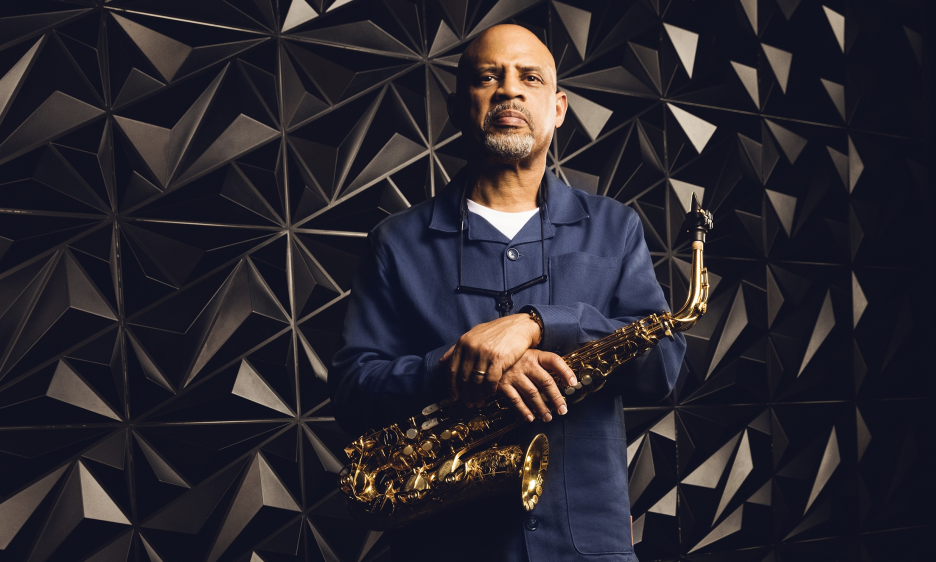
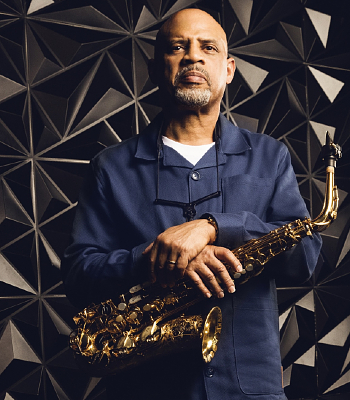
Courtesy Kevin Scanlon
I want to create music that stays with the listener over time, when the meaning deepens. What I'd love for listeners to get from this project is not just that these are a collection of beautiful, great songs, but that these songs have stood the test of time for a reason.
—Steve Wilson
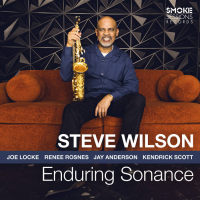
Wilson ultimately became a leader, though it was never his intention. Nevertheless, he approached the responsibility with his characteristic professionalism and artistry, eventually producing a rich, diverse discography that includes some of the finest modern straight-ahead jazz. In May 2026, Wilson will release Enduring Sonance (Smoke Sessions Records, 2026), his debut album for Smoke Sessions Records. The album is classic Wilson—elegant, timeless, pleasurable. Backed by a star-studded combo and with the benefit of one of jazz's most prominent labels, the album is probably Wilson's most noteworthy release to date. And yet, Wilson remains steadfast in his journey to produce the highest-level music possible, whether fronting his own group or providing the best possible support to his peers.
All About Jazz spoke to Wilson about Enduring Sonance, his career generally, and his place in the New York jazz scene.
Upbringing and Development
All About Jazz: Can you talk about your childhood in Hampton, what led you to take up music, and how you ultimately realized it was your calling?Steve Wilson: I got introduced to music through my father. He didn't consciously introduce it to me, but he had a small but eclectic record collection. He took me to the Hamptons Jazz Fest, which was produced by George Wein. George was expanding his Newport Jazz Festival, and he brought in a lot of the artists that he would have in Newport. So. In those days, I got to see Cannonball Adderley, Eddie Harris, Les McCann, Rahsaan Roland Kirk, Freddie Hubbard, and the list goes on and on. So seeing the music live was really what did it for me, and I knew pretty much, by the time I was 12 years old, that music is what I wanted to do. And that's when my formal training started. It was a great time. All the kids in my neighborhood played music, and we formed a garage band. So I was getting my formal training at school, and then afterwards playing the pop music of the day, funk, and R&B. So it was a great time to be growing up there.
AAJ: You play multiple instruments. What did you start on, and how did that evolve over time?
SW: I started out on saxophone. Like most kids, I wanted to be a drummer originally, but when I saw Cannonball and Eddie live, I thought, wow. I want to do that. So now I play, primarily, alto and soprano saxophones. I don't play tenor. I play flute as a secondary instrument, mostly for big bands.
AAJ: You worked with some legendary musicians very early in your career. Given their stature and your relative inexperience, how do you think you were able to rise to the level they expected?
SW: I moved to New York in 1987. I was 26 years old. Before that, during my early twenties, I had the good fortune to play with good people when they came through Virginia, people like Freddie Hubbard, Frank Foster, and Wallace Roney. And so those were connections I had before I came to New York. That helped me in my transition, and I would get recommended. I was very fortunate in that way, and one thing led to the next and, um, so yeah, it just kept going from there.
AAJ: So you had early gigs with masters such as Lionel Hampton, Chick Corea, and Dave Holland. How did you take the wisdom and experience they imparted, and use it to build your career and progress as a musician?
SW: When I got to New York, I learned early on that when you get a chance to play with musicians of a certain caliber, it can be intimidating at first. Then, after you get acclimated a bit to the gig, you realize that they have you there for a reason. They want you to play. But you also realize that they are not resting on any laurels. They are putting it all out there night after night. They are not coasting simply because they have 50 records! So you had to be on your game every night and be ready, because every night you had to find something new. For example, I joined Buster Williams in 1991. When Buster has you in a bandstand, he wants you to play. You cannot think about the legend of Buster Williams. You have to be in the moment. You have to give the music what it's calling for. Buster is always pushing you to find something new. And it was the same aesthetic with Dave Holland, with Mulgrew Miller, with Chick Corea. They were finding new territory every night.
The "Quintessential Sideman"
AAJ: The New York Times famously ran a profile of you in the late 1990's and labeled you the "quintessential sideman." To a certain extent, The Wall Street Journal later repeated that narrative. How did you react to that classification?SW: I was very flattered that they chose to feature me. I took a lot of pride in the sideman role because that's what I came to New York to do. I came to New York primarily to play with my heroes.
AAJ: How did you eventually make the transition from sideman to leader?
SW: Not by my own design! I was not looking to be a leader at all. But in 1990 I got a call from Criss Cross, which was recording so many great young musicians. And they wanted to do a record with me as a leader, and they asked me to put together a band. And I really did not feel worthy of being a band leader at that point. But a couple years later, they wanted me to do another record. And so I started writing music and I started doing my first gigs as a leader in the early nineties. So that's what got me into leading bands periodically.
AAJ: Does your approach change when you are acting as a leader or a sideman?
SW: Yes. As a sideman, I try to honor the music of the composer—in most cases that's the bandleader. I try to find out as much as I can about the music, what it's about, feel the concept, feel the vibe of it. I imagine it might be like when an actor approaches a role. They find out what the story is, what their character is in that story, and the dynamics of that character. And then they find themselves within that character. When I'm a leader, I try to find musicians who are rooted, are not afraid to take chances, and can take me out of my comfort zone. I want to grow. I don't want to just come in and mail it in and play my stuff. No, I want them to take me places. And I want to have that trust you need with your bandmates.
Enduring Sonance
AAJ: Let's talk about Enduring Sonance. Can you talk about the album's concept? How do you typically devise each of your leader albums?SW: The album had been in the making for about two years. I had the idea of doing a ballads record, but I was in no rush to do it. And then I went to Paul Stache [co-owner of Smoke Sessions Records] with the idea, so I started thinking about the program. I didn't want to just do Great American Songbook tunes. As much as I love them, I've always loved doing tunes off the beaten path. So I thought about "Eyes of Love," which was on a Quincy Jones record from the 1970's. That was a record I first heard when I was barely a teenager. And then, "A Quiet Girl, " which is a tune I had played with Billy Childs when I worked with his quartet. I have always loved that tune. Renee [Rosnes] recommended "Francisco" by Milton Nascimento. It's a record about lyricism. Lyricism is the focus.
AAJ: The titles of many of your albums invoke such pleasant feelings—Soulful Song (MAXJAZZ, 2003), Sit Back, Relax and Unwind (JMI, 2024), Enduring Sonance. Do you view this amiability as the object of your music, as opposed to being challenging or intellectual?
SW: Not consciously, but I want to create music that stays with the listener over time, when the meaning deepens. What I'd love for listeners to get from this project is not just that these are a collection of beautiful, great songs, but that these songs have stood the test of time for a reason. They have such great integrity about them—the melodies, the lyricism, the soundscape of this ensemble and of the arrangements. Basically an old school aesthetic, when we all used to sit down and listen to LP's, and you sat with the liner notes and you gave yourself the luxury. The privilege of that experience, to experience the music at every level, not just something that would be on when you're multitasking.
AAJ: Absolutely. Back then, an album was a financial investment. You spend $20 on an album—that's hard-earned money!
SW: Exactly. You're with that album for weeks. You are totally invested in that record. So I wanted that aesthetic of really experiencing the music. I didn't want to just put together a program that consists simply of some cool tunes with some cool melodies, and everyone takes solos. I realize how this may sound, but my concept was not to make a jazz record. It's obviously a jazz record at the end, because all the components are there. But I wanted the album to be the sound of a group that has something unique.
AAJ: Speaking of your group, can you discuss your composition and collaboration?
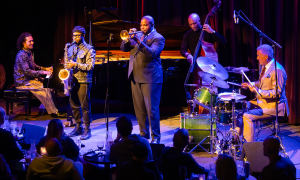
SW: It started with Renee [pianist Renee Rosnes]. Renee and I have known each other for over 35 years, so I knew that she would know exactly what I was after. She's such a brilliant musician, composer and arranger. I knew that she could do the arrangements much better than I could. Joe Locke [vibraphone] and I have also known each other for many years, and we have the same appreciation for a lot of the same music across different genres. He has a love of lyricism and approaches music from the heart. And Joe Locke [bass]—What many people may not know about Jay is that he has such a beautiful melodic approach to playing the bass and his accompanying style. He really creates beautiful melodies underneath that really keeps the music flowing. I wanted Kendrick Scott [drums] particularly because of the way that he paints on the drums and the way that he orchestrates. Finally, we added Kevin Newton on French horn for a couple of tunes. He has a beautiful round sound, not too brassy. My only regret is that he didn't contribute to more music.
Bucket List Projects
AAJ: What ideas do you have for your next projects?SW: I have a continuing project, a concerto, for which I commissioned [pianist] Billy Childs, for saxophone and wind ensemble. That's been a bucket list project of mine for years. It kind of brings me back full circle to my earlier training, all from junior high school to college to playing in symphonic wind band and I love the sound of that. I am working on the project with a consortium of seven universities. This is an area where I want to continue developing. One, because I just love that sound. And two, because there are some really great conductors doing that music. I find that university ensembles are very receptive to doing new music, and they are ready for these kind of cross-genre collaborations. The piece that Billy wrote is a hybrid classical-jazz piece, and so it leaves me a lot of room. And it's a great experience for the college students who play it. Another bucket list project I have is that I would love to do something with a brass ensemble. Hopefully I'll be able to do that in the next couple of years. Also, I want continue the duo that I have with [drummer] Lewis Nash. We have our drum/saxophone duo that we've subtitled Duologue. I feel like at this point in my career and development, I feel so blessed, because I can just be patient. I'm in no hurry to make new records, one after the other. I'm getting to the core of my artistry and the core of my voice. My only agenda is to make meaningful music that has integrity and that I hope can uplift people. Music that I can learn from in the process of making it, and playing with as many great musicians as I possibly can.
Tags
Interview
Andrew Schinder
AMT Public Relations
Steve Wilson
Enduring Sonance
Smoke Sessions Records
Hamptons Jazz Fest
George Wein
newport jazz festival
Cannonball Adderley
Eddie Harris
Les McCann
Rahsaan Roland Kirk
Freddie Hubbard
John Hicks
Frank Foster
Wallace Roney
Lionel Hampton
Chick Corea
Dave Holland
Buster Williams
Mulgrew Miller
Criss Cross
Soulful Song
Renee Rosnes
Joe Locke
Jay Anderson
Kendrick Scott
Kevin Newton
Billy Childs
Lewis Nash
Comments

PREVIOUS / NEXT

Support All About Jazz
 All About Jazz has been a pillar of jazz since 1995, championing it as an art form and, more importantly, supporting the musicians who make it. Our enduring commitment has made "AAJ" one of the most culturally important websites of its kind, read by hundreds of thousands of fans, musicians and industry figures every month.