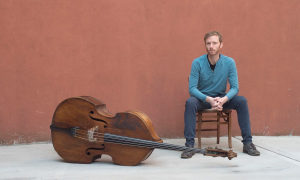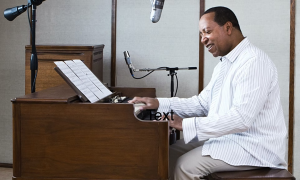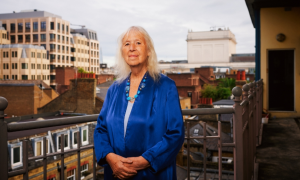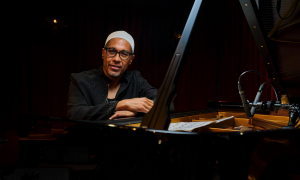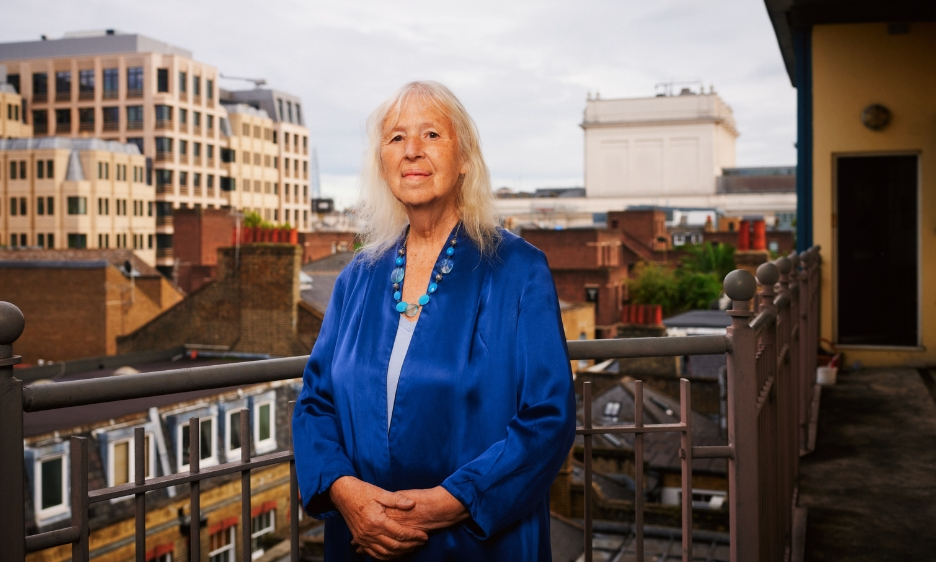


Vocalist Maggie Nicols, one of the leading figures in international free improvisation, presents a long-awaited album of jazz standards, realizing a project that has been part of her musical life since the early 1960s. The recording brings her together with pianist Geoff Eales, alongside Ashley John Long (double bass) and Sophie Alloway (drums), in a collaboration that bridges tradition and experimentation with clarity and ease.
Nicols’ relationship with the standard repertoire began early, singing in the 1960s with her first mentor, bebop pianist Denis Rose. Although she went on to become a defining voice in the avant-garde and free music scenes, collaborating with artists such as the Spontaneous Music Ensemble, Irene Schweizer, and Julie Tippetts, and co-founding the Feminist Improvising Group, the idea of recording an album of standards remained a constant thread.
That intention finally came to fruition through a series of encounters that felt, in the words of pianist Geoff Eales, “written in the stars.” The two musicians first met at Cafe OTO in London, a venue known for experimental and improvised music. Despite coming from different musical backgrounds, with Nicols rooted in free improvisation and Eales known for his jazz arrangement and musical direction work, the partnership developed quickly and naturally.
“It’s so easy to be type-cast,” Eales reflects. “Maggie as a leading figure in free improvisation, and me as a composer of contemporary jazz. I hope this album shows that neither of us fits into a single box.”
The repertoire reflects a shared respect for the jazz tradition, featuring songs such as “All Blues," “Come Rain or Come Shine," “My Funny Valentine," and “Turn Out the Stars." The performances balance familiarity with openness, allowing space for interpretation while remaining close to the emotional core of the material.
Produced by Paul Jolly for 33 Records, the album also fulfills a long-standing ambition on the production side. “I have known Maggie since the late 1960s and have long understood her desire to record an album of standard material,” Jolly notes. “It has been an ambition of mine to help bring this to life.”
For Nicols, the project represents both a return and a continuation. “For decades it had been a dream of mine to record an album of songs,” she says. “Our musical partnership has been a total inspiration, and finally the recording I have longed for has come about.”
The result is a recording that brings together different strands of jazz history, not as contrast, but as a natural conversation between artists who have followed their own paths over many years. It is, above all, a document of timing, connection, and shared musical understanding.
Nicols’ relationship with the standard repertoire began early, singing in the 1960s with her first mentor, bebop pianist Denis Rose. Although she went on to become a defining voice in the avant-garde and free music scenes, collaborating with artists such as the Spontaneous Music Ensemble, Irene Schweizer, and Julie Tippetts, and co-founding the Feminist Improvising Group, the idea of recording an album of standards remained a constant thread.
That intention finally came to fruition through a series of encounters that felt, in the words of pianist Geoff Eales, “written in the stars.” The two musicians first met at Cafe OTO in London, a venue known for experimental and improvised music. Despite coming from different musical backgrounds, with Nicols rooted in free improvisation and Eales known for his jazz arrangement and musical direction work, the partnership developed quickly and naturally.
“It’s so easy to be type-cast,” Eales reflects. “Maggie as a leading figure in free improvisation, and me as a composer of contemporary jazz. I hope this album shows that neither of us fits into a single box.”
The repertoire reflects a shared respect for the jazz tradition, featuring songs such as “All Blues," “Come Rain or Come Shine," “My Funny Valentine," and “Turn Out the Stars." The performances balance familiarity with openness, allowing space for interpretation while remaining close to the emotional core of the material.
Produced by Paul Jolly for 33 Records, the album also fulfills a long-standing ambition on the production side. “I have known Maggie since the late 1960s and have long understood her desire to record an album of standard material,” Jolly notes. “It has been an ambition of mine to help bring this to life.”
For Nicols, the project represents both a return and a continuation. “For decades it had been a dream of mine to record an album of songs,” she says. “Our musical partnership has been a total inspiration, and finally the recording I have longed for has come about.”
The result is a recording that brings together different strands of jazz history, not as contrast, but as a natural conversation between artists who have followed their own paths over many years. It is, above all, a document of timing, connection, and shared musical understanding.