Home » Jazz Articles » Interview » Matt Marantz: About Music, Money and Mouthpieces
Matt Marantz: About Music, Money and Mouthpieces
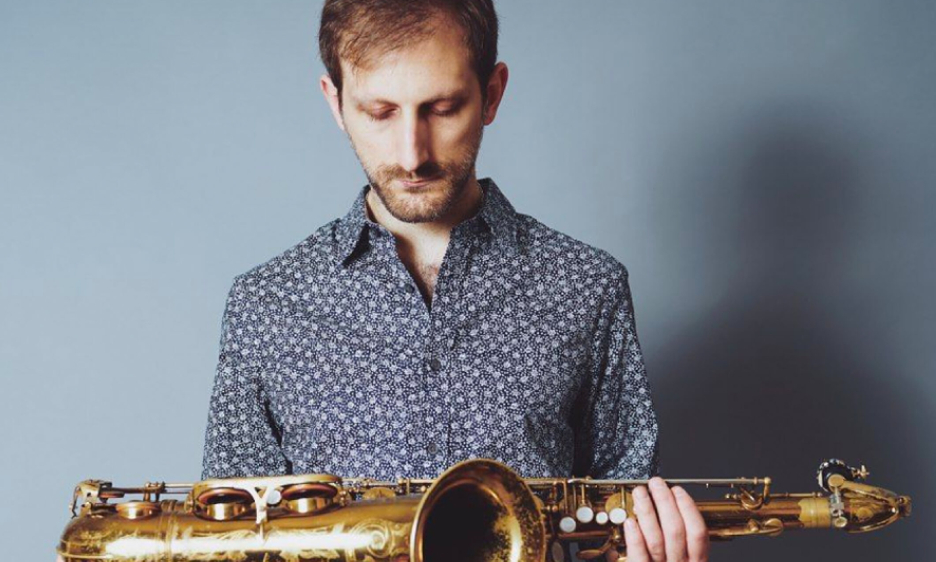

The main thing that makes me happy when I am doing mouthpiece work is finding out how much people like them later on.
—Matt Marantz
Originally from Texas, Matt Marantz got his start by growing up in a musical family. At a young age, during the early years of his saxophone studies, he heard the music of Charlie Parker, Phil Woods and Cannonball Adderley via his father's record collection. He attended Booker T. Washington High School for the Performing and Visual Arts in Dallas where some of his peers, most notably pianists Sam Harris and Frank LoCrasto, had a big impact on his musical learning and composition style.
Marantz moved to New York in 2004 and still lives there, in Brooklyn. His musical career has had its ups and downs, but his journey has taken him as far away as the Middle East, Europe and Asia for tours, gaining opportunities to perform live with the likes of Herbie Hancock, Michael Bublé, Branford Marsalis, Terence Blanchard and Jason Moran. Curiosity turned urgent with the necessity to put food on the table and pay ConEd to keep the lights on, so he branched out into production and engineering. Then the opportunity came along to begin building his own custom mouthpieces for saxophone players. His list of clients is both lengthy and dotted with some very well-known musicians. Adamant that ersatz mouthpieces would not be his goal, when compared to the high-end products, his stand up favorably and that is not sugaring the assessment.
Melissa Aldana had this to say about the quality of Marantz's workmanship. "After years of working on sound while trying to gain a deeper understanding of what direction I want to go for, I have finally found the mouthpiece that allows me to connect on a deeper level. Matt Marantz's Slant Legacy HR for tenor sax is the best mouthpiece I've ever played. This is my dream mouthpiece."
Mouthpieces keep him so busy that a new record has lingered for several years awaiting his solos and finishing touches. "I can put out a record that I work extremely hard on and I'm super proud of," he said, "and it gets no traction. But that easy listening stuff I have a contract for just takes off on Spotify." Easy listening is the jazz version of sushi, uncooked though colorful, but it's nothing to get excited about for him.
At gigs, you will often see horn players fiddling with their mouthpieces, puckering up like they were about to kiss a snake, not knowing if it would bite them in the nose. Marantz saw a niche to fill, one that has a salubrious effect on one's bank account. Explaining what he manufactures, the words poured out like water sluicing from an overburdened dam. Nevertheless, he is bound and determined to put the finishing touches on that new album, which will be fusion style with as much EWI playing as tenor saxophone. But here we are, four years after hearing that jazz compilation disc, and another email was sent to Marantz, which led to the following interview. He has much to say on a variety of topics. All About Jazz: Good afternoon, Matt. We are in the midst of a thunderstorm in East Tennessee. How is it in Brooklyn?
Matt Marantz: The weather is clear as a bell here, thanks for asking, and Brooklyn is great. I moved to New York in 2004, but only ventured into Brooklyn when I finished grad school around the fall of 2013. Most of my best friends either live here now or have lived here in the past, and almost all of those people are also full time musicians who I have played with a lot too. So on any given day over the years, you'd leave your building to go buy groceries and routinely run into other musicians who you either knew or knew of all the time which was great and gave you a sense of community. Rents are cheaper in Brooklyn than in Manhattan, but also it's more relaxed and you can think more clearly out here which is great for composing or working on studio projects.
AAJ: You come from Texas. How important was your upbringing for developing your career as a musician? Did you go through the vinyl collection of your parents? How did you get interested in music?
MM: My parents are both musicians and my brother, Luke Marantz, is an incredible professional jazz pianist who is often touring in Europe and other places abroad with great bands. In fact, he will be touring in India this February.
Our dad was performing a lot with his jazz quintet when we were both younger, but he doesn't really play a lot anymore. That's actually how I got started though, doing my first gigs with his band. He taught jazz at a school called Booker T. Washington High School for the Performing and Visual Arts in Dallas, Texas. There are a few of those arts magnet schools around the country, and throughout his tenure he had some incredible talent pass through his student ensembles such as Roy Hargrove, Norah Jones, keyboardist extraordinaire Shuan Martin from Snarky Puppy, and even Erykah Badu went through the dance department and teamed up on some musical projects with Roy after they met there. It was a place where you could feel the history of the talent that had been there before you which almost emanated from the walls. We really looked up to all of those people as young musicians.
Roy was an especially big inspiration for me back then. He actually came back to the school and did a free concert for the students in the Arts Magnet band hall with his R.H. Factor band when I was in the 10th grade, which was cool to get to see at the time. He let me sit in with them on sax during a blues in front of all my friends and teachers, and I had never been more nervous than that before. I was shaking! Somehow, though, I got through it.
My mother is also an amazing musician, a classical pianist. I always knew my mom was a great musician, but some of her skills didn't become as apparent to me until I was older. Last time I was visiting them, I realized she was reducing a full musical score to a piano part on sight one day just for fun. She's an amazing sight-reader and a talented accompanist of classical vocalists. She's always also been the pianist at a few different churches ever since I can remember.
I got interested in music before I even knew I wanted to play saxophone. Before I was old enough to start seriously learning a real instrument, I had a Casio keyboard as a kid which had a demo song mode that I used to pretend to play along to, and I remember having visions of wishing I was performing the demo music in front of people. It was more of an "I know I'd really want to do that" sort of feeling than anything concrete. It was only later on, maybe even about midway through 7th grade, when I got a Charlie Parker Omnibook along with a compilation disc of him playing all the classic Bird tunes for Christmas plus some other great records from Phil Woods & Cannonball Adderly and felt like I'd discovered jazz. Hearing those guys play on CD for the first time was honestly incredible. I was hooked from the first moment I heard them play, and I knew I wanted to do that from around age 12. So that's when I really started practicing a lot, too.
AAJ: When did you get your first saxophone?
MM: I think I was about 11. Actually, it's kind of a funny story about how I started playing sax. When I reached the 5th grade the music teachers started making us all aware that it would be time to select band instruments soon if we wanted to be in the band. The choices were between being in the band or playing football, and I knew I wasn't going to play football, so I started thinking about what I wanted to play in the band instead and decided on sax.
Anyway, at the audition for the 6th grade beginning band class, I just fell on my face. I couldn't do anything that they asked us to do at the audition. Their method for selecting your instrument or deciding what you were going to play was to just let you have a quick try of everything and then they would judge your affinity for each instrument. When it came time to try the saxophone, I didn't even know that the whole thing came apart into 3 pieces (mouthpiece, neck, and the body of the instrument), and all they would let you test was the neck of an alto with a random reed and a random mouthpiece on it. Fast forward to 2026 when I'm now a professional sax mouthpiece technician, and I'm sure that was probably not the best setup for anyone to try for their first time playing a sax. Anyway, it did not go well.
AAJ: That must have been awkward.
MM: It was, and to be honest, I couldn't get anything but a horrible squeak out of it. They tried to convince me to play the bassoon instead, which sounded horrible to me. It took a fair amount of coaxing, but thankfully, eventually they changed their minds and gave me a shot at the saxophone, so we bought one.
Our family didn't have very much money, so for them it was kind of a big deal. We got a Yamaha student model alto sax used for $300 from an electrician at our church, and I still have it.
My dad was doing a lot of promotion and consulting for jazz festivals at the time, so he built himself an office separate from the house in our backyard out of one of those oversized standalone workshops you can get from Home Depot. It was fully insulated and he'd built a real concrete foundation for it, so it was basically soundproofed which meant that I could practice out there whenever I wanted and none of the neighbors or my parents in their house could hear it. He had his entire vinyl collection out there which he generously gave me full access to, so I was practicing all the time and listening to his records out there in his office pretty much whenever he wasn't using it for his work. He had everything from Miles (Davis) to Cannonball (Adderley) to (John) Coltrane to Ella Fitzgerald to Duke Ellington to Jimmy Smith to Freddie Hubbard. He pretty much had it all, and it was all on vinyl which was amazing. Phil Woods stuck out to me as one of my favorites. He had a lot of really obscure, seldom-seen Phil Woods records from the seventies and all the great Cannonball Adderley Quintet records, because he also loved Nat. He had lots of the classic Charlie Parker records, some of which I didn't also have on CD so I'd listen to them out there, plus all the classic Blue Note era stuff. My dad also had a lot of great Joe Henderson records, and he eventually became (and still is) my favorite jazz saxophonist so I have to thank him for that. Really, at that age, I pretty much lived out there in the jazz office practicing and listening to music.
AAJ: Your initial training came in high school music courses and band?
MM: Well, to be fair, I was extremely lucky to have had two great sax teachers at the very beginning, one right after the other. Those two teachers were both really stern with me about the technique portion of the saxophone because they had both studied with Jim Riggs, the sax professor at University of North Texas at the time. Riggs is a bit of a legend to all of us who came up playing saxophone in the North Texas area. I was lucky to have these two formative teachers that truly cared about me at first, and then later, I got to study directly with Riggs too which was great.
Then yeah, later I went to the Arts Magnet high school in Dallas I mentioned before, and that was a really high level program. We were getting assignments like learning how to play John Coltrane's Giant Steps in 3 continuously modulating keys, so that the turnaround at the end just continued on up into the next logical key center at the top of the next chorus instead of returning to B major every time like usual. It was intense!
AAJ: Did you first play out with your dad's band?
MM: Yes, actually! My dad had a working jazz quintet since even before I was born. So, around the time I was learning how to read music and learning how to hear things and beginning to learn tunes on sax, he started playing along with me in the practice room, helping me learn tunes, giving me Jamey Aebersold discs & books to learn with, teaching me the musical modes, and eventually, hiring me to play with his band. I remember the very first gig I ever did with his band; I was 12. I mean, I wasn't really good enough to be on the gig by professional standards, but I knew hazily what was going on and was just so excited to be there and to be part of the hang.
In those days, around age 12 to 13, I was always asking my dad's band members or his high school jazz students about how chord changes worked because I couldn't understand that songs could actually change keys from one bar to the next. It never really clicked in my mind until I took a high school class in advanced classical music theory. That class was integral to my entire understanding of the foundation of music, harmony, and composition. As soon as I understood that whatever was happening in the bass movement was king, that you could use the bass's harmonic movement to help identify chord progressions, and that there could be all types of pivot chords over the bass notes to get you from one place to the next, things started to make more sense in the jazz realm. All of that basic classical theory clarified so much for me about how music works and how one passage can lead to another, how to voice-lead, and how to understand what was happening on a page of almost any style of music. That's when I really came to life and started learning how to play chord changes and started writing my own tunes, too, in high school. I had to write for one of the high school groups called the MIDI Ensemble. That ensemble was sort of like a classic keyboard band plus sax and vocals, so we could do fusion hits like Herbie Hancock's "I Thought It Was You" which was awesome. The teacher also wanted us to write for the group so that was the first time I ever got to bring in any of my own original music and hear it played by my friends which got me hooked on composing as well.
AAJ: So you started doing some writing for your high school ensembles?
MM: Yes. I was starting to experiment with slash chords, which is where you simply notate common or simple triadic chords over specifically assigned bass notes on the sheet music so that the pianist plays the top chord and the bassist plays the root as well as the scale implied by the arrangement of the harmony, and so I was able to write some songs that included those types of progressions and get to practice improvising over them in real time with my rhythm section friends who were actually really good. There was a really talented keyboardist in that ensemble with me at the time named Sam Harris, who is now the pianist with jazz musician Ambrose Akinmusire. Super cool.
After high school, I left Dallas and moved to New York. I was enrolled at Manhattan School of Music which was great. All I wanted to do in those days was practice all the time, play sessions with everyone at school, and go out and hear incredible gigs in the city. In 2004 there were still so many of my favorite musicians alive and performing. Dave Binney would put together these incredible nights at the 55bar with Chris Potter, Brian Blade, Thomas Morgan, and Adam Rodgers all in one band, it was surreal. You could still go down and hear Paul Motian's many different bands at the Village Vanguard all the time. In fact, the first concert I saw there was Paul Motian's trio with Joe Lovano and Bill Frisell, and that night of music will be stuck in my mind forever. Incredible. I was hyper-focused on jazz and practicing in those days. I had to focus on school too in order to pass the classes, but for the most part, I was just about always working on music. I wasn't really thinking about the future at that time.
AAJ: Doesn't everyone wish they had a look into a crystal ball before making major decisions on career paths?
MM: Well yeah I mean, I still love music just as much as I always have and I'm still always thinking about music all the time, listening to music, practicing my horn, and writing new tunes, but as much as I would love to only play and write music all the time, that just isn't reality for me. Granted, I've also always had a lot of different interests as well, and I'm not ashamed of any of those. I was just reading an interview of the legendary classical pianist Arthur Rubenstein, and he was talking about how many times he'd gone to 3 movies in a row, or spent entire days wandering around new cities, or going to social engagements or parties with his friends. Rubenstein was talking about all that in relation to the fact that he wasn't always practicing the piano, and that unless you go out and live and experience things for real, your musical expressions will be limited. Well, that made me feel a lot better, because I love films, I love exploring new places, and I like hanging out with my friends, but I've also always loved building things, fixing things, and working with my hands. That's led me into several different fields, some of which aren't even adjacent to music, but I think a complete person is more interesting than a two dimensional one, so I'm not sad about having a multifaceted career either. I like doing lots of different things.
AAJ: Reality does have a tendency to get in the way of plans and hopes.
MM: Well, I've always had a lot of different interests, and some of those have led me down musically-unrelated rabbit holes, eventually spawning different careers adjacent to playing. I think that's cool though because it keeps life interesting and, honestly, I always try to think that the deeper you understand & can do things adjacent to music (such as recording & working with audio for example), the deeper it informs your musical art. I never expected this as a kid, but one of my biggest passions now is audio & the whole studio production world. When I made my first record at age 23, "Offering," I hired out some of the best studios I knew of in the city and found out that I really enjoyed every step of the process of making a record, and almost especially the post-production end of it.
That interest eventually led me down a path of collecting recording equipment of my own and beginning to record myself and my friends. The first stuff was just demos of songs I wrote on guitar and sang, then eventually a friend needed a demo of his band, and one thing led to another and after a while I was one of the guys that some New York jazz musicians were calling to do live recordings of their bands in NYC. I learned a lot about live recording in those days. I had a 16-channel mobile rig I used to lug around, and I still do that sometimes. Mainly nowadays though, I operate out of the small studio I built with my brother. Over the years, gradually I've gotten to do professional production work on recordings made by some really great jazz musicians, and even wound up mixing something featuring a vocal flown in by Coldplay's Chris Martin once!
Adjacent to the recording end of things, I've always been someone who enjoys putting together models, working with my hands, and trying to understand how things work so I got into the idea of cloning vintage recording studio equipment with really nice components which naturally got me into building some electronics. That passion, the DIY audio subculture, eventually ended up leading me into industrial electronics maintenance and repair, which is something else I do on the side.
AAJ: Isn't your profession still in music whether you are recording or playing or not?
MM: Well, I certainly hope that people still think of me as a musician! About 16 years ago, though, I began working on sax mouthpieces. It started because although I'd gotten used to playing on a lot of gear that I knew didn't really work that well up until that point, I always felt like I was struggling with my equipment and not getting what I really wanted out of it in terms of the sound and the response of it all. That's a very common feeling amongst saxophonists, and you can read endless lore about legendary players like John Coltrane carrying airline bags full of mouthpieces around to gigs & recordings, going through them as if they were reeds in order to try and find just the right one at the right time. Well, play saxophone for long enough, and most people will start to feel similarly.
It's to do with the way they have been historically manufactured. Most companies were always trying to do too many, meet impossible volume standards, and rush them out the door. So as players we were always looking for the ones that worked the best, because most of them weren't made very well to begin with, and the ones that were made well routinely fetched absurd collector-level prices which made it difficult for musicians to afford the vintage ones that were really good. Even then, just because you found a vintage "New York Meyer" on eBay, for example, didn't always mean it would be a good one, either. So there was a lot of buying, trying, and selling again in those days for me... Eventually I got tired of all the money I was losing down that rabbit hole, I bought the tools for working on them, and I started trying to figure out why they didn't work right, how they worked, and how to make them work better.
AAJ: This may sound like a dumb question, but if the mouthpiece business is going so well why do you have five jobs?
MM: Well, again I'm someone who has a lot of different interests and I don't just want to do the same thing all the time in any capacity. Truthfully, running your own business is also expensive if you want to use the best materials, the best engineering development team, and make it all in America like I am doing. So a lot of the money I make working on mouthpieces is funneled directly back into the business by way of manufacturing my raw materials, mainly, as well as all the other expenses a regular business generally has.
I could stop making custom models and just focus on refacing, which barely costs me anything to maintain other than keeping enough fresh sandpaper & handfiles in stock, but my true passion with mouthpieces is developing a "blank" for each model as a foundation that allows me to create mouthpieces that, for me, meet or exceed the sound and response feedback you get from the best, rarest, holy-grail vintage mouthpieces you can find out there for sale at crazy high prices. That is what makes this fun for me; To be making something brand new in 2026 that I honestly feel stands up to the vintage specimens I have on hand.
That's how I've always approached the craft; As an artist, which has carried over into working well as a business model too. I just try to make stuff that I love to play on. Being a demanding player in terms of what I want to feel from my equipment has worked very well for me with the mouthpiece business because I've found that when I make something that I know works great for me, then usually other people love it, too.
But as far as having a lot of different jobs, yeah; I just take things as they come. For me, sometimes that has meant playing second alto with Michael Bulbé, sometimes that has meant coming to a studio in New Jersey to record on someone's original independent project, sometimes that has meant teaching a Zoom lesson for a saxophonist in Slovenia, sometimes that has meant being a sound guy at New York jazz clubs, or sometimes that has meant making a mouthpiece for someone in New Zealand going only on subtle directions over email. I've always said yes to things I've found interesting when people ask because I like to understand things from different perspectives and be a well-rounded person. I think if all you ever do is play gigs and teach music, you might not understand what it's really like to be the sound guy, or what it's like to do a regular job with a regular boss, or be the craftsperson servicing your instrument. I think it's all important in terms of perspective, and the more you know & get to experience, the more it potentially informs your artistry.
AAJ: Where can musicians find your mouthpieces on the Internet?
MM: I've got a whole different website for that than the website I post my performances & records on; It's called www.MarantzCustomMouthpieces.com. You can see a bit about what I'm doing there, including some pictures as well as some reviews and endorsements of my products.
The main thing that makes me happy when I am doing mouthpiece work is finding out how much people like them later on. I know I've turned it into a business, but for me, the joy in it comes when I find out that players feel relieved of the stresses of looking for good mouthpieces anymore. Like, when someone tells me how much they love it or how much easier it's made finding reeds or that they feel like they sound like themselves on it, that's when I know I'm doing the right thing with the mouthpiece craft and makes it worthwhile to keep going even if I'm not getting rich.
AAJ: Shouldn't you be charging more?
MM: I'm charging about as much as I can for the custom models, but see, it's a spiritual tightrope to walk on for me as someone who is a musician at heart while simultaneously being someone who's repairing & selling instrument parts for a living. I don't want people to feel strapped when they buy my stuff, but quality also comes at a price.
That's another reason I do a lot of different things. These days, you simply have to diversify, and I'm not unique in that way. A fair number of my friends that I consider some of the best musicians I've ever heard also do other things for work. I don't think that's unique to my generation either; I've heard stories of famous jazz musicians being cobblers, driving cabs, being clinical professors of psychiatry at major universities, working at furniture factories, and the list goes on...
AAJ: I've heard you are going to be engineering an album with guitarist Alex Goodman.
MM: I'm really excited about that! It gives me an opportunity to work as an engineer with some of New York's finest jazz musicians including Alex, which makes the engineering side of things especially interesting & fun for me. On that recording date were drummer Mark Ferber and bassist Rick Rosato, who are two of the best. They also happen to be the drummer and bassist on the last record that I made in my studio for my sax trio, which is called Sonoran. I love engineering whether it's on the tracking side, the mixing side, or the mastering side, and in the case of that session, I was given the privilege of doing it all.
AAJ: Is your own recording and playing taking a backseat to all these other endeavors?
MM: Well, in a way, yes. Again, though, I prefer to look at it as the more I learn about other sides of the music industry, it all informs me as a musician in different ways. So in a way, I'm still learning about music from new & different angles, and I think that finds its way into my playing in sometimes unexpected ways.
I can tell you that for example, even other hobbies I have that are totally unrelated to music like lifting weights, for example, have taught me a lot about life, introduced me to people outside of music I never would've met otherwise, and showed me how to methodically reach goals over long periods of time when that's what may be required. So even just right there, it takes you outside of your comfort zone and reminds you that even if something seems particularly impossible in your career, if you put your mind, energy, and focus into it, a lot of times you can do it.
On the other hand, of course I'd love to play more saxophone. If I could play a great creative gig for an audience once a week, I'd be in heaven. Learning to balance my time and focus more on that side of things is my current long term goal.
AAJ: I don't think anyone has really figured out why some music hits and other music misses. It's fortunate you have these other skills.
MM: Yeah, living in New York trying to be an artist is not exactly easy, and I've been at it for 22 years & counting. On the other hand, moving here has most likely made me a stronger musician than I probably would've been if I'd stayed in Texas. I'm pretty sure of it. I can tell you that the very first session I ever played here I knew that I couldn't keep up with the other players. That experience drove me to practice until I could, and it's that same energy that inspires me to keep my technique sharp to this day. I don't know if I'd feel the same way if I lived somewhere else other than New York.
Of course life in a big city like New York is challenging on a personal level, too. "If you can make it here you can make it anywhere" is absolutely true. It is a sink or swim sort of situation here, and actually, for me that's never changed. I still have to set days aside to just do nothing and catch up with life & recharge my energy because of how many different directions I'm being pulled in all the time for work. Would I trade that for an easier, less interesting life? No, I don't think so.
AAJ: You do not want to be changing careers midway through life, but people do it all the time and some even succeed.
MM: Several of my closest friends in music have changed career paths and done really well in them. I respect that for sure, but I never really want to take my eye off of the ball with music. I'm often still thinking about it and practicing in my head when I'm doing other things, and I hope that never goes away. If you really want to perform and make records in 2026, you can still find ways to do those things.
AAJ: Labels aren't doing business the way they used to, though.
MM: Well, it's true that nobody sells music the way they used to during the heyday of radio, physical media, and before streaming was a thing. However, we adapt, that's what we do. We find new ways to make records (recording and producing them ourselves, for example), some of us have started our own record labels, some of us have gotten grants from institutions to fund projects, and sometimes, you might still get your independent recording picked up by an interested record label and produced. It's even happened to me. So you know, things are different now, but that doesn't mean I'm going to stop doing what I love to do. You just find different ways around the track.
AAJ: You did get to meet President Bush. That must have been exciting.
MM: Yes, and that was a wild moment! I was invited to the White House in 2004 to perform at the NEA Jazz Masters induction ceremony which was being hosted by then-President George W. Bush, the NEA staff, and Dr. Billy Taylor. I have to say that all politics aside, President Bush was genuinely kind to all of us while we were there, took a few moments to meet us individually & take a picture, and after the performance he shook each of our hands as we came off stage and called me his "Texas brother" as I walked past him. That moment made me laugh and I'll never forget it.
Anyway, I was really nervous but the gig went well after all. Most of the time in those situations where external circumstances are nerve-wracking, after you play the first note, you're just like "Ah, I got this" and you just do it. That's the way that one was, too.
Like I was saying earlier though, the programs available in American jazz education led me into a lot of different scenarios in my younger years. I got to go to the Grammys twice when I was still in high school thanks to the Grammy High School Jazz Orchestra foundation. Jazz educational events like those were actually where I first met some of the musicians I would later perform, tour, and record with to this day. Some of those formative relationships eventually landed me gigs with big names like Jon Batiste and Michael Bulbé, which is wild to think about now. For a couple of years between 2019~2021 I was almost constantly on a tour bus, sometimes traveling for 17-hour-long journeys through the European countryside to get to destinations on tight touring schedules.
I've done it a tiny bit myself as a leader on a much smaller scale, but to make touring make sense you've got to be making new records all the time and potentially even have some external support. With everything else I'm up to these days, consistently releasing new records with new material hasn't been achievable yet, although I'm hoping that will change.
Tags
Interview
dean nardi
Matt Marantz
Charlie Parker
Phil Woods
Cannonball Adderly
Sam Harris
Frank LoCrasto
Herbie Hancock
Michael Bublé
Branford Marsalis
Terence Blanchard
jason moran
Melissa Aldana
Ella Fitzgerald
duke ellington
Joe Henderson
Darren Burris
Eugene Boza
Bill Evans
Eldar Djangirov
ambrose akinmusire
Billy Taylor
Marcus Gilmore
Roy Haynes
Elvin Jones
Ravi Coltrane
Alex Goodman
Mark Ferber
Rick Rosato
Mike Bono
Roberto Giaquinto
Jon Batiste
Kush Abadey
Michael Brecker
Paul Motian
Mat Manieri
Allan Holdsworth
brad mehldau
Keith Jarrett
Comments
PREVIOUS / NEXT

Support All About Jazz
 All About Jazz has been a pillar of jazz since 1995, championing it as an art form and, more importantly, supporting the musicians who make it. Our enduring commitment has made "AAJ" one of the most culturally important websites of its kind, read by hundreds of thousands of fans, musicians and industry figures every month.