Home » Jazz Articles » History of Jazz » 1502 Ridge Avenue and Other Extinct Philly Jazz Temples
1502 Ridge Avenue and Other Extinct Philly Jazz Temples

Adderley ruefully observed, I found out that you couldn't fool anybody in Philadelphia.
—Martin Williams
Adderley said he thought the band he had swung pretty good, but the then-owner of the Blue Note in Philly, a former trumpet player named Jack Fields, was not happy. Adderley's manager thereupon fired the band. Cannonball commented that swinging in Florida was one thing, but swinging in New York or Philly was something else, particularly when the likes of Red Garland and John Coltrane were in the house. Jack Fields lent Cannon some money and he went out and hired drummer Specs Wright, but found he was stuck with the bassist, who could not handle fast tempos. Adderley ruefully observed, "I found out that you couldn't fool anybody in Philadelphia."
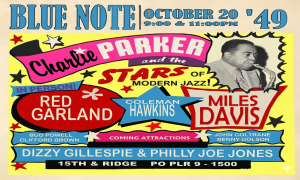
Not then, at least, and not at the Blue Note, which was the preeminent venue for "progressive" music in Philadelphia, located at the North Philly jazz mecca of 1502 Ridge Avenue. The Blue Note was justly famous for the talent it brought in. A hip club, with an integrated audience of jazz fans and collegians. It also attracted the usual contingent of underage drinkers, probably college kids, whose money was as good as anyone else's, but who drew the unwelcome attention of the Philadelphia police.
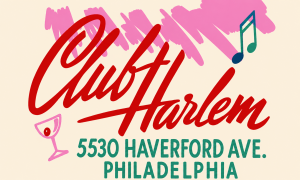
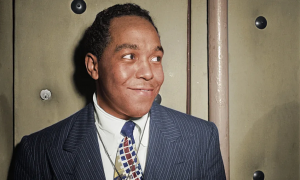
This was not just a problem for the Blue Note. Similar shenanigans went on at the Club Harlem in West Philadelphia at 56th and Haverford, where both Charlie Parker and Ella Fitzgerald appeared (as did Georgie Auld and Buddy DeFranco). The cops raided the place when Stan Kenton was in town, probably in May 1952. Not only did the underage crowd get hauled in, but so did two of Kenton's trombone players. There was plenty of action everywhere in Philly; not all of it was confined to the clubs.
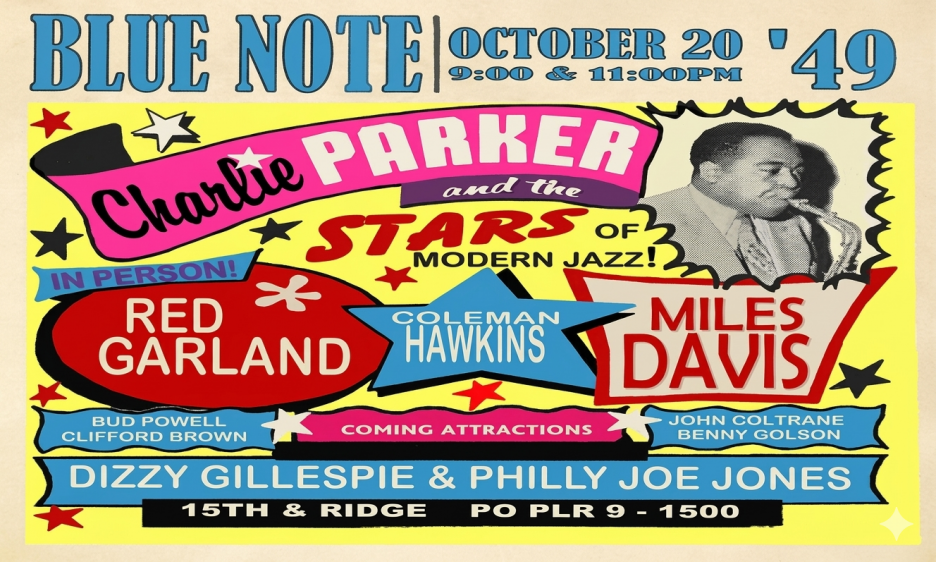
The Blue Note in particular had a good reputation among musicians. Everyone played there: Charlie Parker, Red Garland, Coleman Hawkins, Miles Davis, Bud Powell, John Coltrane, Benny Golson, Dizzy Gillespie, and Philly Joe Jones.
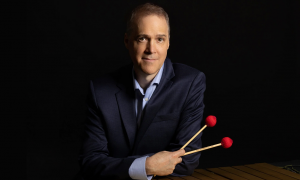
Vibraphonist Terry Gibbs, who remembers that he usually got a good reception there, had an interesting recollection. Jack Fields apparently dragged Gibbs into the club, maybe in late 1949, to hear a sort of quasi-local, Clifford Brown. It was the first time that Gibbs had heard Brownie, and he was floored. He said that after hearing Brown in Philly, he went up to New York to tell everyone that this kid could play as much as Clark Terry. This, presumably, was how Brownie's career began to take off. He had been in touch with Red Rodney, who was from Southwest Philly, to play for him and to ask for lessons. Rodney had been suitably impressed but did not offer tuition. "Just keep on doing what you are doing," said Rodney, or words to that effect.
No, Philly was not New York, but ironically, its accessibility to then-young talent may have made it precisely the kind of place that could bring young people along, although their coming up against established talent was always risky. A young Lee Morgan learned the hard way when saxophonist Sonny Stitt decided to put him in his place in an incident reminiscent of what supposedly befell Charlie Parker in Kansas City. But Morgan was another gifted Philadelphia player in an environment in which talent was both plentiful and recognized.
What made the Blue Note particularly attractive was its mixed crowd—both black and white audience. At a time when the color line was still firmly established in the South, there were plenty of venues in the North as well that made no bones about keeping Jim Crow. There is a tendency to think that this kind of attitude was only characteristic of venues in more rural or "Southern" Pennsylvania towns like York, where bandleader Gene Krupa got into a brawl with a club owner over the presence of Roy Eldridge in the trumpet section.
Eldridge also appeared as a solo act at the Blue Note, but Philadelphia was not much better even into the 1960s, when black athletes like Hall of Fame baseball player Dick Allen got into a well-publicized fight with Phillies' teammate Frank Thomas that was racially motivated. There was also a storied encounter between white singer Terry Morel and trumpeter Miles Davis at the Blue Note. Morel, who had an up-and-down career, talent notwithstanding, was approached by Davis. "Why didn't you tell me who you were?" "You didn't ask," Morel supposedly replied. Philly attitude in a nutshell, right?
To make matters worse, in 1957, the Philadelphia police, armed with shotguns, raided the Blue Note supposedly looking for drugs—there was a crowd of four hundred present at the time—because, ostensibly, no integrated club could be free of drugs, as a representative of the police put it. "Cops Trying to Break Up Club Because of Mixing," said by then-owner Les Church (Fields had moved on, apparently finishing life in California after another life in the restaurant business) in the Philadelphia Tribune, Philly's black press. Of course, the police stoutly denied any racial motive, acting, they said, on the direct orders of Police Commissioner Thomas Gibbons. This prompted a Tribune columnist, Art Peters, to wish for "Peace from the Cops, who've turned on the heat... To the Blue Note Café, where jazz lovers meet."
In the 1950s, there were probably 15 to 20 clubs, not to mention neighborhood places like Skippy's at 65th and Haverford (approximately) which featured saxophonist Mike Pedicin (senior) on a regular basis, and clubs just over in Jersey owned by musicians like Charlie Ventura, whose viability was always, well, precarious. Over time, their numbers tended to thin out. Some of the reasons were specific to Philadelphia, while others reflected broader national trends.
Clearly the spread of television and the long-playing vinyl recording format (which made its debut in mid-1948) provided efficient, workable substitutes for attending live performances. This must have been especially true at a time when household formation and the postwar baby boom were at a peak, both of which would have placed some constraints on personal mobility. Many of us can remember the enthusiasm with which the LP was greeted, even bringing the swing bands of Benny Goodman and Tommy Dorsey into the living room with classic performances from the 1930s.
You did not have to go to the Earle Theater in Philadelphia in 1958 to hear Goodman. He was "Swinging into Spring" on television and vinyl with Texaco, practically on demand, although no one used that phrase then. In fact, by 1958, the Earle had been gone for five years from South 11th Street, symbolically displaced by a department store. What worked against the smaller clubs had simply started to work against the bigger, more expensively operated venues sooner.
But there was something else at play, too, perhaps a bit less obvious and a little more obscure, but that was the force of postwar prosperity in the 1950s itself. There is no need to go into applied economics here—if you are interested, you can look up something called Baumol's disease in a textbook on economic growth—to get the gist of the explanation.
But basically, a growing economy draws heavily on resources. The more easily they can be gotten, the less costly they are. You can reproduce a screwdriver cheaply. You cannot reproduce a live performance. Once it is given, it is gone. So things like services—a musical performance is a service—tend to get expensive in a hurry. That is what has happened to things like education. And it happened to the cost of live performance too, because in the 1950s and 1960s, America was growing. It was a blessing, but there are no free blessings, to paraphrase an old economic saying.
To make things even tougher on Philadelphia, it had competition. New York—so nice, as Clark Terry (or maybe Lambert, Hendricks and Ross) said, they named it twice—was the center of the jazz universe. Every big name that played Philly played New York too, so whatever one says about union scale and such, there was an implicit compensation floor under which Philly club owners could really not attract talent.
Remember, Terry Gibbs went to New York to tell people about Clifford Brown. Good for Clifford and for New York but maybe less of a favor to Philly venues, especially small ones. How much could you charge in a small house for big-name talent? And if you could get big-name talent almost at the twist of a dial, why would you settle for much less? Whether or not audiences are sophisticated enough to appreciate jazz is another matter. Sadly, supply and demand do not care. Slowly but surely, the ubiquitous clubs went broke.
Ultimately, the problem went well beyond places like the Blue Note Café in Philadelphia. Today, Ridge Avenue in Philadelphia might as well be Central Avenue in Los Angeles or even 52nd Street in New York. Where the clubs used to be is only known to the cognoscenti. There's no need to go looking for the Blue Note Café on Ridge Avenue in Philadelphia. It disappeared a long time ago. Some live recordings are out there, but as far as anyone knows, the rest of it is a memory. And even memories have an expiration date.
Tags
Comments

PREVIOUS / NEXT

Support All About Jazz
 All About Jazz has been a pillar of jazz since 1995, championing it as an art form and, more importantly, supporting the musicians who make it. Our enduring commitment has made "AAJ" one of the most culturally important websites of its kind, read by hundreds of thousands of fans, musicians and industry figures every month.