Home » Jazz Articles » Record Label Profile » GleAM Records: Italian Passion And Dedication
GleAM Records: Italian Passion And Dedication


Contemporary projects, post-bop developments, and archival documentation coexist within a unified curatorial framework.
—Angelo Mastronardi, Founder
Operating from its southern Italian base, GleAM offers its artists comprehensive support at every stage—from artwork creation and intellectual property protection through to printing and international distribution. Building the infrastructure to handle production, promotion and global reach, while simultaneously nurturing a long-term creative vision for each artist, demands enormous reserves of time, dedication and investment. That anyone chooses to start a record label at all is, in itself, surprising...
All About Jazz: So let's begin at the beginning, How was the label born?
Angelo Mastronardi: GleAM was founded in 2017 from a clear intention: to create a curated space in which meaningful musical statements could be documented with coherence and responsibility. Even in its earliest phase, when working with lesser-known artists, the guiding principle was not expansion but direction.
AAJ: How many people are involved in running the label?
AM: The structure is compact but articulated. I work with three press officers, a graphic designer, a video maker, a web designer who also oversees advertising, a lawyer, and a commercial representative, along with several foreign press offices depending on the territory. It is not a corporate machine; it is a coordinated ecosystem.
AAJ: Do you just work with jazz?
AM: Jazz remains the central language of the label, but I approach it expansively. Contemporary projects, post-bop developments, and archival documentation coexist within a unified curatorial framework.
AAJ: How about your own background, how did you first get into jazz?
AM: My encounter with jazz was not immediate. When I was around thirteen or fourteen, a close friend of mine was already playing jazz, and through him I was exposed to that world for the first time. Yet nothing truly ignited in me then. I was still deeply immersed in classical piano literature, fascinated by the European repertoire and by a conception of music grounded in interpretation rather than improvisation.
The real discovery came years later, during my university studies in Rome. Through shared listening sessions and frequenting jazz clubs across the city, something gradually shifted. The decisive moment arrived around the age of twenty-two, when I began improvising myself. I started to experience sound differently in relation to time. I listened differently as well—attentive to hesitation, to risk, to mastery, to the weight of a suspended note followed by an even more eloquent silence. From that moment on, jazz ceased to be simply a genre and became a way of inhabiting sound.
AAJ: So what was the first jazz LP you actually owned?
AM: My first LPs were Blue Train by John Coltrane (Blue Note Records, 1958), Go! by Dexter Gordon (Blue Note Records, 1962), My Funny Valentine—Miles Davis In Concert 1965 by Miles Davis (Columbia Records), and The Blues and the Abstract Truth by Oliver Nelson (Impulse Records, 1961). Looking back, they already formed a kind of compass: structure and lyricism, improvisational authority, and a profound dialogue between composition and freedom.
AAJ: That is an excellent selection of albums! Before becoming a label owner, you were a musician. What brought about the change?
AM: I would not describe it as a change, but as an extension. I continue to compose and work on music, particularly in the context of soundtracks and other projects (my piano trio and partnership as sideman on albums of other musicians). But over time I understood that what interested me deeply was not only producing sound, but recognizing and documenting artistic vision.
I see myself primarily as a curator. My role is not simply to produce records, but to identify artistic trajectories that possess identity, language, and a necessary degree of risk.
AAJ: The label must take up much of your time, what does a typical day look like for you?
AM: My day begins at six in the morning. After half an hour of breakfast and email review, I dedicate time to distributor orders and direct sales. I spend around two hours listening to proposals—approximately thirty to thirty-six per month—and responding to artists approaching deadlines.
International press coordination requires sustained attention, as do calls with Italian and foreign press officers. In the afternoon I return to music itself—composing, mixing, or mastering my own projects—and meet with the graphic designer to define the visual direction of forthcoming releases. The day concludes with contractual reviews and financial oversight. Independence requires constant awareness of both the artistic and structural dimensions.
AAJ: How would you describe the current jazz landscape in Italy?
AM: Italy today has musicians with strong artistic identity and considerable technical depth. Yet nationality is secondary. What ultimately matters is coherence of language. Many of the artists I work with deserve international attention not because they are Italian, but because their artistic vision stands independently of context.
AAJ: What is your take on digital technology and the different requirements of digital and physical releases?
AM: Digital platforms have transformed accessibility and global circulation. That transformation is irreversible. However, physical releases—particularly in archival contexts—provide depth, context, and a different quality of listening.
When dealing with historical recordings, the physical object becomes part of the curatorial act. It carries responsibility. This is not nostalgia, but coherence between music, format, and intention.
AAJ: Did you imagine in the beginning the label would have an international appeal?
AM: It was not a strategic objective, but it was implicit. If one works rigorously on language and vision, international dialogue becomes a natural consequence rather than a marketing goal.
AAJ: How has the way you run the label changed over time?
AM: Running an independent label today demands constant recalibration. It is challenging, and difficulty is inherent to independence. Over time, however, a clearer curatorial direction has allowed the model to become more sustainable and structurally balanced.
AAJ: How do you select projects?
AM: Vision comes first. Then personality. Then language. Risk is essential, but it must emerge from awareness rather than provocation. I try to understand whether an artist possesses a trajectory—something that extends beyond a single recording.
AAJ: Every business needs investment, financially, has it been challenging?
AM: It has been demanding. Independence requires vigilance and long-term thinking. But sustainability arises from coherence. When direction is clear, decisions become more precise.
AAJ: How many records do you typically print?
AM: For most editorial lines, we print between five and six hundred CDs. For the Jazz Giants archival series, around one thousand CDs and fifteen hundred LPs.
AAJ: In 2025 you launched the Jazz Giants series and became the first Italian producer to publish an unreleased tape by legendary tenor saxophonist Dexter Gordon, officially recognized by The Dexter Gordon Society, Inc. and the Estate of Dexter Gordon. How did this come about?
AM: The archival dimension emerged from a sense of responsibility toward musical memory. My first major agreement was with the estate of Dexter Gordon. That project was not simply a production decision, but an act of stewardship. Restoration, contextualization, and format become integral parts of the curatorial gesture
AAJ: That album won numerous Best Historical Album awards. As well the thought behind the stewardship, I would imagine that the whole process of archival discovery and restoration through to the final product is highly painstaking and time-consuming. How do you approach this?
AM: The album received several recognitions after its release, including the Top Jazz award for Best Historical Album from Musica Jazz Magazine. While awards are never the primary motivation behind archival work, they are certainly encouraging because they signal that the effort invested in restoring and contextualizing these recordings is being recognized by critics and listeners across different countries.
The process itself is indeed painstaking and often very time-consuming. When dealing with archival material, my first concern is always the historical and musical integrity of the recording. These documents are not simply "old tapes"; they are part of the artistic legacy of extraordinary musicians, so the approach has to combine the mindset of a producer with that of a curator.
The process usually begins with locating and assessing the original source. Sometimes this means working with tapes that have been carefully preserved, while in other cases the material requires delicate restoration work. Once the source is transferred at high resolution, the goal is not to "modernize" the sound but to reveal the musical information already contained in the recording—removing technical limitations where possible while preserving the natural character of the performance.
From there the work extends to contextual research, liner notes, and the overall editorial concept of the release. In the case of the Dexter Gordon project, for example, I work closely with the Gordon Estate to ensure that each release reflects both historical accuracy and the spirit of Dexter's music.
It is certainly a meticulous process, but also an incredibly rewarding one. Bringing these performances back to life—sometimes after decades of being unheard—is one of the most meaningful aspects of running a label like GleAM.
AAJ: Of the artists currently on your label, who do you believe will have the brightest future internationally?
AM: I prefer not to think in terms of hierarchy or prediction, but in terms of trajectory and coherence over time. Ferdinando Romano demonstrates strong compositional awareness and structural depth, particularly within an avant-garde framework. Nugara embodies conceptual vision and timbral exploration, combined with a compelling live presence. Giuseppe Venezia brings a mature post-bop sensibility, balancing improvisational energy with structural equilibrium. International relevance does not arise from strategy, but from authenticity.
AAJ: Should you ever find yourself with time to listen to music away from the label, which current jazz musicians do you admire?
AM: Among contemporary musicians, I admire Ambrose Akinmusire and Mark Turner for their clarity of structure and sonic individuality. In Europe, Nils Petter Molvaer for his timbral imagination, Jean-Baptiste Trotignon for his harmonic sophistication, and Claudio Fasoli for the depth and consistency of his language.
AAJ: Finally, what are your ambitions for the label?
AM: To continue cultivating a curated space where contemporary voices and historical documents coexist under a coherent aesthetic responsibility. Not expansion for its own sake, but depth—and continuity.
Listening Guide: GleAM Records In 5 Recordings
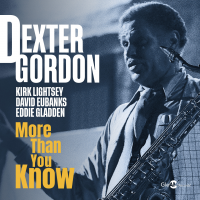 Dexter Gordon
 More Than You Know (1981)
GleAM Records
2025
This previously unreleased live recording catches jazz legend Dexter Gordon at a particularly inspired moment, sparking off his early 1980s quartet: Kirk Lightsey on piano, David Eubanks on bass and Eddie Gladden on drums. Recorded at the Villa Imperiale in Genoa in July 1981, this testament to his enduring influence has been restored with exceptional care, fully revealing Gordon's spacious, vibrant tone while capturing the relaxed stage presence and warm, genial personality that made him such a compelling performer.
 Giuseppe Venezia
 I've Been Waiting For You
GleAM Records
2024
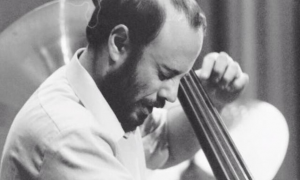
Italian bassist Giuseppe Venezia distills decades of international experience into seven original compositions that carry a quiet maturity and authority throughout. The interplay within his excellent quintet is equally assured, lending the album a sophisticated class as the band range freely across a modern post-bop landscape. Venezia's lyrical bass playing is first-rate, whether in his inventive rhythmic touches or his expressive, wide-ranging solos. There is a sprinkling of magic here, as passion, spirit and excitement combine to a consistently rewarding effect.
 Ferdinando Romano
 The Legends Of Otranto
GleAM Records
2025
The Legends Of Otranto is an intriguing avant-garde suite in six movements drawn from the stories and folklore surrounding the ancient Italian city of Otranto. All compositions and arrangements spring from the creative mind of bassist Ferdinando Romano, who steers a cross-cultural quartet through passages linked to the mythology and spirit of the region. Romano brings a distinctly painterly sensibility to his writing, deploying contrast, texture and fragments of melody to build a richly layered soundscape, colored throughout by expressive and often surprising improvisation.
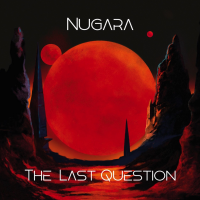 Nugara
 The Last Question
GleAM Records
2025
Conceived as a concept album, the title is drawn from an Isaac Asimov short story exploring the ultimate fate of the universe. That narrative forms an almost classical framework that the piano trio use to unify their nine compositions. The project is further enriched by the seamless integration of the outstanding trumpeter Giovanni Falzone. The music's inclusive spirit draws the listener in with its blend of warm tonal colors, punchy rhythmic statements and tight ensemble interplay that shifts between passionate intensity and gentle reflection.
 Franco D'Andrea
 Modern Art Trio
GleAM Records
2023
Following the discovery of the original analog tapes, this landmark recording from the Modern Art Trio was given impressive audio restoration and mastering, becoming a best seller in Italy before its influence spread across the continent. Rooted in 12-tone technique and seriality, the music might readily be labeled as free jazz, yet D'Andrea brought a rational and rigorous underlying structure to his improvisational ideas, creating an intense, daring atmosphere in which concepts are exchanged, creative freedom actively encouraged and structures fervently dismantled.
Tags
Record Label Profile
Neil Duggan
Dexter Gordon
Gleam Records
Kirk Lightsey
David Eubanks
Eddie Gladen
Giuseppe Venezia
Ferdinando Romano
NuGara
Giovanni Falzone
Franco D'Andrea
Comments

About Angelo Mastronardi
Instrument: Piano
Related Articles | Concerts | Albums | Photos | Similar ToPREVIOUS / NEXT

Support All About Jazz
 All About Jazz has been a pillar of jazz since 1995, championing it as an art form and, more importantly, supporting the musicians who make it. Our enduring commitment has made "AAJ" one of the most culturally important websites of its kind, read by hundreds of thousands of fans, musicians and industry figures every month.