Home » Jazz Articles » Album Review » Linda Dachtyl: Waves of Change
Linda Dachtyl: Waves of Change
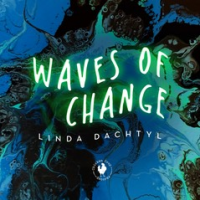
Waves of Change is a time machine back to the late 1960s, early 1970s when music was in full- blown open season. The emergence of bands like King Crimson, Emerson, Lake, and Palmer, Genesis, Yes, and later, Kansas, quickened what would become known as progressive rock. Prog rock is a highly stylized panorama of intently composed music that ranges from seriously thoughtful extended considerations to songs steeped in whimsy and imagination. Dachtyl keys in on these characteristics for this collection, drawing inspiration from the aforementioned bands.
Dachtyl leads her ensemble, showing off her multi-instrumental talent with a manifold range of instruments, including keyboards, piano, Hammond organ, pipe organ, electric and acoustic guitars, and drums, along with providing background vocals. Joining the leader are guitarist Larry Marotta, bassists Steve Perakis and Dave Williams, tenor saxophonist Mark Donavan, and drummer (and husband) Cary Dachtyl, who doubles as producer and additional percussionist. Charles Valentino handles the lead vocals with authentic panache.
Dachtyl and company are earnest in their efforts to present this music in situ. It is a trip down memory lane made veritable by including well-considered covers that add to the veracity of the collection. The Beatles' "Being for the Benefit of Mr. Kite" (from Sgt. Pepper's Lonely Hearts Club Band (Capitol Records, 1967) opens the recording, setting the sonic environment for what is coming. An inspired inclusion, "Mr. Kite" fits nicely into Dachtyl's chosen repertoire, highlighting the Fab Four's invention from that important recording (think of how "A Day in the Life" would have sounded with this same band). Dachtyl provides the carnival atmosphere of the song with her deft management of the Schantz Pipe Organ, Mini-Moog Model D, ARP Odyssey, M4000D Mellotron. Valentino's vocals are punky, updating the song without losing its sepia image.
Other "Art Song" chestnuts include Spanky and Our Gang's 1968 "Like to Get to Know You" (Mercury Records), a period earworm from AM radio, featuring synthesized strings and a mellow vibe that strangely foreshadows Marvin Gaye's What's Going On (Tamla Records, 1971). The song features a bass-organ interlude that could have been conceived by Chris Squire and Rick Wakeman, before Wakeman was de-seated by some nifty Keith Emerson synthesizer. Dachtyl resurrects The Graham Bond Organization's "Baby Can It Be True" (from There's a Bond Between Us (Columbia Records, 1965)). The leader's synthesized strings and Mark Donavan's tenor saxophone solidify the future Marvin Gaye connection. Dachtyl adds a Shirley Scott organ solo before Marotta's guitar solo, completely updating the song while demonstrating the roots of what would be progressive rock.
The last cover is of Lee Hazlewood's "Some Velvet Morning," originally recorded by Nancy Sinatra and Hazlewood and appearing on Sinatra's LP Movin' With Nancy (Capitol Records, 1967). Labeled "Psychedelic Rock," the performance features a lengthy keyboard opening by Dachtyl before Valentino sings the ballad, full-throated, surrounded by organ and mellotron. Dactyl pours it on, covering a myriad of musical advances to come. Dachtyl and Marotta spar throughout the song, revealing, "Some velvet morning when I'm straight..." indeed. This is the fulcrum upon which the rest of the album balances, bringing old and new together.
The rest of selections are Dachtyl composed. The leader blows the dust off the genre, showing period prog rock in a more contemporary climate. "Waves of Change." Beginning baroquely, the song evolves quickly over a Dachtyl piano figure coming down somewhere between Yes and Styx. Marotta provides guitar interludes from the crossroads of Robert Fripp and Shawn Lane, while Dachtyl does her best Keith Emerson synth sound. "Redemption" is a militant march that could have found itself in either the discographies of Styx or Uriah Heep (think of Dennis DeYoung singing "Stealin'"). "Rising Sun" contains a contemporary organ-guitar jazz trio break that swings hard enough to cause a nosebleed.
The album closes with a Dachtyl four-part suite, "Turmoils of the Soul." The leader is one to compose these suites in her life as a jazz organist. Here, she sums up her prog rock survey, touching on both the past and present of the sub-genre. Waves of Change is a high-functioning project that puts Dachtyl's interests and experiences into a 21st-century perspective.
Track Listing
Being for the Benefit of Mr. Kite; Waves of Change; Like to Get to Know You; Baby Can It Be True; Redemption; Rising Sun; Some Velvet Morning; Turmoils of the Soul: I. Inquiry, II; Turbulence, III; Surrender IV; Truth.
Personnel

Linda Dachtyl
organ, Hammond B3Cary Dachtyl
drumsCharles Valentino
vocals
Steve Perakis
bassLarry Marotta
guitar
Mark Donavan
saxophoneAlbum information
Title: Waves of Change | Year Released: 2024 | Record Label: Summit/Chicken Coup Records
Tags
Linda Dachtyl
Album Review
C. Michael Bailey
Mouthpiece Music
Waves of Change
Summit/Chicken Coup Records
tony monaco
King Crimson
Emerson, Lake, and Palmer
Genesis
Yes
Kansas
Larry Marotta
Steve Perakis
Dave Williams
Mark Donavan
Cary Dachtyl
Charles Valentino
Spanky and Our Gang
Marvin Gaye
Chris Squire
Rick Wakeman
Keith Emerson
Shirley Scott
Lee Hazlewood
Nancy Sinatra
Styx
Uriah Heep
Dennis DeYoung
Comments
About Linda Dachtyl
Instrument: Organ, Hammond B3
Related Articles | Concerts | Albums | Photos | Similar ToPREVIOUS / NEXT

Support All About Jazz
 All About Jazz has been a pillar of jazz since 1995, championing it as an art form and, more importantly, supporting the musicians who make it. Our enduring commitment has made "AAJ" one of the most culturally important websites of its kind, read by hundreds of thousands of fans, musicians and industry figures every month.