Home » Jazz Articles » Inside the Songs » Thomas Strønen Time Is A Blind Guide: Off Stillness
Thomas Strønen Time Is A Blind Guide: Off Stillness
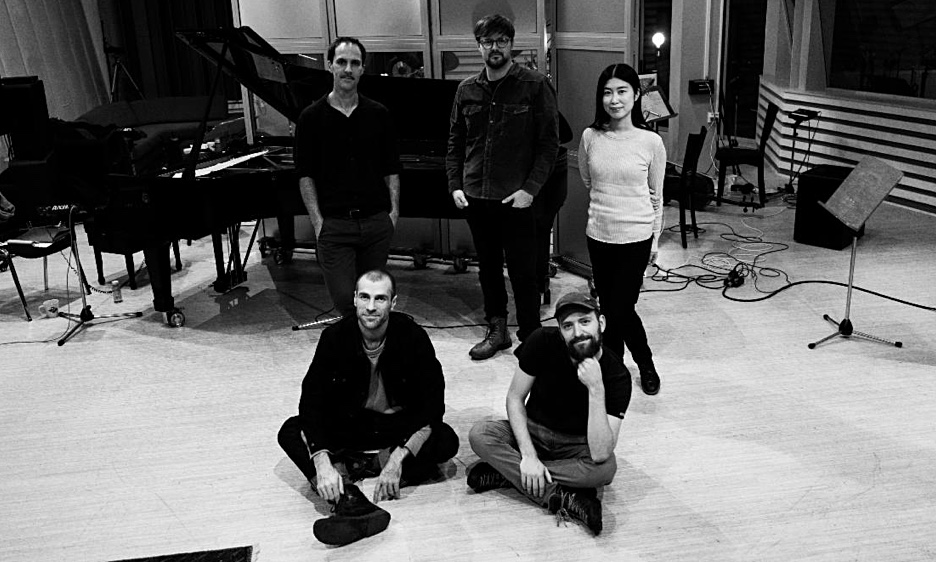
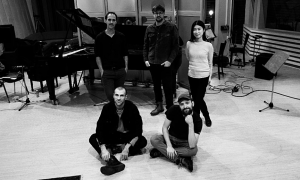
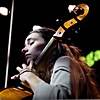
Courtesy Kunt Bry

Even though the ensemble seems to play my compositions as a base, the band has developed a distinguished sound and way of improvising that feels like its own language.
As the players dance around and into each other, on-the-fly ideas go every which way but parallel. Strønen's textural drum scatters alone will have you asking, "How did he do this?" The only answer I can come up with is that this quintet begins at infinity. Off Stillness is a whole album full of fascinating and complex pathways spread among dazzling and well-drawn compositions. It is as entertaining as it is challenging, and the players have a chemistry that is intoxicating, irresistible, intriguing, especially on "Season" where the three stringed instruments take center stage. Somehow it works even if it seems each musician is doing their own thing apart from the other two. Of course, they are not exactly as piano and drums serve to take the song on an oblong direction like a comet circling the heavens.
This is the third Time Is A Blind guide recording, following the group's eponymous debut (ECM, 2015) and Lucus (ECM, 2018), with the German daily Nürnberger Nachrichten pinpointing exactly the strengths that make TIABG so unique, calling the ensemble "a musically, even philosophically open—minded quintet exploring outer space somewhere between baroque and folk. Questioning, hesitating, emphasizing. This is jazz full of searching, longing, devoted to brittle beauty." Something of a summary of all the musical elements that precede it, "In Awe of Stillness" can be divided in two, with a textural exploration making up the first half, and a more agitated, almost tumultuous approach to interplay following in the second. But why the title Off Stillness? According to Strønen there are several reasons, though one stands out: The tribute to a formative personality of his youth (and another artist well-known in the ECM cosmos): Jon Balke.
"The title is a tribute to a formative moment in my youth," says Strønen. "It honors the first real jazz concert I attended at the age of 15. Sneaking in through the kitchen of a cafe in Tønsberg, I was introduced to Jon Balke's Oslo 13 by my now father-in-law, composer and musician Terje Johannesen. Their music from the album Off Balance (Odin, 1988) changed the way I thought about music in general, and drumming specifically. This memory came back to me when I realized that Jon turned 70 this year."
Similar to the maxim "Justice is blind," Time As A Blind Guide could be interpreted as an unbiased, impartial application of meter and rhythm, representing objectivity not prejudicial. The group waxes gloriously throughout the record, like following the path of the Tao where the secrets are unleashed with the humble inscrutability of Buddha. On Off Stillness, it is like Strønen and the others have gone to the edge of the abyss and swan dived into it. Enthralling music that the composer describes below in this segment of "Inside the Songs."
Inside the Songs
Memories of Paul
The opening track of the album, might be the least representative track, and it came as a surprise to me that it ended up as the first. Manfred Eicher likes to surprise the listeners and not start in the most obvious way, and I ended up liking the idea. The piece refers to both Paul Bley and Paul Motian, but more in a more honorable way than trying to play the way they did. I look at them as musicians with a high willingness to risk-taking both in the way they improvised, composed and in the way they developed their musicianship. Much of the music I compose for TiAbG is centered around the string trio, but in this piece, I wanted the piano to take the lead while creating an environment that was contained throughout the whole composition.Season
This one was originally written for a dance piece as a static mood with rhythmic polymeters working in the background. There's a shared improvisation between piano and violin on the form, never losing the tension nor taking it away from the original idea.Fall
This piece is one of many written with the string trio in focus and I feel it represents a way of playing closer to chamber music. It also worked as a door opener for a slightly different way of improvising. If you were to hear the ensemble today, you would hear similar musical counterpoints in more improvised contexts. Even though the ensemble seems to play my compositions as a base, the band has developed a distinguished sound and way of improvising that feels like its own language. Long passages that would sound truly composed, so coherent and fresh. I feel the band has developed a lot even since our latest recording, and I hope our next album can be a recording from one of our live concerts.Tuesday
This is a simple tune that has followed us for several years. It's an easy idea, yet very well working and can be played in many ways. The very last phrase of the piece is a little greeting to the amazing composition "Horses in the Rain" by Django Bates, performed by Sidsel Endresen on the record So I Write (ECM, 1990). Those who haven't heard that record yet, it's due time.Cubism
Composed in Pigalle in Paris during a residency, occupied with music 24/7 with only taking breaks to go to art exhibitions. I wanted to make something that had a defined beat and repetitions, yet abstract. The piece has later been more arranged by the ensemble. It was pretty new when entering the studio and the relief was big when we finally managed to get it right. The tension that evolves when something's at stake, is often something Manfred is looking for in music. There's a fine line between being fresh and exciting with the possibility of failing and being too secure and comfortable. We were on a thin line here, but still putting everything into it.Dismissed
I've always been drawn to classical contemporary music, and this is my take on just that. The rigidness of exact composed lines is combined with the improvised reaction to the same. This composition is always fun to play and can take any direction or orchestration. I wanted something expressive on the record, as the band is live, and this seemed to be a good representation to some of the direction this ensemble likes to go in. I like the temper, the variations of tempo and dynamics and the fact that we never know what the composed parts leads us to.In Awe of Stillness
While we don't play many pieces with conventional solos, this is the exception. Here, Håkon can take all the space he wants to and often we have a longer percussive part as well as an outro. When I compose, I often ask myself where the melodies come from, and in this case, I wrote the second theme first, and then made an intro that built up to the main theme.Tags
Inside the Songs
dean nardi
DL Media
Ayumi Tanaka
Leo Svensson Sander
Lucy Railton
Håkon Aase
Ole Morten Vågan
Thomas Strønen
Jon Balke
Comments

PREVIOUS / NEXT

Support All About Jazz
 All About Jazz has been a pillar of jazz since 1995, championing it as an art form and, more importantly, supporting the musicians who make it. Our enduring commitment has made "AAJ" one of the most culturally important websites of its kind, read by hundreds of thousands of fans, musicians and industry figures every month.