Home » Jazz Articles » Reassessing » Billy Cobham: Spectrum
Billy Cobham: Spectrum

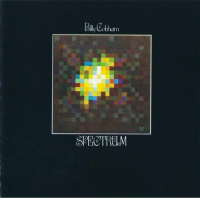
In the midst of this turmoil, legendary drummer Billy Cobham found time to cobble together a band consisting of Mahavishnu cohort Jan Hammer on keys, ace West Coast session bassist Leland Sklar and in a truly inspired choice, the young Tommy Bolin for lead guitar shredding. Bolin had joined the rock band the James Gang after Joe Walsh went solo a year earlier and had been tabbed to replace Richie Blackmore in Deep Purple. The result was the album Spectrum (Atlantic Records, 1973), recorded at the studio in Greenwich Village commissioned and made famous by Jimi Hendrix. Cobham had received a budget of $35,000 from the label for this project. It took all of two days to lay the tracks, several done in one take. Sklar remarked in engineer Ken Scott's book, Abbey Road to Ziggy Stardust: Off the Record with The Beatles, Bowie, Elton & So Much More, "Spectrum is such a benchmark for so many people. There was a sort of fire in it. It was new ground and it wasn't very analytical. It was more flying by the seat of your pants. That's where great accidents happen, which seems impossible these days."
Scott wrote about the careful artistry of recording, using mic placement, double tracking, specialized reverbs, editing and such that pulled the basic Spectrum tracks together into the heavy groove-oriented funk sound that distanced itself from the excessive noodling spirituality favored by McLaughlin. The album kicked off with "Quadrant 4," a frenetic blues featuring Bolin cutting loose on his prodigious Fender Stratocaster over a double bass drum shuffle pattern, later imitated by Van Halen on their hit, "Hot for Teacher." The interchanges on solos between Bolin and Hammer were brilliant on "Taurian Matador." Hammer's use of pitch-bend on his synthesizer, and Bolin's use of the 'Echoplex' (his signature guitar effect) had often made it impossible for listeners to discern who was playing when. Also notable on this track was Cobham's razor-sharp percussive strokes and propulsion from Sklar's bass.
The album shone its brightest piercing light on the 10-minute "Stratus," which began with this weird hissing noise followed by some fast rolls from Cobham and electronic purling from Hammer before fading out. This served as the intro to the main track featuring dynamic and sensuously bombarding percussive rhythms to exhilarating solos, moments of suspense filled with convoluted and utterly maniacal instrumentation. This produced a groove that would be looped and sampled by Massive Attack to marvelous effect on their 1991 hit "Safe from Harm." Jeff Beck—who played the track live on at least two occasions —and Prince covered "Stratus," while many of last century's hip-hop artists borrowed samples. It even appeared (credited) in the popular video game Grand Theft Auto 4.
The fourth and final track with this quartet was "Red Baron," which was tacked onto the keyboard intro, "Snoopy's Search." This one was also a favorite sample of rappers, notably Compton's Most Wanted and Brothers Like Outlaw on "Full Essence." The song became a jazz/funk standard, reflecting the lighthearted imagery of the cartoon dogfights between the two Peanuts characters in its heroic theme. The synth programming was pure and Bolin's unorthodox bluesy picking riveting, all adding to the charismatic allure of the simulated cartoon rivalry. Sklar's bass was deep in the pocket, while Cobham's snare sounded like a suddenly unfurled topgallant sail snapping into a 20-knot wind just off Newport during a regatta.
There are three other named tracks, which were basically short interludes of not much more than a minute in length. "Searching for the Right Door" and "Anxiety" are Cobham showing off his chops whereas "To the Women in My Life" has Hammer messing around on the piano. These could easily have been merged into the long tracks that followed by taking out the brief breaks. Nowadays, musicians sometimes add separate interludes to increase royalties from streaming services, in effect gaming the system. Why Cobham chose to do this in the pre-Internet era is unclear.
For the remaining two tracks on the album, Cobham brought in venerable bassist Ron Carter and horn players Joe Farrell and Jimmy Owens. "Le Lis" is a mellow, introspective piece, its title from an Iberian word for lily or the symbolic flower of Québec, the fleur-de-lys, often associated with purity and beauty. Which brings us to the title track with the two horn players establishing a theme that is more in the jazz realm, although not without its groove, aptly furthered by Carter and Cobham with renewed momentum and texture.
Some have posited that Spectrum is the pinnacle of Cobham's recorded career. That is debatable but it is certainly at least sharing that lofty perch. The band Dreams, which also featured the Brecker Brothers and John Abercrombie, had its singular moments. Cobham moved to Switzerland in 1985 where he continues to add to his impressive list of 44 studio albums and still tours at age 82.
Cobham deployed a bombastic and complex drumming style that made his first album seethe with an impetuous release of adrenaline. He went on to become well-known for semi-abstract canvasses, charged with tension and electricity, executed in brilliant and juicy hues. He will always be remembered mostly for the ingenious Spectrum, the first of those 44. It should be heard (or revisited) to truly fathom its brilliance.
Track Listing
Quadrant 4; Searching for the Right Door; Spectrum; Anxiety; Taurian Matador; Stratus; To The Women in my Life; Le Lis; Snoopy's Search; Red Barron.
Personnel

Billy Cobham
drums
Leland Sklar
bass, electric
Jan Hammer
keyboards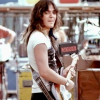
Tommy Bolin
guitar, electric
Joe Farrell
saxophone
Ron Carter
bass
Jimmy Owens
trumpet
Ray Barretto
congasAlbum information
Title: Spectrum | Year Released: 1973 | Record Label: Atlantic Records
Tags
Billy Cobham
Reassessing
dean nardi
Spectrum
Atlantic Records
Mahavishnu Orchestra
john mclaughlin
Jan Hammer
Leland Sklar
Tommy Bolin
Jimi Hendix
Ron Carter
Joe Farrell
Jimmy Owens
Brecker Brothers
John Abercrombie
Comments
PREVIOUS / NEXT

Billy Cobham Concerts
Support All About Jazz
 All About Jazz has been a pillar of jazz since 1995, championing it as an art form and, more importantly, supporting the musicians who make it. Our enduring commitment has made "AAJ" one of the most culturally important websites of its kind, read by hundreds of thousands of fans, musicians and industry figures every month.