Home » Jazz Articles » The Jazz Files » Kenny Dorham: The Composer in the Horn - A Verified Chro...
Kenny Dorham: The Composer in the Horn - A Verified Chronology, 1953–1964
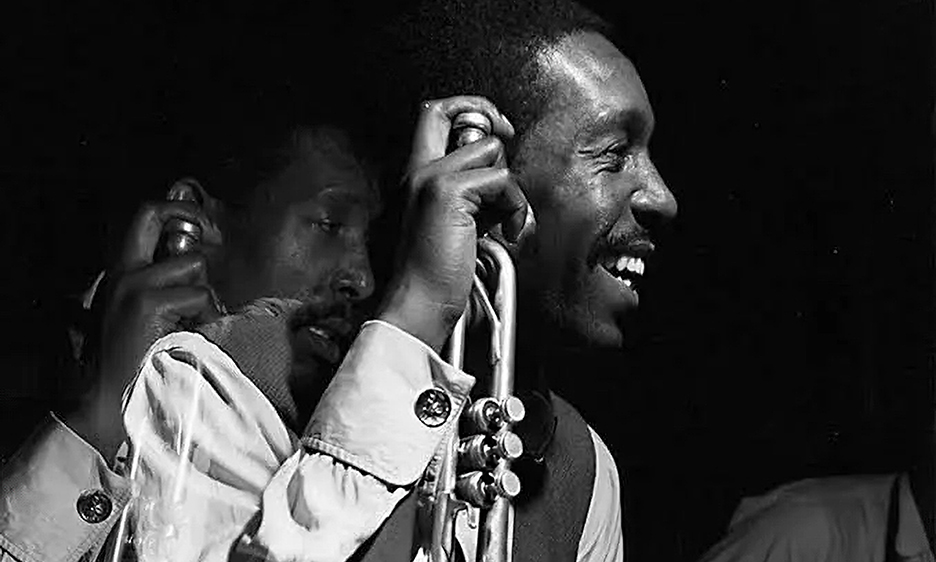
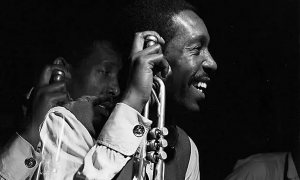
Courtesy Jerry Schatzberg

With Kenny Dorham, the compositions tell the story as clearly as the trumpet does.
I. 1953-55: Bebop Craft Meets Afro-Cuban Design
Dorham's earliest recorded originals arrive with the poise of a working composer. "An Oscar for Oscar," captured on a small-group date in late '53, already shows the qualities that would remain central: a trumpet-centric melodic line that sings without excess, and a structural clarity that gives improvisers firm footing without boxing them in. Dorham's writing rarely treats the head as a mere gateway to solos; the themes tend to be finished statements, with hooks that stay memorable even when the harmony moves quickly.That craft becomes something broader in the Blue Note material often grouped under Afro-Cuban. The titles from the '55 sessions are not simply period signifiers; they map a real compositional pivot. Pieces such as "Afrodisia," "Lotus Flower" and "Minor's Holiday" frame Dorham's trumpet voice inside rhythmic designs that reduce harmonic clutter and intensify forward motion. The effect is not ornamental Latin color, but a practical rethinking of groove and form: themes that sit comfortably on tumbao-like cells, figures that lock with drums rather than floating above them, and melodies that feel inevitable because they are built to ride the rhythm.
Those recordings also clarify Dorham's temperament as a writer. Even at their most upbeat, the tunes resist bombast. The melodies carry a measured elegance, and the harmonic choices favor clean voice-leading over flashy turns. Dorham's compositional identity begins to read as a kind of disciplined lyricism—a preference for lines that sound conversational, even when they are structurally tight.
II. 1956-60: Live Hard Bop, Blues Logic and a Lyrical Center
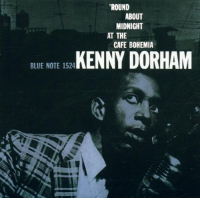 The live Blue Note recordings from 'Round About Midnight At The Cafe Bohemia (Blue Note Records, 2002) in '56 complicate the story in a useful way. In a club setting, Dorham's book leans into immediacy: themes that announce themselves quickly, blues-based vehicles designed to turn the band around the form, and titles that reflect a working musician's relationship to repertoire. Some tunes credited to Dorham from this period sit close to the contrafact tradition, a reminder that authorship in jazz often includes refashioning existing materials into new practical tools. That context does not weaken the picture; it strengthens it. Dorham appears not as a composer of occasional "special pieces," but as a working bandleader building functional music for the stand.
 By the time of the Riverside and New Jazz material at the end of the decade, Dorham's writing leans more openly toward lyricism. The Blue Spring (Riverside, 1959) sessions show an appetite for thematic continuity and variation across related titles: "Blue Spring," "Poetic Spring," "Spring Cannon" and "Passion Spring" read like a composer exploring multiple facets of a shared atmosphere. The writing is not programmatic, but it is coherent in a way that suggests Dorham thinking in suites and mood families, not only in isolated vehicles.
The same balance of grace and practicality anchors Quiet Kenny (Blue Note, 1959) and Jazz Contemporary (Time, 1960). "Lotus Blossom," "Blue Friday" and "Blue Spring Shuffle" carry the blues vocabulary forward without turning it into generic "blowing" material. "Tonica" and "A Waltz" show Dorham's continued interest in economy: themes that unfold with minimal fuss, harmonies that move with purpose and forms that allow a soloist to build a narrative rather than sprint through changes. By '60, Dorham's writing makes a clear argument: sophistication can be achieved through restraint, not density.
III. 1961-64: Post-Bop Clarity and the Composer as Collaborator
 Dorham's early '60s work concentrates his language further. The Blue Note date that yielded Whistle Stop (Blue Note Records, 1997) presents a concise portfolio of originals that feel engineered for conversation among equals. "Whistle Stop," "Sunrise in Mexico" and "Windmill" operate as clean, identifiable themes with strong rhythmic profiles; they are memorable without becoming simplistic. The writing invites interaction. It is music designed for the specific chemistry of a quintet and for the high-resolution recorded sound Blue Note was capturing at the time.
 The mid-decade material also highlights a crucial aspect of Dorham's legacy: the way his compositions entered other leaders' books and helped define the era's vocabulary. "Blue Bossa" and "La Mesha," first recorded on Joe Henderson's Page One (Kedar Entertainment Group, 1963), demonstrate Dorham's gift for writing forms that feel like standards on arrival: harmonically clear, rhythmically grounded and flexible enough to support multiple improvisational personalities. The titles associated with Henderson's Our Thing and In 'n Out extend the point. Dorham's role in these settings is not merely as a sideman with a good horn; the compositions function as structural contributions to the session's identity.
Dorham's own leader date Una Mas (Blue Note Records, 2011) sharpens the thesis. The three originals "Una Mas," "Straight Ahead" and "Sao Paulo" show a mature composer comfortable with open space and with rhythmic implication rather than constant harmonic assertion. The writing sounds modern without chasing novelty. It is post-bop music that stays rooted in melody and pulse, and it points toward the era's broader shift: fewer notes, stronger shapes, deeper groove. By '64, Dorham's compositional output may appear less prolific than the mid-'50s burst, but the focus intensifies. The language has been refined down to essentials, and the essentials are strong.
Taken as a whole, the verified chronology that follows is less a catalog than a portrait: Dorham as a composer who moved steadily toward clarity, and whose most durable pieces achieved longevity by serving musicians. The trumpet voice mattered, but the tunes did, too—because Dorham wrote music designed to be played, reshaped and carried forward.
The Verified List (Chronological)
| # | Title | First recording | Album / session (label) | Release year |
|---|---|---|---|---|
| 1 | An Oscar for Oscar | Dec 15, 1953 | Kenny Dorham Quintet (Debut) | 1953 |
| 2 | Veneta's Dance | Jan 30, 1955 | Afro-Cuban (Blue Note) | 1955 |
| 3 | K.D.'s Motion | Jan 30, 1955 | Afro-Cuban (Blue Note) | 1955 |
| 4 | The Villa | Jan 30, 1955 | Afro-Cuban (Blue Note) | 1955 |
| 5 | K.D.'s Cab Ride | Jan 30, 1955 | Blue Note session (later issues) | 1955/57 |
| 6 | Minor's Holiday | Mar 29, 1955 | Afro-Cuban (Blue Note) | 1955 |
| 7 | Basheer's Dream | Mar 29, 1955 | Afro-Cuban (Blue Note) | 1955 |
| 8 | Afrodisia | Mar 29, 1955 | Afro-Cuban (Blue Note) | 1955 |
| 9 | Lotus Flower | Mar 29, 1955 | Afro-Cuban (Blue Note) | 1955 |
| 10 | Monaco | May 31, 1956 | 'Round About Midnight at the Cafe Bohemia (Blue Note) | 1956 |
| 11 | Mexico City | May 31, 1956 | same album | 1956 |
| 12 | Hill's Edge | May 31, 1956 | same album | 1956 |
| 13 | Noose Bloos | Nov 13, 1957 | 2 Horns / 2 Rhythm (Riverside) | 1957 |
| 14 | Jazz-Classic | Dec 2, 1957 | same album | 1957 |
| 15 | Passion Spring | Feb 18, 1959 | Blue Spring (Riverside) | 1959 |
| 16 | Poetic Spring | Feb 18, 1959 | same album | 1959 |
| 17 | Spring Cannon | Feb 18, 1959 | same album | 1959 |
| 18 | Blue Spring | Feb 18, 1959 | same album | 1959 |
| 19 | Lotus Blossom | Nov 13, 1959 | Quiet Kenny (New Jazz) | 1960 |
| 20 | Blue Friday | Nov 13, 1959 | same album | 1960 |
| 21 | Blue Spring Shuffle | Nov 13, 1959 | same album | 1960 |
| 22 | A Waltz | Feb 11-12, 1960 | Jazz Contemporary (Time) | 1960 |
| 23 | Horn Salute | Feb 11-12, 1960 | same album | 1960 |
| 24 | Tonica | Feb 11-12, 1960 | same album | 1960 |
| 25 | Sign Off | Feb 11-12, 1960 | same session (CD issue) | 1960 |
| 26 | Buffalo | Jan 15, 1961 | Whistle Stop (Blue Note) | 1961 |
| 27 | Sunset | Jan 15, 1961 | same album | 1961 |
| 28 | Whistle Stop | Jan 15, 1961 | same album | 1961 |
| 29 | Sunrise in Mexico | Jan 15, 1961 | same album | 1961 |
| 30 | Windmill | Jan 15, 1961 | same album | 1961 |
| 31 | Dorham's Epitaph | Jan 15, 1961 | same album | 1961 |
| 32 | Blues Lament | Mar 19, 1961 | Blue Note rejected session | unissued at time |
| 33 | Spadesville | Mar 19, 1961 | Blue Note rejected session | unissued at time |
| 34 | Us | Nov 13, 1961 | Inta Somethin' (Pacific Jazz) | 1962 |
| 35 | San Francisco Beat | Nov 13, 1961 | same album | 1962 |
| 36 | El Matador | Apr 15, 1962 | Matador (United Artists) | 1962/63 |
| 37 | Una Mas | Apr 1, 1963 | Una Mas (Blue Note) | 1963/64 |
| 38 | Straight Ahead | Apr 1, 1963 | same album | 1963/64 |
| 39 | Sao Paulo | Apr 1, 1963 | same album | 1963/64 |
| 40 | Blue Bossa | Jun 3, 1963 | Page One (Blue Note) | 1963 |
| 41 | La Mesha | Jun 3, 1963 | same album | 1963 |
| 42 | Pedro's Time | Sep 9, 1963 | Our Thing (Blue Note) | 1964 |
| 43 | Back Road | Sep 9, 1963 | same album | 1964 |
| 44 | Escapade | Sep 9, 1963 | same album | 1964 |
| 45 | Short Story | Apr 10, 1964 | In 'n Out (Blue Note) | 1965 |
| 46 | Brown's Town | Apr 10, 1964 | same album | 1965 |
| 47 | Trompeta Toccata | Sep 14, 1964 | Trompeta Toccata (Blue Note) | 1965 |
| 48 | Night Watch | Sep 14, 1964 | same album | 1965 |
| 49 | The Fox | Sep 14, 1964 | same album | 1965 |
Tags
The Jazz Files
Kenny Dorham
Hank Hehmsoth
'Round About Midnight At The Cafe Bohemia
Quiet Kenny
Whistle Stop
Una Mas
Comments

PREVIOUS / NEXT

Support All About Jazz
 All About Jazz has been a pillar of jazz since 1995, championing it as an art form and, more importantly, supporting the musicians who make it. Our enduring commitment has made "AAJ" one of the most culturally important websites of its kind, read by hundreds of thousands of fans, musicians and industry figures every month.