Home » Jazz Articles » Live Review » James Francies, Joel Ross and Immanuel Wilkins at The New School
James Francies, Joel Ross and Immanuel Wilkins at The New School
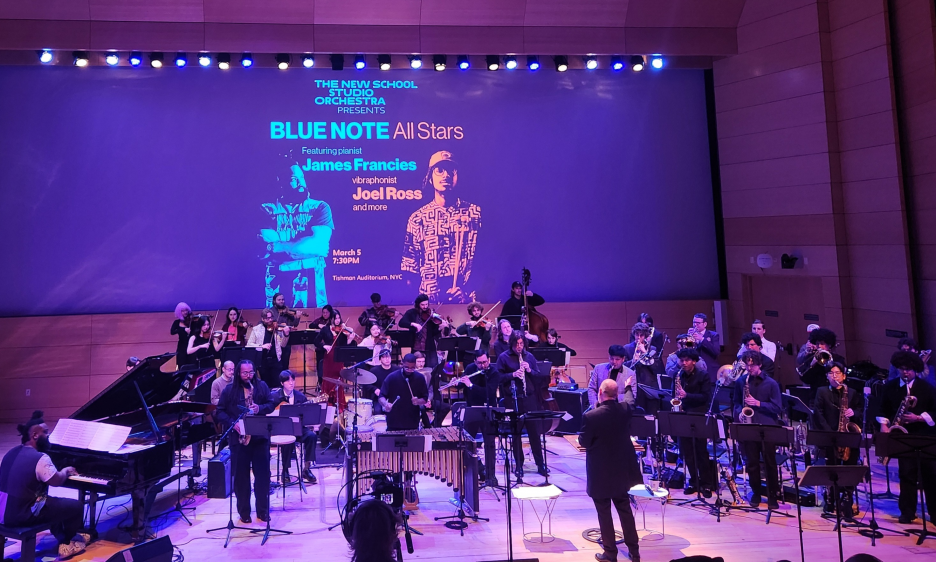
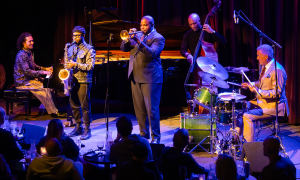
Courtesy Paul Reynolds

The three stars sometimes soloed simultaneously. The result could easily have been a muddle; instead, it came off as beautifully harmonious and convivial.
The New School
New York, NY
March 5, 2026
What does a jazz program do when three of its faculty record for the famed Blue Note Records? If you're The New School for Jazz and Contemporary Music, you create a Blue Note All-Stars ensemble and put the Blue Noters—Joel Ross, Immanuel Wilkins and James Francies—front and center on the bandstand.
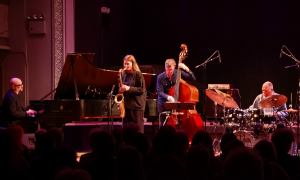
Thursday's concert at the Tishman Auditorium At The New School was equally a showcase for the three acclaimed artists—who play vibes, tenor sax and piano, respectively—and for the talented 35-plus strong student ensemble that backed them.
The concert somewhat defied expectations, but not in a way that in any way disappointed. The essence of Blue Note's classic 1960s sound revolved around lean lineups—quartets to sextets, mostly—and those groups left a legacy of post-bop standards. More recently, the New School's Blue Note trio, along with others like Robert Glasper, have led a remarkable remake of the label's artistry by incorporating contemporary influences like hip-hop, using instrumentation such as synthesizers and releasing thematic concept albums like Ross's The Parable Of The Poet (Blue Note Records, 2022) which he describes as "an expansive album-length suite comprised of seven evocative movements."
Yet the All-Stars presented neither the classic small-group Blue Note sound nor its 21st century iteration. Few Blue Note chestnuts were included in the program, save for a snappy full-ensemble arrangement of "Evidence," first recorded by Thelonious Monk in 1948, and on Blue Note. And while the bulk of the program was drawn from the leaders' Blue Note releases, the arrangements eschewed the most modern touches of their albums. (Francies exclusively played concert grand piano, for example.)
Indeed, with the huge contingent—including a 15-piece string section—the concert at times less resembled the sound of Blue Note, in any era, than of CTI Records, another vintage jazz label that, in its 1970s heyday, had a penchant for rich orchestral arrangements that contrasted with the lean Blue Note sound. In particular, Ross's most richly arranged numbers evoked the best CTI recordings of Milt Jackson—a key influence for the young vibraphonist—such as the orchestral pieces found on the Olinga (Qwest Records, 1974) album, including the lyrical title track.
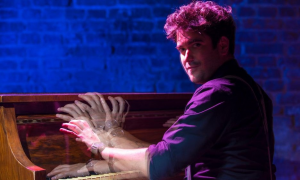
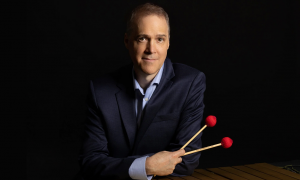
As was Jackson's back in the day, Ross's playing on Thursday was characterized by a soulful directness, clarity and economy—no note he played seemed extraneous or show-offish. The playing of Wilkins shares the vibraphonist's emotional, even spiritual, power; it's no wonder the two artists have recorded together extensively. A big guy both physically and musically, Francies plays with a muscular power, yet is also capable of tenderness when required.
Together, the trio exceeded the sum of their musical parts, such was their artistic chemistry. In an onstage chat hosted by Dr Keller Coker, the New School's dean of jazz and contemporary music, the three contemporaries, all around 30, reflected on their decades of friendship and collaboration. They jammed together a lot in their formative years—Ross and Francies as New School students, and Wilkins making the trip downtown from studies at Juilliard so often that "eventually the [New School] security guards just waved me in; no ID needed."
Thursday's arrangements sometimes placed the three stars in the spotlight at the same time. In response, two of them often soloed simultaneously while the other held back, before the roles seamlessly switched. It could easily have been a muddle; instead, it came off as beautifully harmonious and convivial.
The trio weren't the only soloists. Consistently capable student horn players, including a duo of two trumpets and tenor and soprano saxists, also stepped up. A vocal feature, "Good Morning Heartache," was delivered beautifully and torchily by Amber Diaz—who, unfortunately, was the only student soloist to be identified from the stage, and so is able to be credited here.
Also unexpected: a set highlight that detoured entirely from the jazz repertoire. The band's gorgeous take on Jimmy Webb's "Wichita Lineman," played in front of an evocative period photo of linemen at work, featured Ross playing the melody feelingly, and soloing with authority without ever derailing the tender wistfulness of the song.
The New School is steadily moving the center of gravity for collegiate jazz in New York further downtown with programs like this one and last year's historic and triumphant performance of "Escalator Over The Hill" by The New School Studio Orchestra and Vocal Ensemble. Thursday's concert was the New School's last marquee jazz performance of the season—things wrap up in May with a Motown tribute—but its 2026-27 schedule should be well worth a look. And the price of the performances is zero, making them one of the city's best jazz values.
Tags
Live Review
Joel Ross
Paul Reynolds
United States
Blue Note Records
The New School for Jazz and Contemporary Music
Immanuel Wilkins
James Francies
Tishman Auditorium At The New School
Robert Glasper
The Parable Of The Poet
Thelonious Monk
CTI Records
Milt Jackson
Olinga
Dr Keller Coker
"Escalator Over The Hill" by The New School Studio Orchestra and Vocal Ensemble
Comments

PREVIOUS / NEXT


Joel Ross Concerts
Support All About Jazz
 All About Jazz has been a pillar of jazz since 1995, championing it as an art form and, more importantly, supporting the musicians who make it. Our enduring commitment has made "AAJ" one of the most culturally important websites of its kind, read by hundreds of thousands of fans, musicians and industry figures every month.