Home » Jazz Articles » Album Review » Ingi Bjarni Skúlason: Hope
Ingi Bjarni Skúlason: Hope

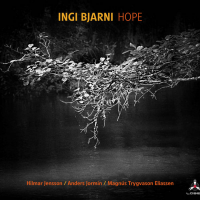
"This was not something I intentionally planned," Skúlason notes in the liner text. The realization came gradually, revealing how deeply intuition had guided both the writing and the sequencing of the music. Subconscious currents shape the album's emotional logic, and that trust in instinct gives the music its quiet authority. Nothing here feels imposed. Each piece unfolds as though it could only exist in this precise form.
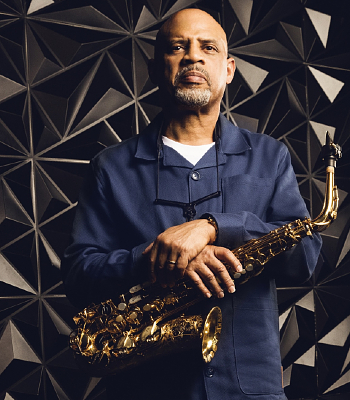
The title track honors that openness from its first gesture. Jormin's arco bass enters alone, voicing a restrained lament that clears the air rather than weighs it down. It feels like a moment of preparation, a soft unburdening that makes room for what follows. When the full quartet joins, Skúlason's flowing piano lines emerge with a calm resolve, supported by Eliassen's attentive cymbal work and Jormin's supple phrasing. Jensson hovers just above the surface, adding filigree and texture. What begins as a reflection gradually becomes something closer to a wish, one that looks toward a future unshackled from fear.
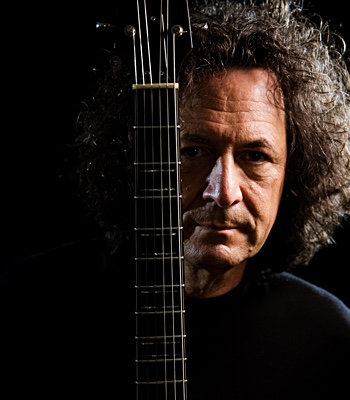
"Uplift" carries that momentum forward with subtle daring. Its rhythmic shape bends and shifts, alternating between uneven meters without calling attention to the feat. The folk-inflected theme feels both rooted and forward-looking at once, its sleek lines suggesting a quiet optimism shaped by experience rather than innocence. Jensson's guitar work glints throughout, weaving light through the composition's carefully balanced frame.
"Chant" retreats inward again, opening with a hushed piano figure that feels almost private. As the piece unfolds, it assumes the character of a wordless song, its melody circling gently as if tending a wound. Skúlason has described it as a piece devoted to healing, and the intention resonates deeply. Jormin's solo arrives like a considered response, expressive without excess, shaping silence as meaningfully as sound.
"Eftir allt," translated as "After everything," continues this meditation with a sober clarity. The composition reflects on impermanence without despair, acknowledging the body's limits while honoring what remains. Jormin's bass speaks with particular gravity here, his dialogue with Eliassen grounded and patient, as though both players are weighing each moment before letting it pass.
With "Hægur dans," the album briefly lifts its gaze toward motion and complexity. Written with Eliassen in mind, it opens into a glowing groove before loosening its structure, allowing improvisation to take the lead. The sense of freedom introduced here finds further expression in "Continuation," where form dissolves and reassembles in real time. "April Dreams" itself grew from an improvisation, its eventual shape discovered rather than designed. Jensson's solo drifts outward with a luminous unpredictability, brushing the edge of coherence before gently returning to earth.
"Desember" draws the listener back into stillness. It resonates as an internal echo, holding sorrow and acceptance in careful balance. There is no attempt to resolve what cannot be resolved, only a willingness to remain present. The closing track, "Escaped," turns toward light without haste. The piano gleams, the guitar lifts, and the rhythm section offers small, precise accents that suggest the quiet rituals of morning. With renewed attention and a softened gaze, the day begins anew.
In both spirit and sound, Hope speaks to a lineage of jazz that values space, tone, and emotional honesty. Listeners drawn to ECM productions—especially those of Mathias Eick, Jakob Bro, and, of course, Jormin—will find much to savor here. Skúlason's achievement lies not only in articulating grief, but in allowing it to transform, gently and without force, into something sustaining.
Track Listing
Hope; Uplift; Chant; Eftir allt; Hægur dans; April Dreams; Continuation; Desember; Escaped.
Personnel

Album information
Title: Hope | Year Released: 2025 | Record Label: Losen Records
Tags
Ingi Bjarni Skúlason
Album Review
Tyran Grillo
Hope
Losen Records
Ingi Bjarni Skúlason
Anders Jormin
Hilmar Jensson
Magnús Trygvason Eliassen
Mathias Eick
Jakob Bro
Comments

About Ingi Bjarni Skúlason
Instrument: Piano
Related Articles | Concerts | Albums | Photos | Similar ToPREVIOUS / NEXT

Support All About Jazz
 All About Jazz has been a pillar of jazz since 1995, championing it as an art form and, more importantly, supporting the musicians who make it. Our enduring commitment has made "AAJ" one of the most culturally important websites of its kind, read by hundreds of thousands of fans, musicians and industry figures every month.