Home » Jazz Articles » Interview » Charlie Ballantine Establishes Himself on the East Coast
Charlie Ballantine Establishes Himself on the East Coast
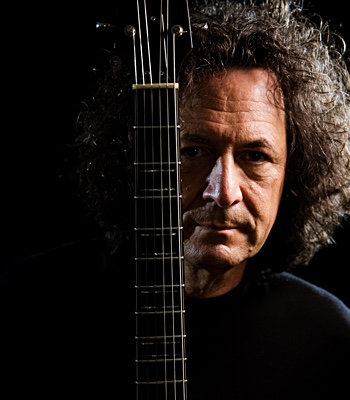
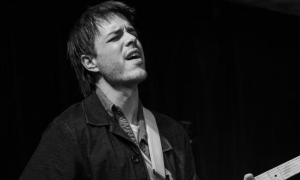
Courtesy Uncredited - from website

Sometimes you have an idea, but once you get in the studio, it becomes its own thing. I love that process. It inspires growth. Albums are like photo albums – this is where I am now.
—Charlie Ballantine
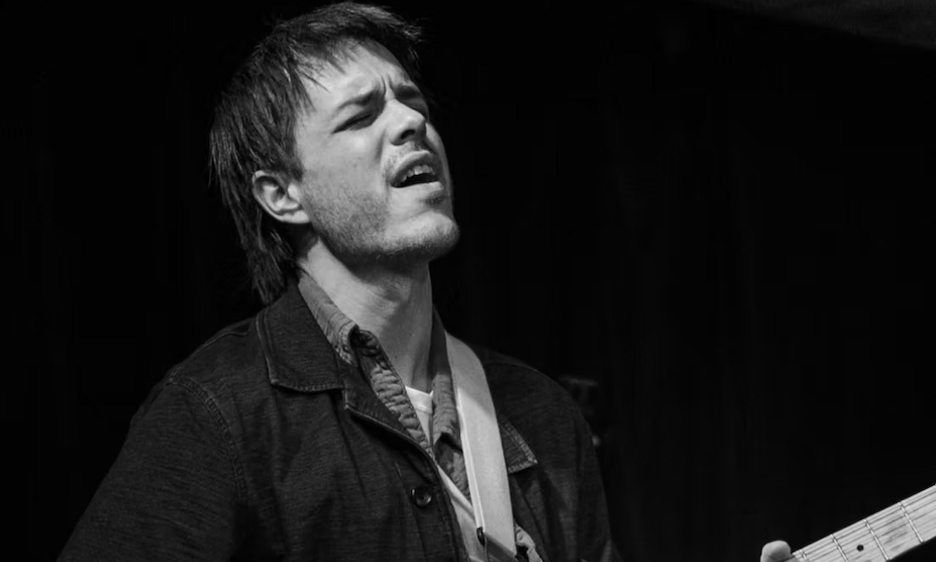
Originally based in Indianapolis, Ballantine moved to Baltimore in 2022 to reestablish himself on the East Coast. His aim was simple: get out there, meet musicians, play more, and build something real. By any measure, he's done exactly that—developing a strong following, filling rooms, and continuing to create music that feels both vital and alive.
This interview offers a snapshot of where Ballantine is now—on the road, in the studio, and in the ongoing process of making his mark.
All About Jazz: I'd like to talk a little bit about your career right now, what you're working on, the live album coming up, the tour, and how your musical life is in Baltimore. I've looked at your website. I see you have 17 gigs on your upcoming tour, which is pretty damn good.
Charlie Ballantine: Yeah. Yeah, I didn't realize there were that many. That feels like a lot.
AAJ: Well, between the end of April and mid-June—
CB: Yeah, there's kind of two separate runs.
AAJ: Yeah, you've got a break in the middle there. But that's great. Congratulations on doing the legwork. Are you—or someone else helping book you, or are you doing it yourself?
CB: I probably do a little over half of it. I do have a manager and booking agent. And it'll either be I'll put together a few things, and they'll sprinkle things in, or they'll get a few things, and I'll build around that. So, it's kind of a mutual thing, but yeah, mostly me.
AAJ: I just read another interview that you did a year or two ago. And you said you sold out every show. Is that going well? Shows are selling out?
CB: Yeah, the last couple, maybe two or three years, I would say over half of the shows have been pretty much sold out. I've been doing this long enough now that it's refreshing because we played empty rooms for a few years and met people, met jazz societies, met promoters, and got our foot in the door at venues that were maybe beyond my means in my early twenties. It definitely feels like a grind, but yeah, they're mostly full now.
AAJ: When you're on tour, are you playing the same set list, or are you all over the place, just trying to keep it fresher?
CB: I usually—like I just sent out the email to everyone for this tour—there's usually, I would say, twenty songs, and we'll play ten to twelve a night. I don't always know what that's gonna be. There's a list of standards. So maybe there are 12 originals and eight standards, or something, and we'll usually do two or three standards.
Depending on the club—sometimes if we're in New York, like we're doing Mezzrow, maybe that's a night where I'll do half standards. It's just a room where the walls are oozing with tradition and swing. So, I try to have an idea of what I'm gonna do, but maybe I'll walk into a room and go, "Okay, I'm gonna change this around." And I do try to change the order a lot, too. Sometimes starting with a really fast, exciting tune and the next night starting with a ballad, just to see what happens.
AAJ: You're working on this live album. You're doing the final mixing, being a perfectionist, no doubt, getting it perfect. I understand from your tours that it was recorded at the Pausa Lounge in Buffalo—is that correct? For some of it?
CB: Yeah, some of it was there, and then some of it was at The Rex Hotel Jazz & Blues Bar in Toronto. We did two nights there. And that's always a really, really special place, a creative environment.
AAJ: I own six of your live albums that I've compiled from YouTube that go back quite a while. And they're all really good. Three or four are from the Bop Shop. Those all came out great. And there's one from the Jazz Kitchen that's one of my favorite albums. What is it about this upcoming live album—which is your first officially released live album—that you think is special?
CB: It's a trio with a really, really great deep bond. It's Quinn Sternberg on bass and Paul Wells on drums. We just recorded a studio record as well over the holidays. It's just a great trio. Last year, we had a similar-length tour, probably two or three weeks. We're playing the same kind of show every night, but things are different night-to-night. You get to tweak things and polish them night after night, changing the order, trying ideas, and kind of refining this ninety-minute thing over the course of the tour. It's really special, especially with those players. As you know, my life at that time was kind of all over the place, kind of crumbling, and the bassist had just gotten divorced. So, we were really digging in every night out of necessity—kind of therapy. It was a really special time. We got a lot of good cuts from all those nights. It was hard choosing amongst them.
AAJ: So, what is it about a trio? The most traditional jazz arrangement is a piano trio. Guitar trios are rarer. And so many guitar albums—just my editorial comment—it feels like there's a lot of filler. The guitarist plays, then the piano plays, etc. But you're there all the time in a trio. You're leading it. There's an incredible continuity. I don't know anybody who does it better than you. What are your thoughts about that? Is the guitar trio sort of the ultimate format for you?
CB: I think, as far as traditional jazz goes, it was more quartet-heavy—horn and piano. But I think it evolved from rock—the power trio, like Cream. When I think of great guitar trios, I think of John Scofield, Steve Swallow, and Bill Stewart, Bill Frisell, Julian Lage. There's something about the connective tissue in a trio. When you add another component, you can lose that unity. If you add piano, I become a horn player. If you add a horn, I become a pianist. But in a trio, it's more democratic. Totally even.
AAJ: Are you familiar with the Ginger Baker / Bill Frisell album, Going Back Home (Atlantic Records, 1995)?
CB: Oh yes. Yeah, there's two of them (Falling off the Roof is the other). I love both those records with Charlie Haden.
AAJ: Yeah. It's still on my playlist. I have a very curated playlist of just the best stuff, and that never gets boring. Just like your stuff.
There's a song you did on a Bop Shop date—Darn That Dream. I have forty-one different versions of that song (going back to 1948 with Miles Davis). I have a lot of stuff—pathologically so—and I've listened to most of them. And I felt yours was the best. There's something about your melodic continuity—it never loses the melody. It's very touching and very real. How do you approach a song like that?
CB: That one I've played with a lot of people over ten or fifteen years. You internalize it from playing it in different contexts. I don't really remember practicing it a lot. You get comfortable inside it. I also get flashbacks of great experiences playing it. I'm trying to emulate those feelings. I've probably played that song hundreds of times. It's deep inside of me.
AAJ: And then you've got some amazing originals. One that you've done twice on albums and often play live—Strange Idea. What's that song about?
CB: I remember writing that probably seven or eight years ago. It was a two or three in the morning thing. That one came out in one thought. Most songs you revise, but that one was immediate—A section, then boom, the bridge. It's always been fun to play. Drummers love it. It's a nice way to start or end a show. It's bouncy.
AAJ: When I listened to your albums, every album, every song is good. There's a continuity—melody, beat, story. Your songs don't go on side tangents, and they keep your attention until the very end. How do you do that? Do you have a particular intention, like on your last album, East by Midwest (Origin Records, 2025)?
CB: Not really. Sometimes you have an idea, but once you get in the studio, it becomes its own thing. I love that process. It inspires growth. Albums are like photo albums —this is where I am now. Miles Okazaki said sometimes it's just getting what's in your head out so you can move on. That resonates with me.
AAJ: You know, one of the songs I really loved from East by Midwest was Strawberry Fields. A lot of musicians, I think, abstract pop songs too much, but yours is recognizable immediately. How do you decide what to do with a song like that?
CB: With The Beatles tunes, you almost can't change them too much. If you hear the melody, you hear the chords. It's hard to improvise on them—they almost don't belong to you. It's a delicate process. With something like Tomorrow Never Knows, since it's already weird, I had more freedom to experiment.
AAJ: I wanted to talk to you a little bit more about your songwriting, as I think your songwriting is what makes you stand out, what makes you different. You have a particular style. And I'd like to know about how you go about writing songs.
When you're starting, when a new piece comes to you, or you're trying to create a new piece, when does it come? I mean, is it sitting down at the guitar or when you're eating dinner?
CB: Usually when I'm listening to something. I think it's probably not as deep or spontaneous as people want to believe. And I think every artist is this way. I'm just willing to admit it. A lot of it is just emulating what inspires you. And sometimes I hear something, and I think, I really want to write a tune like that, or when I hear a solo, and I get inspired to write something.
Some of them might come from me a little more organically when I'm just sitting down, creating something without anything in mind. But a lot of them do come from a place, and it's not a single source. It can be, The Beatles, Stravinsky, Bach, it can be anything.
I'm a listener and just a lover of music. And I'm always kind of chasing that feeling that you get when you're like a little kid and you hear something that, you know, feels like real magic. And I still feel that when I hear certain things, and I get really excited, and it just inspires me to sit down and write.
And I never take anything specifically from songs. It's really an emulating kind of thing; it always reminds me of when I was a kid, I grew up in Indiana playing basketball, and I would always pretend I was Reggie Miller. You know, I didn't play anything like Reggie Miller. I was very short, but I would just try to pretend that sometimes. When I sit down and write, I'm just doing that. I'm just pretending to put a different hat on and write like my heroes or write something inspired by one of my heroes.
AAJ: So, what is your process? I mean, do you sit down with a pen and paper on a staff, or do you just take the guitar and start picking out notes? And then, if you do that, do you ever write it down, or is it all just memorized?
CB: I don't write anything down until it's all finalized, until I know this is exactly what the song's gonna be. So, I make writing a big part of my practice, just like scales, technique, and learning songs; composing is something I try to do every day or most days of the week.
When I do that, I turn on my phone's voice memos. And when I get an idea or string together some ideas that make sense for a song, I'll stop the voice memo. And I'll have maybe 10 voice memos, and I'll go to the end of them. And that's where all the good stuff is, because I know I stopped when I completed an idea or a theme. It can be chords, it can be a melody.
But if it's something I want to hang on to and remember, if I'm doing it for an hour or two hours, it's really hard to remember specific ideas. So, I have to kind of mark them like that with recordings, and then I'll return to them, finish out the idea, write a chorus, write a bridge, write an intro, and just start building around these kinds of small ideas, these sketches.
And some of them come out in one moment. Those are the fun ones. Right? When you just start writing, and it just comes out all at once. And I'm really trying to be conscious of those moments. And if I do have an idea that comes out all at once, I try not to touch it. Because sometimes overworking an idea can diminish it a bit when you're over-revising, when you're in a mode trying to change elements that don't need to be changed.
You overthink things and you stop being a listener. You kind of become an academic or something. And I try to always just be a listener when I'm composing. I'm grabbing little pieces of the chords so that I can remember the harmony, so that there's something there to indicate what I was thinking harmonically. But every song is different; some are just a melody for weeks and weeks, and I can't figure out what chords to write. Some are just chords for weeks, and I can't figure out a melody. So, every song has its different challenges.
AAJ: So, is there sort of an average time it takes you to compose a song from beginning to end until you record it?
CB: Not really, if it takes more than a week or two, I throw it out because it's probably not meant to be, because I don't think I'm really composing compositions. I've always considered myself a songwriter, and I think songs come out a little quicker. The themes are simpler. They're just more organic. My music is not drenched in complexity, where I'm reworking it for months.
And what I like to usually do is write, and then I like to pop those new songs in on a tour and then spend two or three weeks essentially rehearsing them, seeing what they can become, seeing where they go, and hearing what other musicians do to them. This inspires me to get some ideas about what we're going to do in the studio, and where they're going, and it gives me a clearer picture of really what they are in a full scope.
AAJ: I get a sense with a lot of jazz albums that you've got an opening melody, and then often they'll go into improvisation that doesn't sound like it's really been thought out. It's improvisation in the moment. I don't have a sense that that's what you do, but that you have a real structure for your songs, and you don't really improvise from scratch.
CB: It's hard to say. Part of the improvisation is deciding how much, how outside, and how inside to play, and how it changes night to night with different players who have never played this material before.
There are stories of John Coltrane in the studio where he would get there a couple of hours early and warm up and play pieces of his solo, ideas that he was going to play in his solos, like for "Giant Steps" or, any of those iconic records that he put out. It was rehearsed to a degree. It wasn't going to be the same every time, but there were ideas that were going to come out in his solo, probably every time.
And I think that's sort of how I think about it, where it's going to be very different every night. But improvisation isn't necessarily specifically about the solo to me. It's a kind of all-encompassing idea where it's like, maybe we'll do this with a big intro tonight, like a two or three-minute intro. Maybe the next night there will be no intro. We'll start right on it. Maybe the next night we'll do it 30 or 40 clicks faster. You know, maybe we'll do really long solos. Maybe we'll play it without an in-head, without the melody at the beginning. And we'll just go right into improvising. And I think, I think that's kind of my idea when approaching the music, almost like a Grateful Dead approach, where the soloing itself that's a small percentage of the improvising.
The improvisatory nature of this music is really about everything. It's about every element. Sometimes you have a gig where the drummer forgets his high-hat clutch, and you suddenly have to play this music with no high hat. And I think, I think that's the beauty of it, that's part of it. It's these changing elements, whether it's the room, the musicians, the gear, the instrumentation, the roadmap, intro, in-head solos, bass solo, or trading. All of that stuff can change night to night, starting with a bass solo. I think that's part of the improvisation for me, just making sure that night to night it's a new experience for us, for the audience, and it's not necessarily an emphasis on the solo being drastically different night to night.
AAJ: What is it about your style that's unique, special, different than everybody else?
CB: I'm not sure. I mean, I certainly recognize my sound when I hear it, and it's not always pleasant! Sometimes it's like hearing yourself in a microphone. But I'm not sure that I really consider my music mine. This stuff's just meant to be shared and experienced together. And if I'm playing it, by myself, it's fun, but it's not nearly as fun as if I'm playing it with my friends or for a big audience, and that's when it becomes what it's supposed to be.
So, I don't know, I don't know that it's necessarily mine or if there's any characteristic that I would say is unique to me. I think I have a voice that could be seen as singular, but to me, I know my influences on a very deep, cellular level. I think no matter what I play, I have an idea of where it comes from, whether it's a personal experience to me, something I listened to when I was a kid, something I heard recently, or a player that means a lot to me. I have a very specific idea of what I'm doing and where it comes from. So, I'm not sure. I'm glad that people think I have a voice that's unique, because I think in a lot of ways, the whole point of this is finding yourself. But to do that, I think you have to reference the precedent. You have to reference where you came from, whether that's life experiences or musical experiences. So, I think that's where everything comes from; it's a unique combination of music that has inspired me and life experiences that are very unique to me.
AAJ: Are you working on a new song right now?
CB: Not specifically. I mean, as I said, I compose, you know, and I've always been a quantity over quality person, right? I have hundreds of things that will never be recorded. And it's just a practice that I like to do right now is to just challenge myself. I'm thinking of an instrumentation with piano and a horn player, so it's like a five-piece type of thing with two horn parts, me being a horn player. And I've kind of geared my writing in that direction recently. I don't know if anything will come of it. I don't know if it'll ever make it to the studio, but that's kind of where my head's at with writing right now.
AAJ: Anything else you want to say about songwriting?
CB: Not really, other than I think in jazz specifically, to me it feels like a bit of a dying art that people don't practice. You come to it out of necessity when you want to do an album, or you get commissioned for something. I think writing has helped me develop every aspect of my playing, every aspect of my art, my soloing, my time, my sense of harmony. A lot of that comes from writing.
There are a million workshops on, "this scale goes with this chord. This is what you play over this chord." And I would love more of an emphasis on just writing because I think that's where real creation comes, and that's where you get to put yourself out there. We can all do flashy things in our solos and impose cool harmonies over different chord changes and traditional jazz, but I think there's a vulnerability that has been really beneficial to me as an artist that comes from writing. It's just something I love to do. And it's one of the top questions I get as a teacher, as an educator, is, well, "How do you write?"
My first question is, "Well, have you ever tried writing?" And the answer is usually, "No." I don't know if people just don't know where to start or what, but it just seems like something that's kind of been erased from practice. And I would love to see more emphasis on it, because I think it's a really beautiful thing that encourages individuality, vulnerability, and all the things that encompass being an artist.
AAJ: Thanks for giving us your insights into songwriting. Very powerful! So, where are you right now? You've got the live album coming out, Passing Through, and then another one already recorded?
CB: Yeah. It's a quartet with the trio plus Rob Dixon on tenor sax. We recorded it in Indianapolis over the holidays. It's a mix of originals and three standards.
AAJ: That's my favorite jazz configuration, by the way. I have more than two hundred albums like that.
CB: It's a fun one because you can be a guitarist or a horn player. It frees you up.
AAJ: So, what's next for you?
CB: I don't know. I'm happy with where I am. I love touring a few times a year. The local scene is great. I host one of the biggest jazz jams here in Baltimore every week. I'd love to get to Europe and Asia. It's harder now—travel costs have gone up—but that's something I want to do.
AAJ: I hope you make it to the West Coast someday. We have a great jazz club here in Santa Cruz!
CB: Me too. I've only been once. The challenge is the distance between cities.
AAJ: Yeah, I get it. I'm just happy you're doing well. You took a big risk moving East, and you've gone through a lot, but you're playing the music you love. Keep going. I want more of that music.
CB: Yeah, I'm going to try to do two records a year—a live and a studio record.
AAJ: Very good. Okay, Charlie. Have a great evening.
Tags
Interview
Charlie Ballantine
Robert Middleton
Indianapolis
Baltimore
New York
Mezzrow
Pausa Lounge
Buffalo
The Rex
Toronto
Bop Shop
Jazz Kitchen
Quinn Sternberg
Paul Wells
Cream
John Scofield
Steve Swallow
Bill Stewart
Bill Frisell
Julian Lage
Ginger Baker
Going Back Home
Charlie Haden
Miles Davis
East by Midwest
Miles Okazaki
Beatles
Rob Dixon
SANTA CRUZ
Comments

About Charlie Ballantine
Instrument: Guitar
Related Articles | Concerts | Albums | Photos | Similar ToPREVIOUS / NEXT
Charlie Ballantine Concerts
Support All About Jazz
 All About Jazz has been a pillar of jazz since 1995, championing it as an art form and, more importantly, supporting the musicians who make it. Our enduring commitment has made "AAJ" one of the most culturally important websites of its kind, read by hundreds of thousands of fans, musicians and industry figures every month.