Home » Jazz Articles » Album Review » Michael Moody: The Ecstasy of Love
Michael Moody: The Ecstasy of Love

Act I—The Arguments of Love
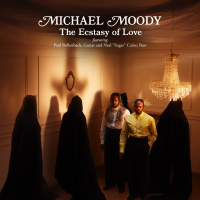
The bold vocalist maintains in this his third project an instrumental and expository minimalism verging on the ascetic—with several tracks under two minutes—as well as a drumless lightness always present in his output. And, of course, love remains a constant. Its title derives from a line spoken in William Shakespeare's Hamlet by Polonius, father of Ophelia, whom Hamlet courts; through this remark, the New York City-born structures a multifaceted declaration of various types of love associated with the human condition. Moody affirms: "I thought The Ecstasy of Love was an appropriate title for the collection of songs I had gathered, all the songs speak to the extremities of the elements of love, madness as well as passion." Without abandoning his well-reasoned emotional touchstones, Moody ventures here into terrain of enigmatic airs, embodied in an album cover that presents us with a mysterious scene steeped in a Hermetic key—the literature of the great English playwright is rife with esoteric symbolism—in which disturbing, dark phantoms levitate around a Moody who, in turn, seems to fragment into the immortal characters of Hamlet and Ophelia.Act II—An Enamored Protagonist And His Admired Spirits
There seems to be a certain stylistic confusion regarding influences and even vocal range with Moody. Some attribute to him baritonal qualities and compare his discourse to that of illustrious predecessors of vocalese such as Eddie Jefferson and Jon Hendricks—a technique that on this album he does not seem particularly inclined to employ, and on his two previous ones only very occasionally. Rather, while confirming the influence of both, Moody prefers to showcase his abilities in a cappella and display a splendid tessitura situated mostly in the tenor range, with a timbre, nonetheless, endowed with warm depth in the lower register. Whatever his tonality, his voice is enveloping, crystalline, pure. It articulates a perfect diction that non-native English speakers will likely appreciate. Returning to influencers and idols, he manifests his admiration for Billie Holiday and Carmen McRae, to whom he dedicates the album. Among other things, from the former he takes her sometimes saxophone-like sensibility, and from the latter her harmonic intelligence applied to the material examined. But the musicality of Sonny Stitt and Dexter Gordon also figure among those noted by the vocalist as his principal sources of inspiration (again, the voice as instrument)—to which we might add elements as disparate as the phrasing of Nat King Cole and Mark Murphy, or the commanding elegance of Johnny Hartman.Act III—The Technique of Love
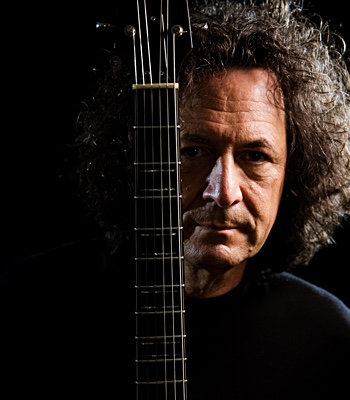
With all the references mentioned, it is hardly surprising that Moody is essentially a musician concerned with the harmonic more than the rhythmic, or even the melodic, though this by no means implies that he neglects these aspects. Once again, the singer favors timeless ballads, executed under a formal classicism tempered by economical phrasing, careful not to excessively alter the melodic purity of the original. His musical language rests largely on a perspicacious interplay between the line shaping of his voice and the chord changes that sustain the chosen pieces, at times venturing into unexpected outside notes, while his hallmark control of vibrato and breathing —together with a richly textured, seductive tone—enables him to craft and modulate a polished vocal delivery. As a result, Moody forges a personal language, immediately recognizable and distinctly differentiated from contemporary referents such as Kurt Elling, Michael Mayo or Theo Bleckmann.Another key component in this project is the change in instrumentation relative to his previous realizations: Moody replaces the rhythmic trio par excellence (piano, bass and occasional drums) with a string duo, formed by the hyperswinging bass of Neal Caine (frequent collaborator with Harry Connick, Jr. and The Marsalis Family) and the guitar of the great Paul Bollenback (closely associated with luminaries such as Joey DeFrancesco, Gary Thomas and Jeff Tain Watts), who contribute their artistry to the sophisticated stylization that ultimately prevails. Bollenback in particular—another musician with a clear inclination toward the harmonic—also acts as a welcome astringent factor, enabling a suggestive setting for the leader through a conveniently dry sound and a tremendously lyrical, yet never cloying, language.
Act IV—The Dissection of Love
With a brave a cappella and a legato that brings to mind the aforementioned Hartman, Moody emerges with velvety softness in the verse of the opening "The Nearness of You." Bollenback enters with acoustic discretion and Caine marks time almost on tiptoes, while the singer plays at emphasizing the lyrics, suspends daring scales in the air and exhibits studied flatting, especially in the bridge: a concise preview of what we will encounter throughout the album."Embraceable You" appears under an amiable, carefree walking marked by Bollenback's guitar—the sole accompanist here—which also offers us a fleeting yet delicious solo, while Moody turns the supplication that dominates its refrain into a petition charged with demand. Another duo performance, "Unforgettable," again features the guitarist from Illinois—now in Joe Pass mode—whose exquisite comping and brief yet complex spot frame Moody's performance. He evinces moderation in vibrato, melodic brilliance and superb control of sustained notes.
Caine, with an incisive walking, intervenes in duet in a miniature, almost unrecognizable "Easy To Love," in which Moody devotes more than a third of his compressed space to introducing the verse. It is a practice that has been out of use for quite some time, but one the singer employs on several occasions as a means to develop his musical ideas freely. Identical instrumental treatment also briefly sketches "Ghost of a Chance," a song that incorporates the whole-tone scale, allowing Moody to expand the album's harmonic palette. The leader lingers over each syllable and the bassist impresses with the resonant presence of his noble sound.
Also in atmospheric duo with the bass, "Good Morning Heartache" opens a small block of tunes inevitably associated with Holiday. Despite being a blues-based composition, Moody conveys a mounting, detached stoicism, favoring technical aspects over expressive ones. The same does not hold true for "Don't Explain," here in duet with a masterfully discreet Bollenback, where the emotional charge intensifies gradually under a tone of dignified, unapologetic sadness.
But it is the pieces with the complete trio that concentrate the greatest richness of nuance and the most moments of interest for the listener, casual or expert alike. "I'm Lost" suffers from a noticeable jazz weakness, especially if compared to "You've Changed"—also included on the album—a theme written two years earlier and with which it shares kindred compositional aspects. Yet it benefits from a woody solo by Caine, who accomplishes the implausible task of evoking both Ray Brown and Charlie Haden simultaneously, while Moody demonstrates once again his deep devotion to McRae. "You've Changed," for its part, includes the verse again and exhibits a carefully wrought vocal treatment, proclaimed more from dry irony than from dramatic disenchantment—lamentably, its conclusion is mutilated by a perverse fade-out that appears precisely when an interesting vamp is beginning to materialize. "I'm Gonna Lock My Heart" deploys an aroma of bossa nova that is actually latent in specific fragments of the album. The luminosity of the leader's voice imposes itself over his emotional distance, Bollenback delivers another splendid turn—one that incorporates with deftness a subtle quotation of "Willow Weep for Me"—and Caine decelerates to lead the track to a conclusion that now, at last, gives way to a concise yet suggestive vamp. Nevertheless, it is "Body and Soul" that arguably stands as the album's apex and represents it most conclusively. The trio tackles it via a mid-tempo vivace, under which Moody finds the balance between technique, inspiration and commitment. Bollenback develops a refined discourse, swinging and replete with harmonic ideas, and Caine anchors the rhythmic foundation with wise discretion.
The album closes with the hymnic classic "The Old Rugged Cross," which acquires here oneiric qualities thanks to a pleasantly electrified Bollenback who points toward other stylistic coordinates. Moody, in contrast, maintains his previous tone and methodology, so his elegant silkiness contrasts vividly with the material and the twilit sonic tapestry provided by the guitarist: an interesting experiment that may well anticipate new directions.
Act V—The resolution of love
The Ecstasy of Love is a very carefully conceived album in which Moody dazzles with his intelligent, elaborate, sometimes academic approach to the compositions and his stylistic references. Despite his attraction to extreme emotions, the vocalist displays a fluctuating yet unmistakable cool distance in his interpretations, sometimes drawing back—as if he were an observer rather than a protagonist—from the terrain he explores. Hence, at an interpretive level, Moody stands as close to cool icons like June Christy and Chris Connor as to the other great figures already mentioned. On the less positive side, there is a degree of uniformity in his treatment of ballads and faster tempos—the subtle shifts in involvement can go unnoticed, seemingly subordinated to formal coherence and technical complexity. Lastly, a point open to debate: it is again Polonius who, in Act II, declares, "Brevity is the soul of wit." Moody seems to have applied this principle to the letter, both in certain tracks and overall—whether his iron restraint succeeds or goes too far is something each listener will have to judge.Bollenback and Caine, for their part, are unsung masters of their respective instruments. The guitarist, majestic throughout the album, moves with every solo intervention and with the multiple details of his comping—fleeting sparks arising from nothing that, as soon as they fade, become canonical. And the bassist from St. Louis brilliantly grounds it all in a necessary earthiness.
Moody is inclined to deepen, both in his reflections and even in his pieces (listen to the 'interviews' on his second album), a very personal analysis of emotions: beyond love, he concerns himself with solitude, desperation, madness and disenchantment, and with their connection to the lyrics traditionally associated with jazz and blues. His is therefore not a superficial, spineless gaze at love and other feelings and states, but rather a reasoned stance of a psychological character. And the conclusions he draws from these observations determine the stylistic and interpretive choices of this album, undoubtedly his best to date—the most mature and the least conventional. Thus, the artist himself conveys it to us: "The ethos of the album is how inseparable madness, love, veneration and redemption are when examining the elements of love. This ideology was the framework for my approach to phrasing and lyrical interpretation." And with his words, the curtain falls.
Track Listing
The Nearness of You; Embraceable You; Unforgettable; Easy to Love; Ghost of a Chance; I'm Lost; Body and Soul; Good Morning Heartache; Don't Explain; You've Changed; I'm Gonna Lock My Heart; Old Rugged Cross.
Personnel



Album information
Title: The Ecstasy of Love | Year Released: 2026 | Record Label: Self Produced
Tags
Michael Moody
Album Review
Artur Moral
The Ecstasy of Love
Self Produced
I Wish You Love
It Never Entered My Mind
New York City
Eddie Jefferson
Jon Hendricks
Billie Holiday
Carmen McRae
Sonny Stitt
Dexter Gordon
Nat King Cole
Mark Murphy
Johnny Hartman
Neal Caine
Harry Connick, Jr.
The Marsalis Family
Paul Bollenback
Joey DeFrancesco
Gary Thomas
Jeff Tain Watts
Joe Pass
Ray Brown
Charlie Haden
June Christy
Chris Connor
St. Louis
Comments
PREVIOUS / NEXT


Support All About Jazz
 All About Jazz has been a pillar of jazz since 1995, championing it as an art form and, more importantly, supporting the musicians who make it. Our enduring commitment has made "AAJ" one of the most culturally important websites of its kind, read by hundreds of thousands of fans, musicians and industry figures every month.