Home » Jazz Articles » Live Review » The Billy Hart Quartet featuring Ethan Iverson at Blues Alley
The Billy Hart Quartet featuring Ethan Iverson at Blues Alley
Blues Alley
Washington, DC
May 3, 2026
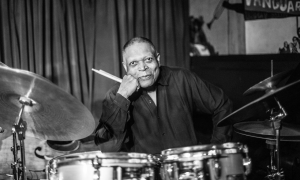
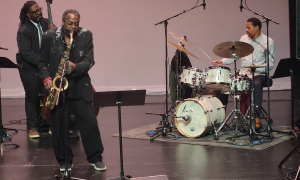
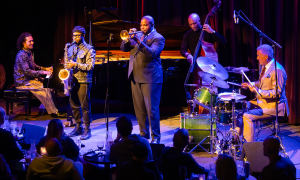
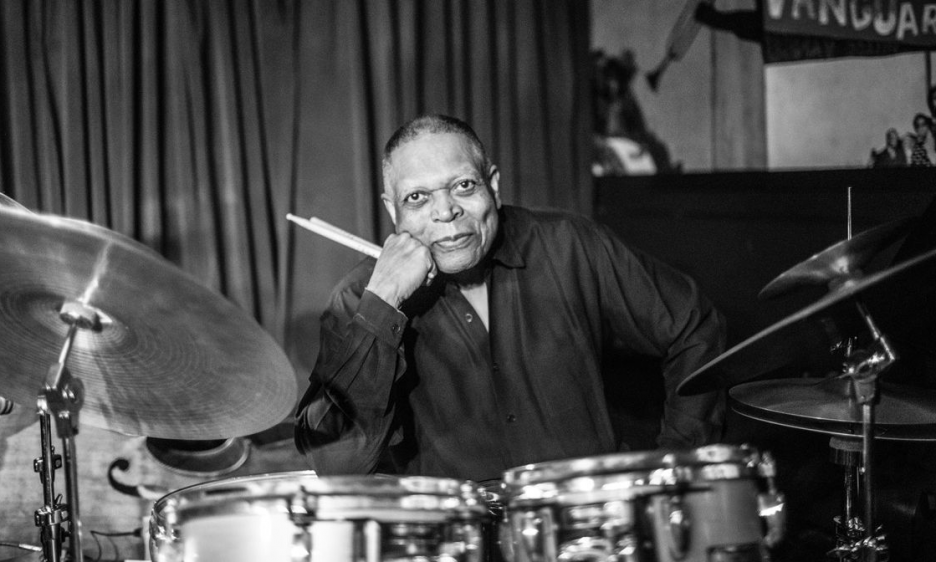
Elder statesman of the drums, contributor to Miles Davis's On the Corner (Columbia, 1972), and Washington, DC, native: Billy Hart was the perfect figure to feature in a centennial celebration of Miles Davis at DC's Blues Alley. Hart has been leading a quartet with saxophonist Mark Turner, pianist Ethan Iverson, and bassist Ben Street for some 20 years, but in a twist that Davis might have approved of, the surprises came even before the first downbeat: half the quartet's longtime members were gone! Saxophonist Nicole Glover took Turner's place, having debuted with the quartet only weeks before, and Joe Martin swapped in for Street on bass.
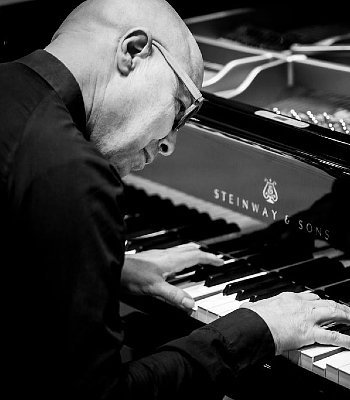
It was only appropriate, then, that the band deferred in the opening notes to Iverson, the quartet's one remaining mainstay, who played just eight bars alone before the band came roaring in. The tune, fittingly enough, was John Coltrane's "Moment's Notice." Immediately, the ensemble's fine-tuning was apparent, but not in the typical way. It takes attention for a group to sound tightly in sync; but it is even harder for all the musicians to sound out of sync, each going their own way, only to prove that they were in fact together the whole time. Each instrument here crescendoed and climaxed in only partially overlapping waves beneath each solo, until all four came together for a triumphant statement of Coltrane's key-jumping melody.
A similar sync out of sync occurred on Hart's "Amethyst," with Glover and Iverson uniting around a simple but foreboding motif while Hart and Martin's unpredictable textures kept things out of joint. In a move reminiscent of his days in The Bad Plus, Iverson delivered an off-kilter earworm of a solo, with simple lines grabbing the listener's attention while shifting keys left the ground unsteady underneath.
Hart's "Teule's Redemption" took the band in a more rocking direction, with Hart, Iverson, and Martin setting down a three-chord vamp for Glover to wail over. Iverson kept things just slightly askew: on both the vamp and his solo, straightforward harmonies in the right hand were soured by dissonances in the left. Meanwhile, a "more is more" approach from Hart delivered a constant churn of activity. Further bolstered by Martin, this rhythm section offered so much action on its own that any horn might have wondered how to deliver a compelling solo over it. Glover's strategy, opting for a few powerful cries or a shifting motif, proved an effective counterbalance.
Another Hart original, "Irah," let the band cool off, as Hart switched to a gentle swing on brushes under another pop-inflected melody from Glover. In the evening's loveliest moment, Martin delivered a ruminative solo, setting the bar for Iverson and Glover's own statements before Glover offered a faithful recapitulation of the melody—no frills necessary.
So far, the concert had united a grounding in the long jazz tradition that Hart is a living witness to, an exploratory ear, and a catchy pop idiom to help the music go down easy. Now, the quartet added another element to the mix with Hart's "Maraschino," a classically inflected piece that soundly largely through-composed for saxophone, piano, and bass. Then, instead of transitioning to solos, Glover, Iverson, and Martin entered a sort of musical standoff, with each proffering only the occasional note as if waiting for the others to start first, while Hart's subdued brushing left them to fend for themselves. But a sudden return to unity at tune's end proved that there had been a plan here all along.
By way of announcing the set's close, Hart gave the audience something to contemplate: "In certain cultures, if you want to say light, you say, oh ... or light ... or neon ... or light ... or oh ... or 'All the Things You Are." From there, Hart experimented with an oomp-pah-pah waltz, before transitioning to a two-against-three hemiola as the band took on Iverson's "Neon," a heavily disguised reinterpretation of the classic "All the Things You Are." Following a battle-cry-like melody, Hart dropped back to provide little more than a metronomic pulse under a final Glover attack, followed by a McCoy Tyner-inspired solo from Iverson that at one point propelled him up off the bench. Then it was one last drum cadenza and a bombastic, cymbal-crashing blast from the whole band that would have been corny if it had not been done with such bravura.
In a year likely to be full of rote Miles Davis pastiches and surveys of his greatest hits, Hart and his quartet celebrated the Prince of Darkness by channeling him in a deeper way: through a forward-looking display of mastery, with one more trick always at the ready.
Tags
Live Review
Robert Bellafiore
United States
Billy Hart
Mark Turner
Ethan Iverson
Ben Street
Nicole Glover
Joe Martin
John Coltrane
The Bad Plus
McCoy Tyner
Comments

PREVIOUS / NEXT

Billy Hart Concerts
May
27
Wed

May
27
Wed
May
28
Thu
May
28
Thu
May
29
Fri
May
29
Fri
May
29
Fri
May
30
Sat
Support All About Jazz
 All About Jazz has been a pillar of jazz since 1995, championing it as an art form and, more importantly, supporting the musicians who make it. Our enduring commitment has made "AAJ" one of the most culturally important websites of its kind, read by hundreds of thousands of fans, musicians and industry figures every month.