Home » Jazz Articles » Take Five With... » Take Five with Pianist Noah Stoneman
Take Five with Pianist Noah Stoneman
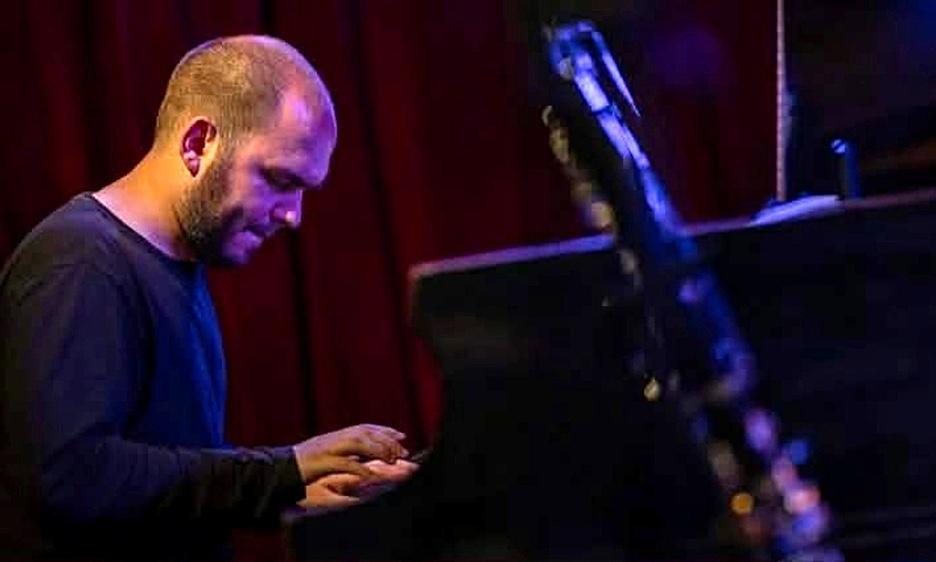

Meet Noah Stoneman
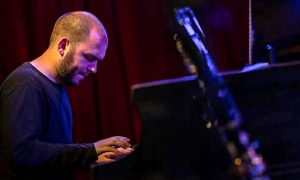
Noah Stoneman is a pianist and composer from London who has been based in New York City for the past three years. His career has already seen him collaborate with master musicians from all walks of musical life, and he is intent on keeping this diversity of creativity as a fixture of his artistic practice for as long as he can. His distinct and emotionally direct style of pianism has lead him to work with such luminaries as Mark Kavuma, Jasper Høiby, Hillai Govreen, Ruben Fox, Felix Moseholm, Eric McPherson, Steve Cardenas, Alex Hitchcock and Caius Williams. He plays regularly around New York, at beloved institutions such as Smalls, Mezzrow, Closeup and Ornithology, and at some of the most prestigious stages in the UK and Europe, including the Barbican, Queen Elizabeth Hall, Copenhagen Jazz Festival and Love Supreme Jazz Festival. His debut album, Anyone's Quiet: Let it Rain to You, was released in 2023 on Fresh Sound Records, and was produced by long-time mentor and ECM recording artist Kit Downes. It received critical acclaim from the Guardian and several other publications. His second album, Dance at Zero, released in February 2026 on Resonant Postcards Records, also received acclaim from the Guardian and was named "Editor's Choice—Best Jazz Albums of the Month" by Jazzwise Magazine.Instrument:
PianoTeachers and/or influences?
Kit Downes has been the most significant teacher in my life. He began mentoring me before I began my studies at the Royal Academy of Music in London, and then became my main teacher whilst I was there. He has really helped keep me on track artistically; always making me think carefully about musical and life decisions and holding myself to a high standard creatively. When I got to New York I was lucky enough to study with Fred Hersch for two years at City College of New York. Fred completely transformed my playing technically. He truly holds only the highest bar for piano playing, so I quickly realized if I didn't sort out my technique problems quickly, I really wouldn't be able to access a lot of his more conceptual ideas and wisdom. That first year of studying with him is probably the hardest I've ever worked at the piano and the most I've ever improved. I'm extremely grateful for any time I get to spend with Fred. Both of these guys are huge influences on me, just to name two of what would be too many to name.I knew I wanted to be a musician when...
Pretty much all of my family are [classical] musicians, so I can't truthfully say there was one single moment where I wanted to become a musician. By the time I was eight years old it had just become the thing I was doing and thinking about more than anything, and my life choices fairly naturally followed from there. In terms of Jazz, it was when my friend Miles Mindlin gave me Wynton Kelly's Wynton Kelly: Piano album on CD when I was around nine years old. From the very first note, I thought, 'this is what's been missing.' Up until that point I'd been learning classical violin with my siblings and cousins, and just generally figuring out music at the piano through no real stylistic lens or tradition to draw from. Wynton Kelly was my way into becoming obsessed with this music and giving my curiosity a direction and sound to chase.Your sound and approach to music.
I think my sound has changed a lot, especially since moving to New York and absorbing so much radically new music all the time. But something I keep finding myself boiling back down to is to keep my ideas and concept (if you can even call it that) simple. I tend to get pretty caught up with new approaches, techniques, and traditions whenever I encounter them, but once I learn about them and finish obsessing over them, I seem to always come back to quite fundamental ideas that have been with me for as long as I can remember. I want to express my music very clearly and without unnecessary affectation. I want to keep my sound a little fragile and personal, like all my heroes do, but have my execution be as strong and fluent as it can possibly be. I like music and forms that are intriguing to repeat and get super abstract upon. I want my piano playing to feel very layered and worth re-listening to; hopefully a very detailed and varied sound. That's what I'm practicing and thinking about at the moment.Your dream band
I'd love to play with Andrew Cyrille. His work with Cecil Taylor's late-'60s bands is extremely important to me, and I think he sounds as good now as he did then. He's a huge inspiration. I'd love to play with Bill Frisell; I think I'd learn a huge amount about listening and patience. If we're including the whole of pantheon of music history I'd love to play with Nina Simone, Milford Graves, Albert Ayler... the list is endless. A few musicians who have really changed my playing in recent years have been the drummers Eric McPherson and Jacob Patrone. Playing with them has really exploded how I hear rhythm. Felix Moseholm has really made me think deeply about my playing—he's someone who never wastes a single note. Amina Claudine Myers is also a recent big influence. Her sound at the piano is completely transporting, and she affects an audience so deeply without playing too much. The flautist Samantha Kochis is also really exciting to me; her music seems to draw so purely from nature and all these accidental organic rhythms in the air. It's really cool. There's a dream band within that list somewhere!Favorite venue
I love playing at the Vortex in London. They gave me my first ever leader gig when I was 15; I couldn't believe it. They've been extremely supportive of me ever since and both my album launches took place there. I love that place. In New York, playing at Mezzrow was very surreal for me since I'd been dreaming of playing there my whole career. And for good reason; the room sounds incredible. The audience is so warm and present, and the piano is perfect. I've been really lucky to play most weeks at Lucille's in Harlem for a while now. It's a really amazing place with the most wonderful staff, most of whom are also ridiculously talented singers/artists/actors. They've also been super supportive of me, and I've grown so much as a musician from running the Jam sessions there. It feels like a home for me here, and I'm very grateful to everyone there. I also owe a lot to Brothers Wash & Dry in Maspeth, Queens. They let people put on the most experimental, DIY shows and develop their ideas with zero pressure to fulfill any quotas or financial obligations. I feel lucky to have been able to bring some bands there and try out things with complete creative freedom. That's very rare for a venue. Selendis and Orchid do an amazing Job. Back in London, KaramelN22 has also been like that for me. I've been playing there since I was 14. It's close to where I'm from and Preeti [Dasgupta] and Manoj [Karamel] have always let me do whatever I want. I've put on a six-person two-hour freely improvised set, ran a weekly jam session, and most recently premiered a piece for solo violin and synth-drone. They were happy—I think—to have it all. I owe so much to my development as a creative musician to places and people like these.Your favorite recording in your discography and why?
Dance at Zero—my most recent album—has my best playing on it for sure. I was fresh from a year of studying with Fred Hersch and just eager and excited to get down on record what I'd been practicing. I know it's typically not a good idea to try and prove yourself in the studio, but on this occasion, I think it gave me a bit of fire and determination I'd perhaps been lacking on my first album. Plus we only had a single day to do the record, so there wasn't much time for thinking. Dance at Zero was a real level-up for me in terms of letting the playing and group-interplay take center stage, rather than any overly serious concept or long-winded compositions. I wanted the tunes to be short-form and fun to play. James Maddren and Dr. Freddie Jensen are the perfect bandmates to push you—me—to fully exhaust these forms and get down any ideas that they help generate. Playing the tunes live with them has only continued to expand and deepen this process. I actually recently put out an album on Bandcamp of voice-memo recordings from the album launch at the Vortex. It also features the incredible Alex Hitchcock on some of it, and some brand new compositions not on Dance at Zero. I'm really happy with both records as a document of this approach to music-making.What do you think is the most important thing you are contributing musically?
I'm still trying to figure out what I am contributing musically, but one thing I've grown more confident in recently is playing and enjoying a lot of different types of music, without one necessarily diminishing or eclipsing the other. I think the fact I play a lot of more straight-ahead jazz music—whatever you want to call it—with people like Ruben Fox and Mark Kavuma is not in opposition to my interest in free music or more experimental music, as perhaps I'd previously thought. The whole spectrum informs itself, and one can draw from anything and everything all the time. That's what a lot of my heroes have shown me. John Coltrane's music is so unbelievably varied in really such a short number of years, sometimes we forget that when we're so into one period of his life and not another. The same with some younger musicians now I really admire, like pianist Micah Thomas, for example. He sounds just as authentic playing a bebop composition as he does on some highly experimental free improvised music. It's all drawing from the same stuff, and all the ideas in one can be applied to the other. I've been embracing this much more this year, rather than worrying about spreading myself too thin.Music you are listening to now:
I've been obsessed with Nina Simone on-and-off for about four years now. Just when I think I've heard everything, I find a new album and it's better than the last. Right now I'm stuck on Emergency Ward!, mainly the first track—it's completely exhilarating—and the album Black Gold. I think her piano playing is underrated. I think of her sound often when I'm playing. It's crystal clear and has such an intensity to every note.How would you describe the state of jazz today?
I think jazz is in an amazing place today. As much as I detest social media, I think Instagram has allowed for some very fruitful cross-pollination across the world. People all around the world can see what's coming out of New York and put their own spin on it, and vice versa. And I think my generation, perhaps also in part due to the internet, is being pretty radical in how they let influences from all walks of music into their playing and composing. There's some incredible young musicians on the scene today that would be hard to even categorize, but they're making some very original and emotionally affecting improvised music. The people I mentioned earlier, Samantha Kochis, Felix Moseholm, Jacob Patrone. Eliana Fishbeyn is really pushing the boundaries of sounds one can hear and imagine—and then render—in an improvised setting. Lex Korten, Esteban Castro, Dabin Ryu, Jonathan Paik—incredible piano players that seem to test what the instrument can hold each time I hear them. Quinton Cain is a really fearless and deeply empathetic improviser. Caius Williams has been a huge influence on how I approach free music, and he's an unbelievable bassist. No one sounds like him. Jonny Mansfield is one of the most skilled and original composers I know—also an amazing vibes player and label head. Resonant Postcards is putting out some amazing stuff. Miles Mindlin, Xhosa Cole, Duarte Ventura, Selendis Sebastian Alexander Johnson, Emmanuel Michael, Hillai Govreen, Zoe Obadia. There are so many more people. It's hard to talk about it in terms of any overarching ideas or movements, but there is a rich abundance of vibrant, truly unique voices right now.What is in the near future?
I am part of a trio with Felix Moseholm and Jacob Patrone that I love playing with. We have a record in the can that'll be out later this year, and we are doing a short tour around Denmark and the UK this summer.What is your greatest fear when you perform?
Being boring. I think pretty much anything else is kind of acceptable in some way. But if I put on a gig that's just boring, that would really upset me. Or even just playing a set that could be mistaken for background music or something like that. I really want my gigs to be alive and very human and engaging. I think sometimes people think of the sound of the piano trio as simply nice or relaxing, and whilst it sure can be, I've seen too many performances from piano trios that completely shake the room and transcend the sum of its parts—refuse to blend into the background in any way—to not aim for the same effect with my performances. The piano trio—and piano itself—can produce some really striking and profound sounds, I'm always thinking of new ways to challenge myself in this regard.If I could go back in time and relive an experience, what would it be?
I did have a great musical experience when I was about 14 in London. My teacher invited me to Kenny Wheeler's public memorial where she was playing, it was in a huge church. I arrived halfway through the event, and there was a quintet playing. It had John Taylor on piano, Martin France on drums and crucially, for me, Evan Parker on soprano. I came in, and they were playing "Mark Time" I think, which has a fairly standard 16-bar form, as far as I can remember. They'd been going round it for a few minutes when Evan quickly started to dissolve the whole thing with his playing. His sound just started growing and growing and the improvising getting more frenetic and, frankly, violent! In an amazing way. With the reverb of the church too, his notes just shot around the room in such a way it was genuinely quite terrifying and otherworldly. The whole band went with him, and they were just going for it, it was completely captivating. This was at a time when I'd never really heard completely improvised music before, so you have to imagine how radically new this sound was for me. And, little did I know, I was watching one of the true masters of the music before my very eyes. Quite a good introduction. But that really made a big impression on me, and I'd like to relive it to see if I'd still have that same visceral response to what Evan was doing.What's the song or piece of music you wish you could hear again for the first time?
Maybe Mahler 8 or "Daphnis et Chloe: Lever Du Jour." I'm a bit of a sucker for pieces like that on such a massive, loud scale. And I just remember being so overwhelmed and blown away by the grandness of both of their finales when I first heard them. Sometimes more is more.Tags
Take Five With...
Noah Stoneman
AAJ Staff
London
New York City
Mark Kavuma
Jasper Høiby
Hillai Govreen
Ruben Fox
Felix Moseholm
Eric McPherson
Steve Cardenas
Alex Hitchcock
Caius Williams
Barbican
Queen Elizabeth Hall
Copenhagen Jazz Festival
Love Supreme Jazz Festival
Kit Downes
Wynton Kelly
Nina Simone
Milford Graves
Albert Ayler
Jacob Patrone
Amina Claudine Myers
John Coltrane
Kenny Wheeler
Jon Taylor
Martin France
Cecil Taylor
Bill Frisell
Comments
PREVIOUS / NEXT
Noah Stoneman Concerts
Support All About Jazz
 All About Jazz has been a pillar of jazz since 1995, championing it as an art form and, more importantly, supporting the musicians who make it. Our enduring commitment has made "AAJ" one of the most culturally important websites of its kind, read by hundreds of thousands of fans, musicians and industry figures every month.