Home » Jazz Articles » Take Five With... » Take Five with Harpist / Vocalist Deborah Henson-Conant
Take Five with Harpist / Vocalist Deborah Henson-Conant
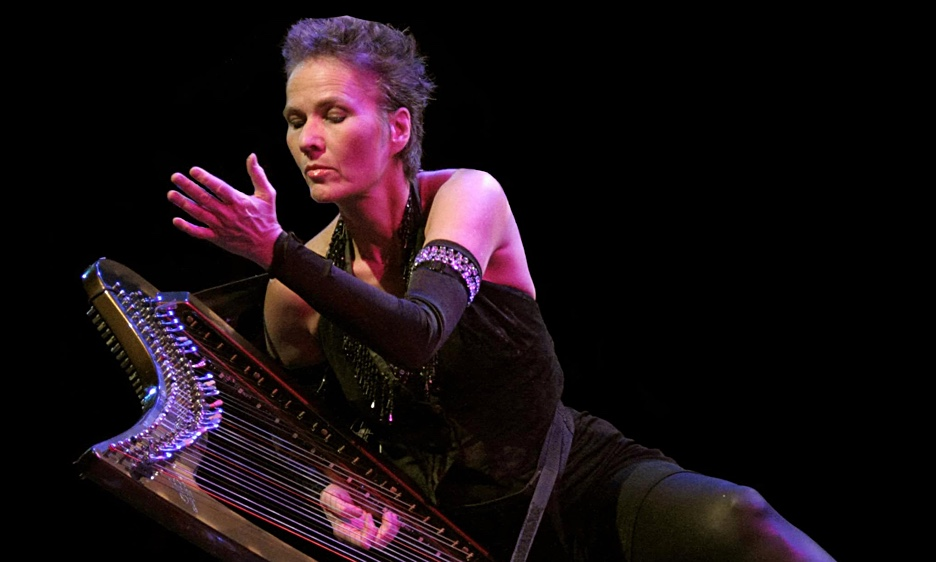
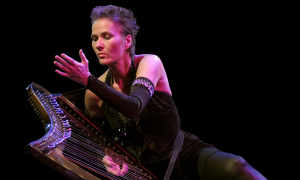
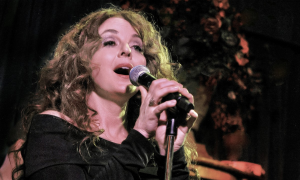
Courtesy J. Brian Buckley

Meet Deborah Henson-Conant
Grammy-nominated electric harpist, singer, composer, and educator Deborah Henson-Conant (DHC), synonymous with her website HipHarp.com, has spent nearly four decades redefining what the harp can be.Blending blues, flamenco, Latin, and classical influences, she creates music that integrates voice, stories, and instrumental performance—driven by rhythm and character. Using a looper pedal and guitar-style effects, she builds layered, improvisational performances as a solo artist and with orchestras and ensembles. She has opened for Ray Charles, toured with the Boston Pops and Steve Vai, and shared the stage with Bobby McFerrin and Mason Williams.
Her TEDx talk, told in words and music, shares the story of her collaboration with CAMAC Harps to create her signature, wearable instrument—the "DHC" electric harp, named after her and played by harpists around the world.
As a composer, her Grammy-nominated works span solo, chamber, orchestral, and music theater forms—flexible, expressive performance vehicles now played by soloists and orchestras worldwide.
As an educator and mentor, she is the founder of Hip Harp Academy and the Harness Your Muse Mentorship program, where she helps musicians develop fluency, freedom, and their own authentic creative voice.
Instruments:
Harp (concert harp & electric lever harp), piano, voice, and spoken word.Teachers and/or influences?
As a kid, I identified as a music theater composer—I wrote my first musical when I was 12—and as a young adult, I was deep into dance and theater improv.My first big jazz influence was Ken Nordine's Word Jazz—a fusion of spoken word, deep thought, humor, and a jazz ensemble led by classical/jazz cellist Fred Katz. That one album gave me so much creative permission and represented so much that would become part of my musical vocabulary and life. It showed me the continuum between spoken word and singing. It normalized 'non-jazz' instruments in jazz. It introduced the opportunity of story and philosophy combined with jazz. And it was funny.
That one album showed me how much character and rhythm a human voice could have and DOES have all the time so that I started listening for rhythm, character and story all the time—like, on the street—and seeing the melody and rhythm in all speech—and it suggested possibilities for language and music that I didn't even know I was hearing, but that now show up all across my work both as a composer and a performer.
My mother taught me to read chord charts when I was ten and that unlocked the American songbook: Gershwin, Jobim, and for harmony, Ives, Debussy, Ravel—and opera—not by choice but because I lived in a house of opera singers—and while you may not think of opera as a jazz influence, the melodic shapes of an aria are like soaring aerobatics—and opera recitative is as rhythmically intricate a storytelling form as rap.
So yes, from Nordine to Jobim to Opera, I was hooked on language and music. But as a player, I learned jazz on the job, and the bass players I worked with were the ones who guided me—sometimes gently, sometimes yelling 'get outa my space!'—to listen and support as well as to develop my own playing style.
I knew I wanted to be a musician when...
I knew I wanted to be a musician when I started breathing. Actually, it was before then. I swear I heard my parents singing when I was in the womb. Singing became my first language.My grandmother Edith had a very pragmatic view of musicians. "People have to sing," she said, "And someone has to keep them together. That's why you play an instrument." So I got the idea that playing music was as practical and necessary a part of life as feeding the dog.
But my mother and my aunt were both opera singers—they showed me music could be transcendent—it could capture you in a moment and take you to a different dimension, and then drop you lightly back and slightly change you forever.
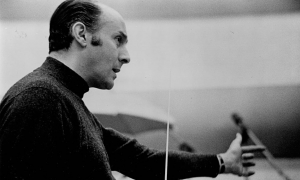
And when I first saw Leonard Bernstein, I thought "THAT'S it! Composer, performer, educator—all in one, all at the same time." But I was just a little kid, so that thought came out as "I want to do THAT."
"That" meant to me living in a 3-dimensional world of music: the dimension of music coming alive inside you at the moment you express it—which we call 'playing or 'performing'; the dimension of opening the door of music for others, showing them what you've learned, how it works, exploring and discovering with them—which we call 'teaching'—and the dimension of creating music that others bring alive in ways that blow your mind, break your heart and bring you joy beyond what you can imagine—which we call 'composing.'
I didn't know that's what those dimensions were called. I just wanted to do what I saw him doing. While other kids wanted to win sports trophies, I was sending copyright forms to the Library of Congress (I got my first copyright when I was 12 or 13). I wrote songs and musical theater. It never occurred to me that an instrument like the harp would be the catalyst to unlock everything: composing, educating, performing—and that it would create opportunities I couldn't have imagined: touring in rock legend Steve Vai's band, getting a Grammy nomination for my symphony show, collaborating in the invention of a new instrument that would be named after me—and so much more. But being a musician? That was a given.
Your sound and approach to music.
Stylistically, my sound is inspired by jazz, blues, flamenco, Latin rhythms, Celtic music, Charles Ives, Claude Debussy, Ken Nordine, Maurice Ravel, musical theater, and storytelling. Did I forget anything?Oh, right: windshield wipers. No joke. Early on, I discovered that any repeated rhythm made me sing.
I think of jazz less as a genre and more as a way of thinking—about anything. Jazz is the structure that creates freedom. It's about connection—not perfection. And that's what I teach. I didn't set out to be an innovator. Jazz opened the door to all of that. On one hand, as a young woman, I was trying to liberate myself from expectations of what it means to be a woman with big ideas, who wanted to write musicals and embody the Leonard Bernstein model of composer, performer and educator in one integrated package. But I had no container for that to grow in.
When the harp opened up as a possibility through a quirky incident in college, I jumped at the opportunity for focused training. I also thought maybe if I played this respected, established instrument, it would legitimize me as a "real musician." But we are who we are, no matter who we try to be—if we're lucky. And there were many who felt that, instead, I was de-legitimizing the harp. But, fortunately, I was oblivious to them.
At first, I wasn't following my wild "we can do anything with this instrument!" impulse—I was trying to discipline it, shape it, make it acceptable. But without realizing it, I was stretching the boundaries of the harp—partly because I didn't know them, and partly because the harp and I were changing each other. I was learning about classical form and composition tools—and the harp was becoming less traditional, taking on more of my natural musical vocabulary: Latin rhythms and harmonies, blues, theatricalism.
I remember sitting in the back of an orchestra, the last 'orchestral harp' gig I ever played, feeling so proud that I was finally fitting in—when a thought hit me out of nowhere: What am I doing back here? I should be in the front!
So these two struggles started feeding each other. The more the instrument opened up, the less I could keep myself contained. And the more I let myself out, the more the instrument had to change. In my TEDx talk, you can hear the story of just how dramatic that change became, when I started collaborating with the CAMAC Harp company to literally change the harp itself.
Your teaching approach
In Hip Harp Academy, the over-arching concept is "Connection—not perfection." The goal is to start from a simple foundation that supports the journey through functionality, fluency and flexibility while being able to experience freedom and self-expression at every stage. In classes, my goal is to share the process of creative engagement. I usually do that by combining three things:- Giving people a musical "snippet" to explore so they're developing the practice of creative exploration and learning through their own discovery—and modeling that by sharing what I'm discovering as I do the same thing.
- Learning how to share their own work and observe others' work for the purpose of discovery rather than evaluating, ranking or assessing it—learning to find the gift in each thing a colleague shares—and then reflect it back.
- Learning ways to manage the critical voices in their heads that keep them from exploring and sharing in the first place.
I often sing instructions or descriptions of what I'm doing as I play, and my students say they 'get' what I'm saying better if I sing than if I talk, and that it brings them inside the music. If I'm sharing musical ideas or creativity concepts from the stage with non-musical audiences or an artist/non-artist mix, it often looks and sounds like a concert. I'm playing music, but I'm also sharing the principles behind it and illustrating them in real time.
If I'm actually teaching non-musicians, I usually break the process down into the seven principles I use to develop any creative project. Then I'm still going to share them 'from the harp' by playing, speaking, and illustrating any way I can. Then I ask people to explore those principles in their own lives, look for them in everyday life, and create something that illustrates each principle.
No matter how I teach, we're always going to talk about what they discovered. In part because I'm always learning by what my students discover—and in part because that's how they learn from each other.
So the format changes depending on the audience, but the goal is always the same: break the ideas down so people can play with them—and then learn from what they discover.
Your dream band
The beautiful thing about jazz is that it teaches you how to use structure to create freedom. Once you learn that principle, it's not confined to music.So my dream band probably wouldn't be made up entirely of musicians. Jazz is a huge part of my training and experience, but I was into dance and theater improv long before I was a jazz improviser.
One project that came close to my dream band was a show I created called "Inviting Invention." It was as close as I've ever come to playing jazz with chemists, biologists, journalists, dancers, and actors. So close that we were invited to present it at the Cambridge Science Festival. Like a jazz band, we had a kind of lead sheet—a one-page overview we could each interpret in our own way. The program started with the "head," or presentation of the theme. My guest would give a 15-20 minute presentation about their work, then I'd perform a 15—20 minute musical keynote/concert with the harp about my work. Those were our A and B sections. Then came the improv.
Once the audience had a sense of what each "player" did, we invited them to help us design an experiment we could improvise together on the spot.
With the chemist, the audience wanted to hear a double concerto of chemical explosions and harp. The journalist interviewed a member of the audience, while I improvised a kind of film score and then launched into a spontaneous song inspired by the interview.
But with the biologist, Dany Adams, we were stumped. Adams' research focuses on bioelectricity and morphogenesis—the process by which organisms develop their shape. Her presentation was about inhibiting tadpole tail regeneration. We all just scratched our heads thinking: how does this connect with music?
Suddenly, I hear myself saying, "What if I play the blues on the harp and you inhibit me—and we see what happens?"
So I start playing the blues, and she starts sticking her fingers between the strings. I shift octaves. She blocks more strings. I shift octaves again. Then she pulls a young girl from the audience to help her—now four sets of fingers are blocking the strings, cutting off my bass line, comping, and melody, but I just keep jumping to an open place on the strings. Until a third person comes up and is just about to cut off every last string—when I panic and, without thinking, I jump away from the harp. And to my surprise—I start singing. Picking up the blues where it left the harp, not missing a beat.
At that moment, the power of musical structure was obvious to everyone in the room. Even when the instrument became unplayable, the blues simply jumped to another sound generator and kept going.
That's my dream band—people willing to play on levels beyond the notes. A collaboration that surprises me and lets me discover something about music—or life or myself—that I didn't even know I didn't know before.
Road story: Your best or worst experience
My most terrifying touring experience was developing the music to tour with Steve Vai. When we first went over the music, he sent me a list of tunes we'd "probably" be playing and said, "You'll take the keyboard part here, the second guitar part here," and so on for about twenty-five pieces.I assumed the next step was he'd send me the charts. But there were no charts.
No. Charts.
And I was completely unfamiliar with his music. When I realized that this conversation was all I was going to get, I panicked. I begged his team to send me something—anything—and eventually they sent me transcripts of the pieces, sometimes written for symphony orchestra. So now I had this thick book—maybe 3 or 4 inches thick—of his music, which got me no closer to having something I could play.
Finally, I hired a Berklee student to make charts of each tune, so I could at least see the architecture and the harmony. But I still couldn't follow the music. I would write things like "Screaming Horse Section," but I was still lost. I started to feel like—you know, those dreams where you think, "Wait! I'm not a musician—I'm a plumber!" I could only vaguely remember that I was considered an accomplished musician. I felt acutely inept.
There was nobody to turn to because this had never been done before. I didn't even know if it was possible on a harp. I started posting passages I was struggling with on Facebook, hoping someone might have a suggestion. One night, a harpist in the Midwest, Marta Cook, posted a brilliant solution to one of the problems. I immediately emailed her and begged her to come to Boston and help me. I barely knew her—but I was desperate.
She came to Boston and stayed with me for two weeks. Together, we got closer to solving the puzzle.
Even so, when I got to LA for rehearsals, I was completely out of my depth and so terrified I think I lost ten pounds in the first week. But somehow, little by little, that four-inch book turned into a chart for each tune, then a page for each chart, and eventually one iPad screen for the entire show.
I'd have no idea how to play it today—it was more complex and non-harpistic than anything I've ever done—but with help from the harp community and a whammy pedal that let me pitch-shift for chromatic passages, somehow I played it. Many times. For months. So yeah, that was terrifying.
Favorite venue
I'm polyamorous when it comes to theaters. I love old theaters with history, opera houses, firehouses turned into theaters—"found space' theaters of every kind—the list is endless. In Germany, I've played theaters built out of old factories with the massive gears still in the lobby; in Italy, a theater in a half-destroyed castle; in Dresden, a venue in an old wine cellar, the gorgeous Shalin Liu Performance Center in Rockport, Massachusetts, with its ocean view behind the stage. I just love theaters.But my favorite venue is the realm of the unexpected—when something appears out of "nothing" and an ordinary space suddenly becomes a theater.
My mother used to transform a living room into a concert hall just by saying, "Imagine you're in a theater." But she didn't just say it—she said it with her whole body. Then she'd put on the backing track to an opera and sing it into life. Imagination became my favorite venue—someone in a spaghetti-stained apron telling you it's a ball gown and making you see the silk. But sometimes a particular experience makes you fall in love with a venue.
When I was touring with Chieli Minucci and George Jinda of Special EFX, I noticed something about our shows. Chieli would take a solo, leaning forward and tearing up the strings, and the audience would explode. Then George would lean into the mic with his talking drum, sweat pouring down his face, his arm pumping like the wings of a bat, and the audience would go wild. Then it was my turn. I'd start wailing on this six-foot-tall, 85-pound harp, and the audience would just look at me blankly.
This got old fast. I kept thinking: What are George and Chieli doing that I'm not doing?
I took a quick inventory: They step forward. They lean into the mic. They sweat. They move their hands a lot.
So the next day, we were playing Sunfest in Florida. Chieli soloed. George soloed. Then it was my turn.
I stood up, leaned the harp forward, and started strumming like a maniac, my head flung back like a rock guitarist. I wasn't even playing notes—just pure harp wildness. The crowd went silent.
Then a woman in the front row stood up and screamed: "YOU'RE A GODDESS!!!" So... I like Sunfest.
Your favorite recording in your discography and why?
"Catcher in the Rye" on Invention and Alchemy. Why? In Scotland, a man named Davy Steele introduced me to the bodhran—a massive, deep hand drum that you play with a bone. Davy had the voice of sweetest heartache, and that bodhran was like the heartbeat of a wild animal on a chase—and the combination was so raw and tender and wild, it blew me away. I wanted to capture and relive that experience over and over, but I never could.15 years later, I was in Grand Rapids, Michigan, and heard a timpani concerto, featuring timpanist David Gross with the Grand Rapids Symphony. That was it! Gross had the same fire as Steele had with the hand drum—so when I had the chance to record a CD/DVD project of my music with the Grand Rapids Symphony, I wrote the piece "Catcher in the Rye." It had been simmering for years, and it poured out: It started with a beautiful Scottish ballad, took a detour into J.D. Salinger's coming-of-age novel, and ended with a pas de deux for voice and timpani so raw and wild I could finally relive the experience of Davy Steele. It was the biggest, tenderest thing I ever got to record.
What do you think is the most important thing you are contributing musically?
Probably permission. Permission for the harp not to behave the way it's "supposed" to behave. Permission for performers to use musical structure as a playground instead of a cage. Permission for audiences to feel like they belong inside the music instead of watching it from the dark.I didn't set out to make a philosophical point. I was just curious about the instrument. I grew up in a world where music was something people did together—it wasn't something you went somewhere to listen to. If you wanted music, you made it.
So when I picked up the harp, I kept asking a simple question: what else is possible with this thing?
That question led to the electric harp, to improvisation, to combining story and music, and to writing pieces that different performers can inhabit in completely different ways.
Over time, I realized that what people were responding to wasn't just the sound—it was the sense that they were allowed to be fully themselves inside the experience.
If I'm contributing anything, it's helping people realize that music isn't a museum piece. It's a living system. And once you step inside it, it can open doors you didn't know were there.
Did you know...
I don't really think of myself as a harpist—despite the website HipHarp.com.The harp is my laboratory. What I'm actually interested in is creating musical worlds that other performers can step into—worlds that unlock their own self-expression—and some of my largest works have no harp in them at all.
The first jazz album I bought was:
Word Jazz by Ken Nordine—although technically, I didn't buy it.Nordine's work captivated me as a child because it made music out of language—a vivid music theater of the imagination. His voice moves like an improviser: the phrasing, the timing, the way words dance in and out of the groove, the way music plays with the story.
He asked questions in the music, the kinds of questions I wanted to ask, as he drifted in and out of reality with his stories.
You stuff that into a kid's head along with opera, musical theater and Jobim, and what comes out is basically me.
Music you are listening to now:
This is always a funny question for me because I rarely listen to recorded music or go to concerts.But that doesn't mean I'm not listening. I'm listening all the time—just not usually to finished performances or recordings. When something is already polished and complete, I mostly hear the result. What excites me is hearing music in the process of becoming.
So the listening that feeds me most happens in more participatory environments, like when I hear people play my music in ways I hadn't imagined, or when I'm with musicians I'm mentoring in my Academy. Their creativity is stunning. For example, one is reinterpreting Gregorian chant for harp and video. Another is writing a song about water and women's cultural histories. One is exploring ancestral trauma through different musical modes. Another is creating a series of one-woman musical theatre pieces about climate through the myth of Daphne, the nymph who was turned into a tree.
And of course I'm always listening to the world itself—the rhythm of speech, the sound of ice shards skidding across ice, coyotes howling and yipping at night. So I'm immersed in music all the time—it's just living, exploratory music rather than recordings. But, full disclosure? Recently, someone gave me an old wind-up Victrola and a box of 78s. That was fun—but it wasn't so much about listening as about time travel.
Desert Island picks:
Honestly, if I was on a desert island, what I would want is a carbon fibre ukulele, 5 extra packs of strings, a big volume about the history of philosophy, and 10 pairs of reading glasses. And a volleyball, of course.How would you describe the state of jazz today?
I'm probably not the best person to comment on the jazz scene. It's the underlying principles of jazz that I get excited about. I learned them from playing jazz, but I use them in every part of my life.For me, jazz isn't just a genre—it's a way of thinking and building that jazz has given to the world.
Structurally, it's a strong, flexible framework for freedom of expression. On paper, it's a distilled conceptual layout that each musician interprets in their own way while spontaneously collaborating to create something larger than themselves—something that's different every time, but that always holds together.
It's a blueprint for creative thinking and collaboration in every part of life—and I'm not even talking about playing it yet.
So to me jazz is—and always will be—a state of mind-blowing creative opportunity. The real question is whether people know how to access that in their own lives. If they don't, I'm hoping my own work might help open that door.
What are some of the essential requirements to keep jazz alive and growing?
Teach people to see jazz and other musical improvisation as play. Teach the guidelines and let people know it's a game—and everyone is welcome to play.Education and inclusion are essential. The thing I often see holding people back is the belief that they have to be "good enough" to earn the right to play. But the beauty of jazz is that it can be built for inclusion as well as virtuosity. That's one reason I love the blues so much—there's a role for everyone inside a basic blues form.
My ex, his kids, and I used to set up a bluesy eight-bar phrase and play for what felt like hours. We'd shift instruments—try the trombone, the tuba, the violin. Because the underlying structure was so strong, nobody could "break" the music, so we just kept playing, and there was a place for everyone. I'm not saying it was great music, or something you'd want to hear in a club—but that wasn't the point. We played it like a game, we played together, and as long as we kept the form and the groove, each person was challenged at their own ability.
There's no other team game like that that I know of—where players of different abilities can all feel both grounded and challenged while playing together.
The thing about jazz is that it's built for improv and exploration. I've said this before: it's the structure that's BUILT for freedom—and collaboration. I sometimes have a hard time explaining to harpists who want to play the blues that it's not about learning a specific song or playing a set of notes correctly. It's a different ethic. Learning to comp, learning to listen, learning to play for rhythm and not for complexity teaches you about the skill and art of support as well as the art of shining.
In other words, it teaches the art of creating a living, grooving foundation—a rhythm section—as well as the beauty of soaring and shining when it's your turn to solo.
What is in the near future?
Right now, the near future feels like an expanding tapestry.One thread is The Golden Cage, my two-character music-theater experiment. Now ready for production, I'm searching for the right theater or opera company to collaborate on a new model of production and community involvement.
Another thread leads to Ukraine, where bandura virtuoso Iryna Lytvynenko has been premiering her adaptations of my work as what she calls "acts of resistance against despair"—and the newest is scheduled to telecast on Ukrainian National TV in April.
A third thread leads to Canada, where I'll premiere My Life with Jean-Jacques Rousseau this summer—a one-act show about my forty-year relationship with a minuet that grew into a lifetime of creative exploration—with other harpists stepping into the story to play different stages of the piece's evolution.
The DHC Legacy Project also has two unusual collaborations coming up—one with Verena Jochum's German storytelling theater and one with the U.S. Army Field Band.
And finally, I'm hoping to get back to Paris, where I've been working with the CAMAC MIDI harp on improv transcriptions.
So the near future looks like travel, collaboration, and trying to keep up with the music as it leaves my head.
What is your greatest fear when you perform?
Sometimes I think that being on stage is the safest place on earth. The beauty of being on stage is that no matter what happens, it's part of the performance. Do I like it when my looper stops right at the climax of a loop-heavy song? No. But it's still real—it's still something deeply human—the experience of the bottom dropping out just when you're about to take flight. Every single thing that happens can become part of the show.I remember a show where a huge bass string broke in the middle of a piece—and when a bass string on the harp pops, it's like a gunshot. As I started to pull the broken string out, the sound engineer turned down the sound system.
"No," I said. "Please turn it back on—this is a sound most people never get to hear."
Amplified, the sound of changing a bass string is part growl, part sigh and part cartoon music. Every time I met anyone who had been at that show, the first thing they talked about was the broken string episode. One asked me if I did that at every show.
So I guess my greatest fear is that the night won't surprise me. But that hasn't happened yet.
What song would you like played at your funeral?
Merceditas. It's the most romantic, cinematic piece I've ever written, and one of the few pieces with no improvisation in it. I put every ounce of romance and longing into that piece. I suspect, though, that others might want to hear The Nightingale. It's about taking on the mantle of song for someone who can no longer sing.What is your favorite song to whistle or sing in the shower?
Well, I'm a bath person. And this is embarrassing, but the truth is: "When the Red, Red Robin Comes Bob, Bob, Bobbin' Along." When I get tired on a road trip, that's the song I sing—for miles—to wake myself up. This part: "Wake up! Wake up, you sleepyhead! Get up! Get up! Get up! Get up!"—you can syncopate the whazoozie out of that section.Then, fifteen minutes later, when you get to "Live, love, laugh... " you can dig into your musical theater roots and channel Ethel Merman. And when you finally get to the end of the tune, a half hour later, you just take it up a half step and start over.
I credit that song with saving me from jumping the guardrail on many a long trip.
By Day:
Hahaha—my day job is keeping up with myself. I'm juggling three jobs: composing, performing, and running an online Academy that serves thousands of harpists each year. So I have three teams: Team Hip Harp, which helps me run the Academy; the Legacy Project team, which helps me complete and publish music; and a team that supports bookings. Leading those teams and developing their leadership is both a joy and an adventure. But it's a whole job itself.If I weren't a jazz musician, I would be a:
Jazz musician.Here's what I mean: the fundamental principles of jazz influence every part of my life—how I think, how I teach, how I lead my teams. So whatever I'm doing, I'm thinking in jazz. If I weren't a jazz musician playing jazz, I'd probably be a jazz something else. But if I couldn't do that... I'd probably draw cartoons.
If I could have dinner with anyone from history, who would it be and why?
My dad.There are so many things I'd love to ask him. But more than anything, I'd love to just sit and sing with him in harmony.
If I could go back in time and relive an experience, what would it be?
Being born.That first breath. Smelling for the first time. Experiencing my mother from the outside. Being autonomous but not alone. That, I would like to experience again. I wouldn't want to hang around in my infancy for too long after that, though. It got more complicated pretty quickly.
People often ask me about my name: Are you married?
Are you British? So here's the true story: I've been trying to get my name right my whole life. My parents split shortly after I said my first word, according to family legend, so my last name changed depending on where I was—I was Henson with my birth father on the West Coast, and Conant with my step-father on the East Coast.At about 12, I asked my parents for ONE name that didn't change. They suggested "Henson-Conant" which made me sound like a composer, à la Rimsky-Korsakov—so I agreed. It's long, though, so my high school boyfriend shortened it to "DHC," which stuck.
And then there's my first name. On tour, Germans call me DeBOrah, the French call me DeboRAH, and Americans call me DEBorah. Others call me Dvorah, Deborita, or Debala. Same tune—different melodies. I like them all.
Tags
Comments
About Deborah Henson-Conant
Instrument: Harp
Related Articles | Concerts | Albums | Photos | Similar ToPREVIOUS / NEXT
Support All About Jazz
 All About Jazz has been a pillar of jazz since 1995, championing it as an art form and, more importantly, supporting the musicians who make it. Our enduring commitment has made "AAJ" one of the most culturally important websites of its kind, read by hundreds of thousands of fans, musicians and industry figures every month.