Home » Jazz Articles » Record Label Profile » Ogun Recordings: Small Is Beautiful
Ogun Recordings: Small Is Beautiful
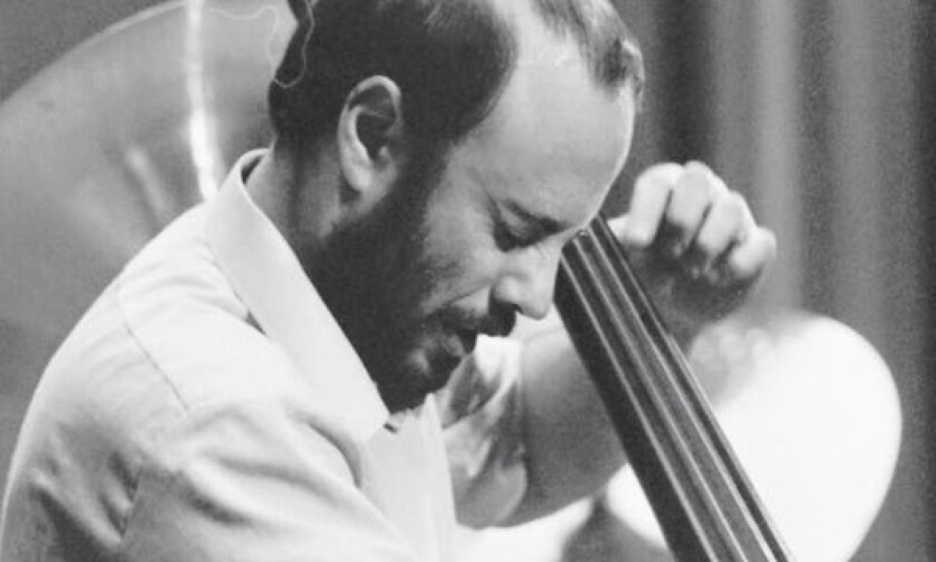

As Hazel Miller notes on the label's site,
"Harry was working with several bands and a friend had convinced us that we needed to do this in order to give them wider exposure. The major record companies had no interest in documenting this music and a record release could only help to promote the bands and this vital new music, too. As manager of these bands, Brotherhood of Breath, Mike Osborne Trio, Elton Dean's Ninesense and Mike Westbrook and Olivier Bou, Keith Tippett and his wife Julie Tippetts and saxophonist Lol Coxhill.
Miller had arrived in London several years before the Blue Notes fled Apartheid South Africa to make a home in exile in Europe. As Hazel Miller comments, "He was working a lot with Westbrook and then, when the Blue Notes came in 1965, he was extremely happy because it was music he could identify with. You know, it was part of his heritage." When the group's bassist Johnny Dyani decamped to Denmark, Miller was invited to join the Brotherhood in his place. Inevitably, the label became associated with the South Africans and the many musical friends they had made in the UK.
Let us be clear this was in no way some kind of niche capitalist enterprise. It was more a cottage industry and one of which William Morris would no doubt have approved. As Miller notes on the label's website,
"Whenever there was a delivery, the albums, a thousand a time, had to be carried up three flights of stairs, to our flat. It was a total takeover of our lives but at the same time, we were gaining an international reputation as the Ogun family covered new aspects of the music and added more members."
Keith Beal was a major asset to the label, dragging recording equipment to venues that were totally unsuitable for recording but still managing to capture the essence of the live concert notably on the Brotherhood's Live at Willisau and Procession—Live At Toulouse. Interestingly, the Miller's son, Damon, achieved a similar feat on Louis Moholo's Freedom Tour 1993 Live in South Africa (Ogun 1994). The latter represented a homecoming for Moholo, the last surviving member of the Blue Notes, after 30 years in exile. In fact, there has always been a sense with Ogun releases that these were somehow messages from the front or even samizdat recordings from the jazz underground, as if the sound of the music was captured on the run.
That with limited resources Ogun produced not only some great jazz recordings but that it did so with an eye to presenting these as a package with often exceptional cover art adds to the Millers' achievement. The brilliant Swiss graphic artist {Niklaus Troxler}} and Willisau Jazz Festival founder designed the cover for the label's first release by Chris McGregor's Brotherhood of Breath, Live at Willisau (Ogun 1974), the Mike Osborne Trio's All Night Long (Ogun 1976) and for Harry Miller's Isipingo's Family Affair (Ogun 1977). All three are still available on CD and are essential purchases. In fact, Troxler gave Ogun the tapes from the Willisau gig that enabled the Millers to launch the label.
While record shops, in particular specialist outlets such as Dobell's in Charing Cross Road and Mole Jazz in King's Cross, were important to the label, direct sales on gigs and on tour were more important, as Hazel Miller told me in 2008,
"We sold the first thousand of the Brotherhood very quickly. Every time they went to a gig, they had a box. Harry had a box under his arm to sell at the gig and it spread the music. And I could use them for the promotion, to send out to the festivals and things."
With many UK musicians looking to work in continental Europe, the practice worked well with direct sales going straight into the pockets of artists and the company itself. Unfortunately, in in 1979, the Thatcher government hiked VAT up to 15% leading to increased interest from UK Customs and Excise in the affairs of small businesses. In Miller's words, "that put the kybosh on it."
"I couldn't give LPs to people to take abroad because the customs had got hip to it. Derek Bailey was the one that got caught with stuff in his car originally and they took umbrage and after that all the regulations started coming in. So, we couldn't do it as easily. It still went on but we couldn't do it in the way we used to."
Harry Miller's death in a car accident in Holland in 1983 led to a gap of several years in new releases. From 1986, Miller began releasing new recordings with the help of close friend and owner of Cadillac Records, John Jack.
When Hazel Miller retired a few years ago, Mike Gavin started managing Ogun her behalf. Martin had known Miller and John Jack for many years and had worked with both on their respective imprints, so was the ideal person to take over the reigns.
"When John died, he left me Cadillac Records in his will, which was a bit of a mixed blessing, to be honest with you. Running a small label is, as you know, not easy. I just run Ogun for Hazel, really, and for the shareholders."
Selling CDs has become ever harder and Britain's withdrawal from the European Union has made matters far, far worse. Sales to Europe are impacted now by import duties and massive hikes in postage costs. Britain had also benefitted from reciprocal trade agreements between America and the EU but now that too has changed.
"About a third of sales were in EU countries, mainly France and Germany, but when I reissued Joy (Cadillac 1976) by the short-lived jazz-fusion group on vinyl recently, I had less than half a dozen orders from France or Germany. That's effectively knocked all the profit out of what I do. Those thirty or forty direct sales would have made a lot of difference. I mean, I can't send promos to journalists in Europe. Even if you put 'promo copy' on the customs' forms particularly the German and Dutch customs will not accept it and they just send it back."
On the plus side, Ogun does have distribution in the States.
"I don't sell a huge number there but Dusty Groove, a record shop, in Chicago takes stuff from me and I also use the distributor, MVD, so technically the CDs are available but they don't keep much stock. So small numbers, really, very small numbers. But, you know, you can't really look at the thing as a commercial enterprise. It has to be seen as a sort of cultural entity and as an archive, something which is important to just keep going really," Gavin said.
The existence of Bandcamp has helped Ogun and Cadillac immensely, as it has helped many small labels, particularly in relation to US sales. But the consequence of these combined issues means that each release is a limited addition and that many amazing albums in the Ogun back catalogue may not get a release. To those that know already, the music of the Blue Notes and Brotherhood of Breath -and of the various Louis Moholo groups—should find a place in any collection. Live at Willisau is, for me the finest album the Brotherhood band made and the CD reissue adds another five tracks. The solos from the likes of saxophonists Evan Parker and Dudu Pukwana and trumpeters Harry Beckett and Mongezi Feza are simply magnificent. As I noted in my history of British jazz, Trad Dads, Dirty Boppers and Free Fusioneers (Equinox 2011), "[T]he key with this band was that the individual is not just supported by the collective, the individual is affirmed by the ensemble and in turn validates it. The notion of jazz as a democratic art form has rarely achieved a higher expression."
It is a comment that, in fact, applies to just about everything in the label's catalogue. Frames: Music For An Imaginary Film (Ogun 1978) from Keith Tippett's Ark features what must be one of the greatest covers of any jazz release and the music astonishes both in terms of conception and performance. It is a particular favourite of Mike Gavin's.
"Any of Keith's records I would recommend. But, I think, Frames is probably the one that I would say, 'Have a look, have a listen to it' because it is, like his Centipede album a big group and features his arrangements and compositions. It's a powerful piece of music and a very beautiful double album. But at the other end of the scale, Pipedream with Keith on church organ, Ann Winter's voice and Marc Charig on cornet and tenor horn is quite beautiful, too."
To these, I would add any of the Blue Notes' releases in the catalogue, the Mike Osborne Trio's All Night Long (Ogun 1976) , the Elton Dean's Ninesense package of Happy Daze (Ogun 1977) and Oh! For The Edge (Ogun 1976) and the Dedication Orchestra tribute album to the Blue Notes, Ikesha (Ogun 1994). I would also make a strong plea for any of the Louis Moholo releases and for Spiritual Knowledge and Grace from a quartet featuring Moholo, Dudu Pukwana, ex-Blue Note bassist Johnny Dyani and American tenor saxophonist Rev. Frank Wright.
So, to the future. As Mike Gavin explains, the business model remains as it did at the very beginning five decades ago,
"Any profits go into the next project and the next one is a big one. It's a tribute to Louis, who died last year. We have about six or seven tapes from a concert at the 100 Club in Oxford Street by Louis Moholo's Culture Shock. It's pretty chaotic because Louis' idea was to have like a nonet or dectet but then loads of people turned up to play, so the balance is all over the place. So, there's a lot of work to be done, so I can't put a date on it but we'll have a package, probably a single CD and that will be our tribute to Louis."
Cultural entity or archive? Ogun might not have the vast back catalogues of labels such as Blue Note and Impulse but, like those imprints, it needs to be seen as a resource for musicians and fans, a place to visit to discover the many different ways of making jazz. Jazz is spoken in many tongues today and Ogun still speaks in its own voice.
Tags
Record Label Profile
Duncan Heining
United Kingdom
Ogun Recordings
Mike Osborne
Elton Dean
Keith Tippett
Julie Tippetts
Lol Coxhill
Louis Moholo
Blue Notes
evan parker
Dudu Pukwana
Harry Beckett
Mongezi Feza
Ann Winter
Marc Charig
Comments
PREVIOUS / NEXT


Support All About Jazz
 All About Jazz has been a pillar of jazz since 1995, championing it as an art form and, more importantly, supporting the musicians who make it. Our enduring commitment has made "AAJ" one of the most culturally important websites of its kind, read by hundreds of thousands of fans, musicians and industry figures every month.