“Americana” is a brand that’s been bandied about quite liberally in today’s musical environs. And yet, it takes a certain dedication and determination to remain true to its essence. On the other hand, versatility and variation go hand in hand. And yet, each depends on the other. In the case of Seattle-based Marley’s Ghost, that eclectic energy has resulted in a broad repertoire that has defied any ability to tag them to any one particular genre. Their dozen albums to date survey a broad scope of Americana and acoustic music in general, making it all but impossible to confine them to any particular niche.
Paste magazine described them as "a decidedly unusual band, as capable of reanimating Appalachian folk songs as they are traditional Celtic fare, honky tonic and reggae.” It went on to say, “Marley’s Ghost has earned cult-band status over years of spirited musicianship, multi-part harmonies and irreverent humor.”
Indeed, Marley’s Ghost dutifully deserves that praise. Now, as they are about to mark their 40th anniversary as a band, they continue to deliver, both on stage and in the studio. They’ll begin by kicking off their anniversary tour in mid March with a performance for e-Town, the nationally-known, widely respected syndicated radio program.
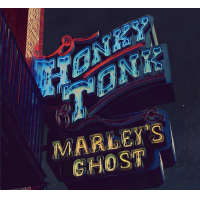
Then there’s the band’s new album, Honky Tonk, a set of songs that offers further perspective on all that Americana handle implies. A rousing and robust collection that references its roots, it looks back at an essential heritage and tradition borne from the barrooms and honky-tonks spawned from the American Heartland throughout the late 1800s in particular.
Like the Band, the dozen or so albums Marley’s Ghost has released over the course of their collective career encompasses a wide array of music, and yet, they never allow themselves to be confined to any one particular niche.
“It is, and always has been, about the music,” bassist, fiddler, guitarist, singer and chief songwriter Dan Wheetman insists. “That’s what’s kept this band going for so long. It’s always been about digging a little deeper, honing our skills and celebrating the entire playing process. That drives us forward.”
Like their previous albums, Honky Tonk finds the band pursuing a path that remains firmly ingrained within an overall umbrella, even as they manage to delve into those singular sounds even further. With longtime producer Larry Campbell (Bob Dylan, Levon Helm) once again behind the board, the music shares a new-found sense of celebration in a classic sound and style.
Read more
“Larry has a vast knowledge that spans so many genres,” Wheetman insists. “The thing he recognized in us is our connection to the folk and roots musicians of a past generation. He saw in us an ability to give that music a contemporary credence. He knew our strengths and how to use them to the best advantage in each of the songs.”
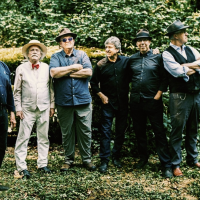
So too, this Northwestern-based band ,comprised of singer/multi-instrumentalists Wheetman, Jon Wilcox, Mike Phelan, Ed Littlefield Jr., Jerry Fletcher, and Bob Nichols, have always made it a point to adhere to a classic template. They’ve proven that prowess time and again through their verve, variety and vitality. The songs on Honky Tonk veer from the rollicking and robust rhythm of “Introduction to the Blues,” the sturdy strut applied to “Burn Down the Honky Tonk” and the sprightly down-home designs of “Rockin’ Chair Money,” to the bittersweet balladry of “Brand New Mister Me,” the casual caress of “Motel Time Again” and the jovial tones that ricochet through “Detour.”
At the same time however, the honky tonk motif name checked in the album title reverberates throughout.
Wheetman points to several songs in particular that typify that approach, many of which he cites as standard inclusions within the band’s repertoire. He describes“If I Left It Up To You” as “a quintessential Merle Haggard song about holding onto love,” adding, “the fact that it comes from a guy who had over 40 number one hits had us thinking of it as a hidden gem.” He singles out the track titled “Slowly I’m Falling” for its shimmering pedal steel intro, while referring to the fact that the original version was the first song to feature the steel guitar.
“You just want to grab your good girl and slide around the floor,” he adds in retrospect
“‘Honky Tonk Song’ is a song we’ve done for years,” he notes. “We didn’t just stumble across this music; we’ve all grown up with it. It’s been a part of our eclectic set lists since the beginning. ‘Invitation to the Blues’ was written by Rodger Miller and recorded by Ray Price, and it has all the elements of a classic Honky Tonk song. We loved the heartbreak all wrapped up that punchy 4/4 rhythm.”
He goes on to offer other examples of that timeless template. “You can’t do a Honky Tonk album without a tune from the ‘Father of Honky Tonk,’ Hank Williams,” he says in mentioning “Rocking Chair Money.” “Hank foreshadowed Elvis with the song’s cool chorus: I’m gonna rock, yeah rock, oh baby rock, rock on down the line, a lyric that was given that rockin’ 2/4 feel.”
Likewise, the classic track titled “Only Daddy That Will Walk the Line” bears special significance. “The midnight haunts and the ‘buckets of blood’ where country musicians paid their dues spawned what we now call, ‘Outlaw Country,’” Wheetman explains. “So I’m guessing the real king of the outlaws is actually Waylon Jennings. “Then again, how can you do a Honky Tonk album and not do a Waylon tune?”
Other tracks take a different tack, but still conform to the concept. “With the twin fiddles and jumpy rhythm, ‘Brigham Bounce’ shares the Western Swing vibe,” Wheetman suggests. “If Honky Tonk is anything, it’s dance music.”
Call it what you will, Marley’s Ghost is still tough to categorize,
“The band always feels like, ‘oh, they finally came up with a name for what we do,’” Wheetman says while referencing the Americana brand. “People always ask us, ‘What kind of music do you play?’ And our answer is, ‘We play old-timey American music.’ It's a bit revivalist, but hopefully it's got a fresh sound about it. We’ve never copied anyone else’s arrangements of anything we’ve done. We always tried to bring our own approach to whatever we do.”
Or, as the L.A. Weekly aptly described it, “This West Coast group deftly dashes across decades of American music to create a sound that’s steeped in tradition but never bogged down by traditionalism.”
The band traces its official origins back to the mid ‘80s, although Wheetman says their friendship and interests in making music began much earlier. “I can remember being at my uncle's house when I was about four years old on New Year's Eve, and word came that Hank Williams had died,” he recalls. “My uncle had had a 78 record player in the back room. And whenever we went there, while the parents would get together and talk, I'd go and play these yellow labeled MGM Hank Williams tunes in the back room. Likewise, the first album Jon ever bought was a Hank Williams album. So that stuff has been in our blood and in our consciousness without even thinking about it.”
He goes on to say that the ties go back to high school, when Wheetman’s rock and roll band competed in a battle of the bands. Jerry was in a competing band and that’s where I met him,” he explains. “They won the competition. They were doing Beatles covers. I met Eddie Littlefield at a coffee house where I was running a hootenanny, and he came in and sang. It was just before New Year's, and he took me up to a place called Sweets Mill, which was a folk music camp in the Sierras, which is where I met Jon. He had come up from LA and had gotten a gig up there. They had a summer camp where the musicians would teach old-timey music, and Irish music, and Balkan music, one week at a time. So all the all the instructors were up at this beautiful little camp in the Sierras just to celebrate New Year’s Eve, and that’s where we first got acquainted.”
The two remained friends and would often run into each other on different occasions. “In 1986, Jon had gotten a gig for St Patrick's Day, and they wanted a band that could play traditional Irish music, but could also play dance music,” Wheetman continues. “He had met Mike, who was living in the Santa Barbara area, and he'd been a bluegrass player and had been in soul bands and in country bands, and played fiddle. So we got together and played this gig, and it was just a lot of fun. It was the three of us and John's wife at the time.”
Meanwhile, Wilcox got a gig at what was to become the first Fall Strawberry Festival. “They said, ‘Well, if you bring a band, we'll put you on,’” Wheetman relates. “So the three of us went up and played, and we were really accepted by the audience, so they asked us to play a couple of ‘tweeners between the main stage acts. I was playing with John Denver at the time, but 1986 was my last tour with him. So I called up my old friend Ed, who I'd stayed in contact with all those years, and I told him I was getting a divorce and I going to get my kids, make some money, get a place and hang out with them. So he said, ‘Well, you know, I put together a recording studio at my place up in Arlington, which is about an hour north of Seattle, so why don't you just come up there and do a Dan Wheetman album? So I finished the tour with John and got my kids, and found a little house close to his. I called Jon and Mike and invited them to play on my album. Then we could also do a Marley's ghost album, so that when we went back to the festival, we’d have some merch. So they came up and sat in and we never left.”
Granted, the name might seem a bit unusual at first. Nevertheless, Wheetman offers a ready explanation.
“We had a gig, and of course, when you have a gig, you have to have a name,” he maintains. “Jon and I were into reggae music pretty deeply at that point, and that gave the name a kind of double connotation as it related to Bob Marley. Plus, we play a lot of traditional music, and so there’s that sort of Dickens thing… you know, the ghost of music past so to speak. All of us had this common musical background of old timey music and Irish music and country music and folks like Hank Williams, Merle, Haggard, George Jones… the good guys.”
The band’s first album, [—-], was comprised of songs played in their live sets. Their sophomore set [—-]. was a gospel album and their first effort with Larry Campbell, who later produced 2019’s Travelin’ Shoes and their second gospel album [—-]. In 2006, Van Dyke Parks produced their album titled Spooked, and they hired hippie artist Robert Crumb to illustrate the album cover. They also did two albums of country/Americana music with Cowboy Jack Clement sitting behind the boards in Nashville, one of which, Jubilee, included performances by Emmylou Harris, John Prine, Marty Stuart and Old Crow Medicine Show.
“These albums reflected all our different musical influences,” Wheetman adds. “One of the things about the band is that it's pretty democratic. If somebody brings a song they want to sing, we look at it, and if it clicks, and the band can do something with it, then we usually play it. The first records were all over the map. It was country music and reggae music, Bob Dylan and just all kinds of stuff. And then, as we went along, we started to focus on a specific genre, and we’d go deep into that genre. That led us to where we are now. The last three albums we've done — The Woodstock Sessions, the gospel album [—-] and this new one were all done with Larry Campbell.”
The new album continues that trend. “As far as Honky Tonk is concerned, we all made our living at one point in honkytonks,” Wheetman recalls. “So that’s when we decided to do an album totally focused on that particular style.”
Indeed, nearly four decades from the initial spark, they’re still exorcising the same passion, purpose and chemistry that inspired them early on. What’s more, the critics tend to agree.
No Depression praised their “Remarkable, distinctive voices, giddily eccentric eclecticism…” Acoustic Guitar magazine concurred, noting, “The real draw is the band itself, showcasing the kind of ensemble performances that come only from a lifetime of playing together, thriving across the decades as virtuosic, unsung heroes of country, folk, and Western swing.”
Or, as the L.A. Weekly aptly put it, “This West Coast group deftly dashes across decades of American music to create a sound that’s steeped in tradition but never bogged down by traditionalism.”
And indeed, that’s what makes the music shared by Marley’s Ghost spirited, enduring and haunting as well.
Gear
Mike Phelan - Guitars, Dobro, bass, fiddle, lead & harmony vocals
Jerry Fletcher - Keyboards, accordion, lead & harmony vocals
Ed Littlefield Jr. - Pedal steel guitar, lead & bass vocals
Dan Wheetman - Bass, National steel guitar, fiddle, guitar, lead & harmony vocals
Jonathan Wilcox - Mandolin, lead & harmony vocals
Bob Nichols - Drums, percussion
Show less