Home » Jazz Articles » Album Review » Michel Petrucciani: Kuumbwa
Michel Petrucciani: Kuumbwa

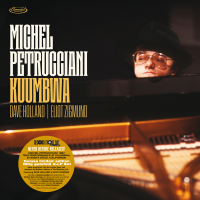
From the first notes of "Limbo," the trio sounds vibrant and open to all possibilities. Petrucciani plays with energy, passion, and unstoppable drive, darting in and out of the beat with playful authority. Holland is immediately engaged, with his solo both solid and daring, while Zigmund's drumming possesses that elusive sense of momentum without clutter. The piece serves as an ideal opener, showing that this will be a concert of risk, sparkle, and natural swing. "Eugenia," a Petrucciani original, follows with tenderness and shape as he draws out its lyrical line with luminous affection. The piece has added intimacy because it was named for a woman who was part of his life for a time while they lived in Park Slope, Brooklyn. There is nothing sentimental in excess here, only fondness, memory, and a sustained sense of emotional poise.
On Victor Young's "Stella By Starlight," Petrucciani begins the performance with an extended solo before shifting into an up-tempo interpretation of the tune, all while maintaining its lyricism. Holland and Zigmund each take some solo space as part of the trio's improvisation before refocusing on Petrucciani. While the piece moves at a brisk pace, he stays true to the song's structure, allowing the lines to develop naturally and keeping the harmonic intent clear. The disc concludes with "Autumn Leaves," played with a bright, invigorating intelligence led by Holland's bass reinterpretation of the familiar material. Petrucciani then speeds up, approaching the piece not as a simple repertoire obligation but as if discovering its possibilities in real time. Zigmund contributes an extended solo that showcases not only his broad experience but also his wider capability. The trio ends with the out-chorus, giving the familiar progression a sharper edge.
Disc two is, if anything, even more powerful. It begins with Rodgers and Hart's "My Funny Valentine." It is beautifully balanced, avoiding both excessive sentiment and cool detachment. Petrucciani understands that this standard needs emotional honesty more than embellishment, which he shapes with warmth and restraint. Holland performs his solo, which is introspective, probing, and deeply musical. Petrucciani's only original piece in this section is "Morning Blues," which relaxes into a looser, more conversational flow. Petrucciani's generosity shines through as he creates a wide open space for Holland to deliver his solo with a big-toned radiance. Even when most relaxed, the playing stays alert, with every phrase answered, and every gesture noticed.
Miles Davis's "Nardis" is one of the highlights of the set. The tune's modal openness lets the trio explore freely, and they do so without losing coherence. The exchanges are exhilarating but never forced or pretentious. The energy is unmistakable. You can hear Holland and Zigmund clearly inspired, responding to Petrucciani's unpredictable improvisations at every turn and delivering articulate, lively solos. It is one of those performances where intensity and control seem to grow together.
"Someday My Prince Will Come" concludes the set with grace and a touch of brilliance. The trio sounds completely relaxed in their mastery of the piece, with Petrucciani navigating the structure with a fluency that feels effortless. Holland and Zigmund support Petrucciani's playing in a way that makes everything sound simple, which is key to his artistry. Overall, whether performing standards or his own compositions, Petrucciani believed in making the difficult feel natural, the complex inviting, and the dazzling joyful.
Track Listing
Disc One: Limbo; Eugenia; Mike P.Blues; Stella By Starlight; The Prayer; Autumn Leaves. Disc Two: My Funny Valentine; All The Things You Are; Morning Blues; Nardis; Sweet Georgia Bright; Someday My Prince Will Come.
Personnel


Album information
Title: Kuumbwa | Year Released: 2026 | Record Label: Elemental Music
Tags
Michel Petrucciani
Album Review
Pierre Giroux
Braithwaite & Katz Communications
Kuumbwa
Elemental Music
Eliot Zigmund
Dave Holland
Miles Davis
Comments
PREVIOUS / NEXT

Support All About Jazz
 All About Jazz has been a pillar of jazz since 1995, championing it as an art form and, more importantly, supporting the musicians who make it. Our enduring commitment has made "AAJ" one of the most culturally important websites of its kind, read by hundreds of thousands of fans, musicians and industry figures every month.