Home » Jazz Articles » In Tribute To... » Jazz Honors The Beatles
Jazz Honors The Beatles
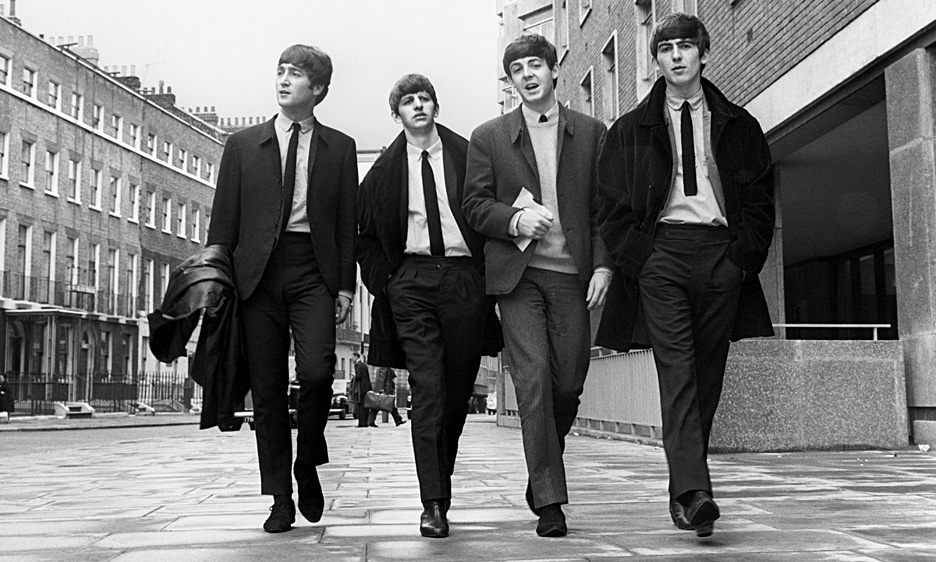

When The Beatles first emerged at the forefront of The British Invasion, few could have predicted the impact they'd have beyond the world of rock and pop. Early albums, and songs like "Love Me Do," "She Loves You" and "I Want to Hold Your Hand," were hardly the grist for something more.
But by the time The Beatles reached the turning point of Rubber Soul (Apple/EMI, 1965), a change was in the air. The Fab Four—John Lennon, Paul McCartney, George Harrison and Ringo Starr—began to transcend the simple (but undeniably appealing) pop structures of their early hits, incorporating elements from farther afield. They'd already scored a major hit earlier in the year with the surprisingly sophisticated ballad, "Yesterday," from Help! (Apple/EMI, 1965), but with "Norwegian Wood," the beginnings of an interest in Indian music was made manifest by George Harrison's simple but effective sitar work, while "Michelle" represented another move towards richer songwriting.
From that point forward, The Beatles' may still have been a pop band at heart, but experimentation was also at its core, a heady combination of the lightening speed growth by Lennon, McCartney and Harrison as writers and producer George Martin's sonic innovations. Revolver (Apple/EMI, 1966) led to a string of seminal albums, all groundbreaking in individual ways. Sgt. Pepper's Lonely Hearts Club Band (Apple/EMI, 1967), Magical Mystery Tour (Apple/EMI, 1967), The Beatles (Apple/EMI, 1968) and Abbey Road (Apple/EMI, 1969) were all filled with vividly memorable songs, and remarkable, forward-thinking production.
The Beatles' impact on the pop world was already cemented, but it wasn't long before artists in the jazz world realized there was plenty of potential to be found. Over the past 40 years, Beatles tunes have been stretched, twisted and reworked by artists ranging from Buddy Rich, Wes Montgomery, Marian McPartland, Sonny Rollins and Benny Goodman to Herbie Hancock, Brad Mehldau, Cassandra Wilson, Chris Potter, Tony Williams and Jaco Pastorius. Entire albums have been devoted to the music of The Beatles by John Pizzarelli, Mike Mainieri, and Joel Harrison, while the BeatleJazz trio has released four full albums dedicated to the music by the Fab Four.
With the recent, long overdue release of the remastered Beatles collection, All About Jazz decided to reach out to the jazz world, to find out just how pervasive the group's reach has been. Here are the words of nearly 80 artists, telling how The Beatles affected their music... and, in many cases, their lives.
 I remember very well hearing and then seeing the Beatles for the first time, listening to their records and, I confess, getting a Beatle haircut in my Mom's kitchen! Who wasn't affected by the Beatles? I didn't really learn guitar like many others did from that school but sure listened to and loved their music. I also had the rare privilege of of being George Harrison's second guitarist on the only full blown tour he ever did, known as the Dark Horse Tour with Ravi Shankar, sixteen Indian musicians and a host of rock heavyweights in the band. Wow! I hung at George's place at Hendley On Themes, listened to Ravi rehearse there, drank tea and recorded with George.
 He was a sweet cat, always nice and complimentary, full of life and humor. Sad he left so soon.
The Beatles enriched us all, so glad we had the Beatles.
—Robben Ford
 There were ten kids in our family. We played at being the Beatles down in our cellar. We'd wait for our chance to be John, or Paul or the quiet ones wanted to be George, or Ringo with the pots and pans... the first 1/2 hour one person would be Paul and then you'd switch out. How did they influence me musically? Its hard to tell because they were so integrated into our lives for a while there. I always knew I wanted to be a musician, and seeing how they just sang about whatever was happening to them showed me that music is not separate from one's life. Their songs have a perfect combination of simplicity and fearless elaborating, always fresh and unexpected. I just loved 'em. Here's a little clip of Peter Eldridge and I singing "She's Leaving Home" at Birdland.
 —Kate McGarry
 One of the most groundbreaking units in the history of music, their music is arguably the most captivating example of creativity from the 20th century!
 —Christian Scott aTunde Adjuah
 There never was and will never be another band that I loved as much as The Beatles. I was eight when I bought Rubber Soul, my first album purchase ever. The magisterial excitement of that moment, as I gazed at the four long faces staring back at me from the record bin, handed the clerk $2.97, and dashed home to put it on my record player, will never leave me. The Beatles were the first at many things, including: destroying the division between high and low art, introducing Indian music into the pop realm, combining pop, avant-garde, and classical impulses in meaningful ways. Their humor was joyous, politics righteous, their tunes and harmony were gorgeous, exhilarating, new. Like great jazz players they were always evolving, not satisfied with the status quo. Each new record felt like a blast of fresh air—I'd spin it for days, trying to dress like them, think like them. I stopped listening to them for many years, but it all came back to me when I did the Harrison on Harrison CD of all George Harrison music. I chose him partly because he was an underdog, but they were all absurdly brilliant.
 —Joel Harrison
 In 1966, when I was 8 years old, John Lennon said, "We're more popular than Jesus now. I don't know which will go first—rock and roll or Christianity." I was living in the South when he dropped that devil of a quote and pretty soon Beatles music was banned and people were stomping on their albums and Beatles material. This reaction proved a windfall for me, because my GODfather gathered his daughter's entire Beatles album collection and released the devil's music on me. I promptly put the first record on my player, got on my drum set, and pretended I was Ringo.
 When I heard "Revolution," "A Long and Winding Road," and "Let it Be" I realized they were the first examples of pop-fusion music. The Beatles fused melodicism and harmony with the spirit of rock and roll. I was writing songs at an early age, so I incorporated this 'fusion' in my compositions. They paved the way for experimentation in the studio—whether it's Lennon doing a vocal track lying on the floor to create a different sound, they just let it be. When I'm in the studio, I keep that spirit of experimentation. Whatever goes!
I see their body of work mirror the arc of great jazz musicians. Their music changed from song to song and record to record. The Fab Four has inspired me to keep high standards of creativity with every project that I undertake.
—John Beasley
 I think the Beatles were the most influential band in pop music history. Think about it, their music is known all around the world and to this day their music is still on the radio and TV commercials daily. The main four members were only a band for about 7 years and changed the face of music in that short time. Forty years later they still have a mystique and fan base that will probably never be topped.
 If you look at the evolution of what the Beatles sounded like from Please Please Me to Let It Be, their sound completely changed. The one absolutely amazing thing that they did was they took their fans with them on their musical journey. How many bands/musicians can evolve so much in a short time and not only keep their fan base but grow it? To me that is amazing.
So much of their song writing was from an era where songs were truly songs, that's why so many jazz artists have recorded Beatles tunes. Melodies, chord changes, and actual song structure. Because of that their songs will last forever because many of them are not trendy and time period based.
I personally have recorded five Beatles tunes and I am sure I will record more.
"Come Together" on Wood (Artistry Music); "Let 'Em In" on Wood II (Artistry Music); "And I Love Her" on Brombo (King Records, Japan); "Day Tripper," "Yesterday," "Eleanor Rigby" on Hands (King Records, Japan)
To me their body of work is tremendous and there is always something you can do arrangement wise with a great melody. Plus, being a bassist it is awesome to me that Paul McCartney is also a bassist. He also spent a fair amount of time in my home Town of Tucson, AZ. I hope I get to meet him one day!
—Brian Bromberg
 I've been listening to The Beatles since I was a teenager, not just because their's was the popular music of the day, but because, especially in their earlier works, the sentiment of their lyrics touched so many feelings that I was having at the time. I remember listening to "The Long and Winding Road" over and over again, because it gave me a sense of hope in connecting deeply with another person and finding true love-the lyrics "lead me to your door," touched me to the core. All the things that affected me when I was young seemed to be found in their lyrics of one tune or another. I've always believed that the three keys to a great original song are a memorable melody, a universal story and lyric, and a timeless quality. I don't know anyone who can't remember most of The Beatles' tunes-music and lyrics. That is the most revealing testament to the power, mastery and genius of their enormous body of work.
 Currently, their songs are being repackaged for a new generation to discover. The Beatles will forever be relevant because they were able to put their fingers on the pulse of the emotions and consciousness of an entire generation. They awakened in our awareness the need for love, peace, and unity in the world—and echoed those sentiments musically. Their message is timeless. With every lyric and melody, their songs will continue to reach people throughout the world in every country, language and generation, insuring their immortal place in music history and in our hearts.
—Lynne Arriale
 I think the qualities of the Beatles that most come out in my music are the energy of the live performance and the sense of humour. The Beatles, to me, seemed to live for the live performance as much as they wouldn't admit it. I remember seeing the film Let It Be in a the Tampa theater in 1979 and the place went crazy watching the concert on the roof... and that was a film! The energy was amazing. The general charisma of the band was captivating. The outfits and haircuts, the general setup of the group was something we all wanted to aspire to, no matter what our style of music would be. I liked the uniformity of the presentation, but the outside the lines thinking that went into the music.
 Even as they made their way to the fur coats and the wild outfits, they had a sense of the "group," but each member seemed to maintain his musical and literal personality. All these things combining for a great musical experience and hopefully, in some way, making its way into my music.
—John Pizzarelli
 I recently bought the reissued version of Rubber Soul at a Starbucks. This was one of my favorite recordings when I was a teenager. Here it is 45 years later, and the music sounds just as good! The writing is so clever, and the production is totally happening. These cats were bad! And George Martin was a master of production. The sound of the instruments are killing! And the vocals are so cleverly doubled and arranged in a very musical way. Great arrangements, period!
 Ringo gets that classic snare drum crack that became so influential for years to come. The lyrics are poetic, heart-felt and clever. What can you say! It's all there.
Really the only thing I noticed that I hadn't before is that on "Drive My Car" Ringo does these funny little snare drum fills that are totally out of time, but he manages to make them work anyway. This reminded me of when I was on Buddy Rich's band and he would have smoked a little too much weed, and on his drum solo launch into an imitation of a bad rock drummer, playing fills all out of time, kind of like someone trying to talk after having novacaine for a dental procedure. But in all fairness, Ringo set the standard for rock drumming during that time. He made the music feel so good!
The Beatles took the tradition of great songwriting and put their own thing on it is such a contemporary and timeless way. It all still sounds great today.
—Bob Mintzer
 I'm a jazz singer, but I'm also a songwriter. I grew up admiring great songwriters, and three of the Fab Four, Lennon, McCartney and Harrison, were brilliant songwriters. Not only did I grow up loving, devouring and studying the Beatles' albums, I've covered their songs on my jazz records. When I cover a modern pop song, I take it apart and reduce it to its essence and then rebuild it as a jazz tune. If it's a great song, it can stand up to re-interpretation in many different styles. I'd rather start with a song that isn't "jazzy" when I cut a pop song, so the first tune I tried was "I Feel Fine" which was a rock and roll song, rather than something like "Michelle" or "Norwegian Wood," which are commonly covered by jazz musicians. I like to take a song a long way from it's original recorded version. That's a lot more interesting to me. I've also covered two wonderful John Lennon tunes, "Love," and "Jealous Guy, which appears on my latest album.
 —Curtis Stigers
"I was in competition for who had the most Beatles records with a few of my friends at around age 10. Still listening and loving those records. Been through vinyl, cassettes, CDs, and now MP3s. i was pretty blown away when Sir Paul showed up at a gig of mine a few years back. He's still hungry for new energy and music. Maybe that's one of the many reasons they were such a great band."
—Ben Perowsky
 The timeless music that The Beatles created remains a source of listening enjoyment and artistic inspiration. The collective growth that occurred in their songwriting and album concepts amazes me every time. I listen to some of their later records like Sgt. Pepper's or Abbey Road. I would be hard pressed to name another rock band that had the musical breadth and depth of The Beatles.
 —Steve Smith
The Beatles have always been an enormous influence on my music and playing. Specifically, different harmonic passages they use have found their way into my music time and time again. I'll also find myself trying to imitate Lennon's voice or McCartney's bass sound at the piano or keyboard. But one of the main influences I get from their music time and time again are the recordings. The sounds they achieved at the time with such limited technology. "Tomorrow Never Knows" from Revolver is an excellent example. On that song, McCartney came in with the idea of using tape loops and tape reversal. Also, Lennon's vocals were run through a Leslie speaker which had never been done before. It's these kind of techniques I find myself using constantly when recording at home or elsewhere. Don't even get me started on Sgt Peppers...
—Frank LoCrasto
I grew up with the Beatles. My mother had a bunch of their records, like Magical Mystery Tour and Sgt. Peppers, also a live concert from Hollywood Bowl in which all that is audible is screaming girls. I think it's fascinating that a group that gained super popularity based on idolatry ended up making music that rivaled any of the great composers in it's creativity and purpose. John Lennon and Paul McCartney were one of the most prolific songwriting teams of the modern era: how many Beatles songs are immediately recognizable?
—George Colligan
 I was one of the few people on February 9, 1964 who didn't see the Beatles performance on the Ed Sullivan show, but boy did I hear about it the next day at school.
 I liked some of their songs but at the time I was more into Motown and James Brown. Every Beatles album always had songs that I liked. AM radio played them every hour on the hour. Rubber Soul and Revolver got my attention as full LPs but it was Sgt. Pepper's Lonely Hearts Club Band that pulled me all the way in to them on a deeper musical level.
What I discovered was that the Beatles weren't afraid to break convention in their songwriting and records. "Good Morning" and "Lucy In The Sky With Diamonds" have odd meter bars. From the beginning they always used Major 6th and dominant 9th chords reflecting their affinity with jazz and rhythm and blues. The use of interesting choices in rock/pop music instrumentation (piccolo trumpet, sitar, french horn, string ensembles etc). They used the recording studio to experiment with extensive editing techniques and innovations like running a track backwards and recording on top of that. They wrote and recorded pop, country and western, rock, blues and ballads.
My writing as a composer and arranger is most directly influenced by the Beatles work. I have always admired how colorful and vivid their music sounded. They opened minds and musical ears to possibilities.
—Wayne Wallace
One might not expect a jazz vibraphonist to have that much in common with the Beatles. However, they set the bar for creating enduring popular music, and I think about them all the time. Any performer has to be in awe of the virtuosity of the young Fab Four. Any studio musician has to be amazed by the recordings they achieved with producer George Martin. And any composer has to be inspired by the sheer beauty of their melodies, and the inventiveness and timelessness of their songs.
—Steve Shapiro
The Beatles are part of my musical DNA. I grew up listening to them on my parents' stereo, and I can still remember putting on the "White Album" to listen to "Julia" and "Blackbird" over and over again. I also recorded a version of "For No One" with Bill Charlap, Avishai Cohen and Andy Watson for a demo many years ago that not many people have ever heard! I still think it's one of the great heartbreak songs. I don't think I consciously ever tried to write like them, but I think the emotion in their songs is what I carry with me. I've always been most attracted to the wistful and sad songs in their catalog. "She's Leaving Home," "Eleanor Rigby," "Because," "You've Got To Hide Your Love Away," etc...
I am still inspired by the incredible heart and craft of their music. I aspire to be so joyous and creative in my own expression.
—Joel Frahm
When the Beatles first come on the scene, I wasn't too impressed. With Sgt. Pepper's, everything changed about the Beatles. I was amazed how they had grown as a band and individually. The musicianship and compositions were stunning. They had elements of all types of music which made me think they were truly a "Fusion" band. After Sgt. Pepper's, I went back and listened with different ears to their earlier records. They stood up extremely well. I have everything they've recorded plus numerous videos and have admired and enjoyed their music. The "White Album," Abbey Road, Revolver, Let it Be, they're all special in some way. Long live the Beatles!
—Jack Wilkins
The musicality and arrangements of much of the Beatles' compositions has impacted how I arrange American Songbook tunes and jazz standards because of the similar pop style that each possesses. I also grew up playing and listening to them a lot on the radio before I listened to or learned anything about jazz. Their harmonies were and still are quite hip for pop music.
—Dena DeRose
Growing up I was exposed to my two older brother's recordings of The Beatles such as For Sale, A Hard Day's Night and Help! . The music with its beautiful melodies and fascinating sonorities impressed me immediately. It seemed to connect to my other interests in jazz, classical, theater music and R&B. However, it was really the later stuff that knocked me out! Their music really started changing when they stopped performing live and became a studio band. This transformation began around the time of Rubber Soul and especially Revolver and continued through all the subsequent recordings. These albums contain many beautiful examples of studio experimentation, orchestration and song writing. Their lyrics combine elements of surrealism, postmodernism and social commentary. The idea of the concept album or suite in pop/rock music really takes off with Sgt. Pepper's and continues with beautiful sequences such as the second half of Abbey Road. Seldom if ever has avant-garde strains been as popular or exposed to a wider audience as in pieces from "The White Album," Revolver, Abbey Road or Magical Mystery Tour.
The Beatles, with considerable help from George Martin, created a body of work which influenced highly divergent musicians in multiple ways.
—Frank Carlberg
 In the months prior to 1993, my ex-wife Nancy often played the Sgt. Pepper's CD at home while working, and her interest in The Beatles served to rekindle mine, especially for George Harrison's "Within You Without You." As The Beatles arrived on the scene in the early '60s, my sister Laurie was the first in our household to go nuts for them, and she was the only one, amongst her girlfriends, to be totally wild for George. So, when Mike Mainieri asked me to contribute a track to his project: A Guitar Tribute To The Beatles—COME TOGETHER (NYC Records, 1993), a two-song George Harrison medley seemed fitting, and "Blue Jay Way" from Magical Mystery Tour appealed to my bizarre musical sensibilities.
 Of course, The Beatles, in their way, opened the doors to breaking down the rigid boundaries that then existed between all forms of popular music, and, even at the time, "world music." Anything seemed possible in the mid to late 1960s. Hard to believe that, at that same point in time, we had the great Miles Davis Quintet; the John Coltrane Quartet; and Ornette Coleman's Quartet too. I think everyone, no matter what their particular musical aesthetic leaning might have been, could appreciate the fantastic songwriting, the great singing, the incredibly creative production values, and the expansion of the popular song form. The music of The Beatles was so wonderful for its time, and it remains so today."
—Steve Khan
 The Beatles energized the entire world, musically and otherwise, with their look and their sound. The strongest impression that I have had over the years is that their music has a timeless quality to it, and I would guess that this must come from their gift for melody as much or more than anything else. Their tunes became production standard-bearers, of course, but it's the musical haiku-quality of their artistry that has most intrigued me over the years. The compactness and clarity, specificity and simple wonderfulness of their songs is what makes their music timeless to me.
 I came of musical age with The Beatles accompanying my journey alongside the albums of Cannonball Adderly, John Coltrane, Miles Davis, Stan Kenton, Oliver Nelson and Buddy Rich. And then along came Weather Report just about the time The Beatles stopped recording; and, for me, Weather Report became a new Beatles in the sense that all that band's recorded music, or most of it at least, had and retains that quality of timelessness. Most bands who added back beats to their swing vocabulary (i.e., went straight 8th-note), well, when I hear many of those recordings I see bell-bottomed pants and dumb shirts and far-out hair styles ... Weather Report, I hear great tunes with production qualities that have stood the tests of time as well as the Fab Four's music.
So, in many ways, The Beatles were not only a great band with great tunes: they became a reference point for all that followed.
—Peter Erskine
I never bought a Beatles album. I heard a lot of their songs ,but even being 20 in 1965, I did not hear many songs before they had actually broken up.
There was too much other music going on in the '60s that I was listening to—Miles Davis, Archie Shepp, Albert Ayler, Paul Bley, Art Ensemble of Chicago, John Coltrane. What I heard on the radio from The Beatles was not something that really caught my attention, compared to the jazz that was happening at that time.
Later I listened more and, while I like a lot of their songs, they never really had an impact on my own music.
—Arild Andersen
 The Beatles' legacy is wound up with the entire history of the American popular song and, in a sense, the last step in the story. Gershwin, Rodgers, Porter, etc., all used the diatonic harmony of the four hundred year history of Western classical music, linked with lyrics to describe a situation, usually centered around love and the like. Lennon and McCartney distilled the harmony down to its bare elements in their songs, stripped of harmonic sophistication (compared to Porter, for example) but, in turn, even more direct in its communicative power. And of course the lyrics were clear, to the point and centered on subjects besides love—things of fancy and delight to a young mind.
 They really challenged themselves and the audience when Sgt. Pepper's and Magical Mystery Tour, followed by The White Album, were released. They raised the ante both lyrically and texturally and, in the end, burned the candle to the end. What a great contribution to the western art song tradition and from a cultural standpoint. Of course, their look and "interests" (LSD, Indian stuff, etc.) did speak to a generation looking for spokesmen. As a direct effect on me musically, I can't really say there was much but, as noted, culturally for sure.
—Dave Liebman
 I began playing the guitar in the summer of 1963, approximately one year before The British Invasion took place. There were just as many accordion students as there were guitar students at the local music shop in the summer of '63. The Beatles' first performance in the States was in New York City on The Ed Sullivan Show in '64, kids were abandoning the accordion and switching to guitar like mad.
 The Beatles pulled the rug out from Planet Earth in the '60s; the songs had incredible melodies and harmony and they made us smile—I knew, then and there, that I wanted to be a musician forever, and I never looked back.
Fast forward from 1964 to 2004. I was working with Dave Liebman in London at the Pizza Express. I went for an afternoon stroll somewhere on a deserted part of Dean Street; a limo pulled up to the sidewalk and Paul McCartney emerged from the limo. He and I face-to-face; I told him I was working at the Pizza and invited him to the gig. He never showed up but what a thrill to see him on the street. It is great to see that the next generation is picking up on The Beatles; they were and are the greatest!
—Vic Juris
 "Sgt. Pepper taught the band to play"—that's for sure! Sgt. Pepper's taught me to play as well. My friend had the album on at his house and gave me his guitar—the first time I picked one up. As he puts it, he was so mad that I already played better than him and he was the one taking lessons (ha!).
 It was through playing along to that record that I fell in love with the guitar and decided to take lessons too. Later, I remember playing along to the whole album of Help over and over in my living room, my guitar plugged into the stereo.
The Beatles have always given me a vivid world of escape and adventure, and the uncompromising creativity and honesty of the group as a whole and John Lennon in particular has been a guiding light for me in my own journey in music. I love The Beatles!
—Kurt Rosenwinkel
 In 1961, I was still performing with the Buddy Rich Septet. Although we played the usual circuit in the US, Birdland in NYC, Pep's in Philly, Blue Note in Chicago, et al, Buddy veered from the tried and true and accepted a booking of a State Department tour. The tour included performances in Afghanistan, Nepal, Thailand, Indonesia, Cambodia, Laos, Vietnam, Hong Kong, Singapore and Iran. Our home was base Bombay, India where we also performed and included stints in New Delhi, Bangalore and Madras. We returned to NY in 1962, exhausted, but filled with the music from these diverse cultures.
 During that year, The Beatles were recording their first hit single "Love Me Do," which I believe became a hit in the US in 1964. I checked them out on The Ed Sullivan Show, and frankly I didn't see what the fuss was all about. I grew up not only listening to jazz but was a fan of "The King Of The Moondogers," Alan Freed, who played R&B and Rock and Roll on his radio show in New York City on WINS.
As a teenager, I played jazz but danced to Little Richard, Chuck Berry, and Bill Haley and the Comets. In the '40s I was hearing live big band jazz at the movie theaters on Broadway, and Diz, Bird and Bags 78s at home; in the '50s, I was attending the Alan Freed shows at the Paramount Theater in Brooklyn, where we kids were dancing in the aisles to Fats Domino and Little Richard. I also dug that there was always a big band backing up these acts! It was during that time I also got hip to Howlin' Wolf, Muddy Waters and other legendary blues artists from friends who loved the blues. So upon first hearing the Beatles, I thought they sounded like a ripoff of the Everly Bros.
In 1964, I began playing with keyboardist, Warren Bernhardt, drummer Donald MacDonald, flautist Jeremy Steig and bassist Eddie Gomez. They had formed a jazz/rock group called Jeremy and the Satyrs. The band also featured a blues singer and guitarist, Adrian Guillery. The group began performing at the Cafe Au Go Go, Bitter End, Electric Circus, and The Fillmore opposite folk, blues and rock bands. They also became the backup group for the folk-singer Tim Hardin. I joined the band after the Satyrs' first recording on Columbia Records, and suddenly I was exposed to hearing the music of Dylan, Hendrix, Zappa and the many rock and folk artists who played that circuit.
When I first heard "Help" in 1965 I was hooked, and then upon their release Rubber Soul, I was blown away! By then the Satyrs were heading into a more psychedelic free/jazz-rock band, as were The Beatles on Rubber Soul. 'Til this day, I'll occasionally play "Yesterdays," "Norwegian Wood" or "Here, There And Everywhere" as a solo piece at one of my group concerts.
Those Beatles albums and all of their later works shifted my musical world off its axis. I recall feeling the same anticipation and excitement from rumors that a forthcoming Beatles album was about to be released, as I did any jazz record during the years the group recorded.
When I first formed my label, NYC Records, the second release was A Guitar Tribute To The Beatles—Come Together. I wasn't at all surprised by how The Beatles shaped the artistry of the many diverse guitarists who participated in the project. The performances on that first album and the subsequent second CD with another lineup of great guitarists are a testament to the musical magic inspired by The Beatles.
—Mike Mainieri
 Like a lot of people, I was really influenced by The Beatles. I had been playing the guitar for about six months when they came along. I'd say they impacted my music in several ways, but most importantly that they inspired me to keep going and work harder. It was quickly obvious that guitar playing was "cool" and a pathway to personal success and satisfaction. It never even occurred to me that it might not work out. They were certainly a big part of my early music experience, but not who I was emulating. I was a dork who wanted to play the blues, and looked down at all the other 15 year-olds who didn't know "the real shit." I had Beatle boots but my mother wouldn't let me wear them.
 —John Scofield
 It's funny, as a kid I really didn't like The Beatles. I was into Hendrix, Stevie Wonder, Sly Stone, even Elton John (his early stuff is great), but I didn't really didn't dig The Beatles. Maybe it was because they were older or something. But of course, as with anything great, I couldn't ignore them at a certain point in my career and I realized how fantastic they were.
 What I learned to appreciate is their unbelievable songwriting. It really doesn't get any better than The Beatles. And then the production. Incredible. Pop music at its best. The Beatles also informed so much of the other music I love. Especially Brazilian pop music like Caetano Veloso, Ivan Lins, Djavan, etc. And The Beatles influence has only gotten stronger with time, as their sound and ideas are more prevalent in current pop music now than ever.
—David Binney
 When reflecting upon how important The Beatles' work has been in my life as a listener and musician, the first thing that often comes to mind is the longevity of my enthusiasm for their music. I first heard and loved them when I was very young, and I continue to be as enthralled by their music today as I was then.
 There are relatively few artists who seem to get such a huge percentage right in terms of what's important in making an artistic endeavor successful. The combining of an absolutely Herculean ability to write reams of unforgettable songs that frequently pushed standard ideas of harmony and melody in popular music forward with their seemingly unquenchable desire and skill in creating completely new ways to record music was unprecedented and, I think, unequaled to this day.
Their music has impacted upon me in so many ways. As a composer they have always presented a sort of near perfect example of what a great song could and should be. The songwriting so purely melodic and harmonic, the songs can be played in any context. In terms of their playing and the production of their recordings, the sounds and parts on their records are always somewhere in my brain as reference points for what a brilliant and succinct recording conception should be when all that is superfluous is cut away.
Tags
The Beatles
Profiles
Michael Ricci
United States
Buddy Rich
Wes Montgomery
Marian McPartland
Sonny Rollins
Benny Goodman
Herbie Hancock
brad mehldau
Cassandra Wilson
Chris Potter
Tony Williams
Jaco Pastorius
John Pizzarelli
Mike Mainieri
Joel Harrison
Robben Ford
Peter Eldridge
Kate McGarry
CHRISTIAN SCOTT
John Beasley
Brian Bromberg
Lynn Arriale
bob mintzer
Curtis Stigers
Ben Perowsky
Steve Smith
Frank LoCrasto
George Colligan
Wayne Wallace
Steve Shapiro
Bill Charlap
Avishai Cohen
Joel Frahm
Jack Wilkins
Dena DeRose
Frank Carlberg
Steve Khan
Peter Erskine
Arild Andersen
Dave Liebman
Vic Juris
Kurt Rosenwinkel
John Scofield
David Binney
Adam Rogers
Nels Cline
Jake Shimabukuro
Andrew Green
Steve Gadd
Don Grolnick
randy brecker
Rodney Whitaker
Carl Allen
Randy Ingram
Miles Okazaki
Marius Nordal
Bobby Broom
Chad McCullough
Matt Jorgensen
Gary Burton
Jimmy Haslip
Theo Travis
Amina Figarova
Ruth Davies
Jackie Ryan
Don Patterson
Jimmy Smith
Jack McDuff
John Coltrane
Pat Martino
Miles Davis
Clay Ross
Michel Delville
Benny Reid
Andreas Oberg
Cathy Rocco
Jaimee Paul
Chuck Owen
Jana Herzen
Chuck Anderson
Rick Hirsch
Kam Falk
Terry Disley
Bill Hartzell
Johnny Alegre
mark wingfield
Stuart Rosh
Alan Steward
Mike Clinco
Shelly Berg
Tony Bianco
Clint Bahr
Earl Klugh
Seth Kibel
Spencer Day
Manny Flores
David Kikoski
Kat Edmonson
Oren Neiman
Sachal Vasandani
Comments

About The Beatles
Instrument: Band / ensemble / orchestra
Related Articles | Albums | Photos | Similar ToPREVIOUS / NEXT


Support All About Jazz
 All About Jazz has been a pillar of jazz since 1995, championing it as an art form and, more importantly, supporting the musicians who make it. Our enduring commitment has made "AAJ" one of the most culturally important websites of its kind, read by hundreds of thousands of fans, musicians and industry figures every month.