Home » Jazz Articles » Album Review » Sharon Minemoto: Goodbye, Strawberry Hill
Sharon Minemoto: Goodbye, Strawberry Hill

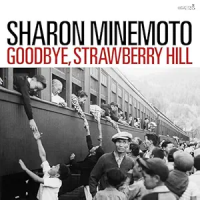
Generations have passed, and most people today have either forgotten or never knew about what happened during those few horrendous years—but many Japanese-Americans remember all too well how their families and friends were badly mistreated and interned in prison camps simply because they looked and often spoke Japanese.
Canadian-born pianist Sharon Minemoto, whose family was forced to leave its farm in Strawberry Hill, British Columbia, imprisoned for the duration of the war and later banned from ever returning to western Canada, pays tribute to her dehumanized forebears on Goodbye, Strawberry Hill, a splendid quartet date for which she wrote or co-wrote nine of the ten intimate and often heartbreaking numbers.
Minemoto's compositions (and one other, "Akatombo," by Kosaku Yamada) are thematic in that they depict people, places, events or other aspects of the mass confinement. But that becomes irrelevant once the music starts. What does matter is that Minemoto's able quartet is squarely focused on every measure, endowing each tune with an abundance of warmth and awareness.
Even though this is Minemoto's gig, an argument could be made that hers is not the most impressive voice in the room; that honor would be reserved for tenor saxophonist Jon Bentley who is astute and admirable on every number. And that is not meant to suggest that Minemoto is less than persuasive, as her solos are invariably pleasing and she embraces the keyboard with an earnestness born of love.
Minemoto wrote the buoyant opening theme, "Rosebud," for an aunt who survived an abusive family relationship, "Eulogy" for a grandfather whose own father died when he was only seven years old. "No Way Out" characterizes anti-Japanese sentiment after the war, "Captive Voyage" her mother's family's arduous return to Japan from Canada, "Ashes Falling Like Leaves, "her father's memories of the atomic bomb attack on Hiroshima (he was living near the site), "An Ocean Between Us" her father's return to Canada as a teen-ager after restrictions on Japanese residency were eased.
The solemn "Meditation," inspired by Minemoto's vision of her grandfather and others using prayer beads during their internment, is given added color by drummer Bernie Arai's use of the flute-like Japanese hotchiku. Yamada's lone composition, "Akatombo," translates into "Dragonfly," which signifies change and transformation in British Columbia's First Nations culture. "Eulogy," which follows, includes the first of several adept solos by bassist Darren Radtke.
Setting aside its disheartening provenance, Goodbye, Strawberry Hill is a consistently pleasing and well-played session. That it is also one with a positive and inspiring message to impart makes it even more fascinating and desirable.
Track Listing
Rosebud (for Keiko Robson); Meditation; Nenju (Prayer Beads); Eulogy (for Sunawa Minemoto); No Way Out; Captive Voyage; Ashes Falling Like Leaves; Akatombo; Dragonfly; An Ocean Between Us.
Personnel

Album information
Title: Goodbye, Strawberry Hill | Year Released: 2026 | Record Label: Cellar Music Group
Tags
Sharon Minemoto
Album Review
Jack Bowers
Goodbye, Strawberry Hill
Cellar Music Group
Jon Bentley
Bernie Arai
Darren Radtke
Comments
PREVIOUS / NEXT

Support All About Jazz
 All About Jazz has been a pillar of jazz since 1995, championing it as an art form and, more importantly, supporting the musicians who make it. Our enduring commitment has made "AAJ" one of the most culturally important websites of its kind, read by hundreds of thousands of fans, musicians and industry figures every month.