Home » Jazz Articles » Album Review » Sonia Ziccardi: Driade
Sonia Ziccardi: Driade

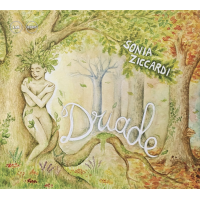
Sonia Ziccardi is no novice, having cooperated on numerous musical and literary projects both in Italy and internationally. Her debut album just confirms her rightful place among promising artists we hope to see and hear more from in the future.
Driade is a collection of nine compositions, all penned by Ziccardi, except for "In the Haze," which was a joint effort between Ziccardi and Vittorio Solimene, and "Unravel," which was originally composed by the Icelandic singer Björk. Ziccardi is joined by Vittorio Solimene on piano, Alessandro Bintzios on double bass, Federico Chiarofonte on drums and Gabriel Marciano on alto saxophone, some of whom are already familiar with each other's work and all of whom are active members of the young contemporary Italian jazz scene.
Firstly, it needs to be said that Driade is an album that beautifully merges Ziccardi's musical and literary talents. Through her delicate vocals and rendition, and the songs' profound lyrics, the entire album feels like a collection of poems enhanced by musical artistry.
The album kickstarts with "Capital Sins," a composition that clearly represents Ziccardi's larger conceptual and introspective musical approach. Sounding at first like a Renaissance text, the lyrics imbued with symbolic undertones, only to be modernised by Solemene's piano, the piece feels slightly theatrical, combining poetry, introspection and modern jazz harmony. "Capital Sins" is a poetic reflection on human contradictions and, as such, is the perfect introduction to the rest of the album, which reflects on the complexities of human nature and relationships.
The tracks on Driade work as parts of a unified artistic narrative rather than isolated songs, forming a poetic exploration of identity, roots, and emotional truth.
Within that framework, "Someone Better" represents one of the album's most personal emotional moments—a song about measuring oneself against an imagined ideal and discovering the quiet courage to remain authentic. The song is about self-perception and vulnerability. Ziccardi's delicate, floating vocal phrasing allows the lyrics to unfold almost like an inner monologue, creating tension and a reflective, minimalist jazz setting.
The imagery and sparse instrumentation in "The Ceiling in My Room" are what make the song so poignant. It is an intimate song with a gentle arrangement, which allows Ziccardi's voice and the emotional nuance of the lyrics to remain in the foreground, almost suspended in time. The mood is that of contemplation, or emotional vulnerability, a recurrent theme throughout the album. Against the heavier themes portrayed on the album, "The Ceiling in My Room" is crucial in the sequence: it offers a contemplative space where the listener pauses with Ziccardi before the emotional journey continues.
Marciano's saxophone and Chiarofonte's drums pick up the pace, rendering the vibe on "Abuse" more chaotic, darker. Ziccardi's voice starts as fragile but changes into what might be perceived as improvisation, thus building emotional intensity through small dynamic changes and delicate timbre.
"Daddy" is a mid-tempo groove by Ziccardi and Solimene in which Ziccardi's lyrics talk about a sense of longing and a strong need for connection, particularly highlighted by the repeated phrases in the chorus.
The tempo of "Two Seasons" tumbles and topples like the cycles of relationships. The tune transitions quickly through Ziccardi's delicate vocals, the fast piano playing and imagery drawn from the rhythms of nature. The song hints at emotional states, which constantly evolve, just like the rhythm of the composition.
The album concludes with "Unravel," originally composed by Björk. The song, although about the emotional toll of heartbreak, is full of hope for the future. Ziccardi's rendition is haunting and ethereal. Her tone remains melancholic yet gentle, perfectly matching the slow, atmospheric nature of the melody. There is emotional fragility in her performance, which seems to be her signature trait.
Driade, as an album, is composed of songs that feel like fragments of an emotional journey, which unfold like a series of inner monologues, depicting a state of introspection, vulnerability and observation. It is music that rewards attentive listening rather than casual background play.
The musical language of the album is carefully thought out to reinforce the album's emotional themes. The arrangements, harmonies, and vocal style all contribute to the sense of intimacy and introspection that runs through the record.
The overall instrumentation is sparse. This minimalist approach allows the listeners to focus on the emotional tone of the voice. The harmonies often feel gentle and slightly unresolved; the music moves delicately, giving the songs a dream-like quality. Finally, Ziccardi's voice is often soft and controlled, creating a strong sense of closeness between her and the listener. The album is a collection of whispered reflections.
All in all, Driade is a successful first album, which should give Ziccardi a strong foothold on the contemporary jazz scene.
Personnel

Sonia Ziccardi
vocals
Vittorio Solimene
piano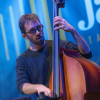
Alessandro Bintzios
bass
Federico Chiarofonte
drumsGabriel Marciano
saxophone, altoAlbum information
Title: Driade | Year Released: 2026 | Record Label: A.MA Records
Tags
Album Review
Nathalie Tamara Freson
Driade
A.MA Records
Sonia Ziccardi
Vittorio Solimene
Björk
Alessandro Bintzios
Federico Chiarofonte
Gabriel Marciano
Comments
PREVIOUS / NEXT


Support All About Jazz
 All About Jazz has been a pillar of jazz since 1995, championing it as an art form and, more importantly, supporting the musicians who make it. Our enduring commitment has made "AAJ" one of the most culturally important websites of its kind, read by hundreds of thousands of fans, musicians and industry figures every month.