Home »
Member Page
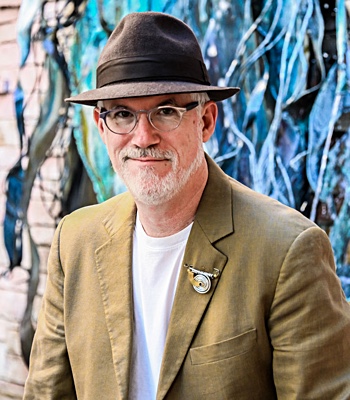
Bret McCabe
Baltimore-based former music journalist working in higher education for the health insurance
 About Me
I am a Baltimore-based arts writer who currently works in higher education. Originally from Dallas, Texas, I spent about 20 years working as a general arts writer/editor for alternative weeklies, daily newspapers, national and regional magazines and arts websites, before transition into higher education publishing, first as a senior humanities writer for the Johns Hopkins Magazine and currently as a senior communications specialist at the Peabody Institute. When not experiencing music or art and writing about it, I like to bike ride, cook, spend time with my wife and our cats, and, hopefully, celebrate the people and things that make being alive worthwhile.
My
Articles
My Jazz Story
My jazz story is an ongoing three-legged race of self education.
The first part involves hearing Albert Ayler’s *Spirits Rejoice* when I was in college and having my brain rewired. A lifelong soul, R&B, and funk listener thanks to my mom, and a default fan of rock and punk by baseline Gen X surliness, *Spirits Rejoice* got me to understand that an overwhelming majority of 20th-century American music that I like and respond to pulls its ideas from the spirituals, blues, ragtime, and jazz forged by enslaved Black people in the Americas and Caribbean, which primed me to open my ears and explore a wider range of music.
The second part came when a first exposure to Eric Dolphy’s bass clarinet solo on “India” from John Coltrane’s *Impressions* damned near made me erupt into tears. Ayler expanded my musical range, but only so far getting me to get turned onto the ecstatic, energetic, idea-dense music of hard bop, free jazz, the so-called avant-garde, and jazz-rock and third-stream hybrids from the late 1950s into the 1990s. I was still responding mostly to music that recalled the muscular oomph and drive of rock and punk. Dolphy’s absolutely ineffable solo on “India” forced me to sit down, take a moment, and feel the intense emotional register of the music and not merely be entertained by the intensity of the playing itself. Even typing this realization down right now, 30 years on from that experience in my mid 20s, connecting Dolphy’s acrobatic runs in “India” to the exquisite sophistication of anything on *John Coltrane and Johnny Hartman* makes me feel like a caveman pointing out that flowers are pretty—but it took Dolphy’s alchemical genius to get me to comprehend the vast expanse of jazz’s emotional range.
The third part is more subtle and, perhaps, the most important of all. After college I moved back home to Dallas for a spell, where I first started writing professionally. At the time, undersung saxophonist Marchel Ivery was still living and playing regularly around town. A contemporary of David “Fathead” Newman and James Clay, I won’t suggest that I got to know Marchel personally as much as I got to, over a solid five to six years, hear him play on a regular basis, with a variety of side players and in a variety of settings. Through Marchel I was able to get a peek at how one individual’s musical voice, ideas, and life experience fits into this living, breathing music we call jazz, as my ears began to hear and notice how he adjusted and responded to the people with whom he collaborated.
All of the above informs how I continually listen and learn, for this music and its musicians teaches us about themselves and the world if we listen closely enough.